
Used cooking oil (yellow grease) trades as a recycling feedstock, and its value per gallon swings with biofuel demand, the load's quality (FFA and MIU), and California's Low Carbon Fuel Standard. The catch for restaurants: that value is captured downstream by the licensed renderer who buys aggregated loads, not paid out at your back door. That is exactly why a CDFA-registered hauler like Oil Guyz can offer free used cooking oil pickup. Below is how yellow grease pricing works in 2026 and where your restaurant sits in the chain.
Most California restaurant operators have only a vague sense of what happens to the used cooking oil pumped out of the bin behind their kitchen every week or two. The truck arrives, the barrel empties, a digital manifest lands in their inbox, and that is the end of their involvement. Behind that simple service is a regulated industrial supply chain, yellow grease recycling, that moves restaurant used cooking oil through CDFA-registered transport, aggregation, refining, and finally back into California's renewable fuel supply.
Understanding roughly how that supply chain works helps a restaurant operator make better decisions about haulers, pickup cadence, and compliance posture. This guide explains what yellow grease is, how the 2026 California recycling market operates, and where your restaurant's used cooking oil fits into the broader renewable fuel ecosystem.
How Much Is Used Cooking Oil Worth Per Gallon in 2026?
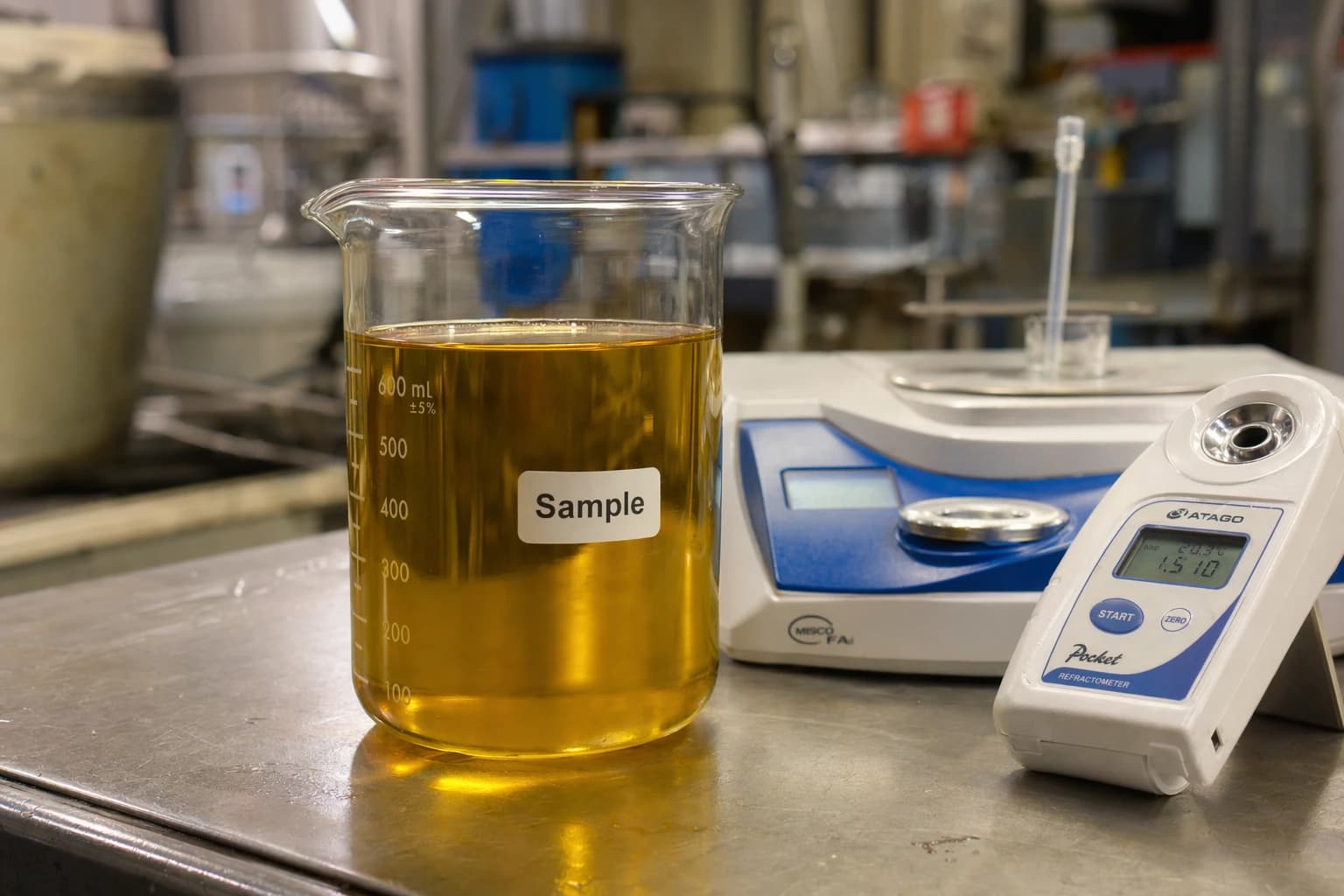
There is no single fixed price for used cooking oil. Yellow grease is a traded recycling feedstock, so its value per gallon moves with biofuel demand and with the quality of each load. Two technical numbers drive most of that value: Free Fatty Acid (FFA) content and Moisture, Insolubles, and Unsaponifiables (MIU). Cleaner oil that runs under 4 percent FFA and under 2 percent MIU is premium feedstock and commands the strongest pricing, while oil that has baked in a hot bin, taken on rain, or mixed with grease trap waste is worth less because it is harder to process. On top of quality, California's Low Carbon Fuel Standard (LCFS) lifts demand, since yellow grease is a waste stream diverted from landfill and earns more carbon credits than virgin crop oils.
For a California restaurant, the important point is where that value lands. The per-gallon value is captured downstream at the aggregation and refinery steps, not paid out at your kitchen. That economics is exactly why established CDFA-registered haulers offer free pickup, free containers, and digital manifests instead of cutting you a check per gallon. If a hauler tries to charge you per pickup, that is a red flag about the operator, not the market.
What "Yellow Grease" Actually Means
In the recycling industry, used cooking oil collected from food service operations is referred to as "yellow grease." The name comes from the color of the rendered material after it leaves the kitchen, golden yellow, distinct from the darker emulsified material that comes out of grease traps. When a CDFA-registered hauler like Oil Guyz collects oil from your kitchen, it is pumped into a vacuum tanker, delivered to an aggregation facility, filtered and tested for quality, and routed onward to biodiesel refineries, renewable diesel producers, oleochemical manufacturers, or rendering facilities.
Yellow grease has specific quality standards. The two that matter most:
- Free Fatty Acid (FFA) content, measured as a percentage. Lower FFA means the oil has not broken down significantly and can be processed into biofuel using simpler methods. Restaurant fryer oil typically runs 4 to 8 percent FFA. Premium feedstock runs under 4 percent.
- Moisture, Insolubles, and Unsaponifiables (MIU), a measure of contamination. Water, food particles, and non-oil residue all count toward the MIU number. Clean restaurant oil usually stays under 2 percent MIU.
These two numbers determine how efficiently a renderer can process a load. Cleaner, lower-FFA oil is easier to recycle. Oil that has been sitting in a hot bin for weeks, exposed to rain, or mixed with grease trap waste becomes harder to process.
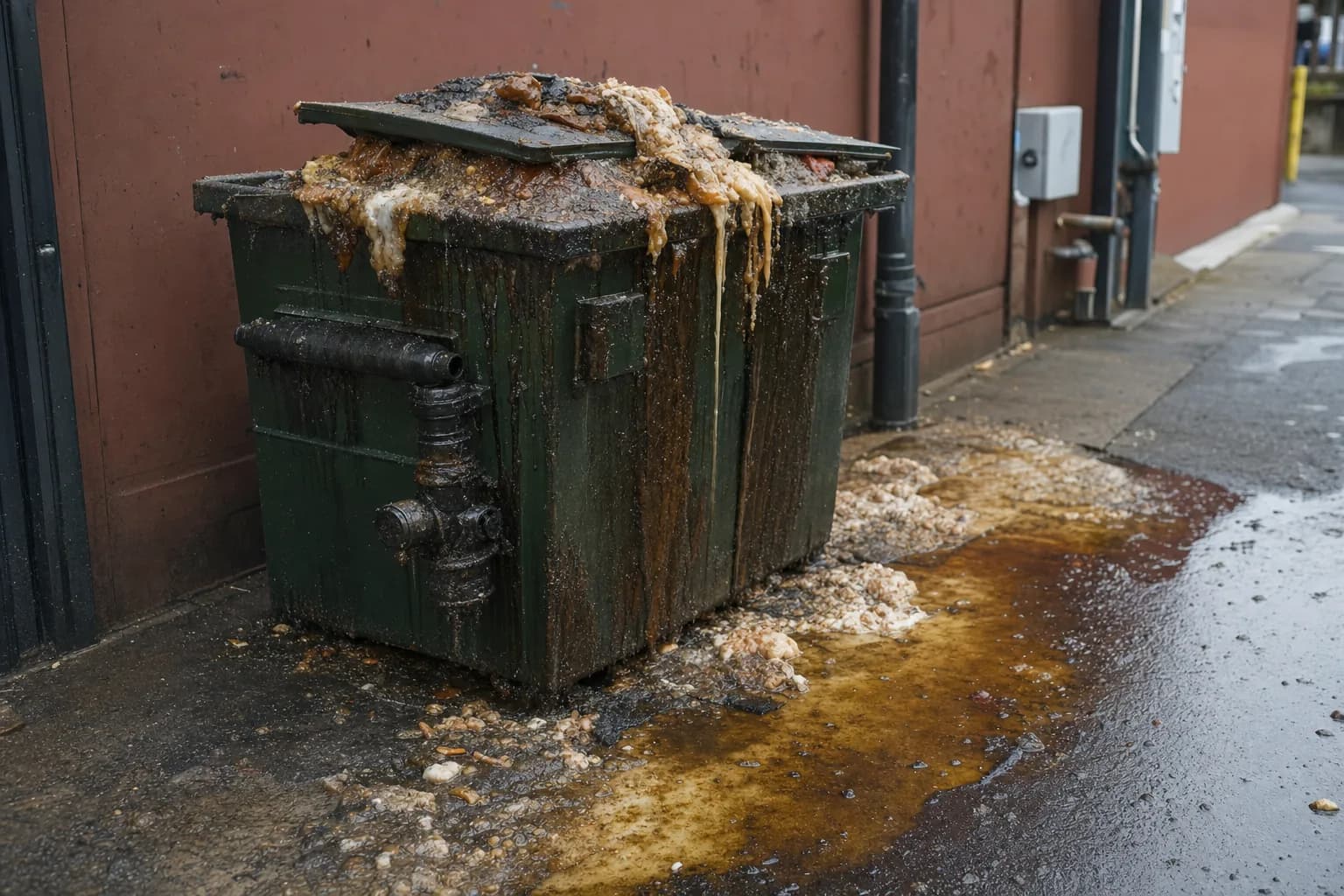
The distinction between yellow grease (a recyclable feedstock) and brown grease (grease trap waste, which is a disposal liability) matters enormously and is worth restating. Your cooking oil pickup generates yellow grease. Your grease trap cleaning generates brown grease. They move through separate recycling and disposal chains, even when the same hauler provides both services to your kitchen.
The 2026 California Yellow Grease Market
California operates one of the most developed used cooking oil recycling markets in the country. The combination of federal Renewable Fuel Standard (RFS) requirements, state-level Low Carbon Fuel Standard (LCFS) credits, and a dense food service economy in Southern California and the Bay Area produces consistent demand from biofuel producers for restaurant-sourced yellow grease feedstock.
In practical terms, this means a restaurant in Orange County, Los Angeles, or San Diego sits at the front end of a working industrial recycling chain. Every gallon of used cooking oil pumped out of your collection container moves through documented chain-of-custody handling and is processed into renewable fuel that feeds into California's transportation energy supply.
The market structure relies on three interlocking components:
- CDFA-registered haulers, the regulated operators authorized to transport Inedible Kitchen Grease in California. Every legitimate pickup operation is registered, insured, and generates the digital manifests that satisfy FOG ordinance compliance and CDFA Title 3 transport rules.
- Aggregation facilities, licensed sites where multiple route truckloads are combined, tested, filtered, and prepared for delivery to refineries.
- End-use refineries and processors, biodiesel refineries, renewable diesel producers, oleochemical manufacturers, and rendering facilities that consume the aggregated yellow grease.
The chain is documented end to end. Your restaurant's manifest can theoretically be tracked from your collection bin through the aggregation point and into the refinery that processed the load.
What Drives the California Recycling Market
Several interconnected forces shape how the yellow grease recycling market functions in California:
- Renewable fuel obligations. Federal Renewable Fuel Standard volume mandates create steady demand for biomass-based diesel, which in turn creates demand for yellow grease feedstock. When federal policy supports higher renewable fuel blends, downstream demand for used cooking oil follows.
- Low Carbon Fuel Standard (LCFS) credits. California's LCFS rewards fuels with lower lifecycle carbon emissions. Yellow grease, a waste stream diverted from landfill, scores well on this metric and earns more credits than virgin crop oils like soybean. This positions California-sourced yellow grease as a preferred feedstock among in-state biofuel producers.
- Sustainable aviation fuel demand. Renewable diesel refineries in California and the Pacific Northwest are increasingly producing sustainable aviation fuel from yellow grease feedstock, opening a new high-value demand channel.
- Export demand. Some California yellow grease flows to international biofuel producers through port facilities, creating additional demand pressure when domestic processing capacity is constrained.
- Regulatory policy. Federal RFS volume obligations, EPA approval of specific feedstock-to-fuel pathways, LCFS amendments, and renewable energy tax provisions all shape recycling market economics over time.
These forces operate on the recycling industry as a whole. They do not directly involve your restaurant, your hauler manages downstream commercial relationships so you don't have to.
How Restaurant Oil Moves Through the Recycling Supply Chain
Understanding the full path from your collection bin to the end-product fuel helps frame why the market works the way it does:
-
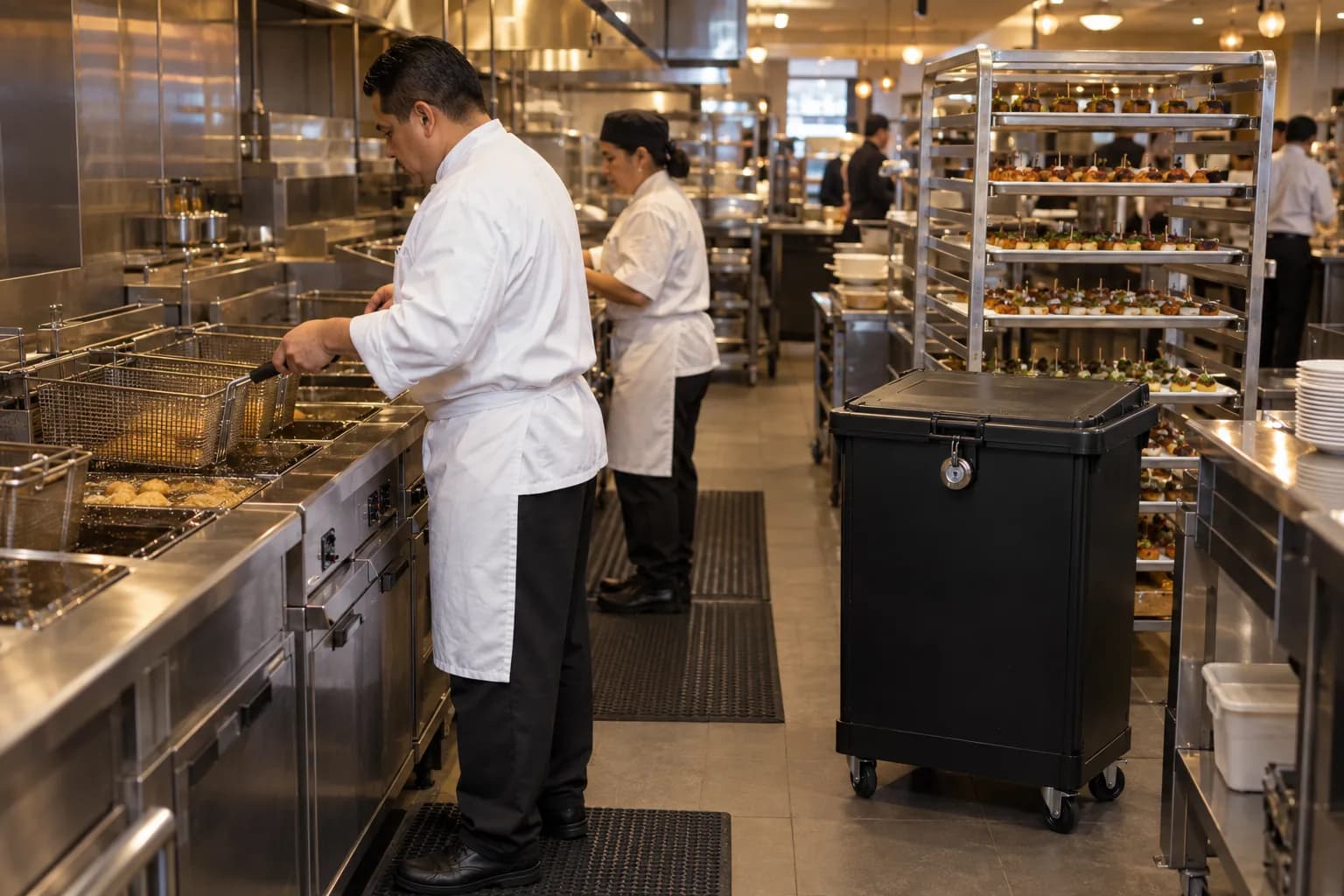
Your kitchen. Deep fryers heat oil to roughly 350°F. Over 8 to 24 hours of frying, the oil absorbs flavors, picks up food particles, and degrades in quality. Your kitchen team transfers it into a 45, 100, or 200 gallon collection container provided by your hauler.
-
Your collection container. The locked, sealed steel container sits in your back lot, alleyway, or designated waste enclosure. Depending on volume, it fills over days, a week, or two weeks until your hauler arrives on the scheduled pickup day.
-
The hauler's truck. A vacuum truck consolidates pickups across 15 to 40 restaurants on a single route day. Every pickup generates a digital CDFA-compliant manifest documenting date, gallons collected, hauler registration, and destination.
-
Aggregation facility. The hauler delivers consolidated route volume to a licensed aggregation facility where the combined load is stored in larger tanks, tested for FFA and MIU, and filtered as needed. Aggregation sites typically hold tens of thousands of gallons in working inventory.
-
Biodiesel refinery or renewable diesel producer. Tanker loads from aggregation move to biodiesel refineries (which produce biodiesel through transesterification), renewable diesel producers (which use hydroprocessing for drop-in diesel and sustainable aviation fuel), oleochemical manufacturers, or rendering facilities.
-
End product. Your used cooking oil becomes biodiesel blended into California's diesel supply, renewable diesel for fleet vehicles and aviation, fatty acid derivatives for industrial chemicals, or other fully recycled outputs.
The entire chain is regulated, documented, and traceable. RIN credits are generated at the refinery step based on verified feedstock origin. LCFS credits are claimed based on lifecycle carbon intensity calculations tied back to the source.
Major California Producers and Buyers in the Recycling Chain
California has one of the densest networks of rendering facilities, biodiesel producers, and renewable diesel refineries in the country. The recycling supply chain that ends at your back door includes:
- Rendering facilities, companies like Baker Commodities and Darling Ingredients operate rendering plants across the state that process yellow grease alongside animal fats and other byproducts.
- Biodiesel producers, California and neighboring states host biodiesel refineries that pull yellow grease feedstock from California aggregation sources.
- Renewable diesel refineries, producers in California and the Pacific Northwest hydroprocess yellow grease into drop-in renewable diesel for fleet vehicles and sustainable aviation fuel.
- Export channels, some California yellow grease reaches international biofuel producers through port facilities.
Your restaurant's oil potentially becomes fuel running in a transit bus in Oakland, a delivery truck in Long Beach, or an aircraft departing LAX burning sustainable aviation fuel. The recycling supply chain is real, regulated, and tracked.
What This Means for Your Restaurant's Cooking Oil Decisions
The practical takeaways for a California restaurant operator:
- Free pickup is the market standard. Any CDFA-registered hauler should offer it. Per-pickup fees are a red flag about the operator, not a reflection of the market.
- CDFA registration is non-negotiable. Unregistered collection bypasses the regulated recycling supply chain. It also exposes your restaurant to compliance risk, you can be cited for using an unregistered transporter.
- Cleaner oil moves through the chain more efficiently. Keeping water out of your collection bin, keeping grease trap waste out, and not letting the container bake in direct sun for weeks all preserve oil quality.
- Consistent volume helps your hauler. Predictable weekly volumes are easier to route. Heavy seasonality can be accommodated with adjusted pickup frequency.
- Your manifest is an asset. Every pickup documented in your dashboard becomes a compliance record for FOG inspections, health department reviews, and CDFA audits.
- Brown grease and yellow grease are different services. Grease trap cleaning is a separate maintenance service with a separate fee. Used cooking oil pickup is free. Do not let a hauler bundle them into a single recurring charge.
How Oil Guyz Fits Into the Recycling Supply Chain
Oil Guyz operates as the CDFA-registered pickup layer of this supply chain across Southern California, Orange County, Los Angeles, San Diego, and surrounding communities. Restaurants schedule free recurring pickups, our team collects the oil into sealed containers on a scheduled route, and every pickup generates a digital chain-of-custody manifest. The collected used cooking oil then moves through the licensed aggregation and recycling pathway described above and ends as biofuel feedstock supporting California's renewable energy infrastructure.
For restaurants:
- No contracts, no monthly fees, no per-pickup charges
- Sealed containers sized to your kitchen, 45, 100, or 200 gallons
- Scheduled weekly, biweekly, or monthly pickups depending on volume
- Digital manifest emailed automatically after every pickup
- CDFA-compliant chain of custody from your bin to the end-product refinery
You stay focused on running the kitchen. The recycling supply chain handles the rest.
The Quiet Reality of Used Cooking Oil Recycling
There is no elaborate play in California's yellow grease recycling market. Your restaurant produces used cooking oil. A CDFA-registered hauler picks it up on a free, scheduled, documented basis. The oil moves through a regulated industrial chain that ends as biodiesel, renewable diesel, or sustainable aviation fuel powering California vehicles and aircraft. Your kitchen stays clean. Your manifests stack up. Your compliance file stays current.
Understanding the recycling supply chain does not change what you actually do day-to-day. But it does make you a more informed customer, one who can tell the difference between a manifest-documented operation running the proper compliance regime and an opportunistic hauler trying to charge for a service the established California market provides for free.