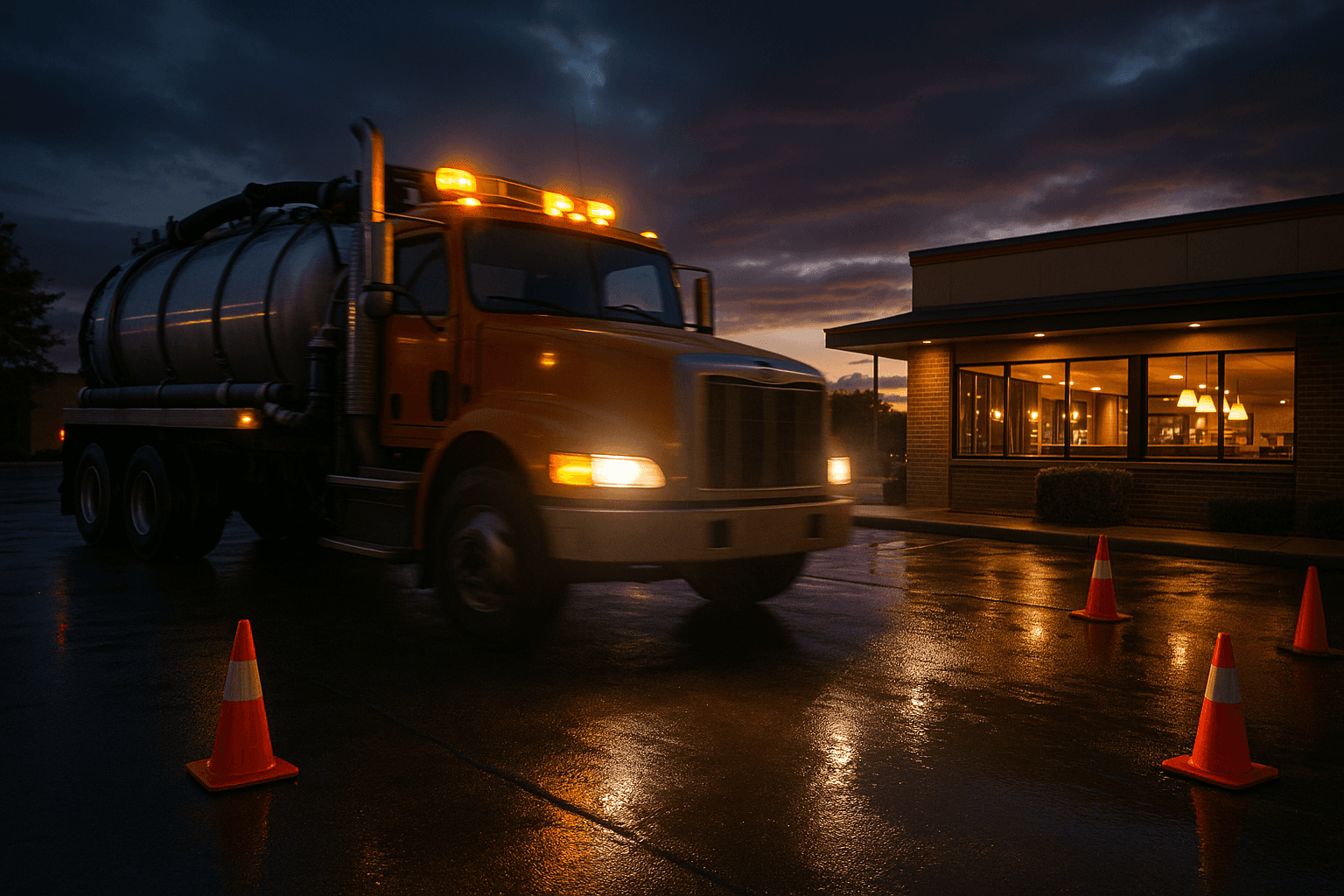
Emergency Grease Spill Response and Cooking Oil Pickup for Restaurants
Oil Guyz provides emergency grease spill response and used cooking oil pickup for restaurants across California and Puget Sound, WA. Call (714) 880-4788. An overflow, a lid that no longer closes, a surprise catering week, or a hauler that never showed. A real person picks up the phone, 24/7, and the emergency is worked against the routes already running that day. Service across Orange County, Los Angeles, San Diego, the Inland Empire, the San Francisco Bay Area, and Pierce, King, and Snohomish Counties in Washington.
Google rating
oil recycled, zero landfill
phones answered 24/7
“Oil Guyz are A+++!! We had 14 containers of used frying oil from our little league snack bar.”
Quick Answer
Emergency cooking oil pickup is an off-schedule collection booked when a commercial kitchen cannot wait for its next route stop, whether oil is on the ground, the container is at capacity, or a hauler no-showed. Oil Guyz answers the emergency line 24/7 across Orange County, Los Angeles, San Diego, the Inland Empire, the San Francisco Bay Area, and Pierce, King, and Snohomish Counties in Washington, and triages every call against the routes already running that day. For a customer on our service schedule the emergency costs nothing, because we are paid for the oil, not by you. Call (714) 880-4788 now, a real person answers day or night.
How Restaurant Oil Collection Works In 3 Simple Steps
Set up restaurant oil collection in about five minutes. We confirm your route the same business day and drop a free bin before your first pickup. After that, Oil Guyz handles every used cooking oil pickup on schedule. You never chase a hauler again.
Call & Triage
A real person answers 24/7, no phone tree. The coordinator works through five quick questions: access, fill level, spilled oil, normal volume, and site hours.
Priority Dispatch
The emergency is worked against the routes already running that day, using the nearest driver with capacity left, and you get a plain answer on what today can do.
On-Site Response
The container or grease trap is pumped out and the service area is contained and tidied before the driver leaves.
Documentation Filed
A manifest for the load and a photo service report land in your customer portal the same day, ready for an inspector, landlord, or insurer.
Prevention Review
We review what caused the emergency and, at no charge, tighten the service interval or swap in a larger container so it does not happen again.
Get Your Free Pickup Set Up
Tell us where your kitchen is. Free locked container, route started this week, no contract or minimum volume.
- Truly free. We are paid for the oil, not by you
- No contracts. Cancel anytime
- No minimum volume. Any kitchen size
- Free locked, anti-theft bin
- Compliant digital manifest after every pickup
- Instant confirmation, then a real person calls you
Request your free oil pickup
Free bin · No contract · Cancel anytime. You get an instant confirmation that we got it, then a real person calls to set up your pickup. No spam, no robocalls.
Prefer to talk? Call (714) 880-4788
What Counts as an Emergency
Not every full bin is an emergency, and a service that treats every full bin as one has nothing left for the commercial kitchens that genuinely need help today. Emergencies fall into four shapes. The first is oil already on the ground: a container that overflowed, a lid left open through a rainstorm, a caddy knocked over on a slope. The second is a container at capacity with the lid no longer closing, and a fryer due to be drained tonight. The third is a volume spike nobody planned for, from a catering contract, a holiday weekend, a street festival, or a second fryer brought online, so the container that fits a normal week does not fit this one. The fourth is a hauler no-show: the stop was on the calendar, nobody came, nobody called. That fourth emergency is the most common one this service takes from kitchens that are not customers yet, usually after a vendor quietly stopped returning calls. What does not qualify is a bin at two-thirds with the regular stop two days out. That is a sizing or cadence problem, and the fix is a bigger container or a tighter service interval, not a same-day dispatch. The coordinator will say so on the phone rather than roll a pickup that nobody needed.
- Oil on the ground from an overflow, an open lid, or a tipped container
- Container at capacity, lid no longer closing over tonight's fryer drain
- Volume spike from catering, a holiday, a festival, or a second fryer
- A hauler no-show with no phone call and no rescheduled stop
- An inspection or landlord deadline landing before the next route day
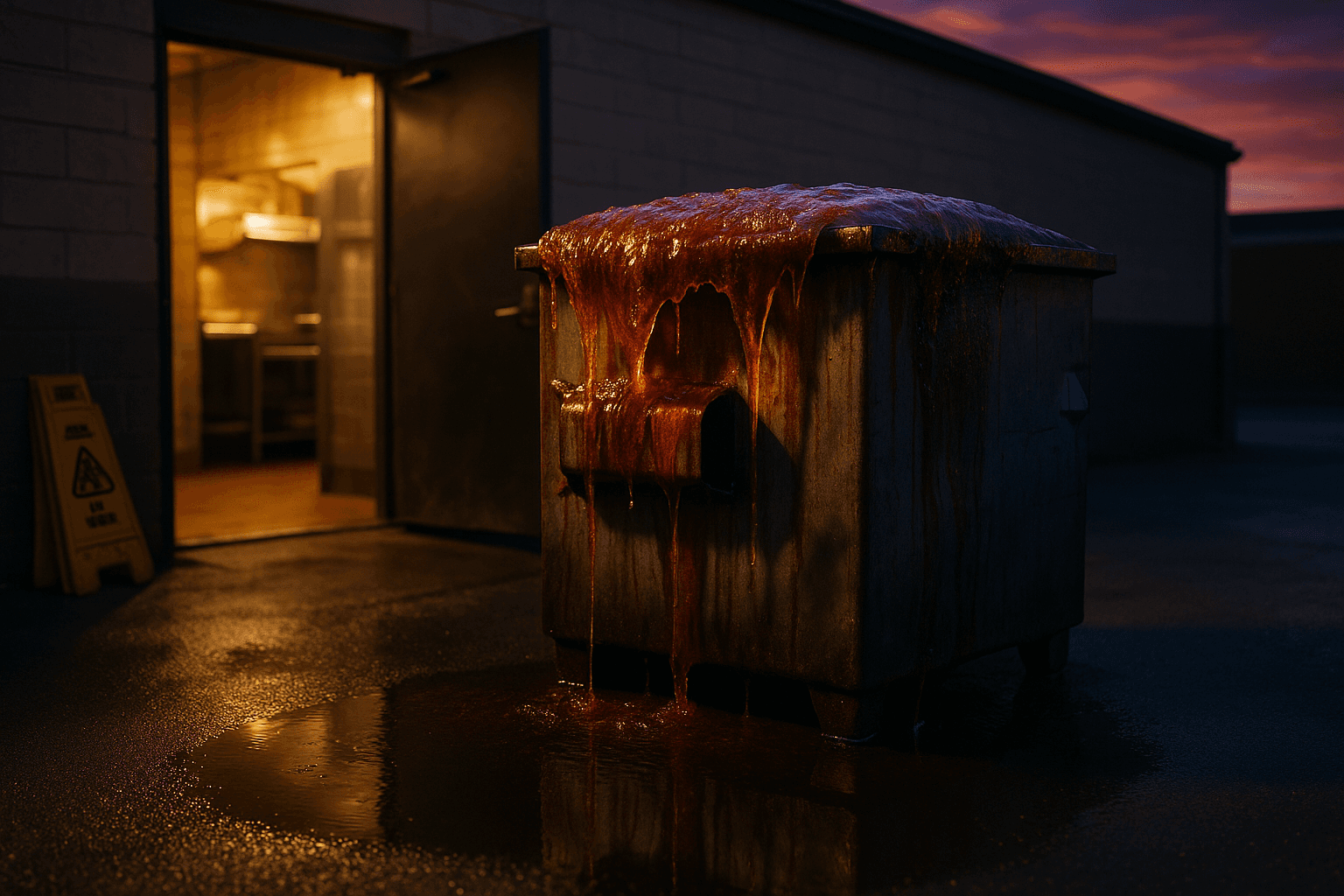
What Happens on an Emergency Call
Every emergency starts as a phone call, and a person picks it up, day or night, weekend or holiday. No phone tree, no voicemail, no callback queue. The coordinator works through five questions in about two minutes, because those five are what dispatch needs to place the stop. Where is the container, including the cross street and how a driver physically reaches it, since a bin behind a locked alley gate is a different job than a bin on an open lot. How full is it, measured the way a cook measures it: does the lid close, and how many inches from the rim. Is oil sitting outside the container, and is any of it moving. What is the normal weekly volume for this account, which separates a one-week surge from a container that has been undersized for months. And when is the site reachable, because an emergency that has to land before a four o'clock gate lock is a harder insert than one that can happen at six in the morning. The coordinator is not the person who decides how fast help arrives. Where the drivers already are decides that. What the coordinator does commit to is telling you where things actually stand while you are still on the line, and a call back the same business day if the picture changes.
- A real person picks up, 24/7, with no phone tree and no voicemail
- Five triage questions: access, fill level, spilled oil, normal volume, site hours
- A plain answer on the call about what today can and cannot do
- No account required, emergencies are taken from kitchens we do not serve yet
How Emergencies Are Triaged Against the Route
An emergency does not get its own truck. Priority dispatch means the emergency is worked against the routes running right now instead of dropped into next week. It does not mean somebody leaves the yard the second you hang up, and any company that quotes an arrival window before looking at its own routes is guessing. Routes are built the night before around geography and capacity, so a driver already a few miles away with room left is the cheapest possible insert, and that is the fastest an emergency can move. It slows when the nearest load is nearly full, because that load has to reach the licensed renderer, offload, and come back, and the round trip is usually the single biggest delay in this service. When nobody is working your market that day, the honest version is that you are first out next time, said plainly rather than leaving a kitchen waiting by the back door for help that was never coming. Emergencies also do not queue first come, first served. An emergency where oil is moving outranks a full but contained bin, because the contained bin is a scheduling problem while moving oil is a discharge problem. A kitchen open and cooking outranks one that is dark until Thursday. A site with a narrow access window is slotted inside that window or moved to the next morning, because arriving after the gate is locked helps nobody. The pickup itself is performed by a CDFA-registered transporter, and the load goes to a licensed renderer, where used cooking oil is recycled into feedstock for biodiesel and renewable diesel. Every stop, emergency or routine, generates a manifest for the customer file.
- Worked against the routes already running today, not the next service cycle
- Nearest driver with capacity left is the fastest possible outcome
- A nearly full load means an offload at the renderer first, the usual delay
- Moving oil outranks a contained bin, an open kitchen outranks a closed one
- Access windows respected, including gate locks and early-morning-only lots
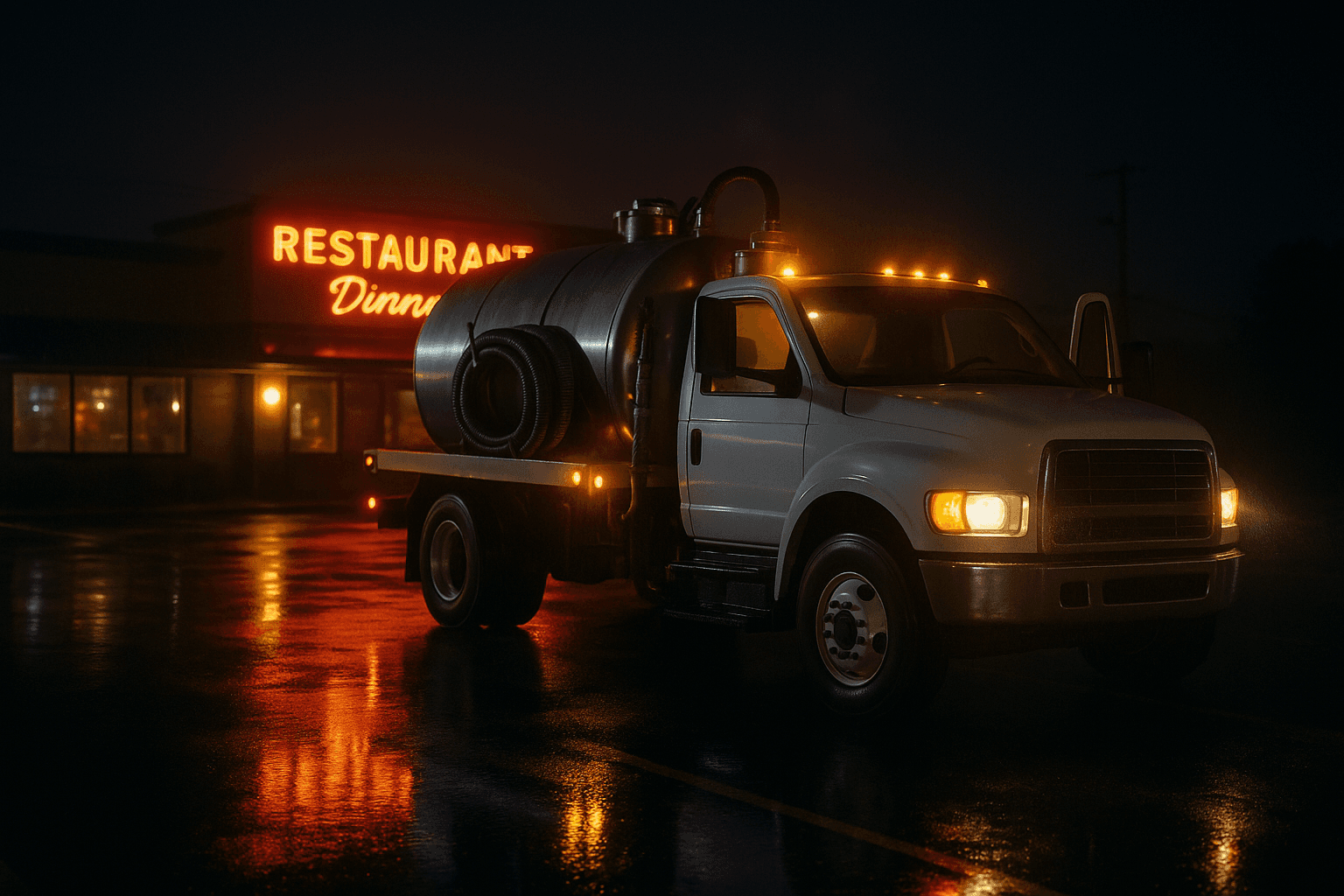
Containing an Emergency Before Help Arrives
Every emergency has a window before anyone reaches the site, and what the kitchen manager does inside it decides how big the problem gets. The coordinator walks a customer through this on the call. Stop draining fryers into the affected container and hold the next batch in a covered pot, well away from any walkway. Stop running water through anything tied to the affected trap. Then contain it: block a downhill storm inlet first, ring the outside edge of the oil with absorbent, and work inward, because sweeping from the middle outward is how a small emergency becomes a large one. Cone or tape the area off, since used cooking oil on a concrete slab is one of the slipperiest surfaces in the back of house and a fall there is a worse problem than the oil. The one move that turns a routine emergency into an expensive one is washing oil into a drain. That converts a cleanable spill into a discharge a sewer or stormwater authority can cite, and it turns a free service call into a plumbing invoice. Photograph the scene for your own file, then leave everything you spread down where it is. The driver takes it with the load.
- Stop draining fryers into the container, hold the next batch covered and aside
- Block any downhill storm inlet before touching the oil
- Ring the edge with absorbent and work inward, never outward
- Cone the area off, used cooking oil on concrete is a real fall hazard
- Never hose it down or push it into a drain, sewer authorities cite that
- Photograph the scene, then leave the cleanup material for the driver
What an Emergency Costs, and the Review After
Most commercial waste hauling is billed monthly whether the container fills or not. Used cooking oil recycling runs the other way, and for a commercial kitchen already on our service schedule an emergency pickup is free, exactly like the routine one. That is not a promotion. Used cooking oil has value at the renderer, so we are paid for the oil, not by you, which is the same reason there is no contract, no monthly fee, and no charge for the locked container. Pricing only enters when the job is bigger than a pump-out, meaning a spill that needs containment and cleanup labor. When that happens the coordinator quotes the number on the call, before anyone is dispatched, and the number does not move afterward. There is no night, weekend, or holiday surcharge. The work does not end when the container is empty, either, because a second emergency for the same reason is a failure on our side, not the customer's. If the container filled early, the service interval tightens. If it is undersized for the current fryer load, a larger one is swapped in at no charge. If it was damaged or leaking, it gets replaced. The account keeps a service report with photos, volumes, and times, plus the manifest for that load, in the customer portal. California sets the minimum retention for those manifests at two years under 3 CCR 1180.24; holding them for two years is company policy, so the record is still there long after anyone thinks to ask for it.
- No charge for the pickup itself on a scheduled service account
- Cleanup scope quoted on the call, before dispatch, and never revised upward
- No night, weekend, or holiday surcharge
- Free upsize or replacement when the container was the cause
- Photo service report plus the manifest for the load, in the customer portal
- Interval and container review so the same emergency does not repeat
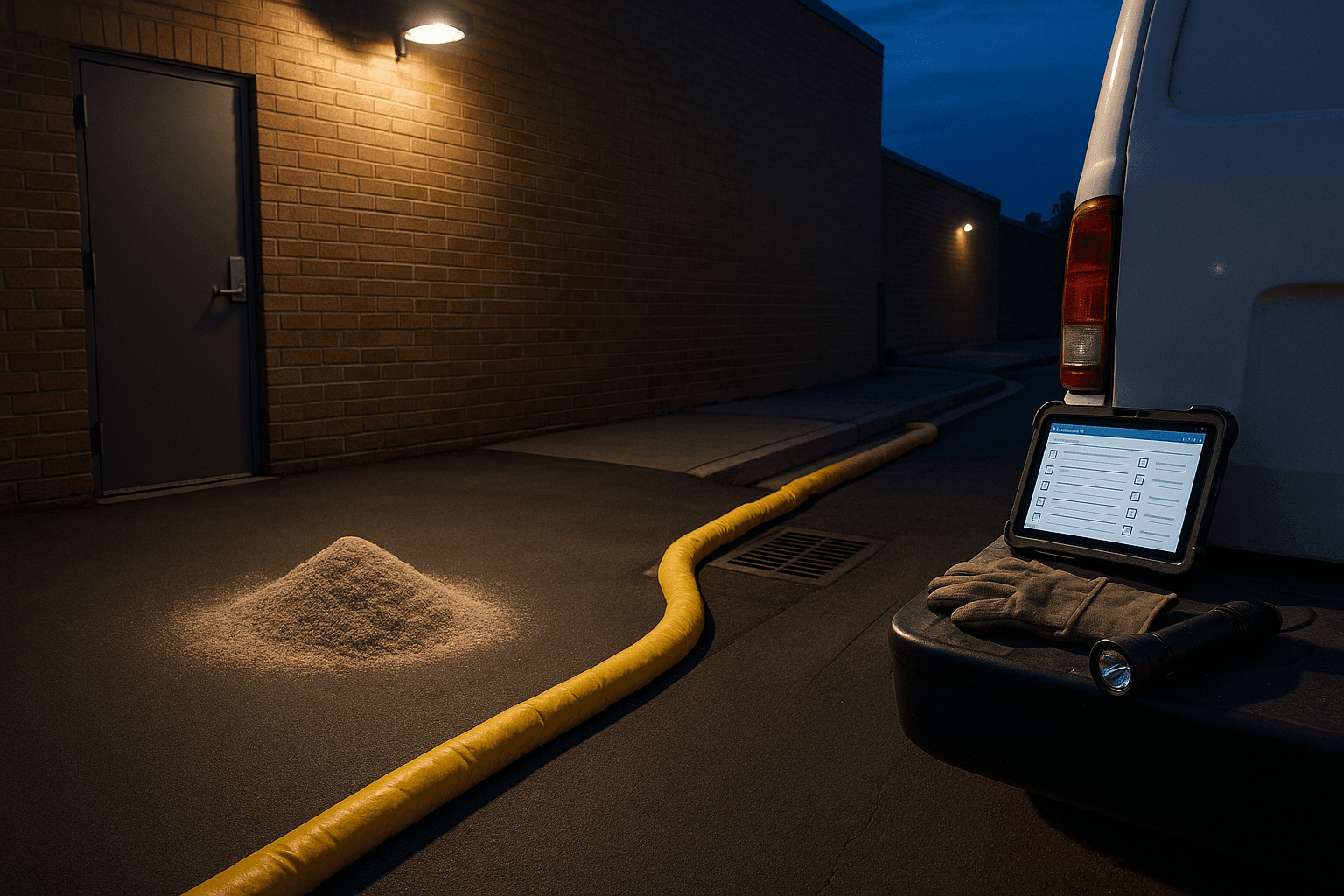
What's Included
Everything you need, nothing you don’t.
- Emergency line answered by a real person, 24/7, including holidays
- Two-minute triage with a plain answer on what today can do
- Priority placement against the routes already running that day
- Full pump-out of the container or grease trap on arrival
- Containment and tidy-up of the service area
- Replacement or larger container on the same visit at no charge
- Manifest for the load and a photo service report in the customer portal
- Interval and container review so the same emergency does not repeat
- No contract, no monthly fee, and no after-hours surcharge
Frequently Asked Questions
Four shapes. Oil already on the ground. A container at capacity with the lid no longer closing over tonight's fryer drain. A volume spike nobody planned for, from a catering run, a holiday weekend, or a second fryer coming online. Or a hauler no-show that left a scheduled stop uncollected with no phone call. A bin at two-thirds with the regular pickup two days away is not an emergency, it is a sizing or cadence problem, and the coordinator will say so rather than roll a service call nobody needed. Emergencies are taken from commercial kitchens that are not customers yet, including operators whose current vendor simply went quiet.
It depends on where the drivers are when you call, and you will hear that on the phone rather than a made-up window. An emergency moves fastest when a driver is already working near you with room left for your oil. It slows when the nearest load is nearly full and has to offload at the licensed renderer first, or when nobody is running your market that day, which makes you first out next time. We will not promise an arrival time nobody controls, and if the picture changes after you hang up you get a call or a text instead of silence. For a new account with no emergency in progress, the first scheduled pickup normally lands 3 to 5 business days out.
On a scheduled service account it is free, exactly like the routine pickup. We are paid for the oil at the renderer, not by you, which is also why there is no contract and no monthly fee. Pricing only enters when the work is bigger than a pump-out, meaning a spill that needs containment and cleanup labor. The coordinator quotes that number on the call, before anyone is dispatched, and it does not move afterward. There is no night, weekend, or holiday surcharge, and nothing gets added to the invoice after the fact.
Yes. Phones are answered 24/7 by a real person, every day of the year, and a holiday emergency is triaged the same way a Tuesday one is, at the same price. Being answered is not the same as being dispatched instantly, though. Fewer routes run on a holiday, so the coordinator will be blunt about what that day can and cannot do rather than let a kitchen plan a dinner service around help that is not coming.
Contain it, do not move it. Stop draining fryers into the container and stop running water through anything tied to it. Block a downhill storm inlet before touching the oil. Ring the edge with oil-dry or cat litter and work inward. Cone the area off, because used cooking oil on concrete is a genuine fall hazard for staff carrying hot pans. The one thing that turns a manageable emergency into an expensive one is washing oil into a drain, which is a discharge a sewer or stormwater authority can cite you for. Photograph the scene, then leave it all in place for the driver to take with the load.
Yes. Every stop, emergency or routine, produces a manifest for the load plus a service report with photos, volumes pumped, and times, both filed in the customer portal. That pair is the compliance record a health inspector, a landlord, or a property manager actually asks for, and it is the proof the oil reached a licensed renderer rather than somewhere it should not have. California sets the minimum manifest retention at two years under 3 CCR 1180.24. Keeping two years is our own company policy, so the record outlives most of the questions about it.
No. It is dispatched as a separate stop and the next scheduled pickup stays on its normal day and time. What changes is the account review afterward. If the service interval caused the emergency, we propose a tighter one. If the container size caused it, a larger one is swapped in at no charge. Nothing on the account moves without your approval first.
Eight markets in all: Orange County, Los Angeles, San Diego, the Inland Empire, the San Francisco Bay Area, and Pierce, King, and Snohomish Counties in Washington. If your business sits just outside one of those lines, call anyway. The coordinator can see where the drivers are and will tell you straight whether we can reach you. If we cannot, you get a plain no on the call instead of a maybe that leaves a kitchen waiting.
What Our Clients Say

Bryan Baird
Google review
“We are a medium sized institutional kitchen located in San Juan Capistrano. When we needed a certified oil and grease removal partner the Oil Guyz were there. Fantastic customer service, fast, reliable, quick follow up and very efficient. They make it super easy to leave a GREAT review!”See full review

Alex Camacho
Google review
“I'm an up and coming new food vendor and properly disposing of used frying oil was a difficult task. That is until I contacted the Oil Guyz! There webpage made it easy to setup their free service of oil pickup. Within a few days I had a free container to store the used oil until ready for the free pickup. This service is very convenient and Joey has been very accommodating to answer all my questions and facilitate the process.”See full review

Ujwal Chaudhary
Google review
“Great service from Oil Guyz! They came and picked up my full barrel of used cooking oil completely free of charge. The process was easy, quick, and professional. I really appreciate their excellent customer service and reliable pickup. If you have used cooking oil that needs to be collected, I definitely recommend Oil Guyz. Great company and great people! 👍”See full review

Nicholas Saccoccia
Google review
“Excellent experience with Oil Guyz! They got me on the schedule fast, showed up on time, were very professional, and were in and out in no time! I would absolutely use them again.”

LA BREAKFAST CASITA
Google review
“We’ve had a great experience with Oil Guyz! I submitted a quote request through their website for our restaurant, and Joey reached out to us right away. From our first conversation, he has been extremely helpful, patient, and responsive. Joey really made the whole process easy for us. He was willing to work with our team on the best location for the bin, answered all of our questions, and kept in touch to make sure everything was taken care of. I especially appreciate his follow-through and willingness to help without ever making us feel rushed. Good customer service can be hard to find, and Joey has definitely made a great impression on us. We’re very happy we chose Oil Guyz for our used commercial oil pickup service at LA Breakfast Casita in Azusa, CA. Thank you, Joey, for making the process so smooth and for taking such good care of us. We look forward to working with Oil Guyz for a long time!”See full review

Mike Fishman
Google review
“Superb service!”

Celso Bahena
Google review
“I’m in the Santa Ana area great reliable service!”

Myk Espinoza
Oakland Ballers · Oakland, CA · Google review
“These dudes really bailed me out of a tough situation. My previous oil collection service had been really screwing me over. Spent 4 weeks of unanswered phone calls, texts, and empty promises with a company we've been using for two years just to get a used oil recepticle, all to no avail. We were sitting on 6 fryers with of oil I that I had nowhere to put. Called Joey and The Oil Guyz and he got me set up just a few hours later. Used oil container, service agreement, answered all of my questions. We're running a very odd program where our schedule is all over the place, so having a "regular" pick up schedule is out of the question. We worked out a way for quick/easy retrieval in about 5 minutes. Can't recommend these guys enough.”See full review

Maryam Tngrian
Google review
“As a manufacturing bakery, we recently needed a one-time pickup of approximately 3,000 lbs of used donut oil. Unfortunately, there was very little information available regarding the company that had handled this service previously, so I had to start from scratch. I found Oil Guyz online and was impressed from the first conversation. Joey, the owner, was extremely helpful and took the time to walk me through the entire process, making the coordination simple and straightforward. Prior to contacting Oil Guyz, I had attempted to reach other providers and had difficulty getting assistance. Oil Guyz was responsive, accommodating, and easy to work with from start to finish. The pickup was completed within the timeframe communicated, and the team handled the removal seamlessly with no disruption to our operation. Their professionalism and customer service made what could have been a challenging process very easy. We would absolutely use Oil Guyz again and would recommend them to other food manufacturing facilities looking for a reliable used cooking oil recycling partner.”See full review

Kengo Kido
Google review
“Joey took care of our needs quickly, efficiently and professionally. I highly reccoemnd his service to anyone!”

Brenda Wu
Google review
“Prompt response from Joey. Great service with problem solving. Highly recommended!”

Camille Bamford
Google review
“Fast and great to work with!”
Related Resources
Guides
Free Tools
- Grease Trap Calculator
Find your recommended pumping frequency
- Compliance Checker
Check if you meet California grease requirements
Emergency Grease Service Across Our Service Markets
We run scheduled routes through every kitchen in the markets below. Click your region for the local route schedule, the direct line for that market, and the cities we cover.
- Orange CountyCA
Anaheim to San Clemente, countywide
Compliance: CDFA-IKC
View Orange County details - Los AngelesCA
LA County from Downtown to the South Bay
Compliance: CDFA-IKC
View Los Angeles details - San DiegoCA
San Diego County from Oceanside to Chula Vista
Compliance: CDFA-IKC
View San Diego details - Inland EmpireCA
Riverside, San Bernardino, Ontario, Corona and beyond
Compliance: CDFA-IKC
View Inland Empire details - Bay AreaCA
Fremont, Oakland, San Francisco, San Jose and the East Bay
Compliance: CDFA-IKC
View Bay Area details - TacomaWA
Tacoma, Lakewood, University Place, Puyallup, Fife
Compliance: WA-FOG
View Tacoma details - King CountyWA
Seattle, Bellevue, Kent, Renton, Federal Way and King County
Compliance: WA-FOG
View King County details - Snohomish CountyWA
Everett, Marysville, Edmonds, Lynnwood, Lake Stevens
Compliance: WA-FOG
View Snohomish County details
Emergency Grease Service by City
We provide emergency grease service to restaurants and commercial kitchens across Orange County, Los Angeles, San Diego, the Inland Empire, the Bay Area, and Pierce, King, and Snohomish Counties in Washington. Every county hub lists the full route coverage.
Emergency Grease Service in Tacoma15 cities
See the Tacoma hub below for every community on the route.
See all 15 Tacoma citiesEmergency Grease Service in King County31 cities
See the King County hub below for every community on the route.
See all 31 King County citiesEmergency Grease Service in Snohomish County15 cities
See the Snohomish County hub below for every community on the route.
See all 15 Snohomish County citiesNeed an Emergency Cooking Oil Pickup? Call Now, a Real Person Answers
Bin overflowing, lid not closing, or a hauler that never showed? Call or send the form and the coordinator will tell you straight what today can do. No contract, no fee for the pickup, free locked container.
Or call (714) 880-4788 and talk to a real person today.