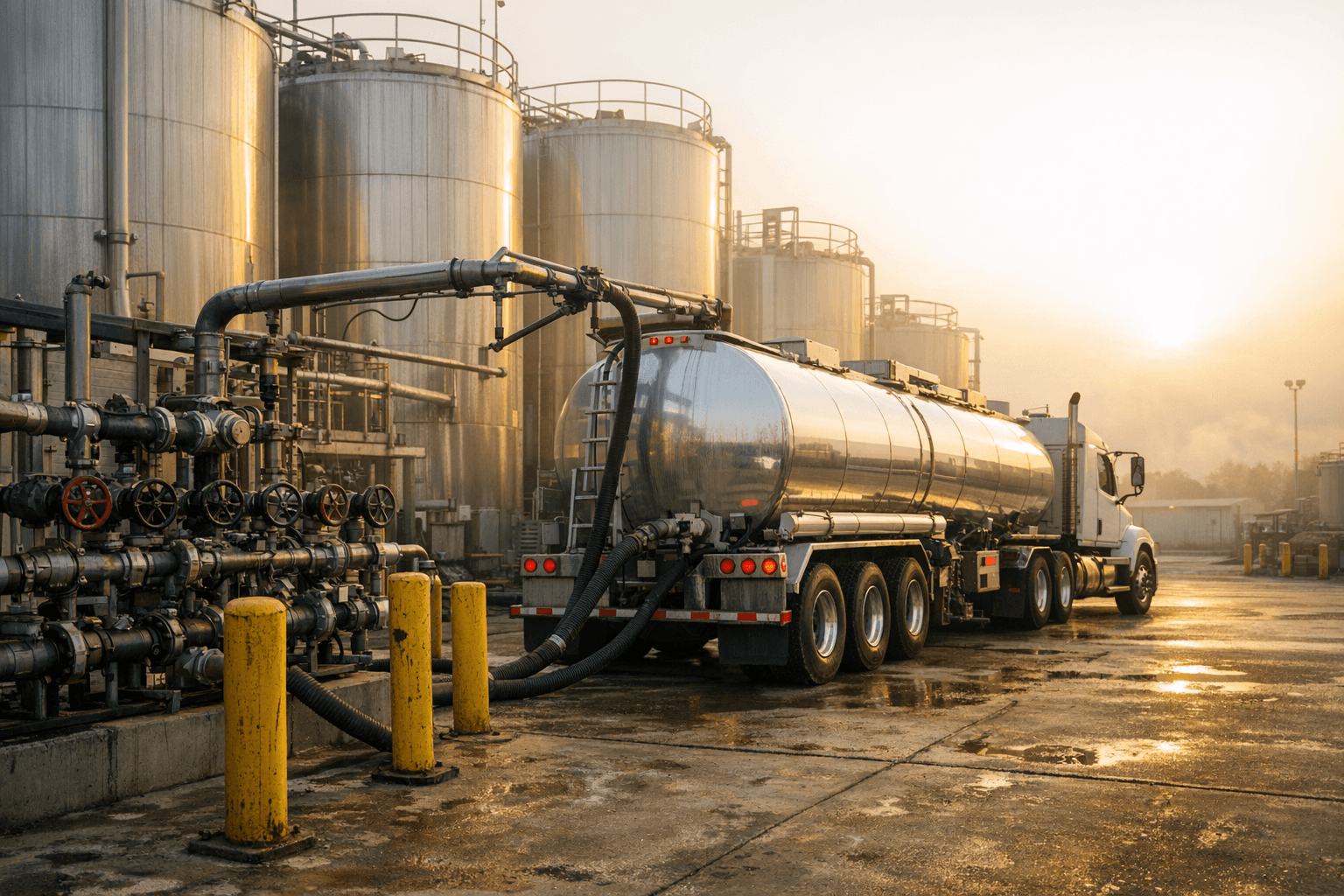
Biodiesel Feedstock Collection, Documented Kitchen by Kitchen
Oil Guyz supplies documented used cooking oil feedstock, collected from commercial kitchens across California and Puget Sound, WA, to biodiesel and renewable fuel producers. Call (714) 880-4788. Every gallon of biodiesel starts as used cooking oil in a commercial kitchen. Oil Guyz collects it across Orange County, Los Angeles, San Diego, the Inland Empire, the San Francisco Bay Area, and Pierce, King, and Snohomish Counties in Washington, and every load leaves on a signed manifest naming the kitchen it came from.
Quick Answer
Biodiesel feedstock collection is how used cooking oil becomes biodiesel. A licensed transporter pumps the container, a manifest documents the load, and a licensed renderer processes it. Anyone making biodiesel buys on free fatty acid, on moisture, and on an origin record naming every kitchen a load came from.
Get Your Free Pickup Set Up
Tell us where your kitchen is. Free locked container, route started this week, no contract or minimum volume.
- Truly free. We are paid for the oil, not by you
- No contracts. Cancel anytime
- No minimum volume. Any kitchen size
- Free locked, anti-theft bin
- Compliant digital manifest after every pickup
- Instant confirmation, then a real person calls you
Request your free oil pickup
Free bin · No contract · Cancel anytime. You get an instant confirmation that we got it, then a real person calls to set up your pickup. No spam, no robocalls.
Prefer to talk? Call (714) 880-4788
Biodiesel Is Only as Provable as the Kitchen It Came From
Biodiesel is a domestically produced renewable fuel made from vegetable oils, animal fats, or recycled restaurant grease (DOE Alternative Fuels Data Center, Biodiesel). Recycled restaurant grease is what this page is about. Nobody sets out to produce it. Used cooking oil accumulates thirty gallons at a time behind restaurants, in a container belonging to whoever signed that kitchen up, and it turns into biodiesel only if somebody collects it before it degrades, keeps trap waste out of it, and can still prove years later which kitchen it came from. A plant buying feedstock is not really buying oil. It is buying the collection system standing behind the oil, and when that system is a chain of brokers, whoever makes the biodiesel inherits every gap in it.
A plant making biodiesel prices a load on one number before any other: free fatty acid. Those acids react with the alkali catalyst used in biodiesel production and turn into soap instead of biodiesel (Used and Waste Oil and Grease for Biodiesel), so the acid figure sets the process before anything else about the load matters. Below roughly 3 to 4 percent, most producers add extra catalyst, let the acids convert to soap, and pull the soap back out. Past that, the feedstock needs acid esterification down under 1 percent before the main reaction is worth running. Same tank, same gallons, a different cost to turn them into biodiesel. Hydrotreating plants making renewable diesel tolerate a wider band, but they pay for it in hydrogen and catalyst life instead of in a separate process step.
The other half of the purchase never shows up in a reactor. It shows up in an audit. Under the Renewable Fuel Standard, biogenic waste oils, fats and greases are an approved biodiesel feedstock (EPA Renewable Fuel Standard, Approved Pathways), running the D4 biomass-based diesel pathway and D5 when co-processed with petroleum. Getting the D-code right is the easy part. Federal recordkeeping then requires a producer to hold documents showing the amounts by weight purchased and the location of the establishments a waste stream was collected from (40 CFR 80.1454, Recordkeeping for Renewable Fuel Producers), for five years from the date the record was created. The Clean Fuel Production Credit added a provenance test on top of it: fuel sold between January 1, 2025 and December 31, 2029 qualifies, and fuel produced after December 31, 2025 has to be exclusively derived from feedstocks produced or grown in the United States, Mexico, or Canada (IRS Clean Fuel Production Credit, Section 45Z), with registration in place at the time of production rather than reconstructed later. Feedstock bought from a trader who bought from a consolidator cannot answer an address-level question, and no stack of affidavits turns commingled gallons back into a traceable stream.
D4
the RFS pathway waste oils run as biomass-based diesel
3 to 4%
free fatty acid, where biodiesel feedstock needs pretreatment
5 years
federal retention on the origin records behind every RIN
What a Plant Making Biodiesel Is Actually Buying
Three things, in this order: a spec the plant can run without changing anything, a cadence that matches how fast the receiving tank turns, and a paper trail that survives being read years later. The spec conversation is shorter than people expect. Free fatty acid sets the pretreatment question, and nothing else comes close to it for how much biodiesel comes out of a batch. Moisture is dead weight on feedstock sold by the pound, and it keeps splitting more acid off the fat while the load sits, so it charges twice. Insolubles and unsaponifiables fill out the MIU fraction, the share of a delivery that will never become biodiesel no matter what the plant does to it. Polymerized material, filter pads, food solids and cleaning chemistry are a different category of problem, because those stop being an economics question and start being a maintenance question. What experienced buyers of biodiesel feedstock actually chase is variance rather than average. A supply that averages a good number but swings four points between deliveries forces a plant to test and segregate every receipt, and that costs more than a slightly worse spec landing in the same place every single time. Testing happens at the receiving facility on arrival, the spec and the rejection terms live in the supply agreement, and nobody serious guarantees a number on a web page.
- Free fatty acid decides whether a batch of biodiesel runs conventionally or needs pretreatment
- Moisture prices as dead weight and keeps generating more acid in storage
- MIU is the fraction of a delivery that will never convert to biodiesel
- Variance between loads costs a plant more than a slightly lower average
- Spec, test method and rejection terms belong in the agreement, not in marketing copy
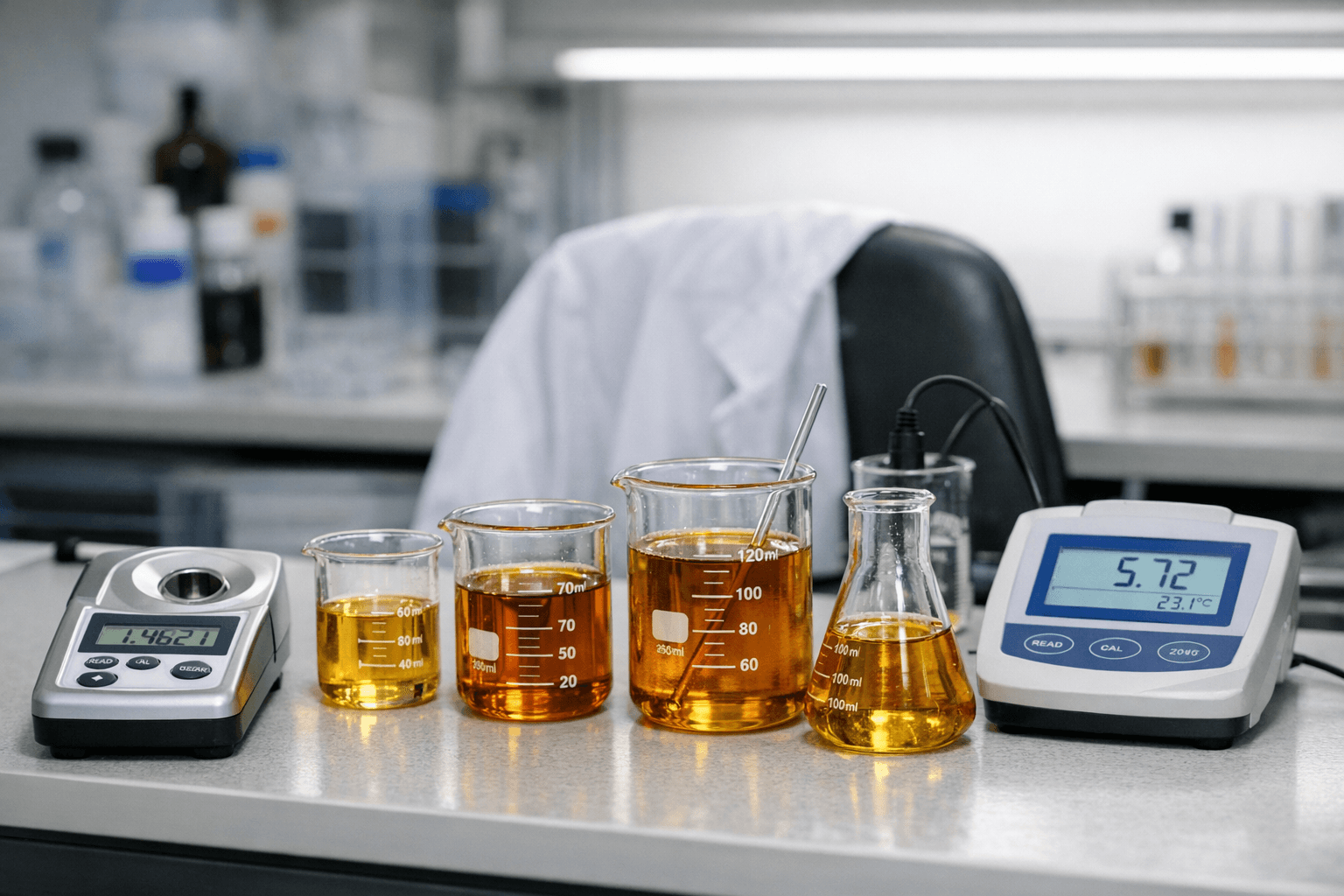
Why Aggregating Restaurant Oil Into Biodiesel Feedstock Is Hard
A kitchen running four to six fryers on a three to five day change fills a 150-gallon container in one to two weeks. That is the unit of supply, and it is why the volume behind a biodiesel supply deal is really a count of active service relationships rather than a routing exercise. Each one carries an address, a back-of-house contact who turns over twice a year, a gate code or a shared alley or a two-hour window when the lot is not blocked by a delivery truck, and a container that has to be sized right or it overflows before the route comes back around. Grade is decided inside that kitchen, before any truck arrives. A lid left open in the rain, a filter pad dropped in, a mop bucket emptied on top, interceptor waste poured in on a busy night by somebody who did not know the difference: each one moves the number a plant making biodiesel is going to test on arrival. None of that is solvable with better dispatch software, which is why collection is a service business first and a transport business second. Then there is churn, because restaurants close, change hands, and get called by three competing collectors a month. Holding the network together is the actual work behind a feedstock commitment. Ours grows because the service costs the kitchen nothing, the locked container is free, and no contract holds anybody in place, so accounts stay for the service instead of the paperwork.
- Biodiesel feedstock volume is a count of active kitchens, not a routing problem
- A four to six fryer kitchen fills a 130-gallon container in one to two weeks
- Grade is set at the source, before a transporter ever arrives
- Container sizing and cadence are what keep a load clean and full
- Free pickup, a free locked container and no contract are why the network keeps growing
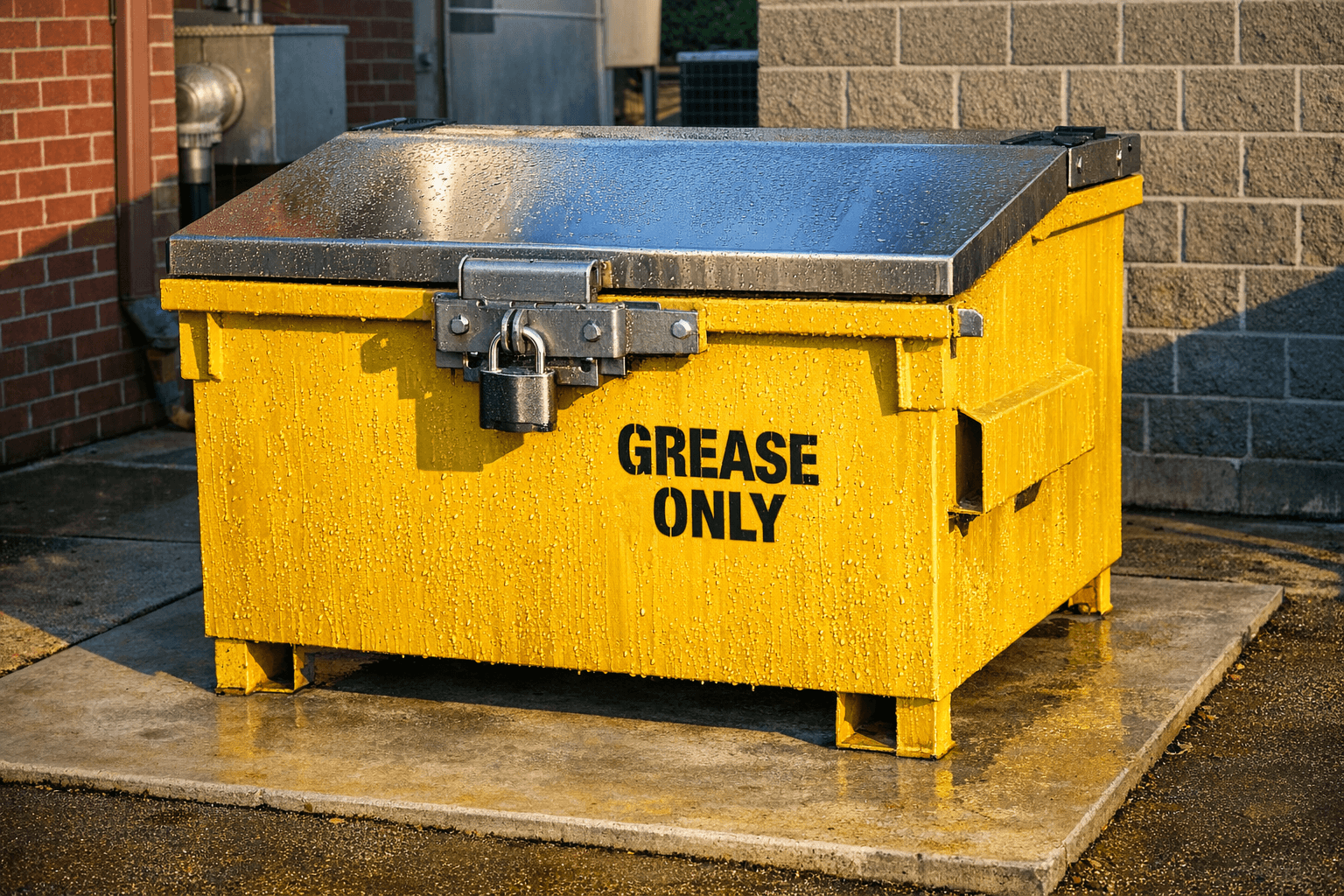
The Manifest Behind a RIN-Qualified Biodiesel Load
California writes down exactly what a collection record has to contain, and the fields line up almost one for one with what a producer of biodiesel needs upstream. Every commercial load carries the transporter name, the generator name and address, the date and time of collection, the type of grease stated in writing as used cooking oil rather than interceptor and trap grease, the amount collected in pounds or gallons, the printed name and signature of the driver, the receiving facility name and address, the date, time and amount received, a signature at that facility, and a consecutive manifest number (CCR Title 3 §1180.24, Inedible Kitchen Grease Manifests). Consecutive numbering carries more weight than it looks like it does, because a gap in the sequence is what makes a missing load visible. Two years is the legal retention floor, for the transporter and the receiving facility both. Two years is our own company policy, not a rule anybody imposed on us. Set that field list beside the federal requirement to document amounts by weight and the location of the establishments a waste stream came from, and the overlap is the whole point: the upstream half of a biodiesel feedstock file gets created at the moment of pickup and signed by two parties, rather than reconstructed from purchase invoices two years later. Pickups are performed by CDFA-registered transporters and loads are received by a licensed renderer, and the state publishes its licensed transporter list publicly (CDFA Inedible Kitchen Grease Transporter List), so a buyer can verify a decal without asking us for anything.
- Generator name and address recorded on the load itself, not on a summary
- Grease type stated in writing, so used cooking oil is never blended with trap waste
- Consecutive numbering makes a missing load visible
- Two-year legal minimum retention, two years archived as company policy
- Transporter licences are verifiable on the state list without going through us

Price Basis, Cadence, and How Biodiesel Feedstock Terms Get Written
Collected fryer oil has real price discovery, which keeps this negotiation shorter than most commodity conversations. USDA Market News quotes yellow grease weekly in cents per pound by region in its National Animal By-Product Feedstuff Report (USDA National Animal By-Product Feedstuff Report), with California regions quoted separately from the Pacific Northwest, and each split between an FOB basis at the collection point and a delivered basis, because freight is a meaningful share of value on a heavy, low-density liquid. Both sides can index to a published number instead of arguing about what is fair this month. Cadence works backward from your tank turns and your storage, not from what is convenient for a route, and loads move under manifest with a licensed transporter to a licensed renderer. Volume, spec, test method, rejection terms, basis and delivery rhythm all belong in a written supply agreement, and we would rather tell you what we can commit to and by when than quote a number we cannot hold. Tell us what your biodiesel plant runs on and what the receiving tank turns in a week. A real person answers our phone at any hour, callbacks go out the same business day, and the form does the same job if you would rather put it in writing.
- Yellow grease is quoted weekly in cents per pound by region by USDA Market News
- FOB at the collection point or delivered, because freight moves the number
- Cadence set against your tank turns rather than route convenience
- Volume, spec, test method and rejection terms all live in a written agreement
- Phones answered around the clock by a real person, callback the same business day
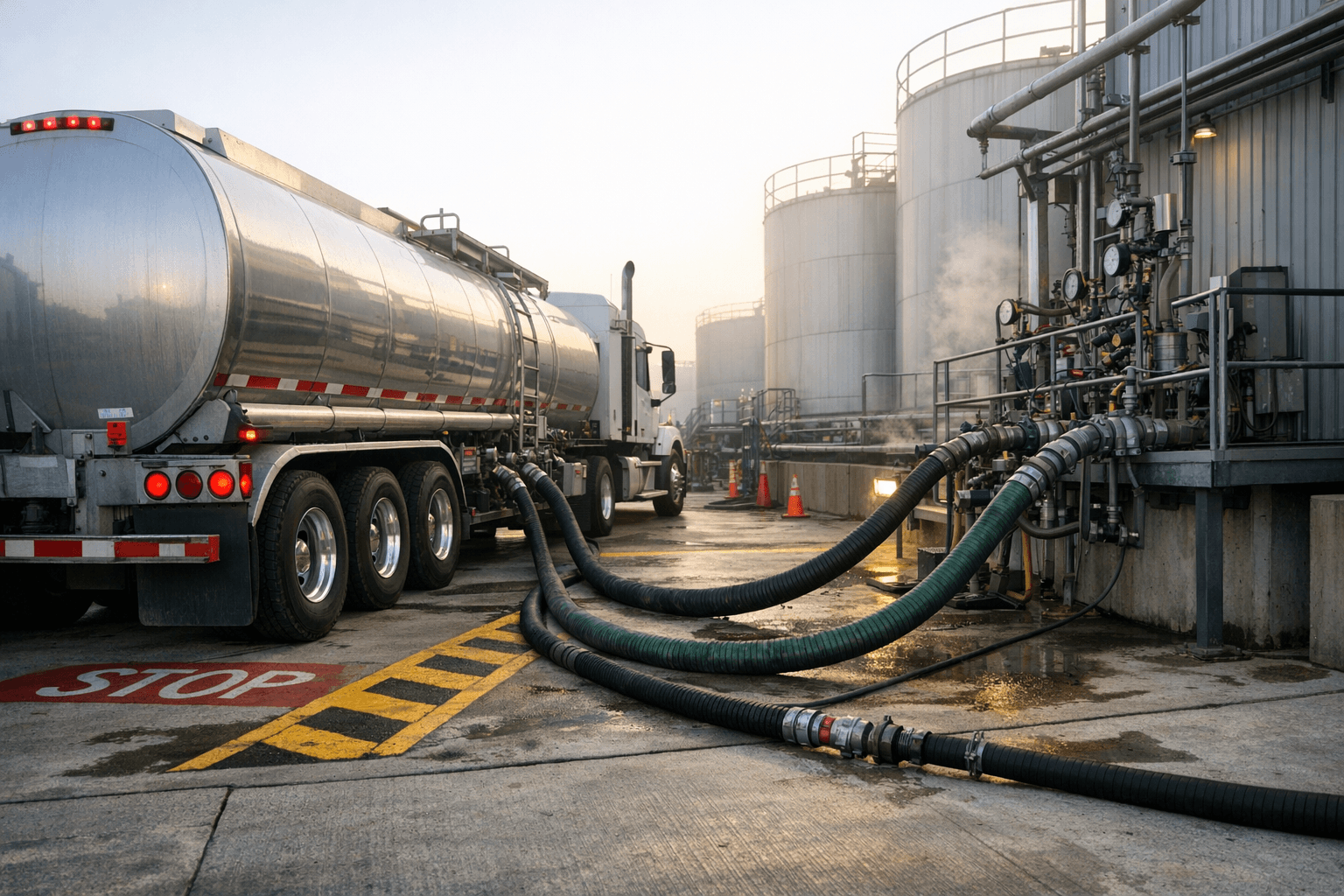
Carbon Intensity Is Where Waste Feedstock Separates From Crop Oil
Biodiesel made from soybean oil and biodiesel made from used fryer oil land in the same D4 biomass-based diesel category under the Renewable Fuel Standard, so the RIN code is not where the difference lives. It shows up in carbon accounting. California scores each fuel against a carbon intensity benchmark that declines every year, with fuels below the benchmark generating credits and fuels above it generating deficits (California Low Carbon Fuel Standard), which puts a price on the lifecycle number rather than on the feedstock label. Renewable diesel, most of it produced from fats, oils and greases, reduces carbon intensity on average by 65 percent compared with petroleum diesel and meets the ASTM D975 specification (DOE Alternative Fuels Data Center, Renewable Diesel), so it moves through existing infrastructure and engines unmodified. Waste feedstock also behaves differently on price, because it is not tracking planted acreage or an export market the way soybean and canola oil do. The tradeoff is honest and worth saying out loud: collected kitchen feedstock arrives more variable than a refined crop oil, and that variability is managed at the kitchen or it is not managed at all.
- Crop oil biodiesel and waste oil biodiesel share the same D4 RIN category
- Carbon intensity, not the RIN code, is where waste feedstock pulls ahead
- Drop-in fuel meeting ASTM D975 moves through existing engines and infrastructure
- Waste feedstock does not track planted acreage or crop export markets
- The cost of that advantage is variability, which is controlled at the source
Who Buys Biodiesel Feedstock This Way
Biodiesel Producers
FAME biodiesel plants running alkali-catalyzed batches, where free fatty acid content decides whether a delivery is a normal run or a pretreatment job.
Renewable Diesel Refiners
Hydrotreating facilities that tolerate a wider acid band but still need predictable cadence and origin records that hold up five years later.
Sustainable Aviation Fuel Producers
HEFA-pathway producers who need feedstock traced to the establishment it was collected from rather than to whichever consolidator sold it last.
Oleochemical Manufacturers
Fatty acid, glycerin and surfactant producers buying on grade, where MIU and polymerized material matter more than any fuel pathway.
Fleet and Municipal Biodiesel Programs
Public fleets and cooperatives running biodiesel blends that want to know which kitchens the feedstock came from before publishing a sustainability claim.
Process and Research Groups
Engineering and laboratory teams characterizing biodiesel feedstock, who need unblended samples with a documented collection history attached.
Biodiesel Feedstock Collected at the Source vs. Bought on the Spot Market
Origin Record
When Paperwork Is Created
Grade Protection
Material Separation
Retention
Price Basis
Counterparties
Scaling Supply
What's Included
Everything you need, nothing you don’t.
- Biodiesel feedstock collected directly from commercial kitchens, never bought from consolidators
- A signed manifest on every load, naming the establishment it came from
- Grease type recorded in writing, so used cooking oil is never blended with trap waste
- Consecutive manifest numbering, so a missing load shows up as a gap
- Establishment-level origin records for your five-year federal feedstock file
- Two-year legal retention met, two years archived as company policy
- Pickups performed by CDFA-registered transporters, loads received by a licensed renderer
- Spec, test method and rejection terms written into the supply agreement
- Price basis indexed to the published weekly market, FOB or delivered
- Delivery cadence set against your tank turns and storage
- Free locked container, free pickup and no contract on the kitchen side of the network
- Phones answered around the clock by a real person, callback the same business day
How Restaurant Oil Collection Works In 3 Simple Steps
Set up restaurant oil collection in about five minutes. We confirm your route the same business day and drop a free bin before your first pickup. After that, Oil Guyz handles every used cooking oil pickup on schedule. You never chase a hauler again.
Initial Inquiry
Tell us the spec your plant runs on, your D-code pathway, and what your receiving tank turns in a week. A real person answers the phone at any hour.
Spec & Volume Qualification
We review your free fatty acid and moisture requirements against the kitchen network we already service, and confirm the volume we can commit to.
Sample & Quality Check
A sample moves through the same collection and manifest process a live account uses, so your team can test it against your spec before anything is signed.
Logistics & Supply Agreement
Volume, spec, test method, rejection terms, price basis, and delivery cadence go into a written supply agreement built around your tank turns.
Ongoing Delivery With QA Documentation
Every load moves under a signed manifest naming the collection kitchen, with a CDFA-registered transporter and a documented chain of custody to your receiving facility.
Frequently Asked Questions
Collected fryer oil sits in the yellow grease band, meaning under 15 percent free fatty acid, and the number that matters to a FAME biodiesel plant is whether it clears the roughly 3 to 4 percent line where extra catalyst stops being enough and acid esterification becomes necessary. What determines where a load lands is upstream behavior: how long oil is held at temperature, whether salt and moisture from wet product are in it, and what else made it into the container. Moisture is the expensive half, because it is weight that never converts to biodiesel and it keeps generating more acid while the feedstock waits. We will not publish a guaranteed number here, and you should be skeptical of anyone who does. Spec, sampling, test method and rejection terms are negotiated into the supply agreement, testing happens at the receiving facility on arrival, and the honest promise is that we control grade where it is actually decided, which is at the kitchen.
Federal recordkeeping asks a renewable fuel producer to keep documents showing the amounts by weight of biogenic waste oils, fats and greases purchased, plus the location of the establishments that waste stream was collected from, and to keep those records five years from the date they were created. A California collection manifest already contains both halves. It names the generator and address, states the grease type in writing, records the amount in pounds or gallons, carries signatures from an on-site representative, the driver and the receiving facility, and runs a consecutive number so a gap is obvious. That means the upstream portion of a biodiesel feedstock file is generated at pickup and signed by two parties, rather than assembled later from purchase invoices that only prove a transaction happened. Under the Renewable Fuel Standard, biogenic waste oils, fats and greases run the D4 biomass-based diesel pathway, and D5 when co-processed with petroleum.
It raises the bar on provenance. The credit applies to clean transportation fuel produced domestically and sold between January 1, 2025 and December 31, 2029, and fuel produced after December 31, 2025 must be exclusively derived from feedstocks produced or grown in the United States, Mexico, or Canada. A taxpayer also cannot claim it unless registered as a producer of clean fuel at the time of production, which is not something that can be fixed retroactively. For a plant buying imported or heavily traded feedstock, that turns origin into diligence work. For a plant buying oil collected out of restaurants in Orange County, Los Angeles, San Diego, the Inland Empire, the Bay Area, or Pierce, King, or Snohomish County in Washington, the origin question answers itself with a street address on a signed document. Confirm the specifics with your own tax counsel, because credit mechanics move faster than any web page does.
Yellow grease is one of the few things leaving a restaurant through the back door that has published price discovery. USDA Market News quotes it weekly in cents per pound by region, with California regions listed separately from the Pacific Northwest, and each quoted on both an FOB basis at the collection point and a delivered basis, because freight is a real share of value on a heavy liquid. Supply agreements index to that published number rather than to a private opinion about fair value. On the kitchen side the service is free: no pickup fee, no container rental, no contract, no minimum volume. That works because the oil has commodity value as biodiesel feedstock and we are paid on that side of the transaction rather than by the restaurant. High-volume kitchens can also qualify for a rebate on the oil itself. It is the same economics that keeps the collection network growing, which is what puts gallons behind a supply commitment.
Because the hard part is not moving liquid, it is holding thousands of small service relationships together well enough that the liquid shows up clean and on time. A single kitchen with four to six fryers produces a 130-gallon container every one to two weeks. Scaling that into biodiesel feedstock means signing kitchens, sizing containers to real output, hitting a cadence so nothing overflows, servicing the container, keeping trap waste and filter pads out of it, and doing all of that while restaurants close, change owners and get pitched by competing collectors. Route density then decides whether a given kitchen is even economical to serve. A spot market purchase skips the work and inherits the consequences: unknown handling, unknown blending, and an origin trail that starts at a broker rather than at an address. The source-level record exists because of the aggregation, and it cannot be bolted on once the feedstock is already in a tank.
It depends which scoreboard you are reading. Under the Renewable Fuel Standard both land in the same D4 biomass-based diesel category, so the RIN code is not the argument. The advantage shows up in carbon accounting, where California compares each fuel to a carbon intensity benchmark that declines annually and pays credits to fuels coming in under it, and in price behavior, since waste feedstock does not track planted acreage or crop export demand. The cost side is real: collected kitchen oil arrives more variable than refined crop oil, and a free fatty acid swing can turn a routine batch of biodiesel into a pretreatment job. That variability is managed at the source or it is not managed at all.
Pickups are performed by CDFA-registered transporters, and every load is delivered to a licensed renderer as the authorized receiving facility. California publishes its licensed inedible kitchen grease transporter list on a public state site, along with a decal lookup, so your procurement or diligence team can verify credentials directly instead of taking a vendor PDF at face value. On the paperwork side, manifest retention is a minimum of two years under California regulation for both the transporter and the receiving facility, and we archive two years as company policy because feedstock questions tend to arrive long after the fuel was sold. If your vendor qualification process needs specific documents beyond that, raise it during the supply agreement conversation and we will tell you plainly what exists and what does not.
What Our Clients Say

Bryan Baird
Google review
“We are a medium sized institutional kitchen located in San Juan Capistrano. When we needed a certified oil and grease removal partner the Oil Guyz were there. Fantastic customer service, fast, reliable, quick follow up and very efficient. They make it super easy to leave a GREAT review!”See full review

Alex Camacho
Google review
“I'm an up and coming new food vendor and properly disposing of used frying oil was a difficult task. That is until I contacted the Oil Guyz! There webpage made it easy to setup their free service of oil pickup. Within a few days I had a free container to store the used oil until ready for the free pickup. This service is very convenient and Joey has been very accommodating to answer all my questions and facilitate the process.”See full review

Ujwal Chaudhary
Google review
“Great service from Oil Guyz! They came and picked up my full barrel of used cooking oil completely free of charge. The process was easy, quick, and professional. I really appreciate their excellent customer service and reliable pickup. If you have used cooking oil that needs to be collected, I definitely recommend Oil Guyz. Great company and great people! 👍”See full review

Nicholas Saccoccia
Google review
“Excellent experience with Oil Guyz! They got me on the schedule fast, showed up on time, were very professional, and were in and out in no time! I would absolutely use them again.”

LA BREAKFAST CASITA
Google review
“We’ve had a great experience with Oil Guyz! I submitted a quote request through their website for our restaurant, and Joey reached out to us right away. From our first conversation, he has been extremely helpful, patient, and responsive. Joey really made the whole process easy for us. He was willing to work with our team on the best location for the bin, answered all of our questions, and kept in touch to make sure everything was taken care of. I especially appreciate his follow-through and willingness to help without ever making us feel rushed. Good customer service can be hard to find, and Joey has definitely made a great impression on us. We’re very happy we chose Oil Guyz for our used commercial oil pickup service at LA Breakfast Casita in Azusa, CA. Thank you, Joey, for making the process so smooth and for taking such good care of us. We look forward to working with Oil Guyz for a long time!”See full review

Mike Fishman
Google review
“Superb service!”

Celso Bahena
Google review
“I’m in the Santa Ana area great reliable service!”

Myk Espinoza
Oakland Ballers · Oakland, CA · Google review
“These dudes really bailed me out of a tough situation. My previous oil collection service had been really screwing me over. Spent 4 weeks of unanswered phone calls, texts, and empty promises with a company we've been using for two years just to get a used oil recepticle, all to no avail. We were sitting on 6 fryers with of oil I that I had nowhere to put. Called Joey and The Oil Guyz and he got me set up just a few hours later. Used oil container, service agreement, answered all of my questions. We're running a very odd program where our schedule is all over the place, so having a "regular" pick up schedule is out of the question. We worked out a way for quick/easy retrieval in about 5 minutes. Can't recommend these guys enough.”See full review

Maryam Tngrian
Google review
“As a manufacturing bakery, we recently needed a one-time pickup of approximately 3,000 lbs of used donut oil. Unfortunately, there was very little information available regarding the company that had handled this service previously, so I had to start from scratch. I found Oil Guyz online and was impressed from the first conversation. Joey, the owner, was extremely helpful and took the time to walk me through the entire process, making the coordination simple and straightforward. Prior to contacting Oil Guyz, I had attempted to reach other providers and had difficulty getting assistance. Oil Guyz was responsive, accommodating, and easy to work with from start to finish. The pickup was completed within the timeframe communicated, and the team handled the removal seamlessly with no disruption to our operation. Their professionalism and customer service made what could have been a challenging process very easy. We would absolutely use Oil Guyz again and would recommend them to other food manufacturing facilities looking for a reliable used cooking oil recycling partner.”See full review

Kengo Kido
Google review
“Joey took care of our needs quickly, efficiently and professionally. I highly reccoemnd his service to anyone!”

Brenda Wu
Google review
“Prompt response from Joey. Great service with problem solving. Highly recommended!”

Camille Bamford
Google review
“Fast and great to work with!”
Related Solutions
Yellow Grease Recycling
How free fatty acid and MIU grade a load, how the weekly market prices it, and what the collection record has to carry.
Learn moreCooking Oil Recycling
The full path from fryer to finished fuel, including what happens to the oil after the receiving facility signs for it.
Learn moreBulk Cooking Oil Disposal & Recycling
Tank and tanker service for food processors, manufacturers and continuous fryer lines producing at industrial volume.
Learn moreBiodiesel Feedstock Collection by City
We provide biodiesel feedstock collection to restaurants and commercial kitchens across Orange County, Los Angeles, San Diego, the Inland Empire, the Bay Area, and Pierce, King, and Snohomish Counties in Washington. Every county hub lists the full route coverage.
Biodiesel Feedstock Collection in Tacoma15 cities
See the Tacoma hub below for every community on the route.
See all 15 Tacoma citiesBiodiesel Feedstock Collection in King County31 cities
See the King County hub below for every community on the route.
See all 31 King County citiesBiodiesel Feedstock Collection in Snohomish County15 cities
See the Snohomish County hub below for every community on the route.
See all 15 Snohomish County citiesTalk to Us About Biodiesel Feedstock Supply
Tell us the spec your plant runs on and what your receiving tank turns in a week, and we will tell you what we can commit to and by when. A real person answers the phone at any hour, and callbacks go out the same business day.
Or call (714) 880-4788 and talk to a real person today.