Free Used Cooking Oil Pickup and Disposal in Los Angeles County
Oil Guyz provides free used cooking oil pickup, recycling, and disposal for restaurants in Los Angeles County, CA. Call (310) 810-2488 to schedule service. From the South Bay to the San Gabriel Valley you get a free locked bin, a driver who pumps it out in place, and a manifest for your records after every pickup.
Los Angeles County pickup terms at a glance
- Pickup fee
- $0. Free scheduled pickup for restaurants and commercial kitchens
- Minimum volume
- None
- Contract
- None. Month to month, cancel anytime
- Container
- Free locked, anti-theft bin, delivered and placed for you
- Paperwork
- CDFA-compliant digital manifest after every pickup, 2 years of records
- Schedule
- Weekly or biweekly route, set around your kitchen hours
- Insurance
- Fully insured; pickups performed by registered transporters, oil recycled through licensed renderers
- Phone
- (310) 810-2488 and a real person answers, 24/7.
Quick Answer
Free used cooking oil pickup and disposal for every kind of Los Angeles kitchen, from a harbor fish house in San Pedro to a hillside hotel above Burbank. Oil Guyz sets the locked bin, pumps it dry on a fixed route, and logs a CDFA manifest at every visit, so the paperwork exists before anyone asks. It costs nothing at any volume, and one call starts it: (310) 810-2488
5.0 on Google
From real restaurant reviews
Same-business-day callback
A real person answers, 24/7
Free locked bin
Delivered and placed for you
Manifest every pickup
Inspection-ready, 2-year records
Free used cooking oil pickup
Used Cooking Oil Pickup for LA County Restaurants
Used cooking oil pickup in Los Angeles County tends to fail the same way everywhere, whether you run a Korean BBQ house in Koreatown, a Cantonese kitchen in Monterey Park, or a burger spot in Torrance. The hauler misses a week and the bin behind the kitchen overflows. Nobody sends paperwork, so when a FOG inspector asks for pickup records, the manager has nothing to show. And in a county where the City of Los Angeles, Long Beach, Pasadena, and Monterey Park each run their own grease programs, missing paperwork is a real problem. Oil Guyz fixes exactly that: free scheduled used cooking oil pickup for restaurant kitchens across LA County, with a person who answers the phone and a record of every gallon that leaves your property. If you are looking for used cooking oil disposal in Los Angeles County, this is the whole service: free used cooking oil pickup, and a record of where every gallon went.
The service is simple. Tell us where your oil lives, and a free locked bin arrives sized to how fast you fill it. Pump-outs happen in place on your route day; containers never get swapped, and barrels or caddies you already use get pumped where they stand. After every pickup a digital manifest documents what was removed and when, with your full history in the online portal. It costs nothing because we are paid for the oil: a licensed renderer processes it into biodiesel feedstock and animal feed ingredients, with nothing sent to landfill. A real person answers, 24/7, and first pickups typically land within the week.
Compliance is where LA County gets complicated. Inside the City of Los Angeles, LA Sanitation and Environment (LASAN) enforces the grease rules under LAMC 64.30. Long Beach and Pasadena run their own city health departments, Monterey Park runs its own FOG Control Program, and LA County Public Works handles industrial waste in unincorporated areas and its contract cities. On top of all of it sits state law: used cooking oil is inedible kitchen grease under the Food and Agricultural Code, and only a CDFA-registered transporter may haul it. Every pickup runs under a CDFA Inedible Kitchen Grease transporter license, and the digital manifest you receive meets the CDFA recordkeeping rule (3 CCR 1180.24). When an inspector asks, you forward the manifest and move on.
Get Free Pickup in Los Angeles
Free locked bin · No contract · No minimum. First pickup in 3 to 5 business days.
Prefer to talk? Call (310) 810-2488
What kitchens say about Oil Guyz
Verbatim Google reviews from the restaurants we serve. On time, genuinely free, and the compliance paperwork is always handled.

Bryan Baird
Google review
“We are a medium sized institutional kitchen located in San Juan Capistrano. When we needed a certified oil and grease removal partner the Oil Guyz were there. Fantastic customer service, fast, reliable, quick follow up and very efficient. They make it super easy to leave a GREAT review!”See full review

Alex Camacho
Google review
“I'm an up and coming new food vendor and properly disposing of used frying oil was a difficult task. That is until I contacted the Oil Guyz! There webpage made it easy to setup their free service of oil pickup. Within a few days I had a free container to store the used oil until ready for the free pickup. This service is very convenient and Joey has been very accommodating to answer all my questions and facilitate the process.”See full review

Ujwal Chaudhary
Google review
“Great service from Oil Guyz! They came and picked up my full barrel of used cooking oil completely free of charge. The process was easy, quick, and professional. I really appreciate their excellent customer service and reliable pickup. If you have used cooking oil that needs to be collected, I definitely recommend Oil Guyz. Great company and great people! 👍”See full review

Nicholas Saccoccia
Google review
“Excellent experience with Oil Guyz! They got me on the schedule fast, showed up on time, were very professional, and were in and out in no time! I would absolutely use them again.”

LA BREAKFAST CASITA
Google review
“We’ve had a great experience with Oil Guyz! I submitted a quote request through their website for our restaurant, and Joey reached out to us right away. From our first conversation, he has been extremely helpful, patient, and responsive. Joey really made the whole process easy for us. He was willing to work with our team on the best location for the bin, answered all of our questions, and kept in touch to make sure everything was taken care of. I especially appreciate his follow-through and willingness to help without ever making us feel rushed. Good customer service can be hard to find, and Joey has definitely made a great impression on us. We’re very happy we chose Oil Guyz for our used commercial oil pickup service at LA Breakfast Casita in Azusa, CA. Thank you, Joey, for making the process so smooth and for taking such good care of us. We look forward to working with Oil Guyz for a long time!”See full review

Mike Fishman
Google review
“Superb service!”

Celso Bahena
Google review
“I’m in the Santa Ana area great reliable service!”

Kengo Kido
Google review
“Joey took care of our needs quickly, efficiently and professionally. I highly reccoemnd his service to anyone!”

Brenda Wu
Google review
“Prompt response from Joey. Great service with problem solving. Highly recommended!”
Used Cooking Oil Pickup in Los Angeles: Five Things to Settle Up Front
How many times a month does an LA restaurant need cooking oil picked up?
Plan on one or two stops a month; only the heaviest fry programs call for a weekly truck. A Sawtelle ramen bar that fries little beyond karaage might go six weeks between visits, while a fried chicken house in Inglewood fills its bin inside a week. We match used cooking oil pickup to how fast the bin fills, then move the date whenever your menu, hours, or season changes the math.
Can a restaurant group run every LA location on one cooking oil pickup account?
Yes, and one account can hold fryer oil pickup for every address you run. One contact answers for the whole group, while each kitchen keeps its own route day, since the Glendale store never fills a bin at the same speed as the one in Long Beach. Manifests file under the location they belong to, so any store can face its own inspector alone, and a new opening joins the account with a phone call.
How quickly can a Los Angeles kitchen get on a pickup route?
Fast, because the routes already exist. We are not building a Los Angeles operation around your signup; used cooking oil pickup already runs across this county, so a new kitchen slots into a route that passes nearby instead of waiting on a someday plan. Tell us where the kitchen is, El Monte or El Segundo, and where the bin should sit, and the first visit happens the next time a truck works your area.
What does an LA kitchen have in hand when a grease inspector shows up?
A complete pickup history, ready before anyone requests it. Every collection we make closes with a manifest, and those manifests stack into a timeline you can pull up by location and date while an inspector is still standing in your Van Nuys kitchen. Because your copy and ours describe the same visit, the numbers always agree, and the question of where your oil goes is settled by a file instead of a scramble.
Where is the money in free cooking oil pickup for LA restaurants?
At the far end of the supply chain, never at your register. Used oil leaves your kitchen as a problem and the refining side of that chain is what funds the collection leg: the bin, the driver, the manifest. A two-fryer taco spot in Huntington Park gets the same free used cooking oil pickup as a hotel line on Figueroa, because volume changes our route, not your bill.
The typical hauler vs Oil Guyz
Two haulers can quote the same free pickup. LA traffic decides which one keeps showing up.
Why now
Most missed pickups in Los Angeles are geometry, not neglect: a truck dispatched from outside the county starts treating your stop as optional the first time the 60 or the 405 turns against it. This is also the county that put the letter grade in the restaurant window, so running on hope that the hauler probably came is a bet no LA kitchen needs to make. Routes built around this county, not squeezed between others, are the difference between a stop the driver makes and a stop the freeway eats.
Get Free Pickup in Los AngelesWhat Free Used Cooking Oil Pickup Includes in Los Angeles
One service level for the whole county, and this is all of it.
Costs you nothing
Free pickup, free bin, free paperwork. We are paid for the oil, not by you.
Reliable, on your schedule
Scheduled pickups on the cadence you set. A real person owns your route.
Inspection-proof
A CDFA-compliant manifest after every pickup. 2-year records kept.
- Recurring scheduled pickups and collectionWeekly, bi-weekly, or monthly. You set the cadence.Free
- A commercial collection containerDelivered and placed where it works for your kitchen.$150 to buyFree
- Compliant digital manifest after every removalCDFA Title 3 §1180-compliant, emailed the moment your container is serviced.Free
- 2 years of disposal records, kept for youProducing history for an inspection takes seconds.Free
- A real person who answersNo phone-tag, no no-show black hole.Free
- No contract, month to monthCancel anytime. No penalty, no removal fee.Free
Total cost to you
No contract. Cancel anytime.
Typically $150+ to set up elsewhere, plus monthly fees
$0
It's free because we are paid for the oil, not by you. We recycle it into clean fuel, so pickup and the bin cost you nothing.
Free sizing tool
Right-size your free bin in seconds
Tell us how much oil your kitchen goes through and we will show you the bin and pickup schedule that fits, no overflowing bins, no wasted trips.
Free bin, sized right
What size bin does your kitchen need?
We aim to fill it 75 to 90% in a month, so one monthly pickup keeps it from overflowing.
130-gallon outdoor bin
~83% full each month
A 130-gallon outdoor bin lands around 83% full over a month, so one pickup a month keeps it from ever overflowing.
This is an estimate to get you close. We confirm the right bin when we place it, and if your volume changes we swap you to a better size at no charge.
From LA Fryers to Renewable Diesel: The Recycling Chain
Used cooking oil is a traded commodity, and Los Angeles kitchens produce a river of it. Collected oil moves to a licensed renderer, where it becomes biodiesel feedstock and animal feed ingredients rather than landfill or a sewer problem. The value recovered in that renewable fuel chain is what makes free pickup free.
That is also why the route can keep widening. Every kitchen that signs on adds volume that funds the stop, so one schedule holds from San Pedro to the San Gabriel Valley as more accounts come online.
Local compliance
Los Angeles County Grease Interceptor, FOG, and Used Cooking Oil Rules for Restaurants
Verified 2026-07-04There is no single FOG regulator in Los Angeles County. The City of LA enforces grease rules through LA Sanitation and Environment (LASAN) under LAMC 64.30, Long Beach and Pasadena run their own city health departments, Monterey Park operates its own FOG Control Program, and LA County Public Works covers unincorporated areas and its contract cities. Wherever your kitchen sits, three duties repeat: keep your grease trap or interceptor sized and serviced, store used cooking oil in a proper container, and send it out only with a CDFA-registered transporter that leaves you a manifest.
Who regulates grease from your kitchen
LA Sanitation and Environment (LASAN), Industrial Waste Management Division
Enforces the City of LA FOG program and industrial wastewater permits under LAMC 64.30.
LA Sanitation and Environment (LASAN), Industrial Waste Management DivisionCounty of Los Angeles Public Works, Environmental Programs Division, Industrial Waste Unit
Regulates industrial waste and grease pretreatment in unincorporated LA County and its contract cities.
County of Los Angeles Public Works, Environmental Programs Division, Industrial Waste UnitCity of Long Beach Bureau of Environmental Health, FOG Program
Long Beach's own health department; inspects food facilities and commercial grease haulers for grease compliance.
City of Long Beach Bureau of Environmental Health, FOG ProgramCity of Monterey Park Public Works, FOG Control Program
City-run inspections covering grease interceptor maintenance and proper used cooking oil disposal.
City of Monterey Park Public Works, FOG Control ProgramCity of Pasadena Public Health Department, Environmental Health Division
Pasadena's own health department; sets grease interceptor and grease waste storage rules through plan check.
City of Pasadena Public Health Department, Environmental Health DivisionCalifornia Department of Food and Agriculture, Meat, Poultry and Egg Safety Branch (Rendering / IKG Program)
State agency that registers used cooking oil transporters and runs the grease manifest system.
California Department of Food and Agriculture, Meat, Poultry and Egg Safety BranchWhat inspectors expect from Los Angeles restaurants
Hold an Industrial Wastewater Permit in the City of LA? You need a gravity grease interceptor
Los Angeles Municipal Code §64.30, Food Service Establishment RequirementsIn the City of Los Angeles, food service establishments required to maintain an Industrial Wastewater Permit must also install, operate, and maintain an approved gravity grease interceptor. The only way out is a conditional waiver granted by the LASAN Director, decided case by case. Source: Los Angeles Municipal Code §64.30, Industrial Wastewater Disposal
New builds and $100,000 remodels in the City of LA get no waiver
Los Angeles Municipal Code §64.30Every newly constructed food service establishment in the City of LA must install a gravity grease interceptor, with no conditional waiver available except narrow exemptions. An existing restaurant is pulled into the same requirement when it plans a remodel with a building permit valuation of $100,000 or more. Source: Los Angeles Municipal Code §64.30, Industrial Wastewater Disposal
Budget for the City of LA industrial wastewater permit fee
Los Angeles Municipal Code §64.30 fee provisionsCity of LA industrial wastewater permit applications carry a $370 base fee set in 2012, adjusted annually under LASAN's fee schedule. The published adjustment table had already reached $616 by July 2020, so the fee you actually pay today is well above the base figure. Source: Los Angeles Municipal Code §64.30, Industrial Wastewater Disposal
County program areas: 750-gallon minimum grease interceptors
Los Angeles County Code, Title 20, Division 2; California Plumbing Code Table 1014.3.6Where LA County Public Works runs the industrial waste program, in unincorporated areas and its contract cities, restaurant grease interceptors are sized per the California Plumbing Code with a 750-gallon minimum and a 1,500-gallon restaurant maximum unless the Environmental Programs Division authorizes otherwise. Source: LA County restaurant pretreatment guidelines (PDF)
Long Beach: pump before the 25% line
Long Beach applies the gravity grease interceptor 25% rule. If floating grease plus settled solids reach a quarter of the interceptor's liquid depth, you must pump more frequently. Inspectors sample on the inlet side and average three evenly spaced readings, so keep your pumping records ready. Source: Long Beach 25% rule illustration (Environmental Health)
Torrance: grease traps approved by the Street Superintendent
Torrance Municipal Code §72.2.17 (Grease Traps)Torrance requires any establishment serving 100 or more meals per day to route kitchen sink waste through approved grease traps before it reaches the public sewer: 20-pound capacity traps for 100 to 300 meals per day, and 60-pound capacity above 300 meals per day. Source: Torrance Municipal Code, Div. 7 Ch. 2 (Sewers)
Pasadena: store grease waste in a leak-proof, lidded container
California Retail Food Code §§114190, 114201, as applied in Pasadena's plan-check guidePasadena, which runs its own city health department, requires all grease waste to be stored in an approved leak-proof container with a tight-fitting lid and removed from the premises for approved disposal. New grease interceptor or trap units must be installed outside the food facility, in the ground. Source: Pasadena plan check construction guidelines (PDF)
State law sits above every local FOG program in LA County
Food and Agricultural Code Section 19300 and Section 19310 are the statutes that make the CDFA-registered-transporter requirement above a legal mandate, not company policy. They also explain why CalRecycle, which only covers used motor oil, never applies to a restaurant's fryer oil. Source: California Used Cooking Oil Disposal Law (full statute guide)
Statewide: only a CDFA-registered transporter may haul your used oil
Food and Agricultural Code §§19310 to 19317; IKG defined at §19216California law makes it unlawful for anyone to transport inedible kitchen grease, which includes used cooking oil, without being registered with CDFA and holding a valid registration certificate. The company hauling your fryer oil must be a registered IKG transporter, and any restaurant can verify a registration on CDFA's public lookup. Source: CDFA Rendering Program FAQ
How deep the 25 percent rule goes
The 25 percent threshold, floating grease plus settled solids measured against an interceptor's liquid depth, is the exact trigger LASAN, LA County Public Works, and Long Beach inspectors sample for. The full walkthrough, including how inspectors average their readings, is in a dedicated guide. Source: LA County's 25 percent grease trap rule
What happens if a kitchen gets cited
Violations in LA County escalate from a notice of violation through administrative orders, permit suspension or revocation, and City Attorney referral. The full penalty schedule and how each step gets triggered is covered in a dedicated guide. Source: California FOG violations and penalties
Your used cooking oil options, honestly
Free pickup from a licensed service (what most kitchens do)
Best optionA CDFA-registered transporter places a free locked bin, pumps it out on a schedule, and leaves a manifest after every pickup. It costs nothing because the oil itself has value as biodiesel feedstock. This is the path that satisfies both your city FOG inspector and the state paper trail.
Hire and verify any CDFA-registered IKG transporter
Allowed, butIf you pay a hauler or use another service, confirm the registration before oil leaves your property. CDFA publishes a public lookup of registered inedible kitchen grease transporters, and state law bars anyone from taking possession of grease from an unregistered transporter, so an unverified hauler puts your kitchen in the penalty chain too.
Drop-off sites are for households, not restaurants
Allowed, butCity and county cooking oil drop-off programs are residential only. No LA area authority page we reviewed offers a public drop-off for commercial volumes, and bringing fryer oil from a business to a household collection event violates program rules. A commercial kitchen needs a registered transporter, full stop.
Never the drain, the trash, or the alley
NeverLA County's restaurant pretreatment guideline flatly prohibits depositing collected grease on site or into any drain, street, gutter, storm drain, or sewer. In the City of Los Angeles, violations escalate from a notice of violation to administrative orders, permit revocation, physical sewer disconnection, and City Attorney referral for civil or criminal action.
Which agency covers your city
- Los Angeles
- LA Sanitation and Environment (LASAN) runs the city FOG program under LAMC 64.30; health permits come from LA County Public Health.
- Long Beach
- City Environmental Health inspectors run the FOG program; Long Beach Utilities handles grease interceptor plan check.
- Torrance
- City of Torrance approves grease traps under TMC 72.2.17; not an LA County industrial-waste contract city.
- Pasadena
- Pasadena's own Public Health Department sets grease interceptor and grease waste storage rules through plan check.
- Monterey Park
- The city's own FOG Control Program inspects grease interceptor maintenance and used cooking oil disposal; 750-gallon minimum interceptor.
- Montebello
- Not an LA County industrial-waste contract city; food facility health inspections come from LA County Public Health.
Primary sources (last verified 2026-07-04)
- Los Angeles Municipal Code §64.30, Industrial Wastewater Disposal
- LA County restaurant pretreatment guidelines (Public Works EPD)
- Long Beach Grease Management Program (Environmental Health)
- Monterey Park FOG Control Program
- Torrance Municipal Code, Div. 7 Ch. 2 (Sewers)
- CDFA Rendering / Inedible Kitchen Grease FAQ
Rules change. We re-check these pages on a regular cycle, but your permit, your lease, and your inspector always win. When in doubt, call the agency listed for your city, or call us and we will point you to the right office.
Coverage
Used Cooking Oil Pickup Across Los Angeles: Cities We Serve
One Los Angeles route, 86 cities. The same free used cooking oil pickup, free locked bin, and documented service everywhere on the route.
More Los Angeles communities on the route
- Agoura Hills:
- Whizin's Market Square anchors the schedule, with service reaching the Kanan Road and Reyes Adobe corridors and the wedding catering kitchens near Cornell Winery and the Old Place south of the 101.
- Alhambra:
- Main Street's dining row between Garfield and Atlantic gets early morning stops before the street's dining activity begins, while Valley Boulevard's dim sum and hot pot kitchens are served in the mid-morning gap before lunch prep.
- Arcadia:
- Early morning collections clear bins before dim sum prep begins along Huntington Drive and Baldwin Avenue, with the Westfield Santa Anita dining cluster and Duarte Road kitchens on the same run.
- Artesia:
- Little India's Pioneer Boulevard stretch, packed with dosa houses, tandoor kitchens, and sweet shops, sees higher weekend pickup frequency, while the South Street and 183rd Street strips share the same weekly schedule.
- Baldwin Park:
- The preserved original In-N-Out stand at Francisquito and Garvey marks the heritage corridor here, and collections span the Ramona Boulevard taqueria and mariscos strip, Foster and Pacific avenues, and the gated commissary kitchens off Vineland.
- Bell:
- Between the Civic Center and the Gage Avenue intersection, Atlantic Avenue carries a dense run of taquerias, pupuserias, and mariscos counters, with Florence Avenue worked into the same weekly rounds.
- Bell Gardens:
- The Bicycle Casino's around-the-clock food operations on Eastern Avenue set the pace here, and pickups continue down Florence Avenue and through the Garfield Avenue centers near Bell Gardens Marketplace.
- Bellflower:
- A single late morning loop runs the Bellflower Boulevard spine through the revitalized downtown blocks between Flower and Oak streets, then branches onto the Artesia and Alondra corridors.
- Beverly Hills:
- Canon Drive's restaurant row and the Golden Triangle are serviced within the city's approved commercial vehicle windows, with South Beverly Drive bistros and Wilshire hotel kitchens on the same discreet schedule.
- Bradbury:
- A gated estate community with almost no commercial kitchens; the few food-service accounts near the Mountain Avenue corridor are covered from the neighboring San Gabriel Valley route.
- Burbank:
- Studio lunch traffic on Olive Avenue and Riverside Drive shapes the weekday timing, with separate coverage for Magnolia Park's independent dining street and the San Fernando Road stretch through downtown.
- Calabasas:
- From The Commons and its patio cafes to Old Town Calabasas near the Leonis Adobe, service reaches the Las Virgenes Road cluster and the canyon kitchens along Old Topanga and Mulholland Highway.
- Carson:
- Filipino and Pacific Islander kitchens along Carson Street and Avalon Boulevard drive steady fryer volume on this route, with event-day scheduling pre-mapped around Dignity Health Sports Park and the South Bay Pavilion cluster.
- Cerritos:
- Three dining clusters share one morning loop: the Towne Center blocks at 183rd and Gridley, South Street's Korean BBQ and Filipino kitchens, and the tandoor operations along the Artesia Boulevard corridor.
- Claremont:
- A college-town dining scene built around the Village at Yale and Bonita gets scheduled stops, along with Foothill Boulevard's Route 66 strip, the Indian Hill plazas, and the commissary kitchens off Arrow Highway.
- Commerce:
- Between the Citadel Outlets food court and the taquerias feeding warehouse crews along Eastern, Atlantic, and Slauson, the route runs shift-aware, reaching the Casino kitchens and the Bandini Boulevard industrial belt.
- Compton:
- Soul food, barbecue, and fried chicken kitchens along Compton Boulevard and Central Avenue anchor the stops here, with the Rosecrans Avenue strip and Alondra Boulevard worked on morning passes when the streets are quiet.
- Covina:
- Downtown's walkable Citrus Avenue block between Badillo Street and San Bernardino Road is serviced late morning before the lunch crowd, and the same compact loop reaches Charter Oak along Arrow Highway and Hollenbeck.
- Cudahy:
- Kitchens along Atlantic Avenue and the Santa Ana Street corridor in one of the county's most compact cities are served on the same southeast LA run as Bell and South Gate.
- Culver City:
- Chef-driven kitchens in downtown and along the Washington Boulevard corridor share the schedule with Hayden Tract lunch spots, where weekday tech crowds push volumes, so collection lands midweek to match.
- Diamond Bar:
- Korean tofu houses, hot pot kitchens, and wok lines along Diamond Bar Boulevard and Golden Springs Drive sit inside an eastern San Gabriel Valley loop, with Gateway Center and the Grand Avenue District on the same pass.
- Downey:
- Two route axes cross here: the Firestone Boulevard corridor east to west, and the Lakewood Boulevard strip through Downey Landing, with morning service wrapped before the Firestone lunch rush fills the parking lots.
- Duarte:
- Huntington Drive carries most of the stops here, from the cafes feeding the City of Hope medical campus along Duarte Road and Buena Vista to the Royal Oaks foothill side and the commissary kitchens off Central Avenue.
- El Monte:
- Valley Boulevard's pho counters, dim sum houses, and wok kitchens set the pace from Peck Road to Santa Anita Avenue, while Garvey Avenue taquerias and the Flair Park catering kitchens fill out the same mid-morning run.
- El Segundo:
- Three kitchen worlds share one small city: Main Street's independent spots downtown, the campus cafeterias around Continental Park and Imperial Highway, and the round-the-clock hotel kitchens along Sepulveda near LAX.
- Gardena:
- Tempura and karaage fryers along the Western Avenue Japanese corridor keep this stop busy, with Pacific Square on Redondo Beach Boulevard and the casino-adjacent kitchens on Vermont Avenue folded into the same route.
- Glendora:
- The Village's brick storefronts along Glendora Avenue get alley-aware scheduling that works around farmer's market weekends, and Foothill Boulevard's Route 66 strip, the Marketplace, and the Promenade round out the loop.
- Hawaiian Gardens:
- The casino district on 223rd Street drives round-the-clock kitchen volume in this one-square-mile city, with Carson Street and Pioneer Boulevard stops on the same day.
- Hawthorne:
- Aerospace lunch crowds near the Crenshaw and Prairie corridors push weekday fryer volume, so stops land late in the week, running the full Hawthorne Boulevard spine from El Segundo Boulevard down to Imperial Highway.
- Hermosa Beach:
- Beach-bar kitchens packed along Pier Avenue and Hermosa Avenue get early-morning stops before foot traffic closes off the alleys, with twice-weekly service in the downtown core and a weekly pass on the PCH corridor.
- Huntington Park:
- Taquerias, mariscos counters, pupuserias, and panaderias crowd the Pacific Boulevard shopping district between Florence and Randolph, and the route threads Gage, Slauson, and State Street with scheduling in English or Spanish.
- Industry:
- Almost nobody lives here, but the Puente Hills Mall cluster and the Gale Avenue warehouse-district cafeterias generate steady weekday oil volume on a route built for loading-dock access.
- Inglewood:
- Free scheduled pickup runs through the SoFi Stadium and Prairie Avenue district, downtown Market Street, and the Crenshaw corridor, reaching legacy soul food and barbecue kitchens alongside the newer stadium-area sports bars.
- Irwindale:
- Speedway event kitchens and the industrial cafeterias along Live Oak Avenue and Arrow Highway make up this quarry town's accounts, picked up on the same San Gabriel Valley day.
- La Cañada Flintridge:
- Documented pickups reach the Foothill Boulevard strip centers near Town Center and the Verdugo Boulevard cafes, with bins sized for the lean one and two fryer kitchens that feed the JPL lunch crowd.
- La Habra Heights:
- A hillside residential city with essentially no restaurant rows; the club kitchens around Hacienda Road are reached from the same north county line that serves La Habra below.
- La Mirada:
- A free locked bin and a set schedule serve kitchens along La Mirada Boulevard and Imperial Highway, with seasonal flexibility for restaurants near the Splash! waterpark and coverage of the Biola University area.
- La Puente:
- No contract is needed for stops along Hacienda Boulevard, Amar Road, and the Valley Boulevard taquerias that catch the City of Industry shift change, with the family kitchens behind La Puente Plaza on the same scheduled route.
- La Verne:
- From Old Town storefronts on Bonita Avenue and D Street to the Route 66 strip plazas on Foothill Boulevard and the Arrow Highway commissary corridor, kitchens here get free scheduled pickup with documented visits.
- Lakewood:
- The whole city fits a single compact morning loop centered on Lakewood Center, with spokes down Carson Street and Del Amo Boulevard covering mall-adjacent chains and the neighborhood taquerias and pizza shops around them.
- Lancaster:
- Free weekly service crosses the Antelope Valley from the BLVD entertainment district and Avenue K near the Antelope Valley Mall out to West Lancaster and Quartz Hill, with sealed locked bins rated for high desert heat.
- Lawndale:
- Kitchens on the Hawthorne Boulevard corridor, Inglewood Avenue near Lawndale High School, and the Marine and Manhattan Beach Boulevard crossings get scheduled stops on an established South Bay route, with locked containers for shared trash enclosures.
- Lomita:
- Locked bins and set pickup days serve the Pacific Coast Highway restaurant strip, the Narbonne Avenue commercial core, and the Lomita Boulevard and Western Avenue plazas in one of LA County's smallest cities by area.
- Lynwood:
- Taquerias, mariscos counters, and pupuserias along Atlantic Boulevard, Long Beach Boulevard, Imperial Highway, and Martin Luther King Boulevard get free documented pickups, with the Lynwood Plaza corridor on the same scheduled run.
- Malibu:
- Coastal stops run the length of PCH, from the Cross Creek and Malibu Country Mart cluster past Carbon Beach to Point Dume Village and Trancas Country Market, with sealed locked bins suited to tight coastal footprints.
- Manhattan Beach:
- Pre-dawn pickups clear the beach and downtown corridor before morning foot traffic reaches the Pier, while Highland Avenue cafes and the Sepulveda Boulevard strip near the 405 follow in a later scheduled window.
- Maywood:
- California's smallest city by land area still supports a full scheduled route, running the Atlantic Boulevard spine plus Slauson, Florence, and Heliotrope, where taquerias, panaderias, and carnicerias share tight back lots and locked bins matter.
- Monrovia:
- Old Town Myrtle Avenue and the Huntington Drive corridor near Station Square anchor the stops here, with the Old Town sweep finishing before sidewalk dining opens and Foothill Boulevard cafes rolled into the same morning run.
- Montebello:
- A north-south loop works Beverly Boulevard in the morning and Whittier Boulevard late morning, serving the dim sum, pho, and Mexican kitchens between Garfield Avenue and Montebello Boulevard plus the Town Center spillover.
- Norwalk:
- Rosecrans Avenue's fast food and taqueria strip is run in the morning before freeway-exit traffic builds, and Norwalk Town Square, Imperial Highway, and Pioneer Boulevard kitchens sit on the same loop.
- Palos Verdes Estates:
- Malaga Cove Plaza's narrow 1920s alleys shape the stops here, which also reach Lunada Bay, Valmonte, and the golf and beach club kitchens, with service kept quiet for the residential setting.
- Paramount:
- Taquerias, chicken spots, and burger stands along Paramount Boulevard set the pace here. Rosecrans drive-throughs and the Clearwater kitchens near Alondra ride the same weekly route.
- Pico Rivera:
- Whittier Boulevard and Rosemead Boulevard intersect here in one of the Gateway Cities' most restaurant-dense zones, and stops land in the mid-morning prep window so nothing collides with the lunch rush.
- Pomona:
- Second Street's Arts District, the Garey and Holt Avenue taqueria strips, and the Fairplex zone each get their own sweep, with downtown bins emptied ahead of Art Walk weekends.
- Rancho Palos Verdes:
- Resort and clubhouse kitchens along Palos Verdes Drive South share the calendar with Golden Cove Center and the Hawthorne Boulevard plazas. Tournament and banquet weeks can add a pickup with no contract change.
- Redondo Beach:
- King Harbor's seafood row along Harbor Drive gets early stops via the harbor service roads before pier foot traffic begins, while Riviera Village and the PCH corridor take the mid-morning lull between breakfast and lunch.
- Rolling Hills:
- This gated equestrian city has no commercial district at all; club and association kitchens are serviced by arrangement from the Palos Verdes Peninsula leg of the South Bay route.
- Rolling Hills Estates:
- Peninsula Center and the Promenade hold the Hill's actual dining cluster, and the Silver Spur corridor joins them on the same South Bay swing that covers the coastal cities below.
- Rosemead:
- Wok and hot pot kitchens along Valley Boulevard keep this stretch of the San Gabriel Valley loop busy, and Garvey Avenue's mix of Asian spots and taquerias rides the same circuit through Rosemead Square.
- San Dimas:
- Bonita Avenue's breweries and farm-to-table spots in the Western-flavored downtown are covered in a single late-morning pass, along with the Via Verde corridor near Raging Waters and the Arrow Highway strip.
- San Fernando:
- Downtown taquerias, pupuserias, and mariscos counters on San Fernando Road and Maclay Avenue push some of the north Valley's heaviest fryer output, so pickup frequency tightens for the Friday and Saturday peak.
- San Gabriel:
- Valley Boulevard through San Gabriel Square carries the densest Chinese dining corridor in the country, and locked bins here get sized to a kitchen's actual wok and fryer count with weekly or twice-weekly stops.
- San Marino:
- Mission Street's village cafes and bistros see quiet stops before the brunch crowd arrives, and the Huntington Drive kitchens and Huntington Library cafes join the same discreet morning sweep.
- Santa Clarita:
- Gastropubs around Valencia Town Center, breweries and chef-driven kitchens in Old Town Newhall, and the family-run spots along Soledad Canyon Road in Canyon Country all sit on the same scheduled route, with free locked bins and documented pickups.
- Santa Fe Springs:
- Lunch counters feeding warehouse and refinery crews are the core here, from the Telegraph Road taquerias to the pho spots on Norwalk Boulevard, and stops are timed around shift changes so a pickup never blocks a dock window.
- Santa Monica:
- Promenade and Ocean Avenue kitchens get early morning service before foot traffic builds, Montana Avenue cafes run on a separate pass, and pickup frequency steps up when summer crowds push beach-zone fryer volume.
- Sierra Madre:
- Village cafes, bistros, and the fish and chips counter around Baldwin Avenue and Sierra Madre Boulevard get a quiet early morning sweep that clears out before the brunch crowd and trail traffic arrive. One and two fryer kitchens are welcome, no minimum.
- Signal Hill:
- Commuter-strip kitchens along Cherry Avenue and PCH, Spring Street family spots, and the view-driven operators up by Hilltop Park share one route, timed around the rush so a stop never blocks a tight turn-in lot.
- South El Monte:
- Taquerias and mariscos counters on Santa Anita Avenue share the schedule with the wok-heavy Cantonese seafood and pho spots on Rosemead Boulevard, and pickup frequency rises for the weekend peak both clusters run.
- South Gate:
- Family-run taquerias, mariscos spots, and bakeries along Tweedy Boulevard anchor this stop list, with Firestone Boulevard kitchens and the food truck commissaries south of it on the same documented schedule.
- South Pasadena:
- Mission Street's historic district gets an early pass before sidewalk dining opens, while the ramen and pho counters around the Fair Oaks Metro A Line station run on a separate mid-morning sweep sized for their lunch volume.
- Temple City:
- Wok-heavy Chinese, Taiwanese, Japanese, and Korean kitchens along Las Tunas Drive are served in one continuous west-to-east pass from Rosemead Boulevard to Baldwin Avenue, so arrival times stay consistent week after week.
- Vernon:
- Pre-dawn taquerias on Pacific Boulevard and the lunch counters behind the meat-packing and cold-storage docks set the rhythm here, so stops line up with plant shift changes instead of blocking a loading-dock window.
- Walnut:
- Chinese seafood houses, hot pot spots, and Korean BBQ counters along Grand and Lemon Avenues drive some of the heaviest wok-line oil output in the east San Gabriel Valley, and the Mt. SAC-area strip centers fold into the same schedule.
- West Covina:
- Filipino, Chinese, and Mexican kitchens fill the two corridors here, one around Plaza West Covina and Amar Road, the other by the Eastland center on Citrus Avenue, with stops in the mid-morning gap before mall traffic peaks.
- West Hollywood:
- Late-night kitchens on the Sunset Strip and Santa Monica Boulevard get mid-morning and afternoon windows that match a 2 AM close, and sealed bins keep odor off the residential blocks that press against every commercial corridor.
- Westlake Village:
- Lakefront dining rooms around Westlake Lake and the Promenade's upscale kitchens sit on the western edge of the county, served on the same day as the Agoura Road corridor.
- Whittier:
- Craft cocktail bars and independent kitchens on Greenleaf Avenue in Uptown are serviced before the district opens for the day, and Whittier Boulevard's Mexican and family dining spots plus the college-area cafes fill out the rest of the route.
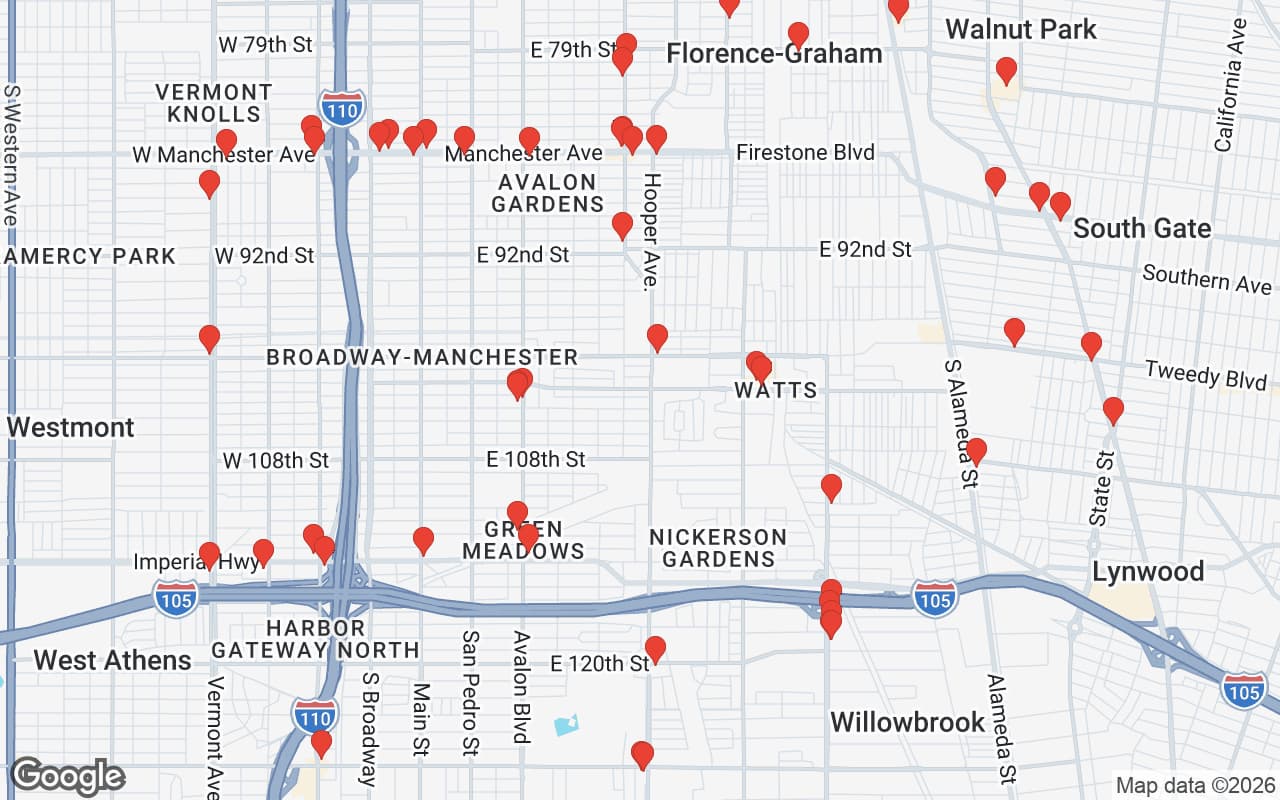
Oil Guyz Service Area in Los Angeles County
We provide free used cooking oil pickup and recycling to restaurants throughout Los Angeles County and surrounding areas.
Los Angeles local line:
(310) 810-2488Restaurant Outside Los Angeles?
Oil Guyz is expanding fast. Drop your state and city and we will email you the moment we light up your area.
No used cooking oil pickup in your area yet?
Tell us your city. We’ll text you the day free pickups reach you.
Answers
Used cooking oil pickup in Los Angeles, FAQ
Get Free Used Cooking Oil Pickup. First Stop in 3 to 5 Business Days.
Picture the bin that never overflows and the compliant digital manifest already in your inbox. Used cooking oil pickup is free because we are paid for the oil, not by you. Every week you wait is another overflowing bin and another gap in your records. Free locked bin, confirmed the same business day, first pickup in 3 to 5 business days, no contract, cancel anytime. New routes are scheduled in the order they come in, so get on the list today.
Or call (310) 810-2488 and talk to a real person today.