
Most restaurant owners in California do not realize that used cooking oil pickup should be free. They have been paying monthly fees to a hauler for years, assuming that is just part of the cost of running a commercial kitchen.
It is not. And the number of restaurants discovering this is growing fast.
Why Free Is the Market Norm: The Commodity Mechanic
Used cooking oil pickup is free for the same basic reason a scrap metal buyer will haul off your old appliances for nothing: the material has resale value on the other end. That single fact explains why this industry works differently than every other waste service you pay for.
Waste has negative value. Trash, contaminated debris, and the sludge pumped out of a grease trap have no buyer waiting for them. Removing that material costs money, so the generator, meaning you, pays a hauler to take it away, and the hauler pays a landfill or treatment facility to process it. That is ordinary disposal economics, and it is why grease trap cleaning carries a real invoice.
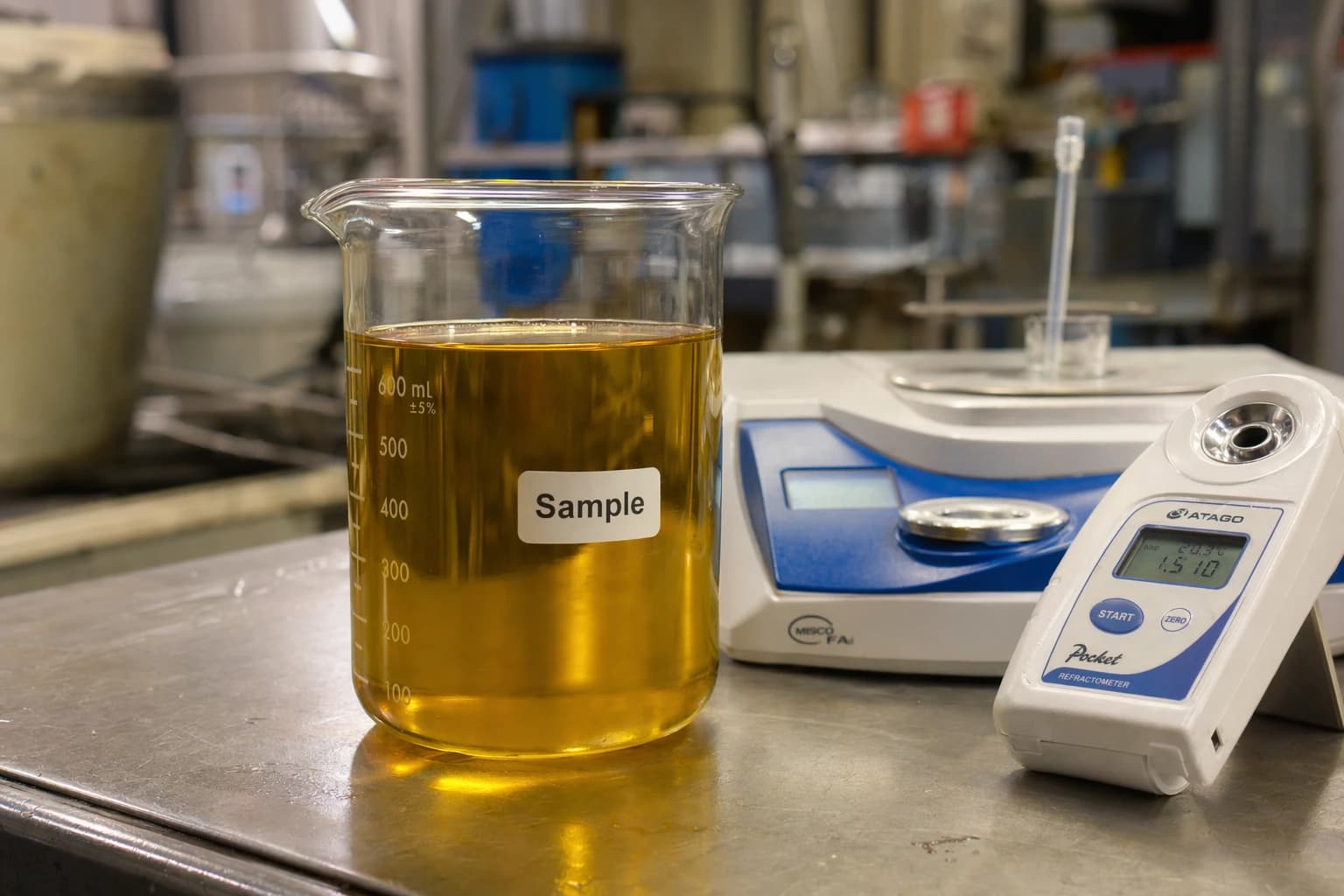
Used cooking oil moves in the opposite direction. Once it is collected, filtered, and graded, it becomes what the industry calls yellow grease, a recycling feedstock with an active buyer market. Yellow grease is priced and traded, roughly 21 to 41 cents per pound depending on quality and market conditions, and it moves into biodiesel refineries, renewable diesel producers, and oleochemical manufacturers who need it as raw material. USDA Market News publishes weekly regional price bids for it, the same way it publishes bids for other agricultural commodities. Waste products do not get that kind of published price discovery. Commodities do.
California's Low Carbon Fuel Standard adds another layer of demand on top of that base market, since yellow grease is a waste stream diverted from landfill and scores well on lifecycle carbon intensity, which makes it attractive feedstock for in-state biofuel producers.
Because the oil has real, positive value once it leaves your property, the hauler collecting it does not need to charge you to break even. Here is how the math actually works:
- The hauler collects your used cooking oil at no cost to you.
- The hauler transports it to a rendering facility, aggregator, or processing plant.
- The oil is graded and filtered, and the hauler is paid based on the volume and quality delivered.
- That payment covers the truck, the driver, the fuel, the free container, and the manifest paperwork, with margin left over.
You never see an invoice because the transaction that actually pays for the service happens downstream, after your oil leaves your kitchen, not at your back door. This is why reputable haulers do not charge for UCO pickup. They make their money on the value of the commodity itself. If a hauler is charging you a monthly fee for oil collection on top of that, they are double-dipping, profiting from both your service fee and the resale of your oil, and that is not how the underlying economics require the service to be priced.
Why Some Restaurants Still Pay for Pickup
If free pickup is the industry standard, why are so many restaurants still paying? A few common reasons:
They signed up years ago when pricing was different. The biodiesel market and California's clean fuel incentives have increased the value of used cooking oil significantly over the past decade. Service agreements that made sense five years ago may now be outdated.
They do not know free pickup exists. Many restaurant owners, especially newer operators, assume grease hauling is just another cost like trash removal. Nobody told them it could be free because their current hauler has no incentive to mention it.
They are bundled into a contract. Some haulers bundle UCO pickup with grease trap cleaning under a single monthly fee. This makes it difficult to see that the oil collection portion should cost nothing. The grease trap cleaning has a legitimate cost, but the UCO pickup does not.
They confuse UCO pickup with grease trap cleaning. These are two completely different services. UCO pickup collects the oil from your fryer containers. Grease trap cleaning pumps out the accumulated FOG from your interceptor. Only the trap cleaning carries a real service cost.
What Free UCO Pickup Actually Looks Like
When you work with a provider that offers genuinely free UCO pickup, here is what you should expect:
No monthly fees for oil collection. The service agreement clearly states that used cooking oil pickup is at no cost. There are no container rental fees, fuel surcharges, environmental fees, or administrative charges tacked on.
Scheduled, reliable pickups. Your hauler arrives on a consistent schedule, typically weekly or biweekly depending on your oil volume. You receive confirmation that the pickup happened.
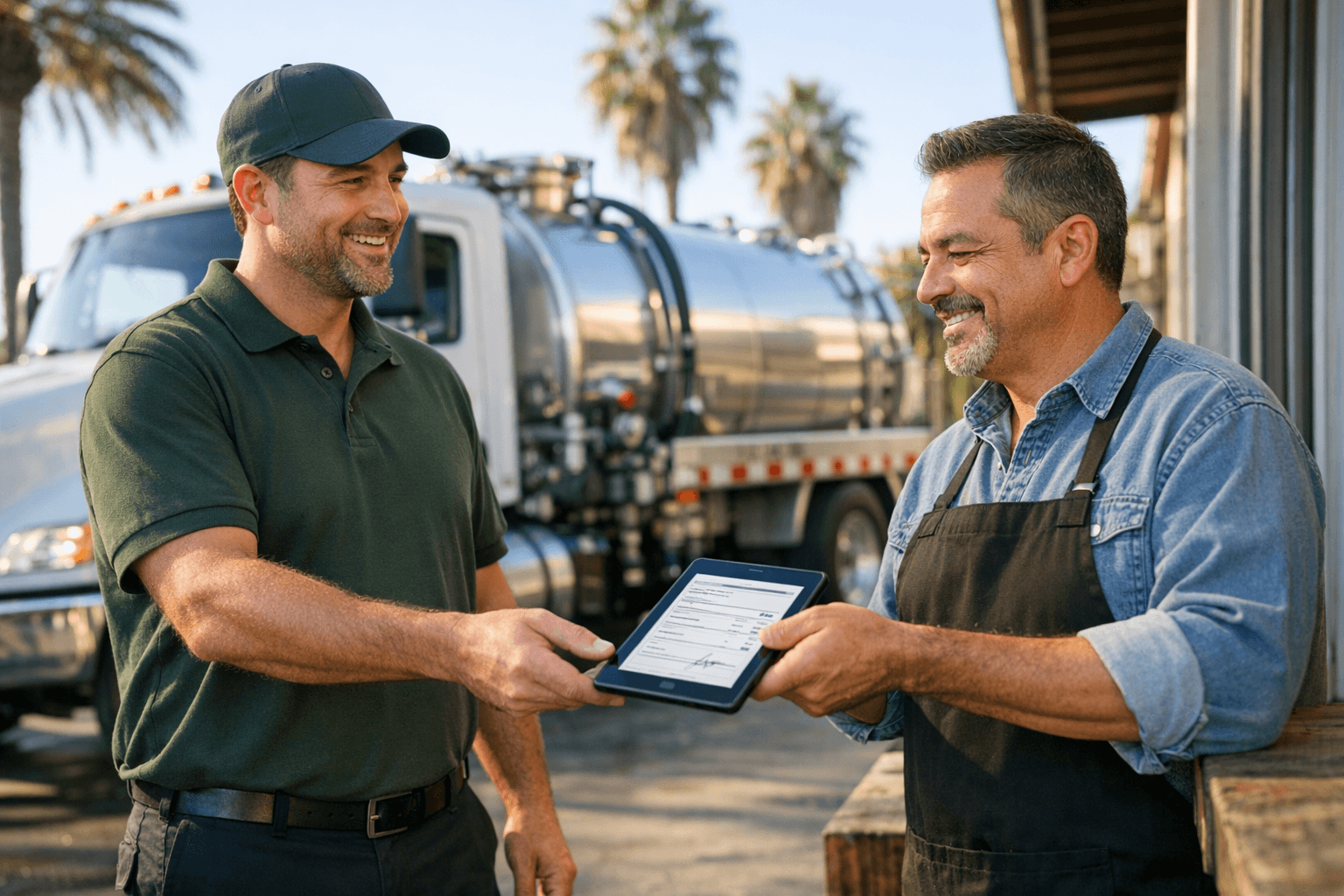
CDFA manifests for every collection. After each pickup, you receive documentation including the date, quantity collected, hauler identification, and CDFA registration number. This keeps you inspection-ready.
Clean, maintained containers. Your collection bins are provided at no charge and maintained by the hauler. Cracked lids, damaged seals, or rusted containers are replaced promptly.
No contracts. The best providers operate month-to-month because they know consistent service keeps customers without needing a contract to lock them in.
How to Know If You Qualify
The primary factor is volume. If your restaurant generates roughly 20 to 30 gallons or more of used cooking oil per month, you almost certainly qualify for free pickup in Southern California.
Restaurants that are especially attractive to haulers include:
- Fast food operations with multiple fryers running all day
- Chinese and Asian restaurants with high-volume wok and deep fry cooking
- Fried chicken and seafood establishments that go through oil quickly
- Food trucks and catering operations that generate concentrated oil volumes
- Hotel and casino kitchens with large-scale food production
Even smaller restaurants with just one or two fryers typically qualify. The threshold is lower than most owners expect, especially in dense metro areas like Orange County, Los Angeles, San Diego, the Inland Empire, and the San Francisco Bay Area where multiple haulers compete for collection routes.
How to Spot a "Free" Pickup With Hidden Fees
"Free" gets used loosely in this industry, and not every hauler advertising free UCO pickup is actually delivering it. The commodity mechanic above only holds if nothing is clawed back on a separate line item. Here is what to check before you sign anything.
Fuel surcharges. Some agreements quote free pickup, then add a recurring fuel surcharge line to the monthly statement, unrelated to your actual oil collection. If a service is genuinely free, there is no cost basis for a fuel line item on top of it. Ask directly whether fuel surcharges apply, and get the answer in writing.
Environmental fees. A flat "environmental fee" or "regulatory compliance fee" tacked onto an otherwise free pickup is a red flag. CDFA registration and manifest compliance are baseline costs of operating a hauling business, already covered by the commodity value of the oil, not a pass-through charge to the restaurant.
Minimum-volume penalties. Some haulers waive fees only above a volume threshold, often somewhere around 40 gallons per pickup, and quietly bill a service charge for anything smaller. A slow month, a menu change, or a remodel can push you under that line without warning. Ask whether a minimum applies and what the penalty is before you sign, not after your first short pickup.
Contract-exit fees. A hauler confident in their service does not need to charge you to leave. Watch for early termination fees, auto-renewal clauses that lock in another term if you miss a narrow cancellation window, and price-escalation clauses that raise your rate without your approval.
A long-term contract tied to a fresh-oil purchase requirement. This one rarely shows up as a fee, it shows up as a bundle. Some oil suppliers offer free UCO pickup only if you also agree to buy your fresh frying oil from them for the length of the contract, sometimes at above-market pricing. The pickup itself may genuinely cost nothing, but you can end up paying for it indirectly through your fresh oil invoice. If free pickup is contingent on where you buy fresh oil, price your fresh oil separately before assuming the deal is actually free.
Bundled, opaque invoices. If your grease trap cleaning and UCO pickup appear as a single line item, you cannot verify that the UCO portion is truly free. Ask for an invoice that separates the two services. Grease trap cleaning is a real, legitimate cost. UCO pickup should show as zero, every time.
Before signing with any provider, ask directly: is there a fuel surcharge, environmental fee, minimum-volume requirement, or exit fee anywhere in this agreement, and is free pickup tied to a fresh-oil purchase? A transparent hauler answers immediately and puts it in writing. One who hesitates, or buries the answer in contract language, is telling you something about how they actually plan to make their money.
Making the Switch
Transitioning to a free UCO pickup provider is straightforward:
- Check your current agreement for cancellation terms. Most are month-to-month or require 30 days notice.
- Verify the new provider's credentials. Confirm their CDFA IKG registration, insurance, and manifest process.
- Confirm the start date before canceling your existing service. You want zero days without coverage.
- Coordinate container swap if your current hauler owns the bins. Your new provider will supply replacements.
The entire transition typically takes one to two weeks of planning and happens in a single day.
The Bottom Line
Free used cooking oil pickup is not a promotion or a gimmick. It is the standard business model for CDFA-registered UCO haulers in Southern California. The value of your oil pays for the service.
If you are currently paying for UCO collection, you are leaving money on the table. A quick switch to a no-cost, no-contract provider puts that money back in your operating budget where it belongs.