
When your grease hauler stops showing up, do three things in order: document every missed pickup with dates and photos, request copies of your past manifests in writing, and line up a CDFA-registered replacement provider whose first pickup overlaps your old one, so you're never left without a container or a compliance record. Don't cancel your old service until the new one is confirmed.
That's the whole answer. The rest of this guide is the detailed playbook behind each step, the regulations that make documentation matter, and how to switch without a single day of exposure.
First, Understand Why a No-Show Is a Real Problem, Not Just an Annoyance
A late pickup feels like an inconvenience. The compliance exposure underneath it is the actual risk.
Used cooking oil in your bin isn't ordinary trash. In California, it's classified as "inedible kitchen grease" (IKG), and under Title 3, California Code of Regulations, Article 44 (3 CCR 1180.20), it may only be hauled by a transporter registered with the California Department of Food and Agriculture (CDFA). When your hauler goes dark and oil piles up, two things happen at once: your container risks overflowing, and your chain-of-custody paper trail develops a gap for the period nobody serviced you.
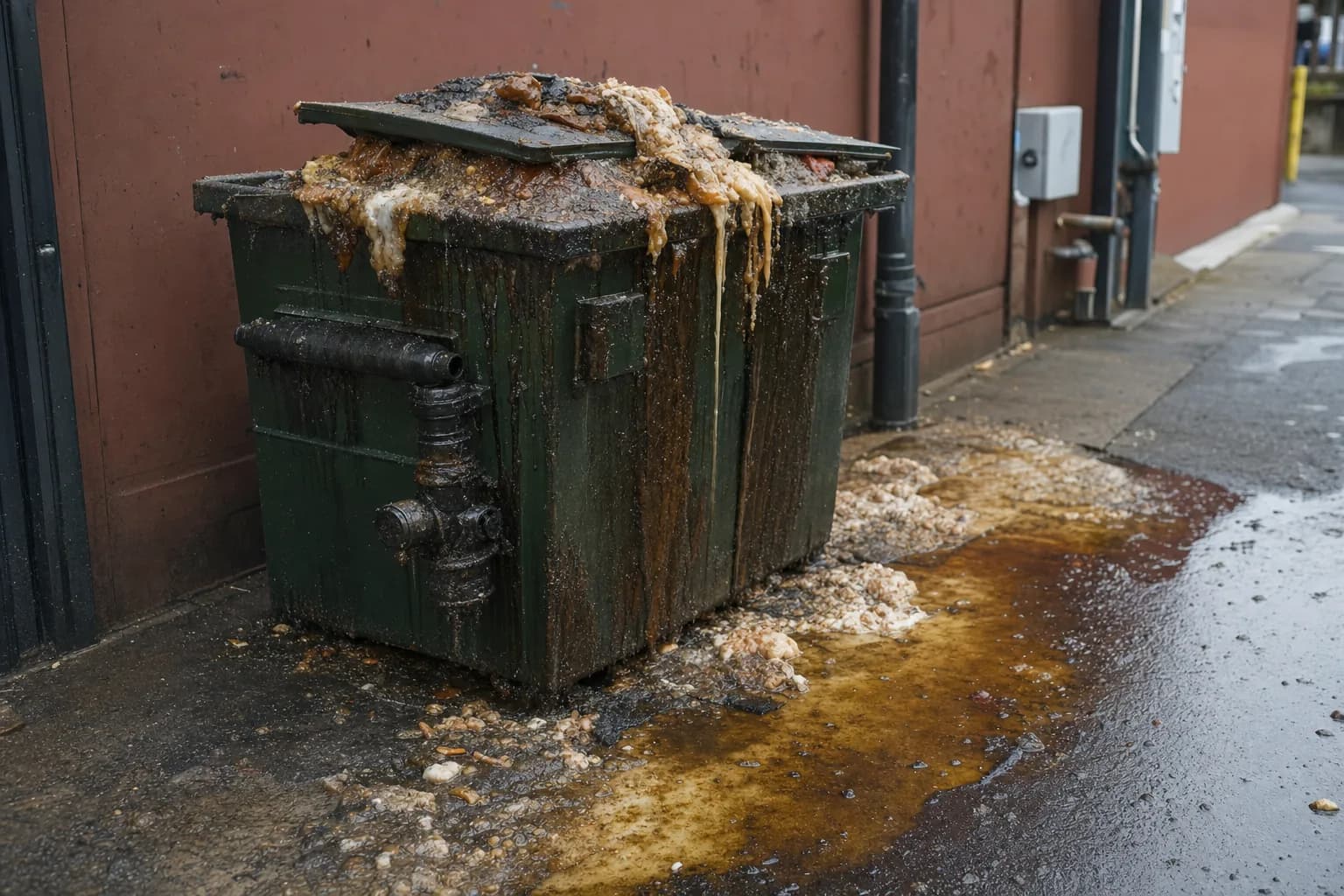
The overflow side has teeth. The U.S. EPA's Report to Congress on sewer overflows found that grease, from restaurants, homes, and industrial sources, is the most common cause, roughly 47%, of reported sewer-line blockages. A container that overflows or backs up into a drain can contribute to a sanitary sewer overflow (SSO) that gets traced straight back to your kitchen. That's a Fats, Oils, and Grease (FOG) violation waiting to happen, and the citation lands on you as the generator, not on the hauler who stopped answering the phone.
So before you start shopping for a new provider, protect yourself with documentation.
Step-by-Step: The No-Show Switch Playbook
Follow these in order. The sequence matters, documentation and records come before cancellation, and overlap scheduling comes before you let the old hauler go.
- Document every missed pickup. Log the scheduled date, whether anyone came, and the container's fill level. Add timestamped photos of the overfull bin and screenshots of every unanswered call, text, and email. This log is your evidence if you later terminate for cause or need to show an inspector why there's a gap.
- Request your manifests in writing. Email the hauler and ask for copies of all manifests and service records for the past two years (the CDFA retention window for IKG records). Put the request in writing even if they've gone silent, the dated request itself shows you made a good-faith effort to keep your file complete.
- Check your contract's notice terms. Find your renewal date and the cancellation window. Look specifically for an auto-renewal (evergreen) clause and any early-termination fee. You need this before you sign with anyone new.
- Line up a registered, insured replacement. Verify CDFA IKG registration, the numbered vehicle decal, two-inch door signage, and proof of insurance or bond before you commit (details below).
- Schedule with overlap. Have the new provider drop a clean, locked container and run their first pickup so it overlaps your final old pickup. You should never have a day where there's no compliant container on site and no one responsible for the oil.
This sequence is what separates a clean switch from a panicked one. Skipping step 1 or 2 is the mistake that comes back to bite restaurants at inspection time.
How To Document a Missed Pickup (So It Actually Helps You)
A vague memory of "they've been bad lately" won't hold up. Specific, dated records will. Local FOG programs require food service establishments to keep written records of all grease and oil removal, manifests, receipts, and invoices showing the disposal carrier and disposal site, often on a set reporting schedule to the city or wastewater agency. Retention requirements vary by jurisdiction, and many municipalities require keeping these records for several years.
Here's a simple structure that satisfies both your own evidence needs and a FOG inspector's expectations:
| What to capture | Why it matters |
|---|---|
| Scheduled date + actual outcome | Establishes the pattern of missed service |
| Photo of container fill level (dated) | Shows overflow risk and timeline |
| Call/text/email log with the hauler | Proves you sought resolution in good faith |
| Copies of past manifests | Fills the chain-of-custody record for periods serviced |
| Written manifest request to hauler | Documents your effort to close the file gap |
Keep this in one folder, digital is fine. If you ever need to terminate for cause or defend yourself during a cooking oil disposal compliance check, it's all in one place.
Getting Your Manifests Back From a Hauler Who's Gone Silent
This is the step most operators skip, and it's the one that protects you most. California requires a chain-of-custody manifest for each used cooking oil pickup, documenting the generator (your restaurant), the registered transporter, and the destination rendering or recycling facility. Under 3 CCR 1180.24, those IKG records must be kept and made available for not less than two years.
If your hauler has stopped servicing you, send a written request, email is fine, asking for copies of every manifest covering the time they collected your oil. Be specific about the date range. Keep the sent message. Even if they never reply, your dated request demonstrates you tried to maintain a complete file, which matters if an inspector finds a gap. Going forward, a good provider hands you a manifest after every pickup, automatically, so you never have to chase paperwork again.
Reading Your Contract Before You Switch
Don't let an old contract trap you. Grease hauling and waste-service agreements frequently contain auto-renewal ("evergreen") clauses that renew automatically unless you cancel in writing within a defined window, commonly 30 to 90 days before the renewal date.
Before you sign with anyone new, pull your current agreement and check:
- Renewal date and cancellation window, calendar the exact deadline to send written notice.
- Auto-renewal / evergreen language, confirm whether silence means another full term.
- Early-termination fee, know the dollar cost of leaving early.
- Termination-for-cause language, repeated failure to perform may let you exit penalty-free, and your missed-pickup log is the proof.
Send any cancellation in writing and keep the confirmation. If your contract has no notice window and the hauler simply stopped performing, your documentation gives you a strong cause argument.
Vetting the Replacement: What a Compliant Hauler Must Show You
A no-show hauler operating out of compliance is a red flag you now know to avoid. Your replacement should pass every check below without flinching. Under 3 CCR 1180.20, a CDFA-registered IKG transporter must display a current, individually numbered CDFA decal on each vehicle and signage on both front doors at least two inches high showing the company name and address or CHP Carrier Identification Number.
| Verify this | The standard |
|---|---|
| CDFA IKG registration | Active registration you can confirm |
| Vehicle decal | Current, individually numbered CDFA decal on the truck |
| Door signage | Two-inch front-door signage with company name/address or CHP ID |
| Insurance or bond | Proof of liability insurance or surety bond of not less than $2 million |
| Recordkeeping | Records kept and available for not less than two years |
| Manifest practice | A CDFA-compliant manifest after every single pickup |
Ask for all of it up front. A legitimate provider shares registration, insurance, and recordkeeping details on request, that transparency is exactly what was missing from the hauler that ghosted you. This is also the moment to confirm there's no contract, no minimum volume, and no fee, which is the standard reputable California collectors now operate by. If you want a deeper checklist, our guide to free used cooking oil pickup walks through every question to ask.
The Critical Move: Overlap Scheduling So You're Never Without a Container
Here's the step that turns a stressful switch into a non-event. Never cancel your old service until your new provider is confirmed, and then schedule so the two overlap.
Coordinate the new provider to drop a clean, locked container and run their first pickup so it overlaps your final old pickup. The goal is zero days where there's no compliant container on site and no one responsible for your oil. Done right, the changeover looks like this:
- Your old hauler makes a final pickup (or you photograph the bin and call it abandoned if they won't come).
- Your new provider drops a free locked anti-theft container before the old one leaves.
- The first new pickup is already on the calendar, and a digital manifest lands in your inbox after it.
Oil Guyz coordinates changeovers exactly this way across California and the Pacific Northwest, so a restaurant switching from an unreliable hauler never has a gap in container coverage or in its manifest trail. Locked containers also cut down on a separate headache, used cooking oil theft, which spikes when bins sit unlocked and overfull during a service lapse.
Don't Forget: Your Oil Has Value, So Pickup Should Be Free
One silver lining when you switch: in most of California, you shouldn't be paying for UCO collection at all. Used cooking oil is a valuable feedstock, not just waste. The U.S. Department of Energy's Alternative Fuels Data Center notes that biodiesel is made domestically from resources like vegetable oils, animal fats, and recycled restaurant grease, and that fats, oils, and greases are among the most common feedstocks for renewable diesel.
That's why a compliant collector picks your oil up for free, every gallon they collect heads into the renewable-fuel supply chain as biodiesel feedstock, renewable diesel, or sustainable aviation fuel. If your old hauler was charging you a monthly fee on top of ghosting you, the switch is overdue. Pickup of the oil itself should cost you nothing; the value of the yellow grease recycling stream covers the collector's costs.
What Reliable Service Actually Looks Like
After a no-show experience, it helps to know the standard you should be holding the next provider to:
- Free scheduled pickups with no contract, no fees, and no minimum volume
- Free locked anti-theft containers, swapped or maintained as needed
- A CDFA-compliant digital manifest emailed after every pickup, kept on file for years
- Route consistency and pickup confirmations from a CDFA-registered transporter, so you know service happened
- A real person who answers the phone when something changes
- Scheduling by phone, text, or the online portal, so an extra pickup before a busy weekend is easy to request
That combination directly solves the problem that brought you here. Oil Guyz built its cooking oil recycling service around it, with reliable routes across Orange County, Los Angeles, San Diego, the Inland Empire, the Bay Area, and Tacoma/Seattle in the Pacific Northwest. If you're in SoCal, our Orange County service area page has the local details.
The Bottom Line
A hauler that stops showing up isn't just unreliable, it's a compliance gap forming behind your kitchen. Document the missed pickups, get your manifests in writing, read your contract's notice terms, vet a CDFA-registered replacement, and overlap the schedules so you're never without a locked container or a complete record. Do it in that order and the switch is clean, with no exposure in between.
Ready to stop chasing a no-show hauler? Get free, reliable used cooking oil pickup with no contract, a real person answers, and a digital manifest hits your inbox after every pickup.