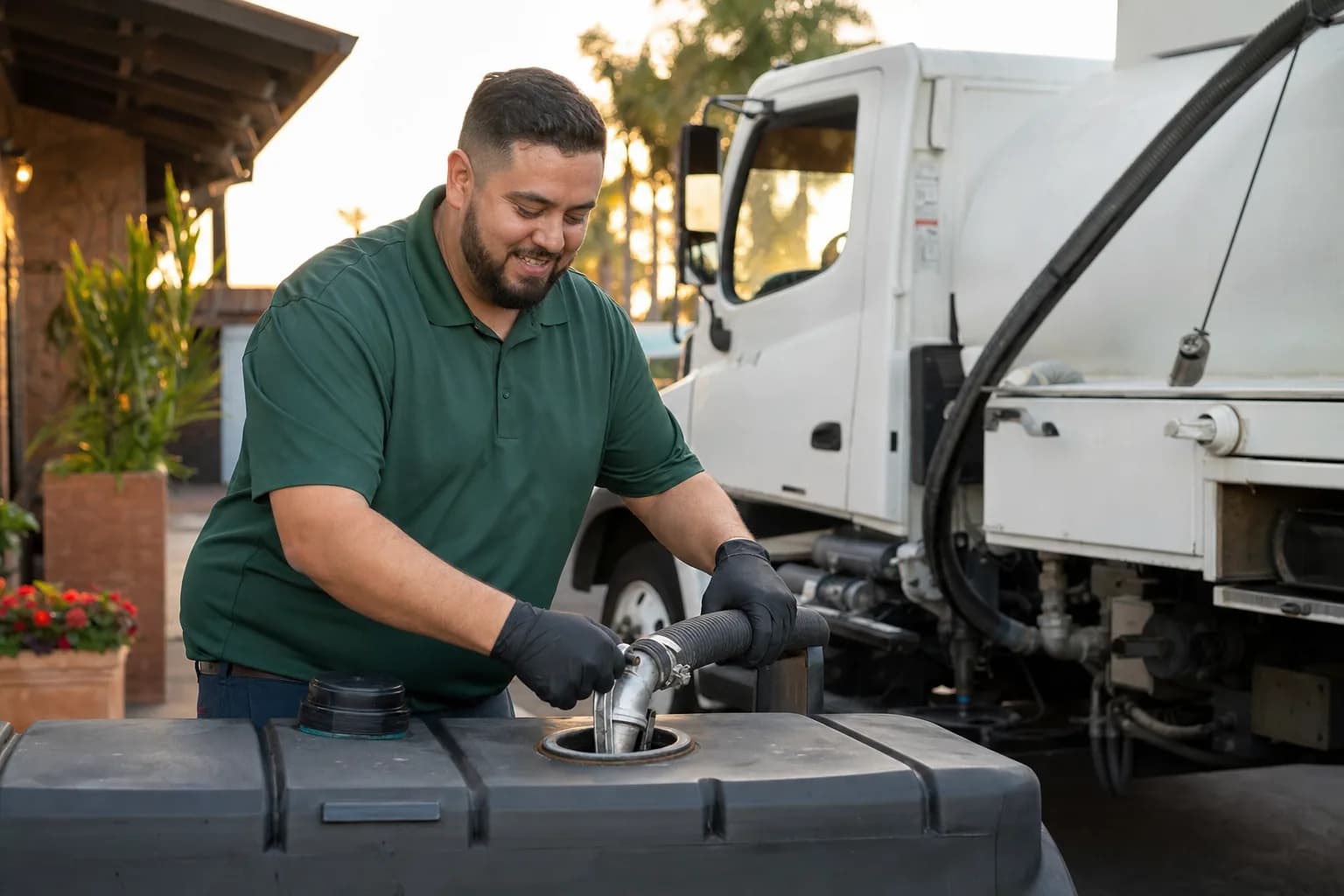
The benefits of using a local cooking oil recycling service are faster response when your bin is full or a pickup is missed, dispatch by people who actually know your routes, a real person on the phone instead of a call-center queue, and firsthand knowledge of your city's specific FOG rules, all while staying fully CDFA-compliant. A good local service also skips contracts and minimum-volume requirements, so you get flexibility a national agreement rarely offers.
Here is the honest part most articles skip: a national brand does have real advantages, a large geographic footprint and a long operating history. But those are reputation signals, not a guarantee that a truck reaches your kitchen any faster. The advantages that change your day-to-day, short response time, knowledgeable dispatch, a human who answers, and someone who knows your local grease ordinance, do not require national scale. This guide breaks down each benefit, shows where local genuinely wins, and is straight about where it does not.
First, the Thing That Actually Matters: Compliance
Before any "local versus national" debate, settle the question that protects your business: is the service legal? In California, that answer has nothing to do with company size.
Used cooking oil is regulated as inedible kitchen grease (IKG) by the California Department of Food and Agriculture. The CDFA's Rendering program states plainly that it is unlawful to transport IKG without a valid CDFA registration certificate, and that a licensed renderer, collection center, or transporter may not take possession of grease from an unregistered transporter. In other words, compliance is built on two things: the transporter holds CDFA registration, and the oil is delivered to a licensed renderer or collection center. A national logo does not satisfy either requirement; a CDFA certificate does.
This is also why "local" is not a fringe option. The CDFA's public registry of IKG transporters is dominated by local and regional operators across the state, not a handful of national giants. A local cooking oil recycling service that is CDFA-registered and routes your oil to a licensed renderer is exactly as compliant as any national company. Oil Guyz operates on that footing: every load moves through a CDFA-licensed renderer, with a manifest documenting the chain of custody.
So the real comparison is not "compliant national versus risky local." Both can be fully compliant. The comparison is about everything that happens after the boxes are checked, and that is where local pulls ahead.
Benefit 1: Faster Response When You Actually Need It
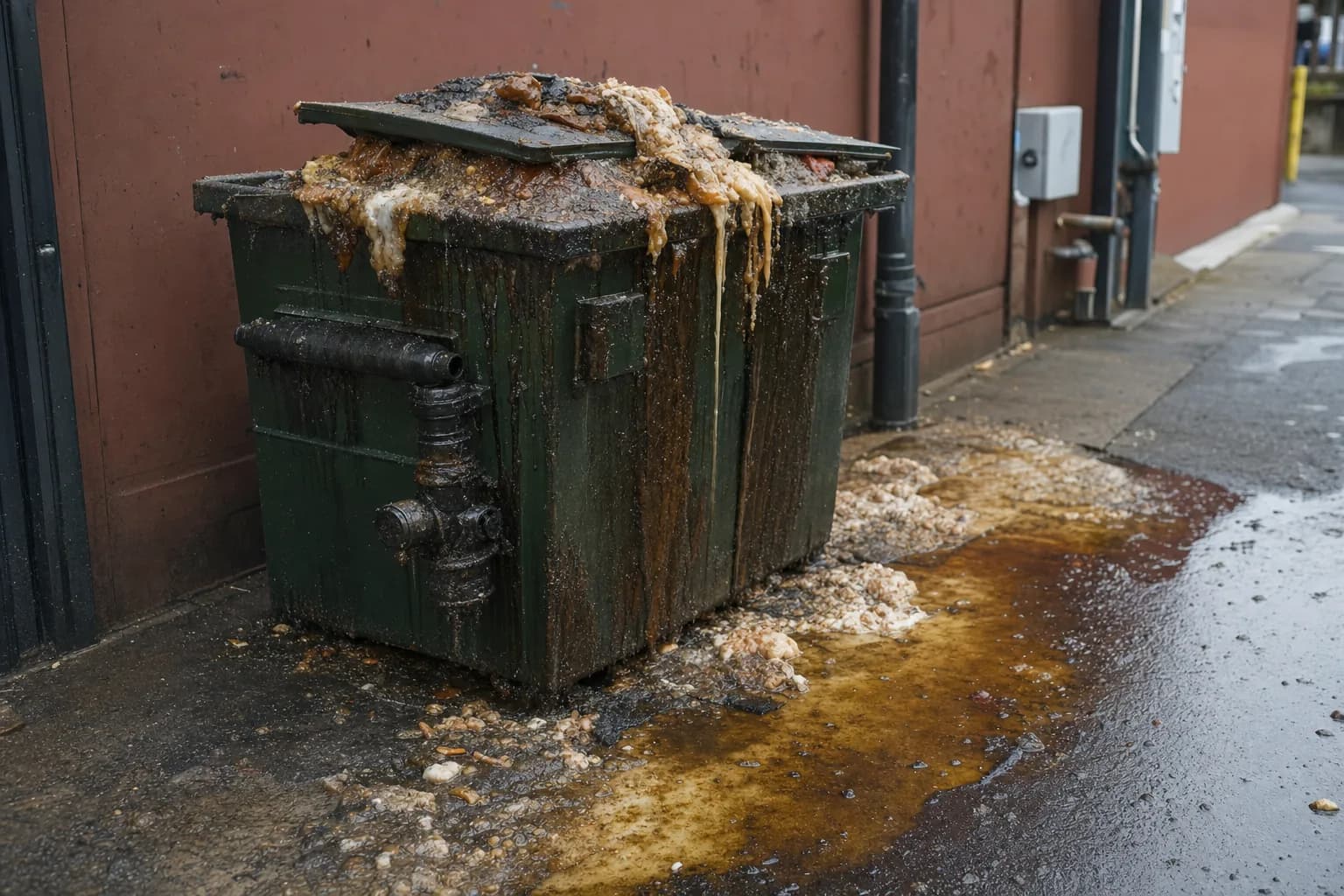
A grease bin does not fill up on a convenient schedule. A busy weekend, a new fryer, a holiday rush, suddenly your container is at the line three days early, and a missed pickup means oil on the floor by your back door.
This is the clearest place local wins. A local service routes trucks through your area regularly, so squeezing in an extra stop usually means adding you to a route that already runs nearby this week. A national contractor often has to wait for a regional truck to cycle back through your territory, which can stretch the gap. The footprint that looks impressive on a coverage map does not help when the nearest truck is two counties away on a fixed loop.
Response time is the benefit restaurant operators feel most, and it is the one a national footprint cannot promise. If you have ever waited on hold for a callback about an overflowing bin, you already understand the difference.
Benefit 2: A Real Person, Not a Call-Center Queue
When you call about a free used cooking oil pickup, there is a meaningful difference between reaching a dispatcher who knows your area and reaching a national call center that routes a ticket.
- A local dispatcher can look at today's routes and tell you when a truck can realistically reach you.
- A national call center typically logs a request, assigns it to a queue, and waits for a regional operations team to schedule it.
The first is a conversation that ends with a plan. The second is a ticket number. For a kitchen that needs an answer before the dinner rush, that gap is the whole point. With Oil Guyz, scheduling happens by phone with a real person, by text, or through the online portal, whichever is fastest for you in the moment.
Benefit 3: Firsthand Knowledge of Your Local FOG Rules
Fats, oils, and grease (FOG) are not a national rulebook. They are a local one.
The EPA names FOG as a leading cause of the sewer blockages that lead to sanitary sewer overflows, and its pretreatment regulations at 40 CFR 403.5(b)(3) prohibit discharging solid or viscous pollutants in amounts that obstruct a treatment works and its collection system. But the day-to-day enforcement is local. California's FOG control program is state-mandated under the State Water Resources Control Board, then administered by individual cities and sanitary districts. Inspection frequency, grease-interceptor servicing intervals, and recordkeeping expectations all vary by jurisdiction.
A few concrete examples of how local that gets:
- Gravity grease interceptors are commonly required to be serviced on a set interval (often quarterly) and not allowed to exceed roughly 25% FOG capacity.
- Many food-service establishments are inspected every one to two years, but the cadence is set by the local district.
- Programs like the Costa Mesa Sanitary District in Orange County and Los Angeles County Public Works publish their own restaurant FOG requirements, and they are not identical.
A local operator who works inside your city's program every week knows what your inspector looks for. That familiarity does not show up on a national coverage map, but it shows up when you are preparing for an inspection. Reliable used cooking oil pickup keeps grease out of your drains in the first place, the foundation of proper cooking oil disposal and of passing a FOG inspection.
Benefit 4: No Contracts, No Minimums, No Trap
Here is another honest point: contracts, fees, and minimum-volume requirements are vendor policies, not California legal requirements. Nothing in state law forces you into a multi-year agreement or a minimum gallon threshold to stay compliant. Those terms exist because they benefit the vendor, not because the rules demand them.
A local service is often structured to skip them entirely. Oil Guyz offers free pickup with free locked anti-theft containers, no contracts, no fees, and no minimum volume. You scale your pickup cadence up for a busy season and back down when things slow, with a phone call. Compare that to a long-term national contract with early-termination language, and the flexibility difference is obvious.
This matters most for smaller and seasonal kitchens that a national minimum-volume policy would either reject or overcharge. A no-minimum local route treats a 5-gallon-a-week cafe and a 200-gallon-a-week fry house as equally welcome customers.
Benefit 5: Anti-Theft Protection on a Verified Route
Grease theft is a genuine, expensive crime in California, stolen used cooking oil is resold as feedstock, and the loss lands on the restaurant whose oil walks off. The CDFA runs a dedicated grease-theft reporting program, and its guidance to restaurants is direct: verify your provider is CDFA-licensed, and confirm trucks display a current IKG transporter decal.
Two things protect you here, and a local service delivers both:
- Locked, anti-theft collection containers that remove the easy target sitting behind your building.
- A verified licensed route, so the person hauling your oil is the registered transporter, not an unlicensed party who could leave you exposed if something goes wrong downstream.
When you can name your collector and watch pickups run on a reliable schedule, theft stops being your problem.
Benefit 6: Proof of Legal Disposal, Every Single Time
California requires a documented chain of custody. Each pickup is recorded on an IKG manifest signed by the generator (you), the transporter, and the receiving facility, and transporters must keep records for every pickup under CCR Title 3.
A strong local service turns that legal requirement into a tool you can use. Oil Guyz emails a CDFA-compliant digital manifest after every pickup, your proof of compliant disposal, ready to hand to a FOG inspector. Records are retained for seven years, well past the typical multi-year recommendation, so you are covered even on an old inspection question.
Benefit 7: Every Gallon Becomes Clean Fuel
This is the one benefit that is genuinely identical whether your hauler is local or national, and that is exactly the point. The environmental upside does not require national scale.
The U.S. Department of Energy's Alternative Fuels Data Center states biodiesel is produced from vegetable oils, yellow grease, used cooking oils, or animal fats via transesterification. Used cooking oil is also a cornerstone feedstock for renewable diesel and sustainable aviation fuel (SAF). Every gallon collected on a local route becomes biodiesel feedstock and feeds the same clean-fuel supply chain a national hauler would. Choosing local costs you nothing on sustainability, your oil still ends up as renewable fuel.
Local vs. National: The Honest Comparison
| Factor | Local cooking oil recycling service | National hauler |
|---|---|---|
| CDFA compliance | Fully compliant if registered + delivers to licensed renderer | Fully compliant, no advantage |
| Response time (full bin / missed pickup) | Often days, via a nearby existing route | Depends on when a regional truck cycles back |
| Who answers the phone | A real dispatcher who knows your routes | Typically a call center / ticket queue |
| Local FOG ordinance knowledge | Firsthand, works the program weekly | Generalized across many jurisdictions |
| Contracts / minimums | Often none, flexible by policy | Frequently multi-year, with minimums |
| Anti-theft containers | Free, locked, on a verified route | Varies by provider |
| Manifest / disposal proof | CDFA-compliant manifest per pickup | Required by law for both |
| What your oil becomes | Biodiesel / renewable diesel / SAF feedstock | Identical end use |
| Geographic footprint | Regional | Large, the national edge |
| Operating history | Varies | Often long, the national edge |
Read the table honestly: the national column wins exactly two rows, geographic footprint and operating history. Both are reputation signals. Every row that touches your actual service experience either favors local or is a tie. If you operate in one region and want responsive service, that math is hard to argue with.
How to Choose a Local Service the Right Way
If you are switching to or vetting a local cooking oil recycling service, run this quick checklist:
- Confirm CDFA IKG registration. Ask for the registration certificate and confirm a current transporter decal on the truck, exactly what the CDFA recommends.
- Ask where the oil goes. A legitimate service names the licensed renderer or collection center that receives it.
- Confirm you get a manifest. You want a CDFA-compliant manifest after every pickup, retained on your behalf.
- Check the terms. No contract, no minimum volume, free locked containers, verify there is no trap.
- Test the response. Call once before you commit. If a real person answers and gives you a real schedule, you have your answer.
A service that passes all five, like Oil Guyz across Orange County, Los Angeles, San Diego, the Bay Area, and Tacoma, gives you the responsiveness of local with none of the compliance compromise.
The Bottom Line
A local cooking oil recycling service gives you faster response, human dispatch, firsthand FOG-ordinance knowledge, and contract-free flexibility, without giving up an ounce of compliance, anti-theft protection, or the renewable-fuel end use you would get from a national hauler. The only things a national brand reliably offers that local cannot match are footprint and history, and neither one empties your bin any faster.
If you run a restaurant or commercial kitchen in California or the Pacific Northwest, schedule free, no-contract used cooking oil pickup and get a real person, a real schedule, and a manifest after every pickup.