
If you operate a restaurant, food truck, or commercial kitchen in California, "cooking oil compliance" sits in the same category as fire safety and health code: invisible when things are working, and a five-alarm problem when they're not.
This guide explains, in plain English, what compliance actually means in 2026, which agencies are involved, what documents you need, what an inspector will ask for, and the three or four steps that protect your restaurant. There are links throughout to the underlying regulatory sources so you can verify any specific claim, plus links to deeper guides on individual sub-topics.
If you only have five minutes, skim the section headings below. If you want the complete picture, read straight through.
What "Cooking Oil Compliance" Actually Means
In California, cooking oil compliance is a stack of three layers that all need to be intact at the same time.
The state layer is run by the California Department of Food and Agriculture's Inedible Kitchen Grease Program. CDFA regulates anyone who transports used cooking oil, yellow grease, from your kitchen to a renderer or refining facility. The regulatory framework lives in Title 3, Section 1180 of the California Code of Regulations and requires registration, recordkeeping, insurance, and manifesting for every pickup. The IKG program was created in 1995 specifically because grease theft and improper disposal were becoming a chronic problem in the state. For the statute-by-statute version of this layer, including why CalRecycle does not cover cooking oil at all, see our California used cooking oil disposal law guide.
The local layer is your municipal FOG program. Run by your county sanitation district or city sewer authority, FOG (fats, oils, and grease) compliance governs what enters the sewer system from your kitchen, primarily through your grease trap or interceptor. Restaurants in Los Angeles, Orange County, and San Diego each have their own variations on the rules, and crucially, the 25% grease trap rule sets the threshold above which you are technically in violation regardless of what your manifest record looks like.
The federal layer is where the value comes from. The EPA Renewable Fuel Standard and the California Low Carbon Fuel Standard (administered by CARB) both treat used cooking oil as a high-value renewable fuel feedstock. This is why your hauler can pick up your oil for free, or in higher-volume cases, pay you per gallon. It's also why staying compliant has financial upside, not just risk-avoidance value.
Your restaurant needs all three layers to be intact, state, local, federal, at the same time. A compliant hauler relationship covers the state and federal layers automatically. The local FOG layer is on you and your grease trap service.
The Three Documents Every Restaurant Needs
Strip away the regulatory complexity and cooking oil compliance for a restaurant comes down to three documents.
1. Your Hauler's CDFA IKG Registration
Every legal UCO transporter in California is registered with CDFA. They have a registration number, and that number is public, CDFA publishes the list of registered IKG transporters on its website. Before you sign any service agreement, ask your prospective hauler for their CDFA IKG registration number and verify it.
Why this matters: if your hauler is operating without registration, every pickup they do from your restaurant is technically out of compliance, and California regulators can cite the restaurant, not just the hauler, for using an unregistered transporter. We covered the warning signs of an unregistered hauler in detail in our grease hauler warning signs guide.
2. A Grease Compliance Manifest for Every Pickup
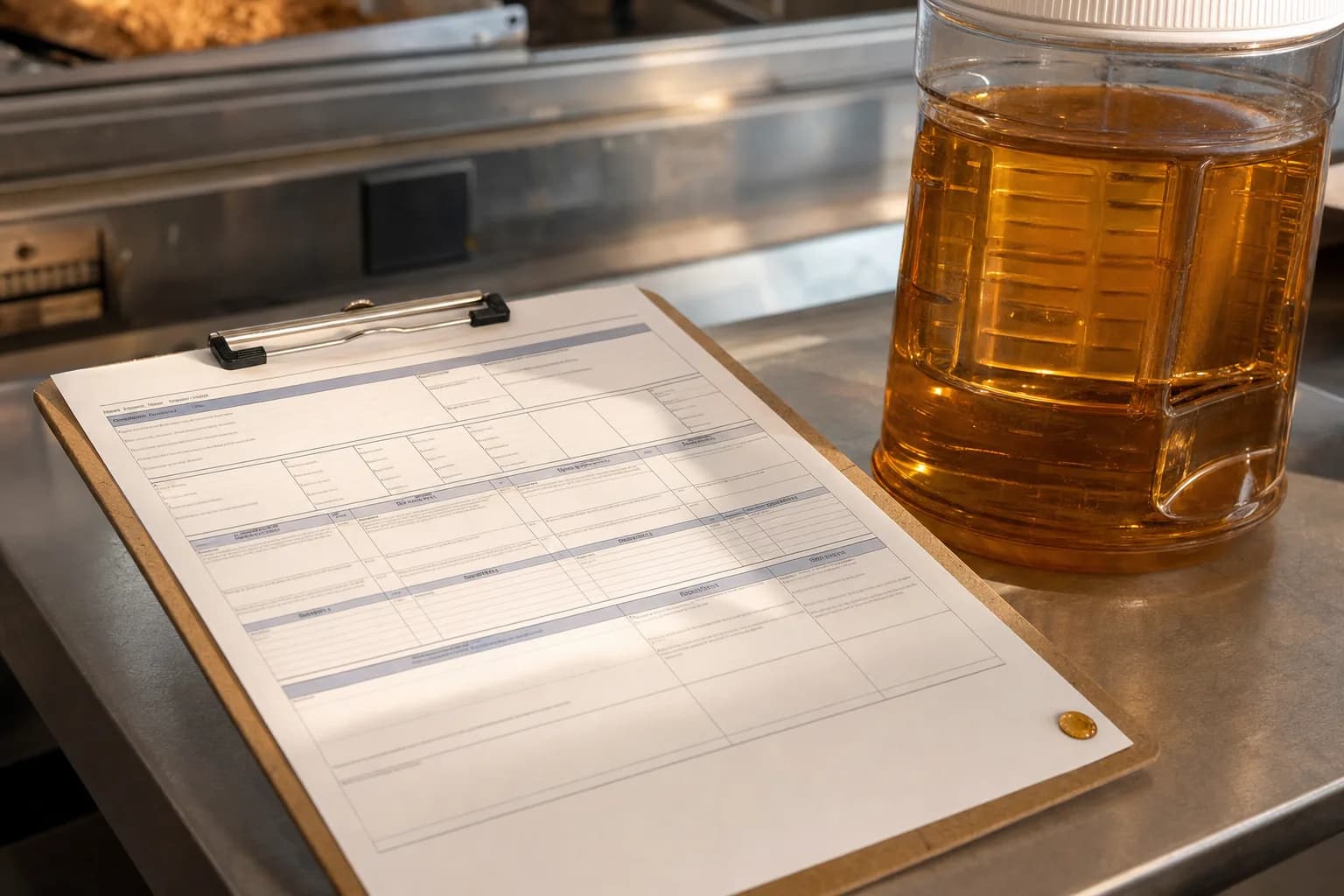
A grease compliance manifest is a legal document, generated at the moment of pickup, that creates a chain of custody from your kitchen to the final processing facility. Every CDFA-registered hauler is required to produce one for every pickup. The manifest must include:
- Your restaurant's name and address (the "generator")
- The hauler's name and CDFA registration number (the "transporter")
- Date and time of pickup
- Estimated quantity collected, in gallons or pounds
- The destination facility receiving the load (the "renderer" or processor)
- Signatures from both the driver and an authorized representative of your restaurant
Modern haulers generate manifests digitally and email them or expose them through a customer portal. Paper manifests are still legally valid but operationally painful. Either way, if your hauler is not producing manifests, you have a compliance problem that no amount of operational excellence elsewhere will solve. See our full breakdown of CDFA manifest requirements for the line-by-line detail.
3. Manifest Retention: Match the Two-Year Standard, Longer Is Smarter
Title 3 Section 1180.24 sets a two-year minimum for manifest recordkeeping, but that duty is placed on your transporter and the receiving facility, not on your restaurant directly. Keeping your own copies for at least two years isn't a separate legal mandate on you as the generator, it's the practical baseline that keeps you self-sufficient instead of depending on your hauler's archive during an audit. Many restaurants target a seven-year archive for reasons that have nothing to do with CDFA:
- ESG and sustainability reporting often pulls a five-year window
- B Corp, Green Restaurant Association, and California Green Business certifications routinely ask for historical pickup volumes
- Local health departments and sanitation districts sometimes audit further back than two years
- If you sell your restaurant or business, the buyer's due diligence will probably want at least five years of compliance documentation
Match the two-year standard as a floor, then treat seven as a recommended working baseline. If your hauler provides a digital portal, long-term retention is automatic; if you're managing paper manifests yourself, build a scanning and archive routine into your monthly closing checklist. Oil Guyz keeps two years of manifests in your dashboard as part of the service.
Common Compliance Failures (and How to Avoid Them)
Most California cooking oil compliance failures fall into one of five buckets. None of them happen on purpose, they're operational drift that goes unnoticed until something forces a review.
Drain or trash disposal. A new line cook pours fryer oil down the floor drain. It causes a downstream sewer blockage. The sanitation district investigates upstream and traces the FOG back to your restaurant. You get cited under the local FOG program AND flagged for an unregistered disposal pathway. The fix: train every kitchen team member that 100% of UCO goes into the collection container, period.
Manifest gaps. Your hauler comes weekly, but you only have manifests for nine of the last twelve pickups. Either the driver forgot, the portal had a sync issue, or the paper copies got lost. The fix: review your manifest archive monthly. If you're missing one, request a re-issue immediately while the hauler still has the route data.
Expired hauler registration. Your hauler's CDFA IKG registration lapsed three months ago and they didn't tell you. Every pickup since then is technically non-compliant. The fix: check the CDFA transporter list once a quarter, or work with a hauler who proactively notifies you of any registration status changes.
Grease trap overflow into FOG violations. Your trap is being pumped quarterly when the 25% rule requires monthly service. A health inspector finds you above threshold, and now you're cited under the local FOG program. The fix: use a grease trap pumping calculator to model the right frequency for your kitchen volume.
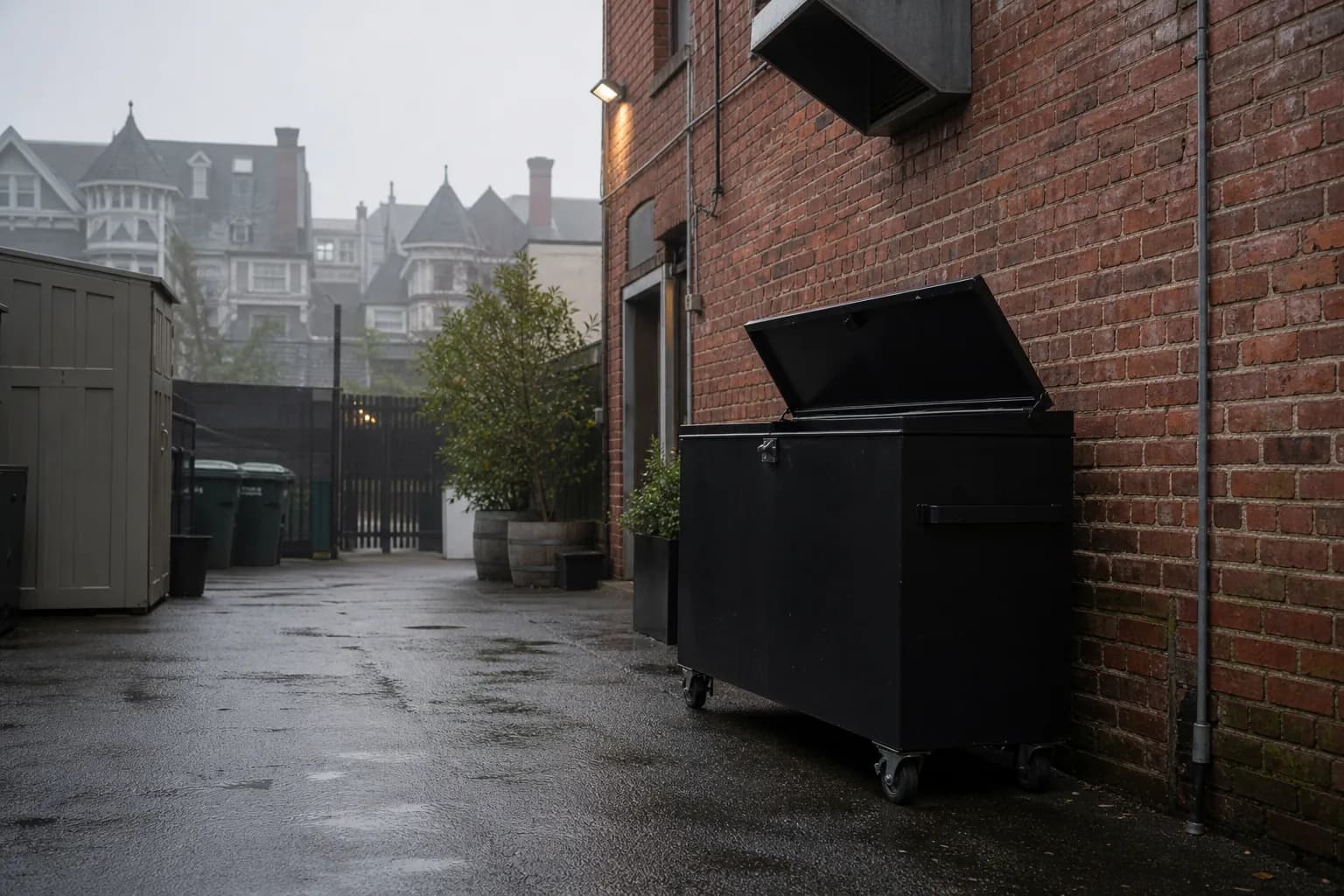
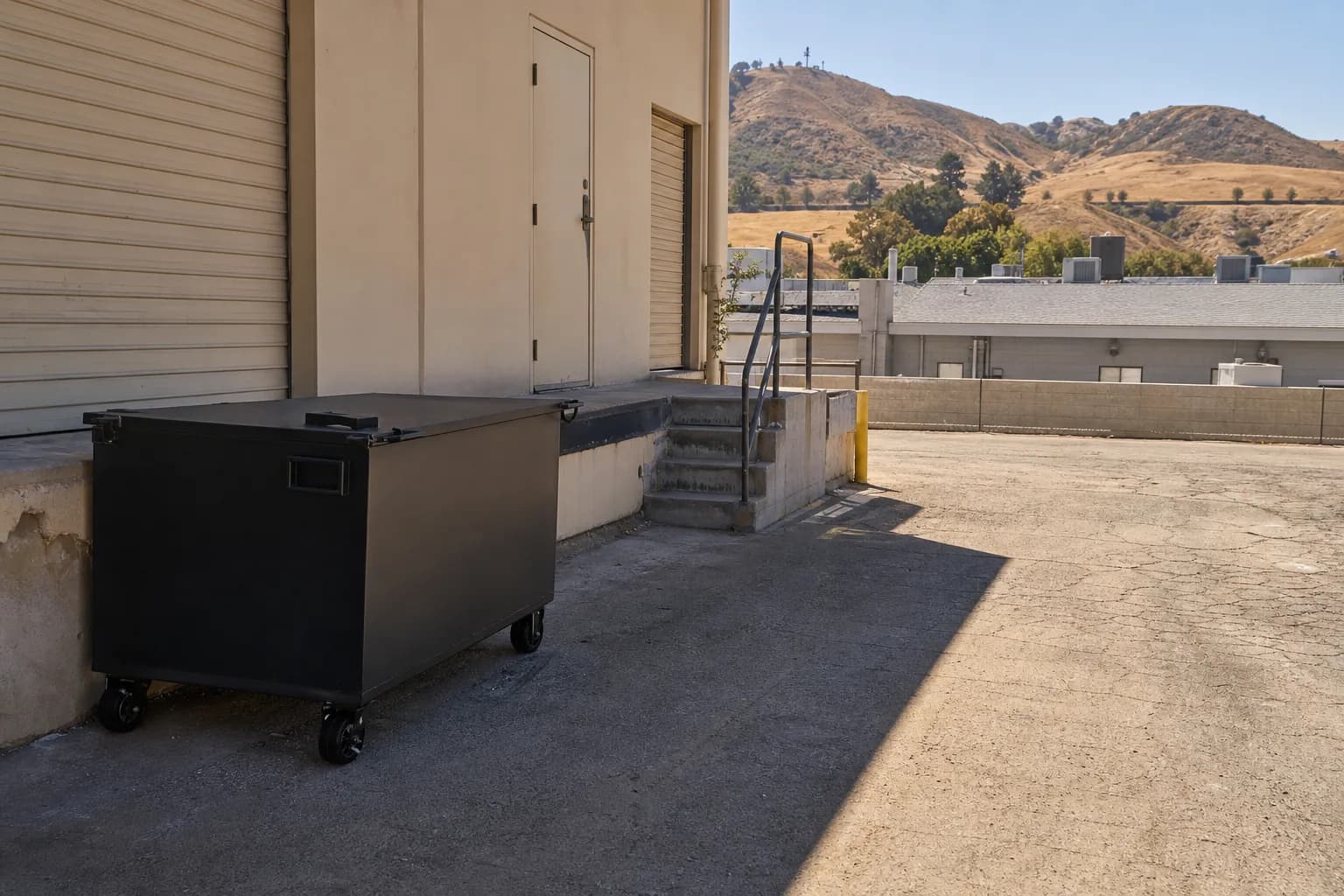
Theft. UCO theft is a real and surprisingly common problem in Southern California. A thief drains your container at night, no manifest is generated, and the next legitimate pickup looks anomalously small. CDFA was literally created to fight this. The fix: locked anti-theft containers and a hauler with night-time route security awareness.
A full breakdown of FOG violations and the penalty schedule is in our California FOG violations guide.
What Health Inspectors Actually Check
When a county health inspector or CDFA investigator looks at your cooking oil compliance, the actual checklist is shorter than most restaurant owners expect. They are usually working through these questions:
- Who is your UCO hauler, and are they CDFA-registered today?
- Can you produce manifests for every pickup in the last 12-24 months?
- Is your grease trap being serviced on the required schedule (and do you have manifests for that too)?
- Is the UCO collection container locked, sealed, and labeled?
- Is there any sign of drain disposal, discoloration, grease buildup in floor drains, complaints from neighbors?
That's essentially the whole inspection from the cooking-oil side. Everything else they look at, temperature logs, food storage, hand-washing, is separate. We maintain a full restaurant health inspection grease checklist that goes deeper into how to prepare for a visit.
If you can produce a clean digital manifest archive in under a minute and verify your hauler's registration on the spot, the cooking-oil portion of your inspection takes about 90 seconds.
How to Verify Your Hauler Is Legitimate
Five practical checks. None take more than ten minutes.
- Ask for their CDFA IKG registration number in writing. Reputable haulers volunteer this; sketchy ones get defensive.
- Search them on the CDFA registered transporter list. This is the authoritative source.
- Check that the registration name matches the company name on your invoice. Sometimes a registered company sub-contracts to an unregistered driver, this is a common compliance gap.
- Ask to see a sample manifest before signing a service agreement. A real hauler will hand you one in 30 seconds.
- Ask what happens to your oil after pickup. A compliant hauler can name the rendering or refining facility on the spot.
For a deeper checklist, our grease hauler registration verification guide walks through every step.
The 5-Question Compliance Self-Check
If you want to know in two minutes whether your current cooking oil compliance is solid, run this self-check:
- Can I name my UCO hauler and produce their CDFA IKG registration number from memory or a quick file lookup?
- Do I have access to a manifest for every pickup in the last 12 months?
- Am I keeping my own manifest copies for at least two years, matching the retention standard the state sets for my transporter, ideally well past it?
- Is my grease trap being serviced often enough to stay under the 25% rule?
- Is my UCO container locked, sealed, and serviced on a documented schedule?
A "no" to any of these is a compliance gap worth fixing in the next 30 days. We built a free compliance checker tool that walks through these questions in detail and produces a written summary you can save with your records.
When Compliance Also Saves Money
The frustrating part of cooking oil compliance for most restaurant owners is that it feels like pure overhead. It's not. Compliance is what unlocks the financial upside built into California's renewable fuel programs.
- Pickup is free because your UCO has refining value, the hauler captures that value and a registered, manifested pickup is what makes it legal to do so
- For higher-volume restaurants (typically 100+ gallons per month), some haulers pay per gallon, also legally enabled by the manifest system
- ESG, B Corp, Green Restaurant Association, and California Green Business certifications all credit verified UCO recycling, which has reputational and sometimes financial value to the restaurant
- Your environmental impact is real and measurable, our carbon offset calculator translates your gallons recycled into avoided CO₂ using EPA-published lifecycle data
The framing that helps most: compliance isn't the cost of doing business, it's the cost of access to the legal market for your oil. The illegal market pays nothing and exposes you to liability. The legal market pays in free pickups, manifest documentation, and sustainability credentials.
Closing the Loop
Cooking oil compliance in 2026 is a solved problem for any California restaurant that hires the right hauler. State registration is verifiable in 30 seconds. Manifests are produced digitally for every pickup. Retention meets the two-year minimum automatically if your hauler has a real portal. Grease trap service follows a calculable schedule. The 5-question self-check above takes two minutes.
If you're not sure where you stand, run our free compliance checker, it'll tell you exactly what to fix. If you'd like a second opinion on your current hauler or want to see what a compliant pickup actually looks like, reach out. No contracts, no commitment, just a clear picture of where you stand.