
Health inspections in California are not something you prepare for the night before. The restaurants that consistently pass with high scores are the ones where compliance is built into daily operations, not scrambled together when the inspector walks through the door.
Grease management is one of the most commonly cited areas during inspections, and it covers more than just the grease trap. Inspectors look at your documentation, your kitchen practices, your exhaust system, and your waste oil storage. This guide covers every grease-related item they check so you can be ready at all times.
The Complete Grease Inspection Checklist
Health inspectors follow a structured checklist during every visit. Here is what they look at, organized by area.
Grease Trap / Interceptor
- Maintenance log is current. The inspector will ask to see your log showing the date, hauler name, and amount of waste removed for each pumping. Gaps in the log raise red flags.
- Trap is not at or near capacity. If the grease layer is visibly thick or nearing the one-quarter threshold (the standard most Southern California sanitation districts use, though the exact threshold and how it's enforced varies by local jurisdiction), it will be noted.
- No overflow or signs of recent overflow. Grease stains around the trap access, on the floor, or on adjacent walls indicate past overflows that were not properly addressed.
- Access point is clear and accessible. The trap lid must be accessible. Inspectors cannot verify maintenance if the trap is blocked by equipment, storage, or debris.
- Proper sealing. The trap lid should sit flush and be properly sealed to prevent odors and vermin access.
Kitchen Hood and Exhaust System
- Current hood cleaning certificate. This is a document from a certified hood cleaning company showing the date of the last professional cleaning. It should match the NFPA 96 schedule for your cooking type.
- Filters are clean. Baffle filters in the hood should be free of heavy grease buildup. Most restaurants run these through the dishwasher weekly or have a set rotation.
- No grease dripping. Visible grease drips from the hood, the duct openings, or the rooftop fan housing are a violation and a fire hazard.
- Grease cups or troughs are emptied. The collection cups at the bottom of the hood filters should be emptied daily or as needed.
Waste Oil Storage
- Containers are labeled. Your used cooking oil collection containers should be clearly labeled as waste oil or UCO.
- Containers are sealed. Lids must be securely closed when not actively being filled to prevent spills, pests, and odors.
- No overfilling. Containers should not be filled to the brim. Leave at least two inches of headspace.
- Secondary containment. If your containers are stored outdoors, they should be in an area with secondary containment (a lip, berm, or tray) to catch spills.
- Area is clean. The ground around the containers should be free of spilled oil, food debris, and standing water.
Kitchen Floor and Drain Areas
- Floor drains are clear. No standing grease or water around floor drains. Drain covers should be in place and not caked with grease.
- Behind equipment is clean. Inspectors will look behind the fryer, flattop, and other grease-producing equipment for accumulation.
- Mats and walking surfaces. Anti-slip mats near fryers and cooking stations should be clean, not saturated with grease.
Documentation
- Grease trap pumping manifests. These are the official CDFA documents showing each waste load was transported by a registered hauler to a licensed, approved facility.
- Hood cleaning certificate. Current and from a certified provider.
- Grease trap maintenance log. A running record of all service dates and details.
- Staff training records. Some jurisdictions check whether employees have been trained on proper grease disposal. Even if not required, having this documented shows diligence.
Violations: What Gets Cited and How Severe
Not all grease-related violations carry the same weight. Understanding the difference helps you prioritize what matters most.
Critical Violations (Immediate Correction Required)
- Active grease trap overflow
- Grease discharge to the storm drain system
- No grease trap installed when required by code
- Extreme grease buildup creating a fire hazard on exhaust systems
Major Violations (Correction Within Set Timeframe)
- Grease trap at or above the one-quarter capacity threshold (per the most common local standard, verify the exact threshold with your specific jurisdiction)
- Missing or expired hood cleaning certificate
- No maintenance log or significant gaps in records
- Waste oil containers without lids or secondary containment
Minor Violations (Noted, Correction Expected)
- Grease accumulation on floor behind equipment
- Dirty hood filters between professional cleanings
- Missing labels on waste oil containers
- Grease cups on hood not recently emptied
How Grease Inspections Differ by Jurisdiction
The checklist above applies everywhere in California, but who inspects your kitchen, and how your results get posted, changes by address. Here is how three nearby jurisdictions differ.
Los Angeles County
Most restaurants outside a few cities are inspected by the LA County Department of Public Health, Environmental Health Division. LA County pioneered restaurant letter grading in 1998: a 100-point inspection produces an A (90-100), B (80-89), or C (70-79) posted at the entrance, and grease trap condition and your maintenance log are deductions inside that same score.
The FOG capacity threshold in your trap is enforced separately, by whichever wastewater agency covers your address (LASAN in the City of Los Angeles, LA County Public Works in unincorporated areas, LA County Sanitation Districts, or your own city's program). See our guide to the LA County 25 percent grease trap rule for how that threshold works and who enforces it.
Long Beach
A fact most owners miss: Long Beach is not part of LA County's health jurisdiction. It has run its own health department since the city was founded, one of only a few California cities, along with Pasadena, that never came under county public health authority. Restaurants inside Long Beach city limits are inspected by the Long Beach Department of Health and Human Services, Bureau of Environmental Health, not LA County.
Two differences follow. Long Beach does not post letter grades; city guidance confirms grades are not assigned or posted there, and your latest inspection is posted instead as an Inspection Summary Report until the next routine visit. And Long Beach runs grease compliance as its own Grease Management Program, framed around protecting the wastewater system: the city notes FOG from restaurants causes more than half of its sewer blockages and overflows.
Seattle-King County
Restaurants here are inspected by Public Health Seattle and King County, Environmental Health Services. Instead of a letter grade, the agency posts a four-tier rating (Excellent, Good, Okay, Needs to Improve) built from a rolling average of your last two to four routine inspections rather than a single visit, so one bad inspection matters less, but repeat issues, grease included, still drag the rating down.
The grease interceptor requirement is broader than most owners expect: any business with commercial kitchen plumbing and a King County Food Business Permit needs one, even small delis and coffee shops. Improper FOG discharge is scored as its own maintenance and sanitation violation, separate from the overall food-safety rating.
The Takeaway
The day-to-day work does not change: keep the trap clean, log every pumping, keep manifests on hand. What changes is who inspects you, what your posted rating looks like, and who you call if something goes wrong. If you operate in more than one of these areas, confirm requirements with each local agency directly rather than assuming they match.
Monthly Self-Inspection Protocol
The easiest way to guarantee you pass every inspection is to inspect yourself monthly. Walk through the same checklist the inspector uses. Here is a simplified monthly routine:
Week 1: Documentation audit. Pull your grease trap maintenance log and verify all entries are current. Check that you have manifests for every pumping. Verify your hood cleaning certificate is not expired.
Week 2: Trap area inspection. Open the trap access and visually check the grease level. Inspect the area around the trap for any signs of leakage or overflow. Verify the access point is not obstructed.
Week 3: Kitchen walkthrough. Check behind fryers and cooking equipment. Inspect floor drains. Look at hood filters and grease cups. Walk the waste oil storage area.
Week 4: Staff check-in. Briefly review grease disposal procedures with kitchen staff during a pre-shift meeting. Reinforce dry-wiping, plate scraping, and proper oil disposal.
This four-week rotation takes about 15 minutes per week and eliminates the anxiety of unannounced inspections entirely.
What to Do When the Inspector Arrives
When a health inspector arrives at your restaurant, the best response is calm professionalism. Here is how to handle the grease-related portions:
Be ready with your binder. Keep your maintenance log, manifests, and hood cleaning certificate in a single binder near the manager station. Hand it to the inspector immediately when they ask for records.
Walk with the inspector. Accompany them through the kitchen. If they find an issue, acknowledge it and explain what corrective action you will take and by when.
Do not argue about the findings. If something is cited, note it and fix it. Arguing rarely changes the outcome and can negatively affect the inspector's overall impression.
Ask questions. If you are unclear about a requirement or a citation, ask the inspector to explain it. Most are happy to educate rather than just penalize.
Printable Grease Inspection Checklist
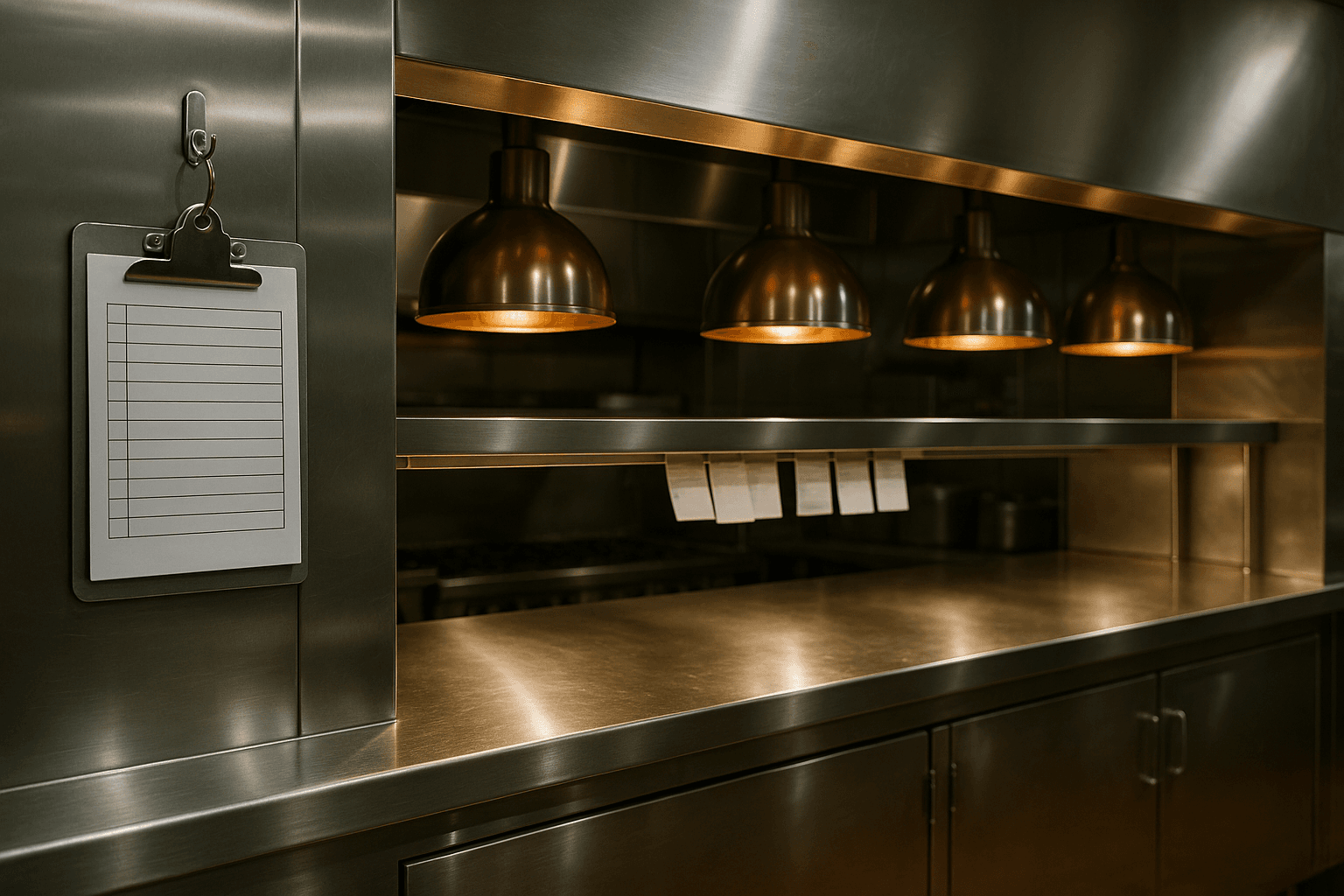
Keep this condensed version in your compliance binder or taped inside a supply closet. It fits on a single printed page, run it top to bottom in under ten minutes for a monthly self-check or a quick pass before you expect a visit.
| # | Check | What Passes |
|---|---|---|
| 1 | Maintenance log | Every pumping logged with date, hauler name, and amount; no gaps |
| 2 | Manifests on file | One manifest per pickup, matches the log entry |
| 3 | Trap fill level | Grease and solids well below capacity, no odor at the lid |
| 4 | Trap access | Lid clear of equipment, storage, or debris |
| 5 | Trap seal | Lid sits flush, no gaps or cracks |
| 6 | Overflow signs | No stains on the floor, walls, or around the access point |
| 7 | Hood certificate | Current, matches the required cleaning frequency for your cooking volume |
| 8 | Hood filters | Free of heavy buildup, on a regular wash rotation |
| 9 | Hood, duct, and fan | No visible grease drips anywhere along the exhaust path |
| 10 | Grease cups | Emptied daily or per shift |
| 11 | UCO containers | Labeled, lids sealed, at least two inches of headspace |
| 12 | Container storage area | Secondary containment if outdoors, no spills on the ground |
| 13 | Floor drains | Clear, covers in place, no standing grease or water |
| 14 | Behind equipment | No accumulation behind fryers, flattops, or other grease-producing units |
| 15 | Staff sign-off | Grease disposal procedures reviewed with kitchen staff this month |
Print it, mark anything that fails, and fix it before the binder goes back on the shelf.
The Bottom Line
Passing the grease-related portions of a health inspection is not about last-minute preparation. It is about maintaining a clean, well-documented operation every day. The checklist in this guide mirrors what inspectors look at, so if you review it monthly and address issues as they appear, the actual inspection becomes a formality rather than a source of stress.