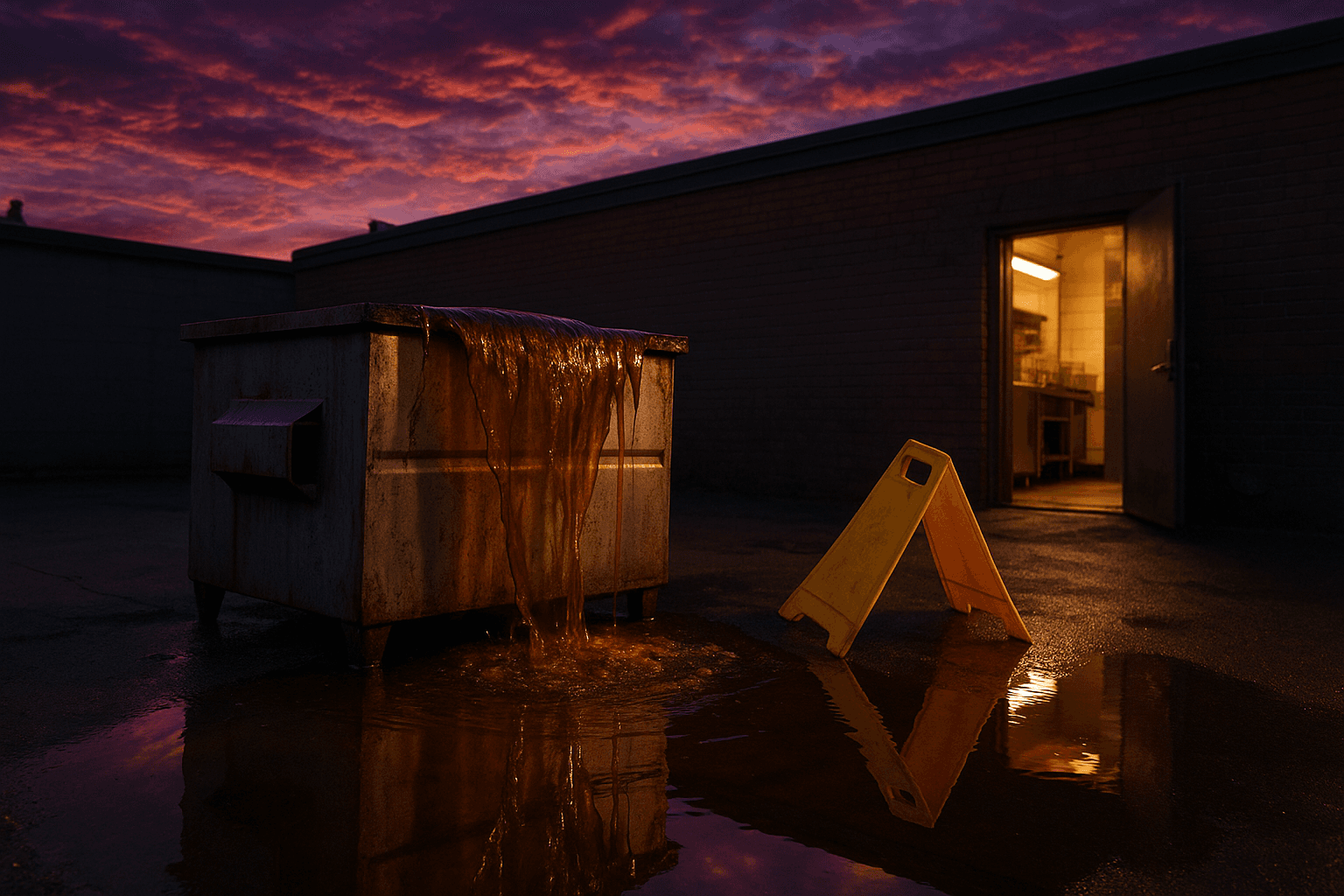

A grease trap overflow is one of the most stressful situations a restaurant operator can face. Grease backing up onto your kitchen floor during a busy dinner service, foul odors hitting the dining room, and the immediate fear of a health code violation combine to create a genuine emergency.
The good news is that how you respond in the first ten minutes makes the difference between a manageable incident and a catastrophic one. This guide walks through what to do first, who to call and in what order, how to clean up, and what a sewer authority expects to see if any of that grease reached a drain it should not have.
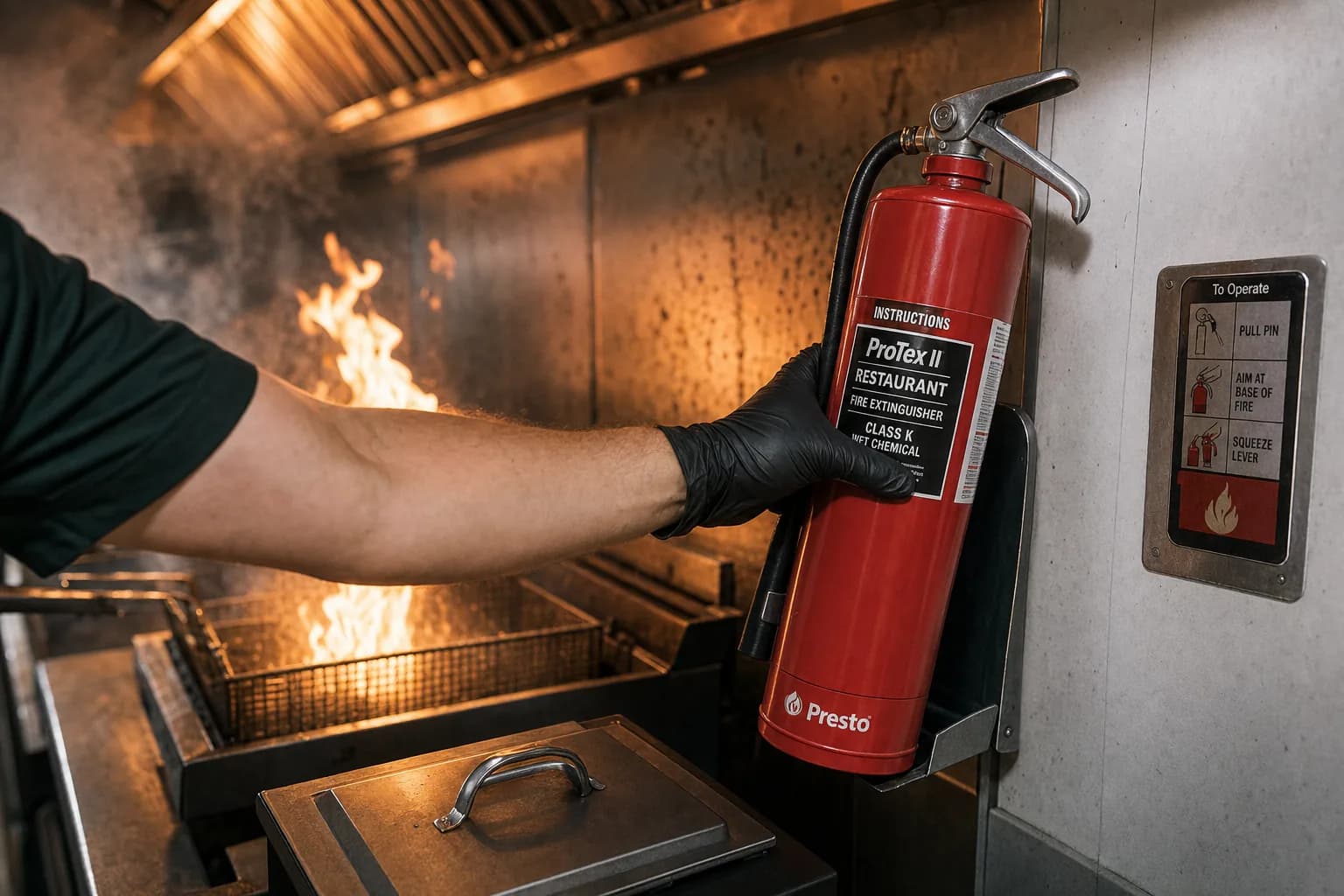
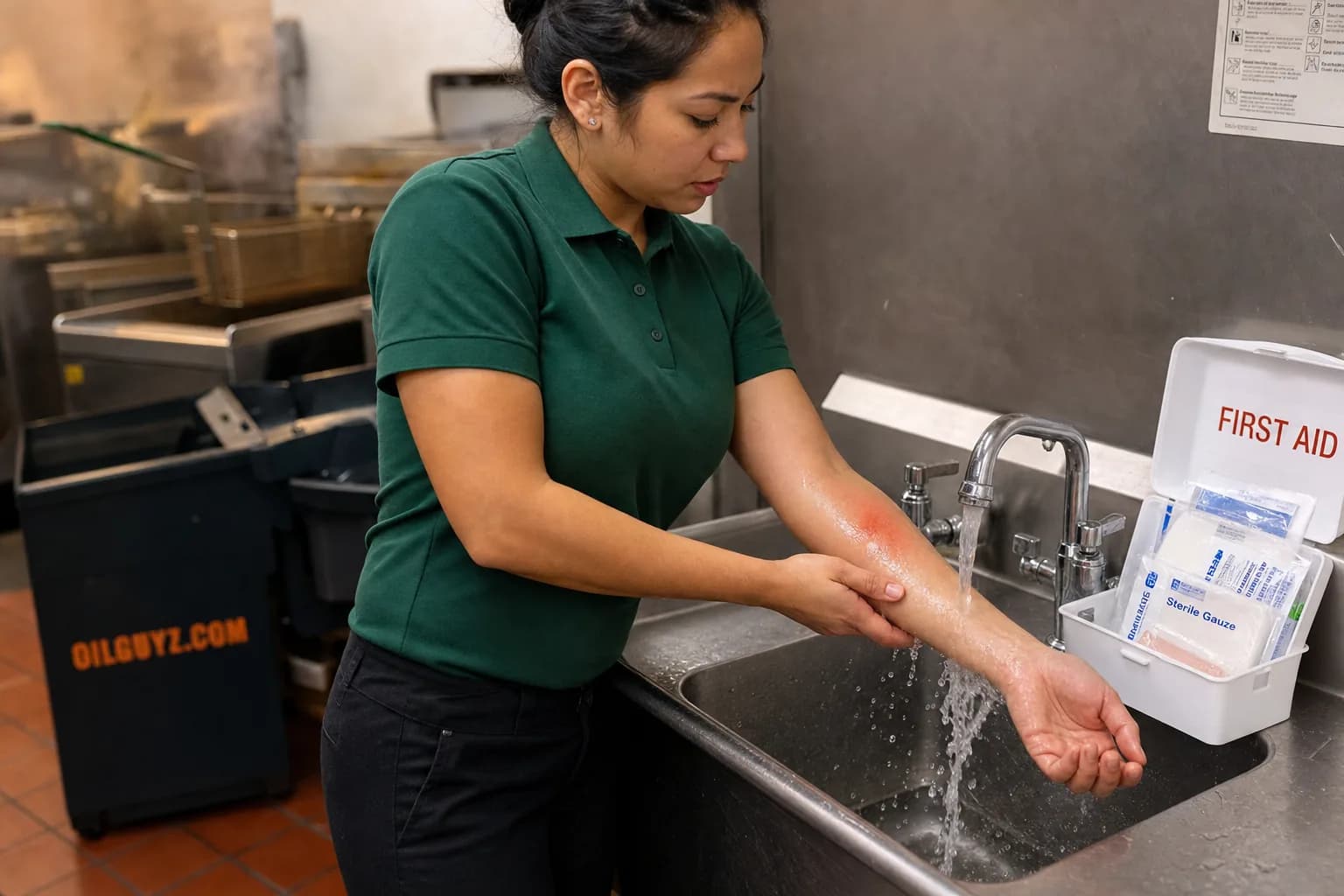
This is a plumbing and wastewater emergency, not a fire or an injury. If your kitchen is dealing with an active flame at the fryer instead, see our grease fire emergency response guide. If someone was burned by hot oil, see hot oil burn first aid for restaurants.
The First Ten Minutes: What to Do the Moment You Find It
Every minute you spend deciding is a minute grease keeps moving, toward a floor drain, a back door, or a storm grate in the parking lot. The first ten minutes are about stopping the source, containing what has already escaped, and not making the mess worse while you wait for help.
1. Stop the Source
Shut off whatever is actively pushing liquid into the trap. If a pump-out or oil transfer was underway when it started, kill the pump first, that alone often stops the overflow from getting worse. Then shut down every sink, dishwasher, and piece of equipment draining into the affected line. More is going in than the clogged trap can pass through, so cutting the inflow is the fastest way to stop the rise.
Post a staff member at each affected sink or drain if needed, so nobody runs water out of habit mid-shift.
2. Contain the Spread
Grab absorbent booms or socks if your kitchen stocks them, they lay across a floor and hold liquid far better than loose material alone. No booms on hand? Kitty litter, oil-absorbent pads, flour, or dry towels laid in a ring around the overflow work too. The goal is a physical barrier that blocks the grease's path toward any floor drain, doorway, or the parking lot.
Block the drain path first, not last. If grease is heading toward a floor drain, seal it, a drain plug, a sandbag, or a folded towel weighted down with a full bus tub buys you time. Past that point it is no longer just a kitchen floor problem, it is a plumbing system problem, and possibly a reporting obligation, covered below.
3. What Not to Do
Do not hose grease toward a floor drain or a storm drain to move it out of the way. Water does not dissolve grease, it pushes it further into the system and coats more pipe on the way down, and if any reaches a storm drain, you have turned a contained spill into an environmental discharge. Do not pour anything down the trap to clear it yourself either. Chemical drain openers and grease traps do not mix safely, and forcing a clog can push the blockage further into the line.
4. Safety Basics First
A grease-covered floor is a slip-and-fall risk, cordon it off and put down slip warning signage before anyone walks through it. If the overflow is in a confined space, like a below-grade trap room, or you notice a strong sewer-gas smell, ventilate the area (prop doors, run exhaust fans) and do not send anyone into a poorly ventilated space alone. Gloves and non-slip footwear are the minimum before cleanup starts.
Who to Notify, in the Right Order
Once the source is stopped and the spread is contained, the phone calls start. Who you call, and in what order, depends on what happened, but three calls cover nearly every overflow.
1. Your UCO Hauler or Transporter
Call first if the trap simply reached capacity or the pumping schedule slipped. Most CDFA-registered used cooking oil haulers and grease trap pumping companies offer emergency service, some around the clock, though after-hours calls can carry an added fee. Have ready: your exact address, where the trap access point is (interior, exterior, parking lot), how bad the overflow looks, and whether any grease reached a floor drain or the outside. If your regular provider cannot get there fast enough, call a backup, which is exactly why every kitchen should keep two hauler numbers posted near the trap access point.
2. The Property's Plumber
Call a plumber when the cause is not simply "the trap is full." A backup that keeps recurring, water backing up from multiple fixtures at once, or a trap that overflowed despite a recent pump-out points to a structural problem: a collapsed line, root intrusion, or a failed baffle inside the interceptor. A hauler can pump out what is there, but only a plumber can diagnose and fix a broken line or component. If you lease your space, route this call to your landlord or property manager too, since the interceptor and the line feeding it are usually a building-owned fixture, not kitchen equipment.
3. The Local Sewer or Wastewater Authority
Call immediately if any grease reached the sanitary sewer beyond your own line, or reached a storm drain at all. This is a real reporting obligation in most California and Washington jurisdictions, not optional courtesy, and self-reporting quickly tends to go better than an agency finding out on its own. Who you call depends on where your kitchen sits:
- East Bay: EBMUD's Clean Bay program, cleanbay@ebmud.com or (510) 287-1651. Fremont, Newark, and Union City route through Union Sanitary District's FOG Coordinator at (510) 477-7630.
- South Bay / Santa Clara County: San Jose's FOG program (Municipal Code Chapter 15.14); Campbell, Los Gatos, Monte Sereno, and most of Saratoga go through West Valley Sanitation District at (408) 378-2407.
- San Francisco: SFPUC's commercial information line, (415) 695-7310.
- Seattle: Seattle Public Utilities' FOG program at greasefreepipes@seattle.gov. Washington runs no CDFA-style state hauler registration, so this is a city and county call, not a state one.
- Everywhere else: your city's public works department or county sanitation district will route you correctly. Southern California agencies like Orange County Sanitation District publish their own FOG ordinances and enforcement contacts online.
Do not wait for a full damage assessment first. A quick "we had an overflow, some may have reached a storm drain, here is what we have done" beats a delayed report every time.
Cleanup Procedures
Once the overflow is contained and emergency pumping is scheduled, begin cleanup immediately. Do not wait for the pumping truck to arrive.
Interior Cleanup
- Remove bulk grease using flat shovels, scrapers, or squeegees. Collect it in buckets or trash bags lined with absorbent material.
- Apply absorbent material (kitty litter works well) to remaining grease on the floor. Let it sit for 10 to 15 minutes to absorb, then sweep it up.
- Degrease the floor using hot water and a commercial degreasing agent. Do not use the kitchen sinks for this. Use mop buckets filled at a utility sink that drains to a different line if possible, or use minimal water to avoid overwhelming the already-compromised trap.
- Sanitize after degreasing. The floor must be both clean and sanitized before resuming normal kitchen operations.
- Inspect floor drains in the affected area. If grease entered any floor drains, note this for the pumping crew so they can assess whether the drain lines need flushing.
Exterior Cleanup
If grease reached exterior areas, pavement, parking lots, or loading docks:
- Apply absorbent granules immediately to prevent spread.
- Scrape and bag all grease-saturated absorbent for disposal by your hauler.
- Pressure wash the area with hot water and degreaser once bulk grease is removed.
- Check nearby storm drain grates for any grease contamination, and report anything you find per the notification steps above.
Documentation for the Sewer Authority
This is different from your routine CDFA transport manifest, and mixing the two up is a common mistake. A manifest documents a normal, scheduled pickup: date, registered transporter, and volume for oil that left your kitchen the way it was supposed to. Incident documentation for a sewer authority is a separate record built around one specific event. It typically wants to see:
- Date and time the overflow was discovered, and roughly when it started if you can estimate it.
- Volume estimate. You do not need an exact gallon count. A reasonable estimate, a few gallons, half the trap's capacity, and so on, is normal and expected.
- Containment actions taken, in order, with timestamps: when the source was stopped, when absorbent went down, when the drain was blocked.
- Photos of the affected area, before cleanup began and after it was completed, including any floor drain or storm drain the grease reached.
- Who was notified and when, including your hauler, your plumber if one was called, and the wastewater authority itself.
Keep a copy of whatever you send the wastewater authority alongside your grease trap maintenance log and pickup manifests. They document two different things, a compliance incident versus routine service, but an inspector reviewing your file after an overflow will want to see both.
When to Call the Health Department
In most California jurisdictions, you are not required to self-report a grease trap overflow to the health department unless it caused a public nuisance or reached the storm sewer, and that call goes to the wastewater authority covered above. But if a health inspector arrives while you are still handling the overflow, be transparent. Show them your documentation, explain the steps you have taken, and present the emergency pumping receipt. Inspectors deal with these situations regularly and are far more lenient with operators who respond responsibly than with ones who try to hide it.
Preventing the Next Overflow
Once the emergency is resolved, take these steps to make sure it does not happen again:
Increase pumping frequency. If your trap overflowed because it reached capacity before the next scheduled service, your cleaning interval is too long. Shorten it by at least 25 percent.
Install a high-level alarm. Electronic grease level monitors cost a few hundred dollars and provide an alert when the trap reaches a preset threshold. This gives you days of warning instead of zero.
Audit kitchen practices. An overflow often reveals underlying habits that accelerate grease buildup: staff pouring fryer oil down sinks, inadequate plate scraping, or running the dishwasher with heavily soiled cookware.
Keep backup hauler contacts posted. Your primary hauler may not always be available for emergencies. A second registered option, posted right at the trap access point, ensures you can always get same-day service.
The Bottom Line
A grease trap overflow is never pleasant, but it does not have to become a disaster, or a violation. The restaurants that recover quickly have a clear response plan: stop the source, contain the spread, call the right people in the right order, clean it up, and document what happened. Taking these steps in order minimizes damage, protects your standing with both the health department and your wastewater authority, and gets your kitchen back to normal operations fast.