
Food truck cooking oil disposal comes down to one rule: cool your used fryer oil, store it in a sealed container, and have it collected by a CDFA-registered program that issues a manifest, never down a drain, never in the commissary dumpster, never curbside. That's the whole legal path, and it's the same path a sit-down restaurant follows, just sized for a mobile kitchen.
The hard part for food trucks isn't the rule, it's the logistics. You don't have a back-of-house dock or a permanent bin behind the building. You have a few gallons of hot oil, a cramped service window, and a home base you share with other operators. This guide covers where mobile operators can legally put used cooking oil, how commissary collection actually works, what container fits a truck, and how even a single-truck operation gets free scheduled pickup plus a digital manifest after every load.
TL;DR
- Used cooking oil from a food truck can only be legally disposed of through a registered collection program, never a drain, storm drain, sink, trash can, or general dumpster.
- The practical setup is a locked collection container at your commissary or home base; you cool and transfer oil into it, and a licensed renderer empties it on a schedule.
- In California, a manifest is required for every used cooking oil pickup, even a single truck, and records must be kept at least two years (3 CCR §1180.24).
- Small operators qualify for free pickup. Used cooking oil is a renewable-fuel feedstock, so collection is offered at no charge, the value is in the oil.
- Every gallon becomes biodiesel / renewable-diesel feedstock, cutting lifecycle greenhouse gases by ~79 to 86% versus petroleum diesel (Argonne National Laboratory, Environmental Science & Technology, 2022).
Where a Food Truck Can, and Can't, Dispose of Used Cooking Oil
Start with the "can't" list, because most food-truck disposal fines come from one of these shortcuts:
- Storm drains and curb gutters, illegal. They flow untreated straight into creeks, the bay, or the ocean.
- Sinks and any drain, illegal and self-defeating. Grease congeals and clogs pipes and sewer mains.
- Curbside trash, public cans, or the commissary's general dumpster, not legal disposal. Liquid grease in trash leaks, draws pests, and isn't documented.
- Pouring it onto soil or down a parking-lot drain, illegal dumping, the exact problem the state's registration and licensing program exists to stop.
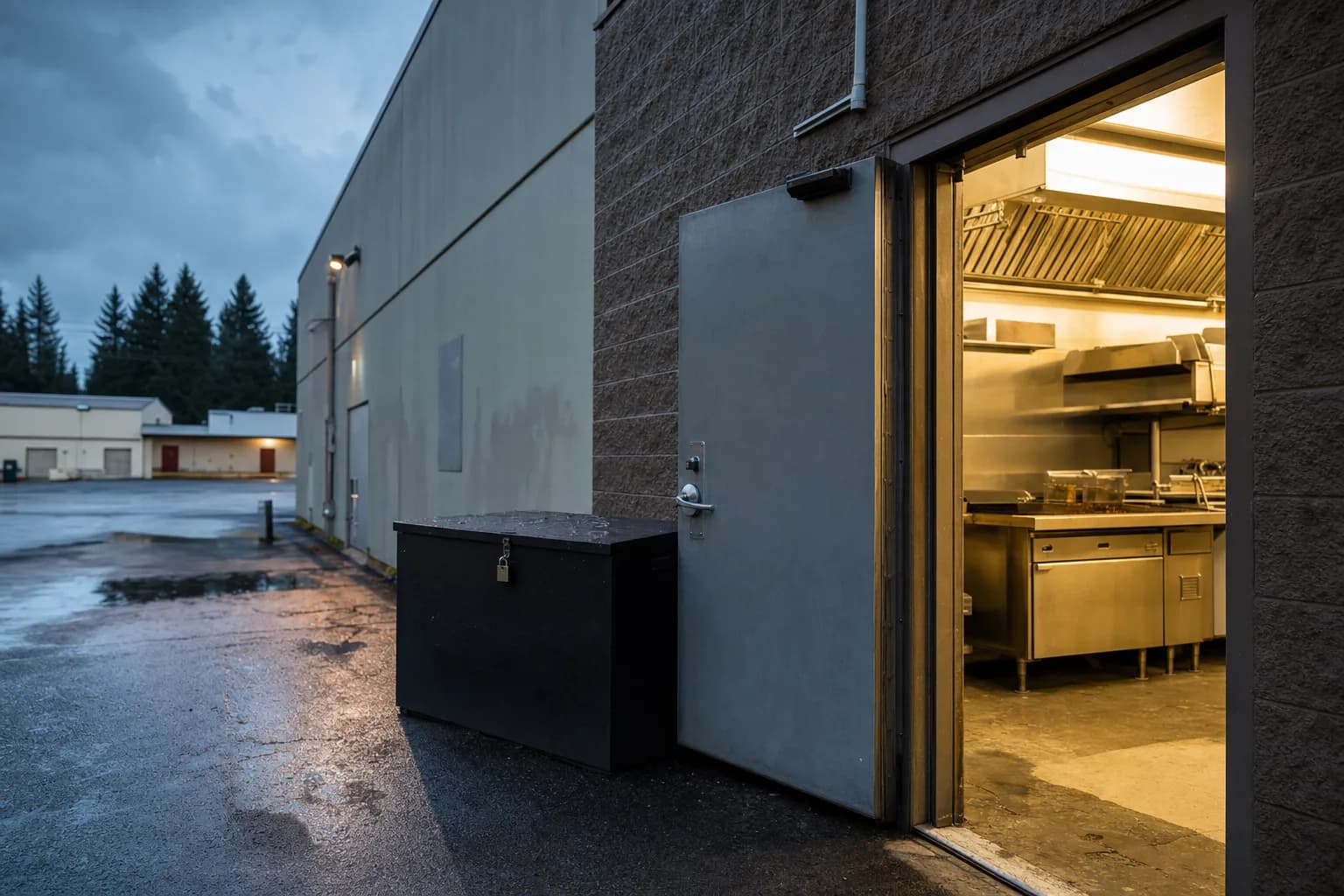
Now the "can": the only compliant route is a dedicated used cooking oil collection container emptied by a CDFA-licensed renderer. For a food truck that almost always means a locked collection container at your commissary or home base, not on the truck itself. The truck holds oil only as safe, sealed interim storage between service and your next visit to base.
This isn't a Southern California quirk. California's Inedible Kitchen Grease (IKG) program registers the transporters and licenses the renderers and documents the chain of custody for collected oil specifically to curb theft and illegal dumping (CDFA MPES). When you collect through a registered program, you're inside that documented system; when you dump, you're outside it, and that's where the liability lives.
The Commissary Is Your Disposal Hub
Most mobile operators are already required to base out of a commissary or shared commercial kitchen for prep, water, and cleaning. That lot is also the natural home for your used cooking oil, and it's what makes disposal simple instead of stressful.
Here's the everyday workflow:
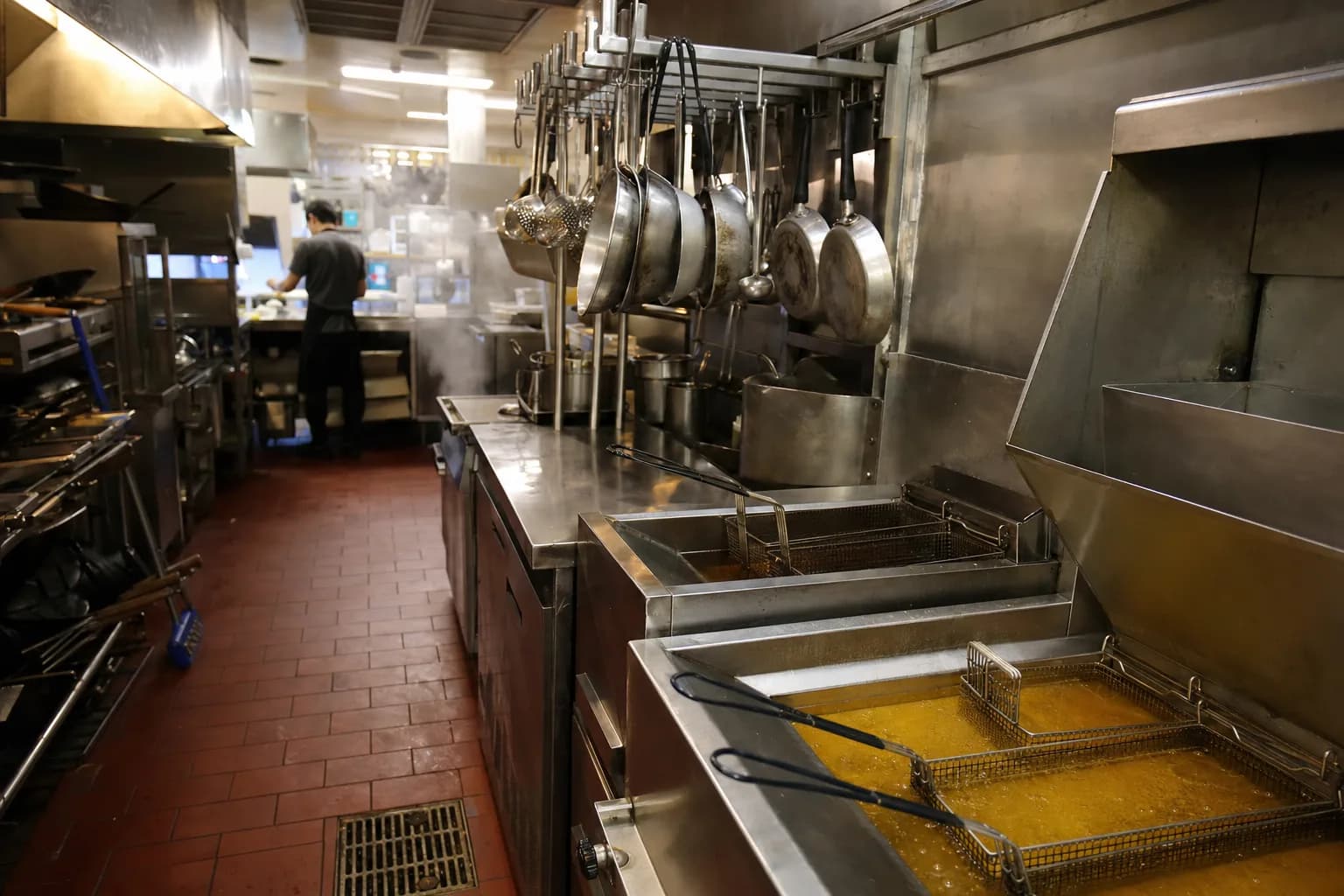
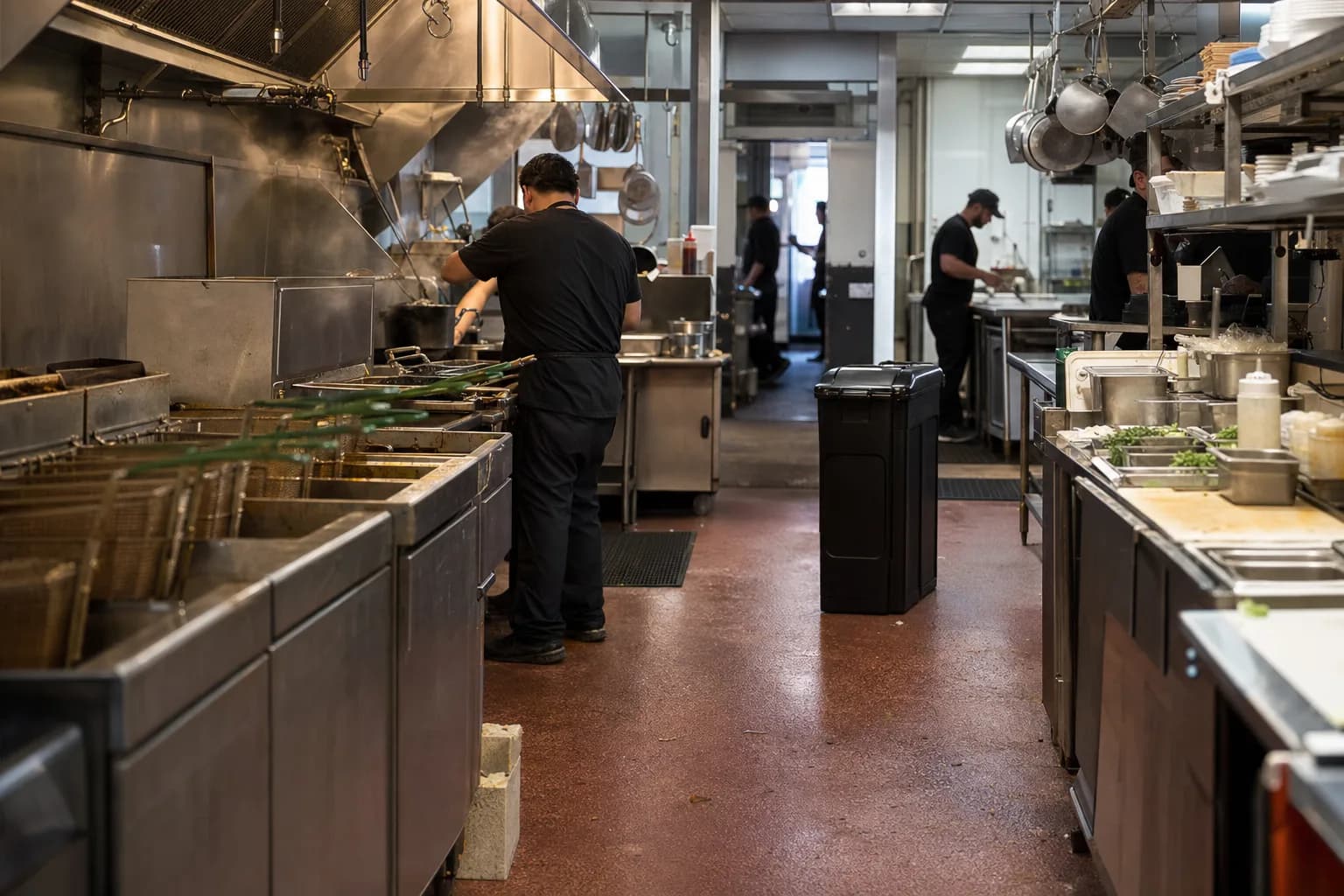
- Finish frying, then let the oil cool. Hot oil is dangerous to transfer and can warp containers. Cool it fully before you move it.
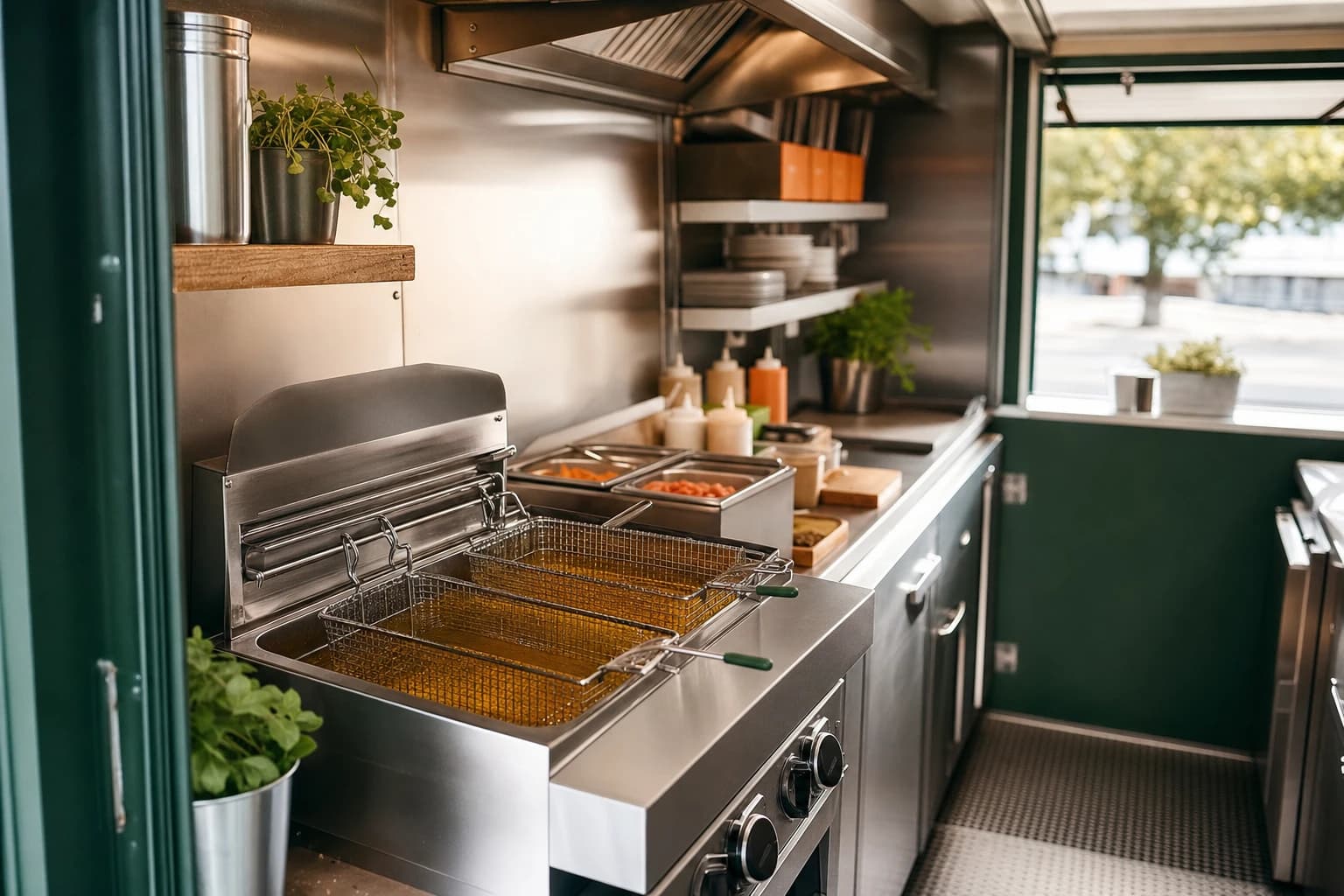
- Transfer to a sealed, leak-proof container on the truck. This is interim storage only, a closed vessel so nothing sloshes or leaks on the drive back.
- Empty into the locked collection container at your base. One shared container at the commissary serves the trucks that park there.
- A licensed renderer empties it on a schedule and documents each pickup with a manifest.
The shared-container angle is the quiet advantage of commissary life. If five trucks share a lot, one locked container and one collection program can cover all of them, nobody needs their own bin, and the site gets a single, predictable service. Oil Guyz provides a free locked anti-theft container sized to the site's combined output, with month-to-month service and no minimum-volume requirement, so a low-volume truck or a small lot isn't paying for capacity it never fills.
If your truck is part of a larger operation, a fleet, a brand running several trucks, or a commissary managing many tenants, the same program scales. See Multi-Location Cooking Oil Collection for how one agreement and one Filtrate dashboard handle several sites or several trucks without a separate vendor at each.
Compact Containers: What Actually Fits a Mobile Operation
Food trucks have two distinct storage needs, and it helps to keep them separate in your head.
| Need | What it is | What to use |
|---|---|---|
| On-truck interim storage | Holding cooled oil safely until you reach base | A sealed, spill-proof, leak-proof closed container, never an open bucket |
| Disposal collection | Where the renderer actually picks the oil up | A locked collection container at your commissary or home base |
For the disposal side, compact is the point. A single truck doesn't generate restaurant volume, so a smaller locked container sized to real output beats an oversized bin that sits half-empty. The two things that matter:
- It locks. Used cooking oil is a genuine commodity and a documented theft target (more on that below). A locked container keeps both the oil and the paper trail yours.
- It's sized to your volume. Right-sizing means you schedule pickup before the fill line, not after an overflow. Overflowing grease is a slip hazard, a pest magnet, and a code problem.
Oil Guyz supplies the locked collection container free and sizes it to your actual output, so a single-truck base and a five-truck lot each get the right capacity, not a guess.
Yes, Small and Single-Truck Operators Get Free Pickup
A myth worth killing: that free used cooking oil pickup is only for big restaurants or chains. It isn't. Free scheduled pickup is available to small operators, including single food trucks, as long as you collect through a registered program.
The reason is simple economics. Used cooking oil isn't waste anybody pays to haul away, it's a valuable renewable-fuel feedstock. The value lives in the oil itself, which is why a legitimate collector offers the container and the pickup at no charge rather than billing you for disposal. So the choice for a small operator isn't "pay for legal disposal vs. cut a corner." It's "free, documented, legal pickup vs. an illegal shortcut that risks a fine." That's not really a choice.
With Oil Guyz, a one-truck operation gets the same package a large kitchen does:
- Free scheduled pickup on a cadence that matches your volume
- A free locked anti-theft container at your base
- A CDFA-compliant digital manifest emailed after every pickup
- Month-to-month, no long contract, cancel anytime, and a real person who answers the phone
The Manifest: Why It Matters Even for One Truck
It's tempting to assume paperwork rules are for the big guys. They're not. In California, a manifest is required for every used cooking oil pickup, electronic manifests are legal under the state's Uniform Electronic Transactions Act, and records must be retained for at least two years (3 CCR §1180.24). Truck size doesn't exempt you.
The manifest is the documented chain of custody, proof your oil went to a licensed renderer and not into a storm drain. That trail protects you two ways:
- In an inspection or audit, you can show exactly where your oil went, with dates and signatures.
- Against theft. Used cooking oil is a real-world theft target, which is exactly why California's Inedible Kitchen Grease program documents the chain of custody for every load (CDFA MPES). A thief who taps your container also breaks that record. A locked container plus a manifest after every pickup keeps both the oil and the paper trail yours.
Oil Guyz routes every load to a CDFA-licensed renderer and emails the digital manifest automatically, so the record builds itself, no binder to maintain, no forms to chase. The full picture of how that paper trail works lives in Cooking Oil Compliance & Reporting.
Setting a Pickup Schedule That Fits a Truck
Schedule by volume, not the calendar. A single truck with one or two fryers produces a fraction of a fixed restaurant's output, so the right cadence is usually lighter:
| Situation | Typical pickup cadence |
|---|---|
| One truck, light/occasional frying | Monthly or on-call |
| One busy fried-food truck | Every few weeks |
| Several trucks sharing one container | Biweekly or weekly, by combined volume |
The rule is the same at any scale: empty the container before it hits the fill line, never the brim. Because Oil Guyz service is month-to-month with no minimum, you can scale the frequency up for festival season or a summer event run and back down when things slow, with a phone call, not a contract amendment.
Putting It Together
For a food truck, compliant used cooking oil disposal is a short, repeatable loop: cool it, seal it, carry it to base, empty it into a locked collection container, and let a licensed renderer pick it up with a manifest. Skip any step toward a drain or a dumpster and you've traded a free, documented program for a fine and a liability.
When you're ready to put a free locked container at your base and a digital manifest in your inbox after every pickup, the Food Trucks cooking oil program is built for mobile operators specifically. For the bigger picture of containers, scheduling, and compliance across any kind of kitchen, start with Restaurant Cooking Oil Management.
Sources
- California Code of Regulations, Title 3 §1180.24 (manifest requirement + retention): https://www.law.cornell.edu/regulations/california/3-CCR-1180.24
- California Department of Food and Agriculture, Meat, Poultry & Egg Safety / Inedible Kitchen Grease program (registration + licensing + chain of custody): https://www.cdfa.ca.gov/AHFSS/MPES/
- U.S. DOE Alternative Fuels Data Center, Renewable Diesel (carbon intensity): https://afdc.energy.gov/fuels/renewable-diesel
- U.S. DOE Alternative Fuels Data Center, Biodiesel Production (lifecycle GHG): https://afdc.energy.gov/fuels/biodiesel-production
- U.S. EPA, Renewable Fuel Standard Program Overview: https://www.epa.gov/renewable-fuel-standard/overview-renewable-fuel-standard-program