
TL;DR: To dispose of turkey fryer oil after Thanksgiving, let it cool completely (overnight is safest), then either strain and store it in a sealed container to reuse for your next fry, or pour the cooled oil into a sealed jug and bring it to a free cooking-oil drop-off to be recycled into clean renewable fuel. Never pour turkey fryer oil down the drain, into a toilet, or out in the yard. It clogs pipes, backs up sewers, and pollutes waterways. In Southern California, the free Oil Guyz Thanksgiving drop-off takes cooled oil at two locations, no appointment, no charge. No drop-off near you? Call your city or county household hazardous waste site, or soak small amounts into cat litter and bag them for the trash.
You just pulled a golden, crispy bird out of three or four gallons of bubbling oil. Dinner was a win. Now you are staring at a pot of dark, cooling grease and wondering what on earth to do with it. This is the part nobody plans for, and it is exactly where most people make an expensive mistake.
Here is how to handle that turkey fryer oil the right way, step by step.
Step one: let the oil cool down completely
Turkey fryer oil runs at 350 to 400 degrees Fahrenheit. Moving a pot of hot oil is the single most dangerous thing you can do on Thanksgiving, and burns from fryer oil are a real holiday hazard.
So before you touch anything:
- Turn off the burner and let the oil sit in the pot, covered, until it is fully cooled. For three to five gallons, that means leaving it overnight.
- Do not try to speed it up by adding water or moving it to the fridge. Cold water hitting hot oil causes splatter and steam.
- Once it is at room temperature, it is safe to strain, store, or transport.
Cool oil is calm oil. Everything after this gets easier once you wait.
Step two: decide if you are reusing it or recycling it
Good news. Frying oil is not automatically garbage after one turkey. The oil you used is a real product worth money, and you have two solid paths.
Reuse it (if the oil still looks and smells clean)
Peanut oil, the most popular turkey fryer oil, can typically handle three to four turkey fries before it breaks down, as long as you store it correctly. To save it for next time:
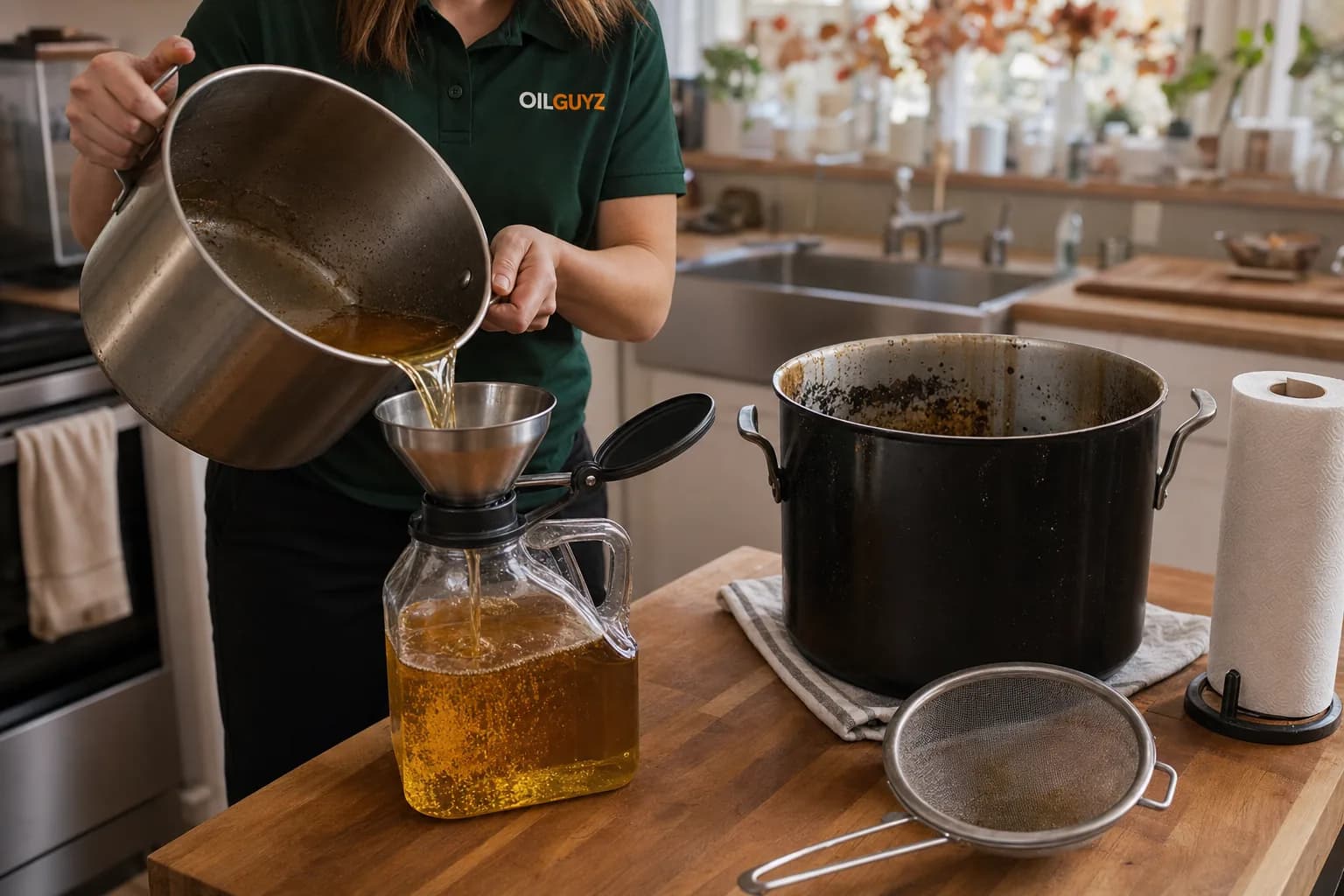
- Strain the cooled oil through a fine-mesh strainer to catch the big bits.
- Filter it again through cheesecloth or a coffee filter, especially if you used a breaded or marinated bird.
- Pour it into a clean, airtight container and store it cold. The fridge or freezer extends its life and slows it from going rancid.
Toss the oil instead of reusing it if you notice any of these warning signs:
- It smells rancid, sour, or "off."
- It looks dark, murky, or thick.
- It foams heavily, smokes at lower temperatures, or does not bubble when food goes in.
When in doubt, recycle it. Bad oil makes bad food.
Recycle it (the smart move when the oil is spent)
When the oil has done its job, it should not go in the trash bag where it can leak, and it absolutely should not go down any drain. The cleanest option is to drop it off for recycling, where it gets turned into renewable fuel instead of rotting in a landfill. More on exactly where to take it below.
What NOT to do with turkey fryer oil (and why it matters)
This is the part that trips people up every single year. These shortcuts feel harmless. They are not.
Do not pour it down the sink, drain, or toilet. Warm oil flows like a liquid, then cools inside your pipes and hardens like candle wax. It grabs onto food scraps and other grease and builds a blockage you cannot see until it is too late.
Do not dump it in the yard, a storm drain, or the gutter. Storm drains run straight to creeks, rivers, and the ocean with no treatment. Oil poured outside coats soil, harms wildlife, and washes pollution downstream.
Do not toss the whole pot of liquid oil in the trash. It leaks through bags, makes a mess for sanitation crews, and can contaminate other recyclables.
Why be this strict? Because the day after Thanksgiving is so notorious for clogs that plumbers have a name for it: "Brown Friday." Roto-Rooter, the largest drain service in the country, reports its service calls jump about 50 percent that day, making it the single busiest day of the year for plumbers. The number one culprit is grease and turkey oil poured down kitchen drains.
It is not just your pipes at stake. In May 2025, a roots-and-grease blockage in a Costa Mesa sewer line caused a roughly 4,000-gallon sewage spill that helped shut down the coastline from Huntington State Beach to Newport Beach to swimmers and surfers. Grease in the sewer is a community problem, and it starts at kitchen sinks just like yours.
For a deeper breakdown of safe disposal at home, see our full guide on how to dispose of used cooking oil safely.
How to store oil for the drive to a drop-off
Getting oil from your kitchen to a recycling bin is simple if you contain it well. Here is the quick checklist:
- Wait until the oil is fully cooled to room temperature.
- Use a sealable, leak-proof container. The original oil jug is perfect. An empty milk jug, a juice bottle, or a sturdy plastic container with a tight lid all work.
- Use a funnel to avoid spills, and wipe the rim before you cap it.
- Seal it tight and stand it upright in your trunk, ideally inside a box or bag in case of tip-overs.
- You do not need to strain it for recycling. The renderer filters it. Strain only if you are saving oil to reuse.
That is it. Cooled, sealed, upright. You are ready to drop it off.
Where to take it: your disposal options compared
You have a few real choices for getting rid of spent turkey oil. Here is how they stack up so you can pick the one that fits.
| Option | Cost | Effort | What happens to the oil |
|---|---|---|---|
| Free community drop-off | Free | Drive it over, pour, done | Recycled into clean renewable fuel |
| Curbside oil recycling (some cities) | Usually free | Check rules, may need a city container | Recycled, if your city offers it |
| Seal and trash (small amounts only) | Free | Easy | Landfill |
| Mix with cat litter or sawdust, then trash | Free | Messy | Landfill |
| Down the drain or yard | "Free" until the plumber bill | Easy | Clogs, spills, pollution. Never do this |
For most Southern California households, the free community drop-off is the clear winner. It costs nothing, takes a few minutes, and the oil actually gets reused for something good instead of sitting in a landfill. To see how the options compare specifically under state rules, read our overview of used cooking oil disposal options in California.
Drop it off free at the Oil Guyz Thanksgiving event
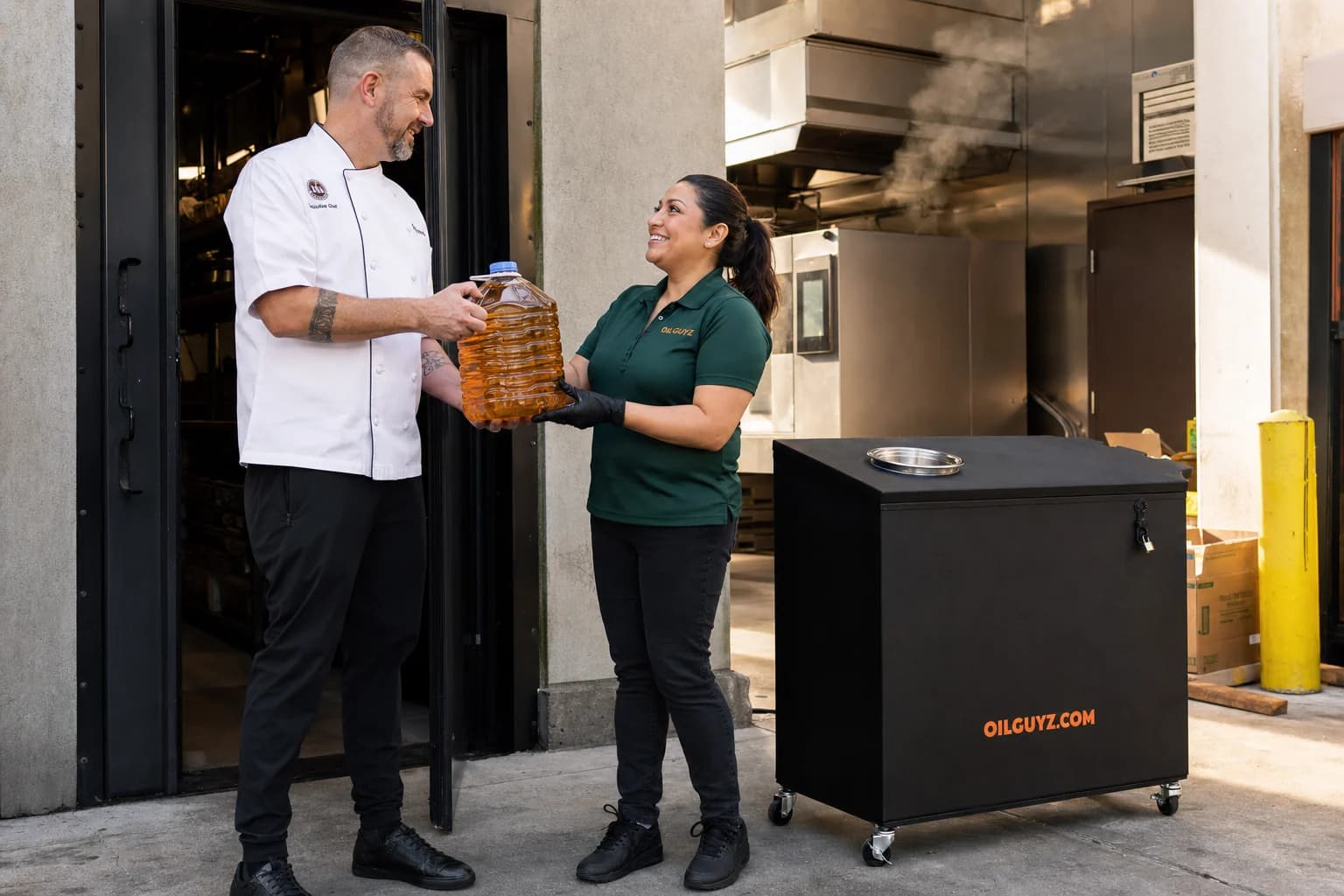
If you are anywhere in Southern California, you do not have to figure out the trash-bag method or hunt for a recycler. We set up a free, self-serve cooking-oil drop-off every holiday season so the community has an easy, responsible place to send the grease.
Here is how it works:
- Bring your cooled turkey fryer oil in a sealed plastic container. No glass.
- Pour it into the clearly marked recycling bin.
- That is it. No appointment, no paperwork, no charge.
Two locations:
- Orange County: 506 Fee Ana St, Placentia
- Los Angeles County: 4570 Ardine St, Gate C, South Gate
When: November 27 through December 27, Monday through Saturday, 9 a.m. to 4 p.m.
Every drop of oil you bring gets recycled by our licensed renderer into clean renewable fuel. Used cooking oil is a prized feedstock for renewable diesel, which can cut greenhouse gas emissions by up to about 65 percent compared to petroleum diesel. So your Thanksgiving leftovers literally help power cleaner trucks instead of clogging a sewer. Full details and a map are at oilguyz.com/thanksgiving, and you can read more on the benefits of recycling used cooking oil.
No drop-off near you? How to get rid of fried turkey oil
Not everyone lives near Placentia or South Gate. If a cooking oil drop-off is too far to drive, you still have three safe ways to get rid of fried turkey oil. Start at the top of the list.
1. Call your city or county household hazardous waste site. Cooking oil is not hazardous waste, but many of these sites take it from residents anyway and send it to be recycled. Call before you load the car, because the rules differ from one site to the next. Ask three questions: do you accept used cooking oil, how many gallons can I bring, and what kind of container do you want it in. For Orange County and Los Angeles, the sites are listed in our guide to where to recycle cooking oil in Los Angeles and Orange County.
2. Soak it up, bag it, and put it in the trash. This is the fallback when there is nowhere to recycle it. Let the oil cool completely. Stir it into an absorbent such as cat litter, sawdust, or shredded paper until no liquid pools at the bottom. Scoop the mix into a trash bag, tie it shut, then double or triple bag it so nothing leaks in the can or the truck. This works for a quart or two at a time. A full fryer pot takes a lot of litter, so for three or four gallons, make the hazardous waste call first.
3. Seal it and hold it until you can recycle it. Used oil does not have to be fresh to be recycled. Capped tight in a plastic jug, it can sit in the garage until your next trip. The Oil Guyz drop-off stays open through December 27, so there is no rush to deal with it the morning after Thanksgiving.
Whichever one you pick, the rule from earlier still holds: never down a drain, a toilet, or a storm drain.
Restaurants: skip the holiday scramble with free year-round pickup
If you run a restaurant, food truck, or commercial kitchen, you are dealing with this every week, not just on Thanksgiving. You do not need to haul anything anywhere.
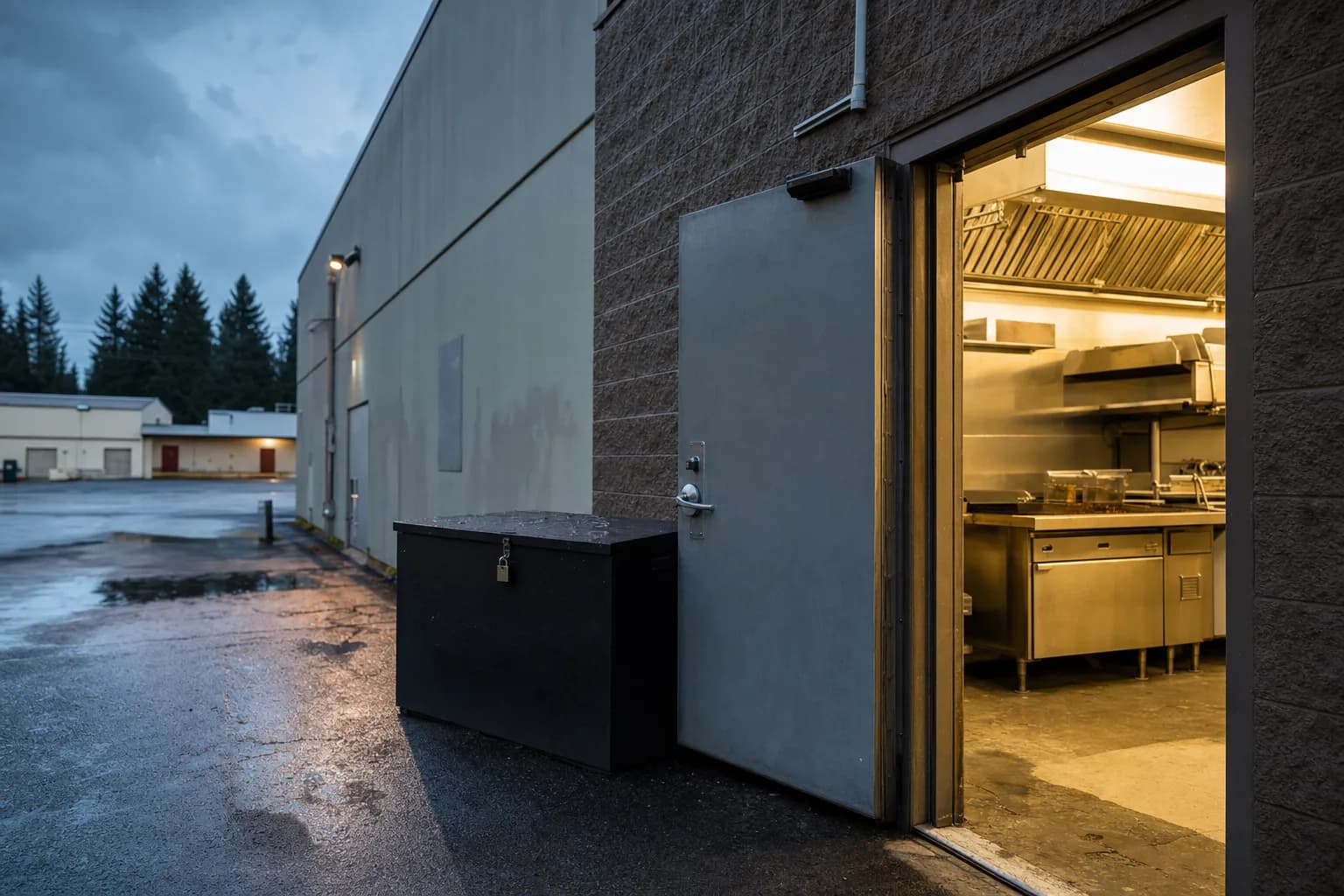
Oil Guyz provides free used cooking oil pickup for food businesses across Southern California, the Bay Area, and the Seattle and Tacoma area. Pickups are performed by CDFA-registered transporters, we handle the container and the scheduling, and the oil gets recycled into renewable fuel. No fees, no hassle, fully compliant.
If your kitchen is fielding grease somewhere it should not go, set up a free pickup and let us handle the rest.
The bottom line
Cool it down. Reuse it if it is clean. Recycle it when it is spent. Never send it down a drain or into the yard. Do that, and you skip the Brown Friday plumber bill, keep grease out of the sewer, and turn your turkey oil into clean fuel.
Drop your cooled oil free this holiday season at oilguyz.com/thanksgiving. Restaurants, ask about free year-round pickup.