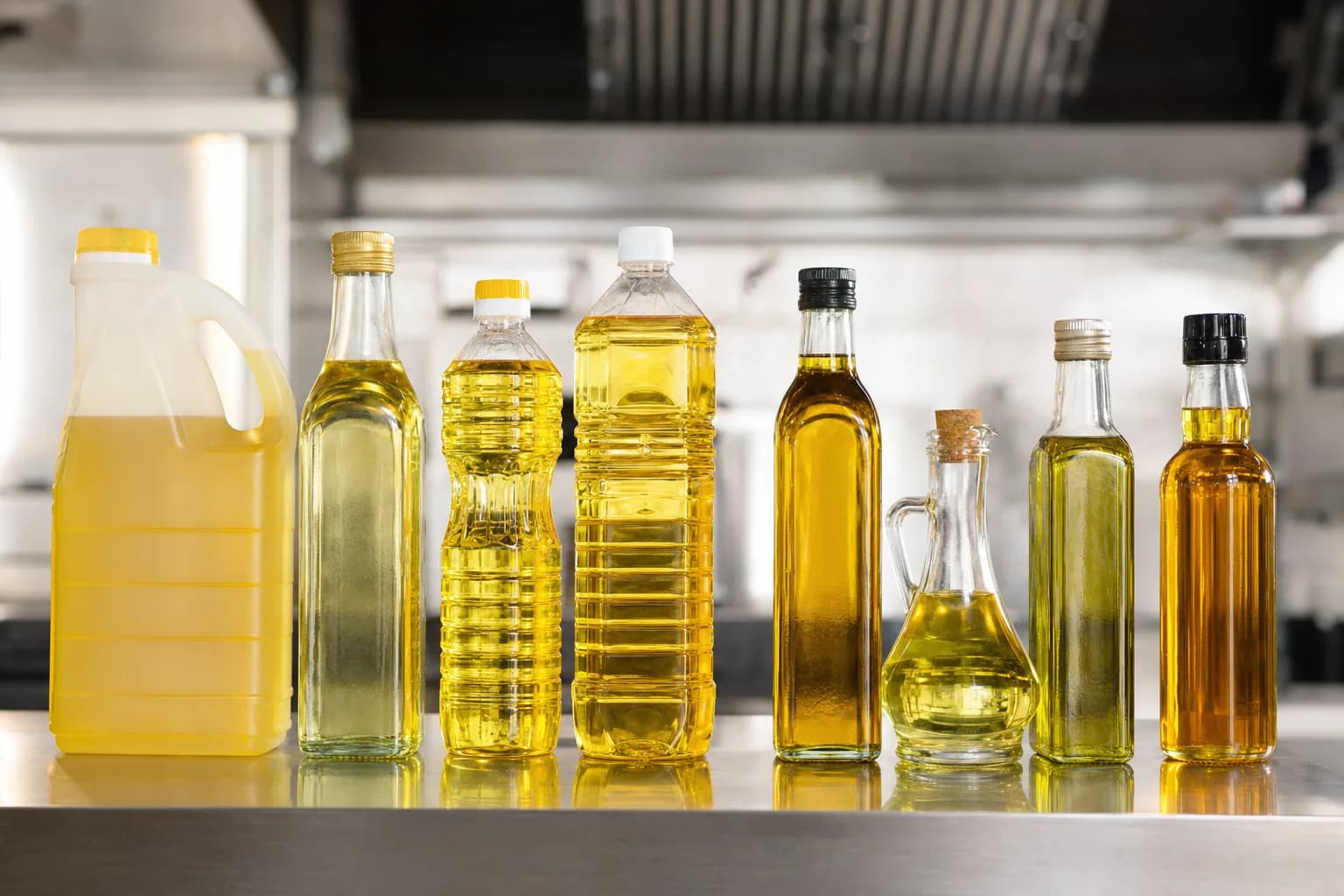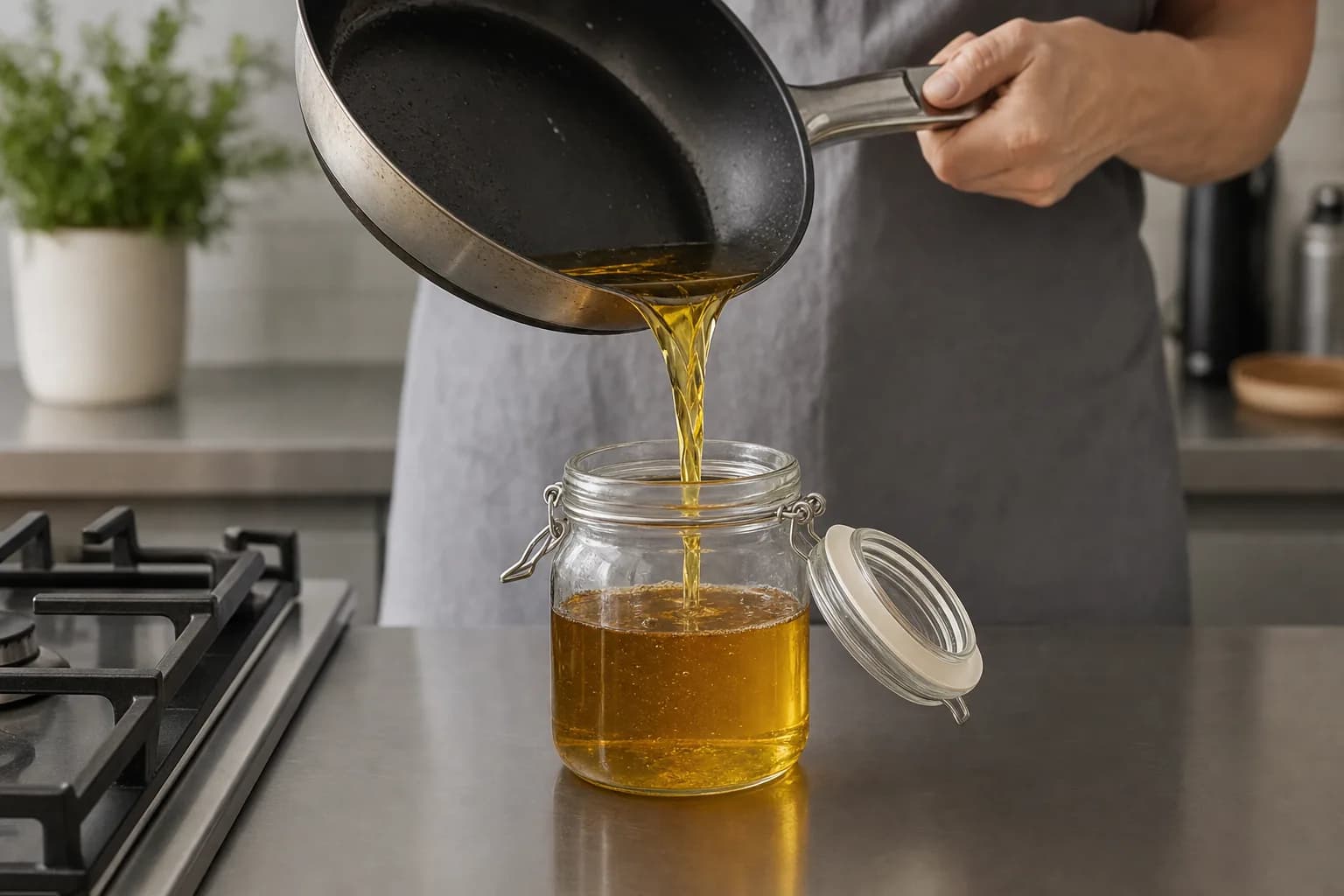

To dispose of used cooking oil safely, let it cool completely, then pour it into a sealable container, never down the drain or toilet, and never loose in the trash. Small household amounts can be sealed and thrown away or dropped off for recycling. Restaurants and commercial kitchens should hand their oil to a registered recycler for free used fryer oil collection.
That short answer covers the essentials, but the details matter, especially the difference between a few tablespoons of pan grease at home and the dozens of gallons a busy kitchen produces every week. Below is the complete, no-shortcuts guide to getting it right, why drain disposal causes so much damage, and what actually happens to the oil after it leaves your hands.
The One Rule That Matters Most: Never Down the Drain
Whether you are a home cook or running a 12-burner line, the single most important rule is the same: used cooking oil, grease, and fat never go down any drain, not the kitchen sink, not the floor drain, not the toilet, and not even with the garbage disposal running.
This is not just a plumbing preference. Fats, oils, and grease, collectively called FOG, are a leading cause of sewer blockages and overflows. The U.S. Environmental Protection Agency estimates that between 23,000 and 75,000 sanitary sewer overflows happen in the United States every year, and its program materials list fats, oils, and grease sent into the sewers among the contributing causes. Those overflows spill raw or partially treated sewage into streets, basements, and waterways.
Here is what makes FOG so deceptive: when you flush it with hot water, it looks like it is gone. It is not. As the East Bay Municipal Utility District and the Texas Commission on Environmental Quality both explain, the grease comes out of solution as the water cools inside the pipe, congeals, and hardens onto the pipe walls, narrowing the line until it clogs and backs up.
Two Myths That Cause Most Clogs
Before the steps, clear out the two beliefs that send the most grease into sewers:
- "Hot water washes it away." It doesn't. The TCEQ is blunt about this: hot water only melts FOG off your dishes and moves it into the sewer pipe, where it cools downstream and clogs the line. You have simply relocated the problem to a spot that is harder and more expensive to reach.
- "My garbage disposal handles grease." It doesn't. Grinding food before rinsing it down the drain only makes the pieces smaller. The disposal does nothing to stop FOG from coating your pipes, it just delivers it in smaller chunks.
How to Dispose of Used Cooking Oil at Home (Step by Step)
For households, the right method depends on how much oil you have. Follow these steps:
- Let it cool completely. Never move or pour hot oil, it can cause serious burns and can warp or melt plastic containers. Leave the pan or fryer off the heat until the oil reaches room temperature.
- Scrape and wipe pans first. Before washing, wipe greasy pans and plates with a paper towel to keep residual FOG out of your sink entirely. Toss the paper towel in the trash.
- Contain small amounts. For a cup or less, pour the cooled oil into a sealable, non-recyclable container, an old jar, a milk carton, or the original bottle. Seal the lid tightly.
- Or absorb it. Alternatively, mix the cooled oil into an absorbent material such as cat litter, sawdust, or paper towels, then seal it in a bag. This is the method the TCEQ, EBMUD, and county household-hazardous-waste programs recommend.
- Trash the small stuff; recycle the big stuff. Sealed small amounts can go in your household trash. But for larger quantities, say, the gallons left over after frying a turkey, take the cooled, contained oil to a cooking-oil drop-off location or a registered grease recycler rather than the trash or the drain.
That last point is the one people miss most. A teaspoon of bacon grease in a sealed jar is fine in the garbage; three gallons of fryer oil is not. When in doubt with a large volume, find a drop-off.
Home vs. Commercial: Different Rules, Different Stakes
The fundamentals are identical, but the scale and the legal obligations diverge sharply once you are running a food-service business.
| Situation | Best disposal method | Who handles it |
|---|---|---|
| A few tablespoons of pan grease (home) | Wipe with paper towel, seal, trash | You |
| Up to ~1 cup of oil (home) | Seal in container or absorb with litter, trash | You |
| Several gallons after deep-frying (home) | Cool, contain, take to a drop-off / recycler | Household hazardous waste site |
| Any restaurant or commercial kitchen | Scheduled used-cooking-oil pickup | A registered UCO recycler |
A restaurant cannot treat fryer oil like household waste. The volumes are far larger, the disposal is regulated, and putting fryer oil down a drain, even one protected by a grease trap, invites both a sewer backup and a code violation.
Why a Grease Trap Is Not a Disposal Method
A common and costly misunderstanding: "We have a grease interceptor, so we can rinse oil down the sink." That is wrong.
A grease interceptor exists to capture FOG from wash and rinse water, the residue on plates, pots, and prep surfaces. It works by holding wastewater long enough for grease to cool, solidify, and float so it can be skimmed off. Los Angeles County pretreatment programs typically require food-service establishments to clean an interceptor before accumulated FOG reaches a set share of capacity, often cited as the "25% rule."
But a grease trap is not built to absorb whole batches of spent fryer oil. Dumping fryer oil into the sink overwhelms the interceptor, pushes grease past it into the sewer, and accelerates expensive pump-outs. Used fryer oil is a separate waste stream that must be collected on its own by a used-cooking-oil service. Grease-trap maintenance and used-oil pickup are two different jobs.
What the Law Requires in California
If you operate a kitchen in California, used cooking oil disposal is not a free-for-all. Under the California Food and Agricultural Code (the Inedible Kitchen Grease provisions, §§19310 to 19317), anyone who hauls inedible kitchen grease must register as a transporter with the California Department of Food and Agriculture (CDFA) and may deliver that grease only to a licensed renderer or collection center.
These rules exist partly to combat grease theft, a real, organized crime in which thieves siphon oil from unsecured bins, and to maintain a clean chain of custody on used cooking oil. Registered transporters are issued annual decals and must meet insurance and bond requirements.
One point of confusion worth clearing up: CalRecycle runs California's well-known Used Oil Recycling Program, but that program is specifically for used motor oil, not cooking oil. Cooking oil falls under the CDFA's rendering and inedible-kitchen-grease framework. Both reflect the same state stance, recycle it properly, never dump it illegally, but they are governed by different agencies.
The practical takeaway for a restaurant: your oil must go to a CDFA-registered hauler and a licensed renderer. That is exactly the model a compliant free used cooking oil pickup service is built around, every gallon tracked, every pickup documented.
What Happens to Used Cooking Oil After Pickup
Disposed correctly, used cooking oil is not waste at all, it is feedstock for clean energy. According to the U.S. Department of Energy's Alternative Fuels Data Center, biodiesel is produced from vegetable oils, yellow grease, used cooking oils, and animal fats, and recycled restaurant cooking oil is one of the major U.S. biodiesel feedstocks.
The same fats, oils, and greases are also hydrotreated into renewable diesel and sustainable aviation fuel (SAF), cleaner-burning alternatives to petroleum diesel and jet fuel. Some recycled oil is also processed into livestock feed, as EBMUD notes. In other words, the grease that would have clogged a sewer becomes fuel that moves trucks and planes.
That is the entire point of cooking oil recycling: closing the loop. When your kitchen's oil is collected as yellow grease and routed to biodiesel feedstock, it is doing far more good than sitting in a landfill.
The Easiest Path for Restaurants: Free Scheduled Pickup
For any commercial kitchen, the simplest and most compliant way to handle used cooking oil disposal is to never handle disposal yourself at all, hand it to a recycler who comes to you.
Oil Guyz provides free used cooking oil pickup and recycling for restaurants and commercial kitchens across California, Orange County, Los Angeles, San Diego, the Inland Empire, and the Bay Area, plus the Pacific Northwest in the Tacoma and Seattle area. Here is what that looks like in practice:
- Free locked, anti-theft containers sized to your volume, so oil never sits in an unsecured bin.
- No contracts, no fees, and no minimum volume, a small café and a high-volume fryer line are both welcome.
- CDFA-compliant digital manifests emailed after every pickup, with 2-year record retention for your compliance file.
- Reliable scheduled routes run by a CDFA-registered transporter, with scheduling by phone, text, or the online portal and a real person who answers the phone.
Picking the right pickup cadence is mostly about volume. As a rough guide:
| Approx. monthly oil volume | Typical pickup frequency |
|---|---|
| Under 50 gallons | Monthly or on-call |
| 50 to 150 gallons | Every 2 weeks |
| 150 to 300 gallons | Weekly |
| 300+ gallons | Multiple times per week |
You do not have to calculate this perfectly on your own. The team will right-size your containers and route based on your actual usage, and adjust as your business changes. You can see how the program works on the cooking oil disposal page, check coverage for your area such as Orange County, Los Angeles, or San Diego, or just reach out to get on a route.
The Bottom Line
Safe used cooking oil disposal comes down to a few non-negotiables: cool it, contain it, keep it out of every drain and out of loose trash, and route anything beyond a small household amount to a registered recycler. At home, that means a sealed container or a drop-off. In a commercial kitchen, it means a CDFA-compliant pickup service that documents every gallon and turns your spent oil into biodiesel, renewable diesel, or SAF instead of a sewer clog.
If you run a restaurant or commercial kitchen, Oil Guyz will pick up your used cooking oil for free, no contracts, no fees, no minimums, so schedule a free pickup and let your old oil become clean fuel.