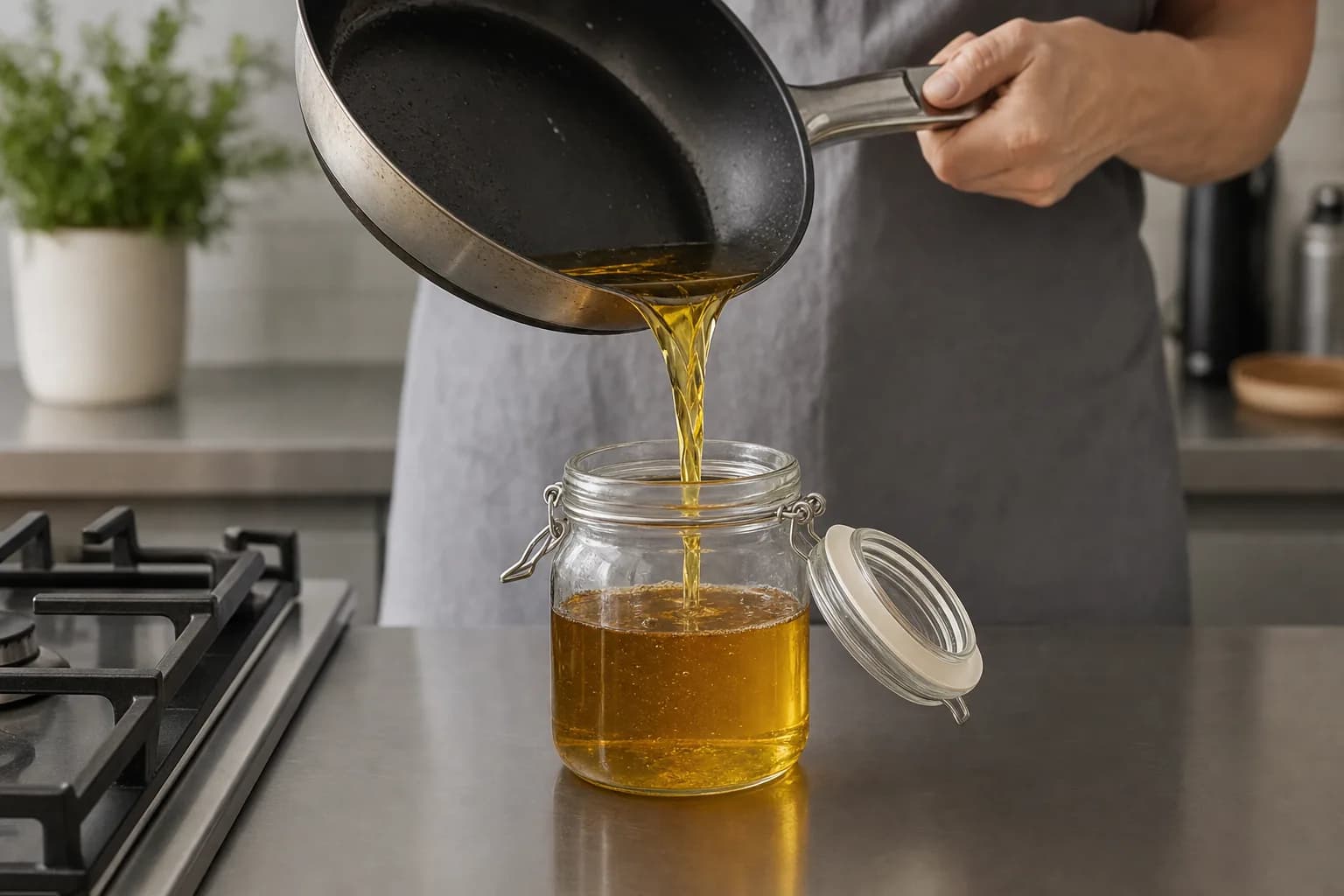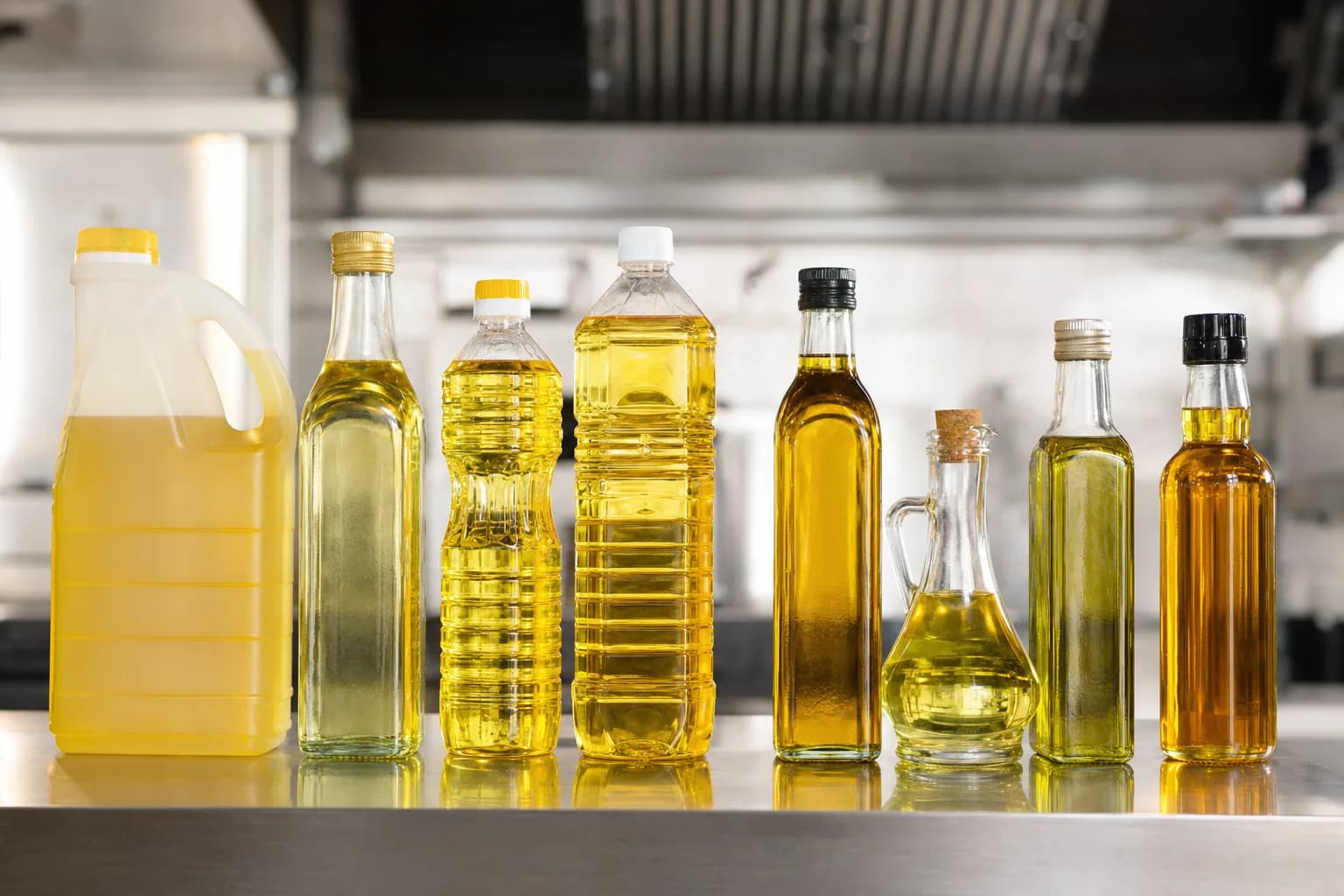

The cooking oils that can be recycled are all the common plant-based frying oils, vegetable, canola, soybean, corn, peanut, sunflower, and olive, plus clean rendered animal fats like beef tallow, lard, bacon grease, and poultry fat. What can't be recycled is oil contaminated with water, soap, chemicals, or food trash, and anything petroleum-based like motor oil. Clean used fryer oil becomes biodiesel, renewable diesel, and jet fuel.
That short answer covers most kitchens. But the line between "accepted" and "rejected" comes down to one thing, contamination, and it's worth understanding exactly where that line sits so you protect the value of your oil and stay compliant. Below is the full accepted-vs-not table, the chemistry behind it, and the honest nuances most articles skip.
The Quick Reference: Accepted vs. Not Accepted
Here's the at-a-glance breakdown of what a commercial used cooking oil (UCO) collector will and won't take.
| Accepted (recyclable) | Not accepted / problematic |
|---|---|
| Vegetable oil (blended) | Water-contaminated or soapy oil |
| Canola oil | Oil mixed with dish soap or detergent |
| Soybean oil | Oil with cleaning chemicals or solvents |
| Corn oil | Oil full of food solids, trash, or plastic |
| Peanut oil | Brown grease / grease-trap sludge |
| Sunflower oil | Motor oil (petroleum) |
| Olive oil | Transmission fluid |
| Deep-fryer oil (used) | Hydraulic fluid or paint thinner |
| Beef tallow (clean rendered) | Antifreeze or any automotive fluid |
| Lard and bacon grease (clean) | Anything you wouldn't fry food in |
| Poultry fat / fryer drippings |
The pattern is simple: if it's an edible fat or oil, plant or animal, and it's reasonably clean, it's recyclable. If it's petroleum, or it's been mixed with water, soap, or chemicals, it's a problem.
Why Vegetable and Plant Oils Are the Core Feedstock
Every plant-based frying oil in your kitchen is recyclable. The U.S. Department of Energy's Alternative Fuels Data Center (AFDC), the authoritative federal source on biodiesel, confirms that biodiesel is manufactured domestically from vegetable oils, animal fats, or recycled restaurant grease. The AFDC specifically names soybean, canola, corn, and cottonseed oil among the plant oils that get converted into fuel.
That federal list isn't exhaustive of what's accepted, though, it's just the ones DOE calls out by name. In practice, peanut, sunflower, and olive oil all behave the same way chemically and are collected right alongside the rest. A typical restaurant fryer is filled with a blended vegetable oil, and that's the single most common stream in the recycling pipeline.
The U.S. Energy Information Administration (EIA) backs this up from the supply side: it confirms the major U.S. biodiesel feedstocks are vegetable oils (mainly soybean oil), animal fats from meat processing, and used cooking oil and yellow grease from restaurants. Restaurant fryer oil isn't a fringe input, it's an explicitly recognized, accepted feedstock that the national fuel supply depends on.
If your kitchen runs any of these oils, Oil Guyz's free used cooking oil pickup collects them at no cost, because the oil has real commodity value.
Animal Fats: Recyclable, With One Honest Caveat
This is the part most quick guides get wrong, so let's be precise. Clean rendered animal fats, beef tallow, pork lard, bacon grease, and poultry fat, are recyclable into biodiesel. The DOE AFDC names beef tallow, pork lard, and poultry fat directly among biodiesel feedstocks, and the EIA notes that animal-fat (tallow) inputs to U.S. biodiesel are rising.
The honest caveat: not every recycling program accepts them. Many municipal and residential curbside or drop-off programs refuse animal fats because they're solid at room temperature and harder for small-scale handling. So if you're a home cook, your local curbside program may turn away your bacon grease even though it's technically a valid feedstock.
Commercial UCO collection is different. A commercial collector like Oil Guyz services kitchens that produce real volumes of fats and is equipped to take clean rendered tallow, lard, and fryer drippings. So the rule of thumb is: animal fats are recyclable, but you usually need a commercial route, not a curbside bin, to actually recycle them.
Yellow Grease vs. Brown Grease: Where the Line Really Sits
To understand why some oil is rejected, you need two industry terms.
Yellow grease is clean used cooking oil collected straight from a fryer or kitchen container. It's the high-value recyclable stream, the stuff this whole article is about.
Brown grease (also called trap grease) is the lower-quality, water-and-solids-laden mix recovered from grease traps and interceptors. It's a different material entirely.
The technical dividing line, according to Cooperative Extension's Farm Energy program (run by land-grant universities), is free fatty acid (FFA) content:
- Under ~15% FFA = yellow grease, clean used cooking oil, high value, easily recycled.
- Over ~15% FFA = brown grease / trap grease, contaminated, low value, far harder to process.
Farm Energy Extension documents just how bad trap grease gets: foul odor, free-fatty-acid content up to roughly 98%, contamination with food and trash, heavy emulsification, solid at room temperature, and water contamination throughout. That's why grease-trap sludge isn't accepted as clean recyclable cooking oil, it's a separate, problematic material, and recovering it is a different job entirely from used cooking oil pickup.
This is also why keeping your fryer oil out of the trap and into a proper collection container matters: you're keeping it on the valuable yellow-grease side of that 15% line. Our used cooking oil recycling and yellow grease recycling programs are built entirely around that clean stream.
The Real Limit on Recyclability: Water and Contamination
If you remember one thing, remember this, water is the enemy of recyclable oil.
Here's the chemistry, kept plain. When used cooking oil is converted into biodiesel, contaminants interfere with the reaction:
- Free fatty acids react with the catalyst to form soap instead of fuel.
- Water in the oil causes even more soap to form and can foul the catalyst entirely.
That's straight from Farm Energy Extension, and it's exactly why water-contaminated, soapy, or chemical-laced oil gets rejected or downgraded. Soap isn't fuel, it's a loss. Every gallon of water or splash of detergent that ends up in your container lowers what the oil is worth and, past a point, makes it unusable.
So the practical contamination rules are:
- Keep water out. Don't let mop water, rain, ice, or wash-down spray get into the container.
- Keep soap and chemicals out. No degreaser, no detergent, no sanitizer, no solvents.
- Keep trash and food solids out. Light food bits are fine, your collector separates those, but plastic, foil, silverware, and trash are not.
- Keep petroleum out, completely. This one gets its own section below.
Get those four right and your oil stays squarely in the accepted column. For more on keeping disposal clean and compliant, see our guide to cooking oil disposal.
Petroleum and Motor Oil: A Completely Separate Stream
This deserves a hard line of its own. Petroleum products and motor oil must never be mixed into used cooking oil collection. They are a different waste stream, recycled under entirely different programs.
Motor oil, transmission fluid, hydraulic fluid, antifreeze, paint thinner, none of it belongs in a cooking oil container. In California, used motor oil is recycled through CalRecycle's certified used-oil collection centers, which is a distinct system from cooking oil recycling. The two never share a container.
Why so strict? Petroleum contamination doesn't just lower the value of a batch of cooking oil, it can ruin it outright as a fuel feedstock. A single careless pour of motor oil into a grease bin can disqualify the whole load. If your kitchen also generates automotive or petroleum waste, route it through the proper used-motor-oil program and keep it nowhere near your fryer-oil container.
Where Recycled Cooking Oil Actually Goes
It's worth knowing that "recyclable" here means something real, your oil becomes fuel, not just "disposed of responsibly."
Recycled used cooking oil is a critical feedstock for sustainable aviation fuel (SAF). The DOE AFDC lists yellow grease under the HEFA-SPK production pathway and states that used cooking oil and waste animal fats are two of the most popular sources for SAF. The same clean oil also becomes biodiesel and renewable diesel for trucks and equipment.
The environmental payoff is concrete. The EPA's Renewable Fuel Standard analysis found that biodiesel produced from waste grease delivers roughly an 86% reduction in greenhouse gas emissions compared with petroleum diesel. That's the basis for the honest claim that every clean gallon you set out becomes low-carbon fuel.
There's a compliance angle too. The EPA's Renewable Fuel Standard accounting requires biofuel producers to verify that used cooking oil feedstocks are genuine waste oil, not virgin oil relabeled to claim waste-fuel incentives. That makes provenance and traceability matter more than ever, which is why Oil Guyz emails a CDFA-compliant digital manifest after every pickup, with 2-year record retention. Your oil's clean-waste origin is documented end to end. If you want the feedstock-supply view, see biodiesel feedstock collection.
How Often Should You Schedule Pickup?
Once you know your oil is recyclable, the only operational question is frequency. There's no minimum volume to qualify for free pickup, but matching your schedule to your volume keeps containers from overflowing (a top contamination risk).
| Monthly oil volume | Kitchen type | Typical pickup frequency |
|---|---|---|
| Under 50 gallons | Cafe, food truck, small bakery | Monthly or on-call |
| 50 to 150 gallons | Single full-service restaurant | Every 2 to 4 weeks |
| 150 to 400 gallons | Busy restaurant, small chain location | Weekly to biweekly |
| 400+ gallons | High-volume kitchen, large fryer line | Weekly or multiple times weekly |
These are starting points, a reliable, scheduled route means you're never guessing. A CDFA-registered transporter handles the collection, and a real person answers the phone if your volume changes and you need to adjust. You can also schedule by phone, text, or the online portal. Kitchens across Orange County and the rest of our California and Pacific Northwest territory get the same clean-stream service.
A Simple Pre-Pickup Checklist
To keep your oil firmly in the accepted column:
- Use a dedicated container, the free locked, anti-theft container keeps oil clean and protects it from grease theft.
- Let oil cool before pouring it into the collection container.
- Keep the lid closed so rain and wash-down water stay out.
- Never add water, soap, sanitizer, or chemicals to the container.
- Never add motor oil or any petroleum product, not even a little.
- Strain out large food debris if it's easy; your collector handles fine separation.
- Schedule pickup before the container overflows, which is when contamination and theft both spike.
The Bottom Line
If you can fry food in it, you can almost certainly recycle it, all the common vegetable and plant oils, plus clean rendered animal fats, are accepted and become clean fuel. What disqualifies oil is contamination: water, soap, chemicals, food trash, or any petroleum like motor oil. Keep those out, and your used cooking oil holds its value and stays compliant from kitchen to refinery.
Oil Guyz provides free used cooking oil pickup with free locked anti-theft containers, no contracts, no fees, and no minimum volume across California (Orange County, Los Angeles, San Diego, the Inland Empire, and the Bay Area) and the Pacific Northwest (Tacoma and Seattle), schedule a free pickup and we'll handle the recycling and the manifest for you.