
Yes, you can recycle the oil from your home fryer, but not through your curbside bin. Let the oil cool completely, pour it into a sealed, leak-proof container, and drop it off at a household hazardous waste (HHW) site or a dedicated cooking-oil collection center. Never pour it down the drain or flush it. For tiny amounts, cool, solidify, and trash it instead.
That's the whole answer. The rest of this guide explains why each step matters, where to find a drop-off near you, what not to do, and what actually happens to your oil once it's collected, because recycled fryer oil is a genuine renewable-energy feedstock, not garbage.
Restaurants and commercial kitchens: used fryer oil collection is a free scheduled service, covered later in this guide.
Why You Can't Toss Fryer Oil in the Curbside Bin
It feels like cooking oil should just go in the recycling cart, it's a bottle of liquid, after all. But used cooking oil behaves nothing like the cans, paper, and rigid plastics your municipal program is built to sort. Liquid oil leaks, coats, and contaminates everything it touches on a sorting line, which is why curbside programs reject it outright.
Composting is no better. Oil and grease throw off the moisture and microbial balance of a compost pile, attract pests, and are excluded by most residential green-bin programs. Counties that run household hazardous waste services, like the County of Santa Clara, specifically route kitchen grease and oil to their HHW channels rather than the green cart, precisely because the standard waste streams can't handle it.
So while cooking oil is genuinely recyclable, it lives in a separate lane: household hazardous waste sites and dedicated cooking-oil drop-offs. Get it into that lane and it becomes valuable. Put it in the wrong bin and it just contaminates a load of otherwise-good recyclables.
The Drain Is the Worst Option, Here's the Real Cost
The most tempting shortcut is also the most damaging: pouring it down the sink, often chased with hot water and dish soap in the hope it'll "wash away." It won't. Once that oil hits cooler pipes, it congeals. Layer after layer, it narrows your drain lines and then the shared sewer main, until something backs up, into your home, a neighbor's home, or the street.
This isn't a minor nuisance. The EPA identifies fats, oils, and grease (collectively, "FOG") as a leading cause of sewer blockages, and wastewater utilities echo that warning constantly. East Bay Municipal Utility District (EBMUD) in the Bay Area and King County, WA both tell residents to keep all cooking oil, grease, and fat out of every drain and toilet, full stop. A single household pouring oil down the sink may seem harmless, but those drains all feed the same shared system, and grease buildup is one of the most expensive, recurring problems sewer agencies deal with.
The same rule covers everything greasy, not just liquid fryer oil. Bacon grease, the fat skimmed off a roast, the congealed layer on last night's soup, all of it is FOG, and all of it follows the same path: never down the drain.
How to Recycle Home Fryer Oil: 6 Steps
Here's the consumer-friendly method that lines up with EPA guidance and how county HHW and wastewater programs actually want residents to handle oil:
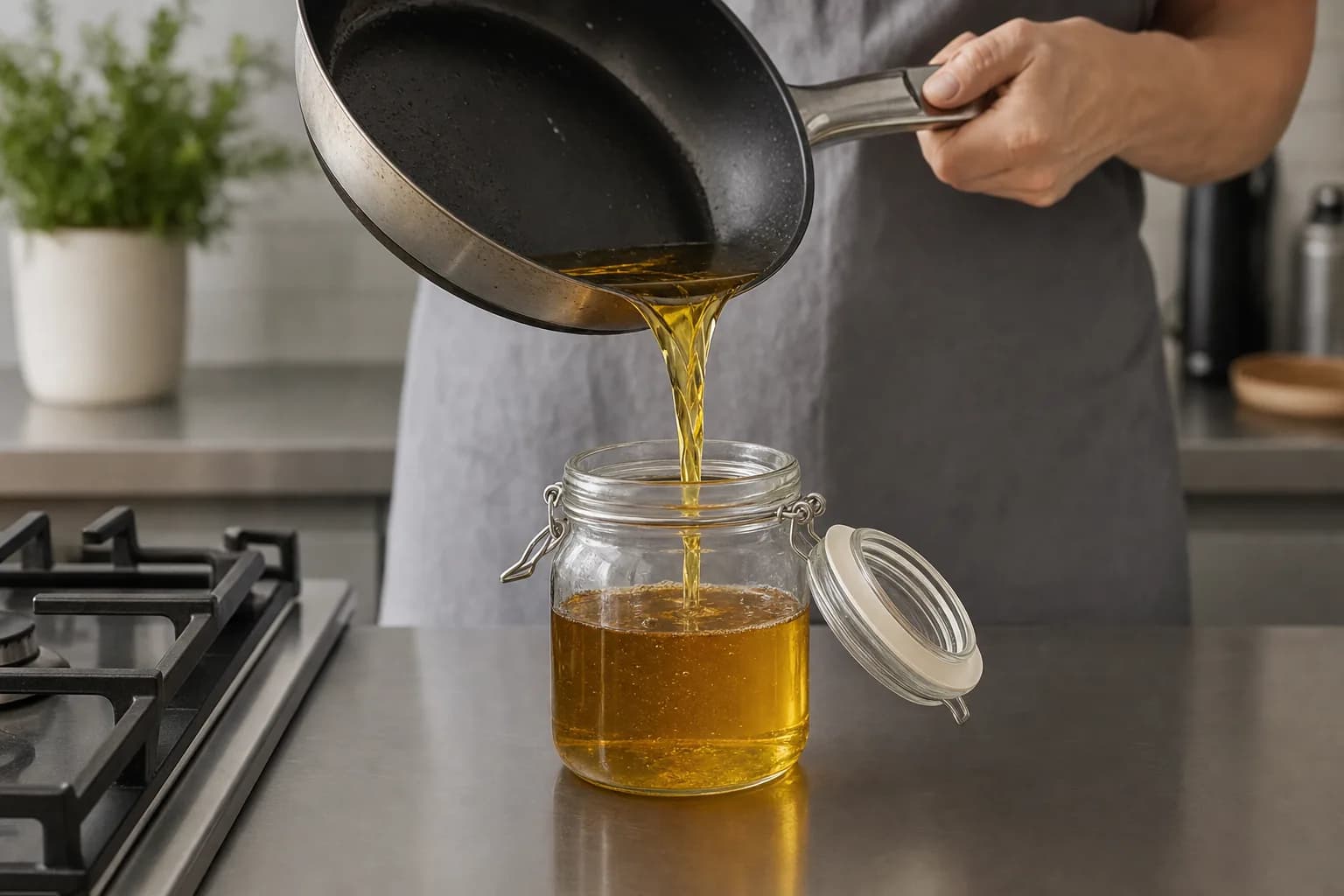
- Cool it completely. Turn off the fryer and let the oil come fully to room temperature. Hot oil is a serious burn and fire hazard, and it can melt or warp a plastic container. Never pour hot oil anywhere but back into a heat-safe pan to cool.
- Strain out the food bits (optional but helpful). A quick pass through a fine mesh strainer or coffee filter removes breading and crumbs. Cleaner oil is easier to recycle and stores better.
- Pick the right container. Use a tightly sealed, leak-proof, non-glass container. The oil's original plastic jug is ideal, it's already sized for the volume and seals well. Avoid glass; collection programs discourage it because it can shatter in transit.
- Keep it clean and dry. Don't add water, and don't let rain or dishwater get in. Water contamination is the number-one reason otherwise-recyclable oil gets downgraded or rejected.
- Decide: drop-off or trash. For a larger amount, say you deep-fried a turkey, take it to an HHW site or a cooking-oil drop-off. For a small amount, you can cool and solidify it (chilling or freezing speeds this up), seal it in a non-recyclable container or bag, and put it in your regular household trash. Both are EPA-acceptable; the drain never is.
- Find your local drop-off. Call 1-800-CLEANUP (1-800-253-2687) or search your city or county site for "household hazardous waste," "used cooking oil recycling," or "FOG program."
What's Accepted Where: A Quick Reference
Because the rules genuinely differ by disposal channel, here's a side-by-side to keep it straight:
| Disposal method | Used cooking oil? | Notes |
|---|---|---|
| Kitchen drain / toilet | ❌ Never | Causes clogs and sewer overflows; EPA flags grease as a leading blockage cause |
| Curbside recycling cart | ❌ No | Liquid oil contaminates the recycling stream |
| Green compost / yard waste bin | ❌ No | Oil and grease are excluded from most residential compost programs |
| Regular household trash (small amounts) | ✅ Yes, if cooled/solidified & sealed | EPA-endorsed for small quantities; freeze or chill first |
| Household hazardous waste (HHW) site | ✅ Yes | Many counties accept residential cooking oil and grease |
| Dedicated cooking-oil drop-off (wastewater utility) | ✅ Yes | Often free for residents; volume and residency limits vary |
| CalRecycle certified collection center | ❌ Not for cooking oil | That recycling-incentive program is for used motor oil only |
That last row matters. CalRecycle's Used Oil Recycling Program, its network of certified collection centers and its per-gallon recycling incentive, exists for used motor oil, not cooking oil. It's an easy mix-up because both are "used oil," but they go to completely different places. Hauling your fryer oil to a certified motor-oil center won't earn you anything and may just get it turned away.
Where to Drop Off Cooking Oil (California and the Pacific Northwest)
Free residential drop-offs are more common than people realize, you usually just have to know what to search for. A few real examples across the regions where Oil Guyz also serves commercial kitchens:
- Bay Area: East Bay MUD runs residential cooking-oil and grease guidance and drop-off options for households in its service area, built around the same "never down the drain" rationale.
- Santa Clara County: The County of Santa Clara's household hazardous waste program provides residential guidance and drop-off for kitchen grease and oil.
- Los Angeles County: LA County Public Works directs residents to HHW collection events and the City of LA's S.A.F.E. Collection Centers for cooking oil. (Cooking oil isn't legally classified as hazardous, but these sites still collect it.)
- Tacoma area (Pierce County, WA): Pierce County lets residents drop off used cooking oil free at household hazardous waste locations, subject to volume limits.
- Seattle area (King County, WA): King County points residents to its HHW and household disposal facilities for larger amounts, and recommends the cool-and-solidify-then-trash method for small quantities.
Acceptance limits, hours, and residency requirements vary by program, so it's always worth a quick check of the specific site before you load up the car. When in doubt, 1-800-CLEANUP is the fastest way to find the nearest option.
What Actually Happens to Your Recycled Oil
Here's the part that makes the extra effort worth it: properly collected used cooking oil doesn't just disappear, it gets turned into fuel.
The U.S. Department of Energy's Alternative Fuels Data Center describes biodiesel as a renewable, biodegradable fuel manufactured domestically from vegetable oils, animal fats, or recycled restaurant grease. Recycled fats, oils, and grease are also a leading feedstock for renewable diesel and sustainable aviation fuel (SAF), the same low-carbon fuels powering a growing share of trucks and planes. The oil you cooled and bottled at home can genuinely re-enter the energy supply as domestic, renewable fuel instead of fouling a sewer line.
That's the whole reason this material is worth keeping out of the trash and the drain whenever a drop-off is available. It's one of the few "waste" streams that's actually a sought-after commodity. (For the deeper version of this journey, settling, free-fatty-acid testing, transesterification, and the rest, see our breakdown of what happens to used cooking oil after recycling.)
A Quick Note on Scope: Home Kitchens vs. Restaurants
It's worth being direct about who does what, because people sometimes find this page hoping someone will come pump oil out of their garage fryer.
Oil Guyz is a commercial service. We provide free, scheduled used cooking oil pickup and recycling for restaurants and commercial kitchens, not home kitchens. If you're a home cook, your path is the municipal or HHW drop-off described above. There's no home pickup, and that's just honest scope.
If, on the other hand, you're reading this because you run a restaurant, food truck, ghost kitchen, or any commercial kitchen, the math changes entirely. You shouldn't be hauling jugs to an HHW site at all. Commercial kitchens get a completely different, and easier, system:
| Home cook | Restaurant / commercial kitchen | |
|---|---|---|
| Who handles it | You, on your own time | A CDFA-registered transporter on a reliable scheduled route |
| Container | Your original oil jug | A free, locked, anti-theft collection container |
| How it leaves | You drive it to a drop-off | Free scheduled pickup, no hauling |
| Paperwork | None | A CDFA-compliant digital manifest emailed after every pickup |
| Cost | Free drop-off (your time) | Free pickup, no contracts, no fees, no minimum volume |
For commercial operators, that means free pickup, free locked containers that deter oil theft, no contracts or minimums, and a compliant paper trail handled by our licensed renderer, with every gallon still becoming biodiesel, renewable diesel, or SAF feedstock. You can see how that works on our free used cooking oil pickup page, compare it against the legal cooking oil disposal options for California kitchens, or check coverage in Orange County, Los Angeles, the Bay Area, and Tacoma.
The Bottom Line
Recycling oil from your home fryer comes down to four habits: cool it, contain it in a sealed non-glass jug, keep it clean and dry, and drop it at an HHW or cooking-oil site (or cool-and-trash small amounts). Skip the drain entirely, that one shortcut is responsible for a huge share of sewer overflows, and it's the one mistake every utility in the country is begging residents not to make. Do it right and your fryer oil becomes renewable fuel instead of a clog.
Run a restaurant or commercial kitchen instead of a home fryer? Oil Guyz handles the whole thing for you, schedule free, no-contract used cooking oil pickup and we'll bring the locked container, the registered route driver, and the compliant manifest, at no cost.