
How much used cooking oil does a fast food restaurant produce? A typical fast food location generates roughly 35 pounds of used cooking oil per day, about 4.5 to 5 gallons, which works out to around 12,775 pounds a year, or close to 1,700 gallons, per store (Frontline International). Your real number rides on how many fryers you run, how heavy your fry menu is, and how often you change the oil.
That single figure is the starting point for almost every operational decision you'll make about your fry program, what size container to put behind the store, how often it needs to be emptied, whether grease theft is worth worrying about, and how much renewable-fuel feedstock your stores quietly generate. This guide breaks the number down, shows what drives it up or down, and turns it into a container size and pickup schedule you can act on.
TL;DR
- A typical fast food location produces ~35 lb of used cooking oil per day, roughly ~12,775 lb per year (source).
- Used cooking oil weighs ~7.4 lb per gallon, so 35 lb/day is about 4.7 gallons a day and roughly 1,700 gallons a year.
- The biggest drivers: number of fryers, menu (fried-heavy vs. light), traffic, and oil-change discipline.
- Right-size your container for 7 to 10 days of capacity and schedule pickup before it hits the fill line, never the brim.
- Every gallon becomes biodiesel / renewable-diesel feedstock, cutting lifecycle greenhouse gases by ~79 to 86% versus petroleum diesel (Argonne National Laboratory, Environmental Science & Technology, 2022).
The Numbers: Daily, Weekly, and Yearly
Here's the same fast food figure expressed every way you're likely to need it. Used cooking oil weighs roughly 7.4 pounds per gallon, the standard conversion the collection industry uses, so the gallon math follows directly from the pound figure.
| Time frame | Approx. used cooking oil (lb) | Approx. used cooking oil (gal) |
|---|---|---|
| Per day | ~35 lb | ~4.7 gal |
| Per week | ~245 lb | ~33 gal |
| Per month | ~1,065 lb | ~144 gal |
| Per year | ~12,775 lb | ~1,725 gal |
Treat these as a well-grounded baseline for a single, typical store, not a ceiling. A high-traffic location with a fried-chicken or french-fry-forward menu can run well above it, while a smaller store with one fryer and a lighter menu will sit below. The point of the table is to give you a number to size against and then refine after a few real pickups.
For a multi-location operator, scale changes the conversation entirely. Ten stores at ~12,775 lb each is roughly 127,000 lb of used cooking oil a year, about 17,000 gallons of renewable-fuel feedstock leaving your kitchens annually. That's the volume that makes a single, consistent collection program (one contract, one Filtrate dashboard, one manifest standard across every site) far more valuable than a patchwork of local haulers.
What Drives the Volume Up or Down
The ~35 lb/day figure is an average, and four factors explain most of the spread around it. Knowing which ones apply to your stores tells you whether to size up or down.
1. Number and size of fryers
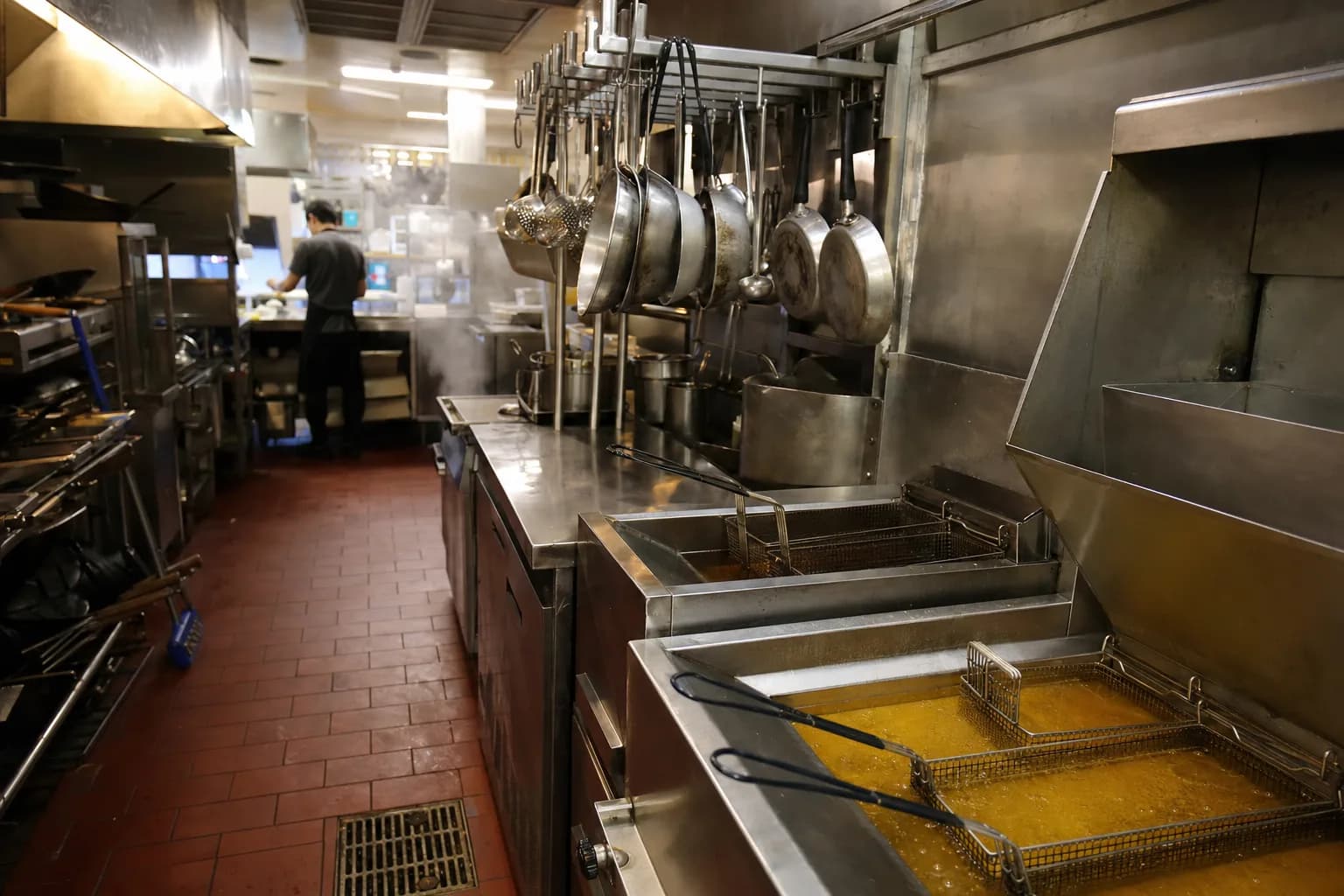
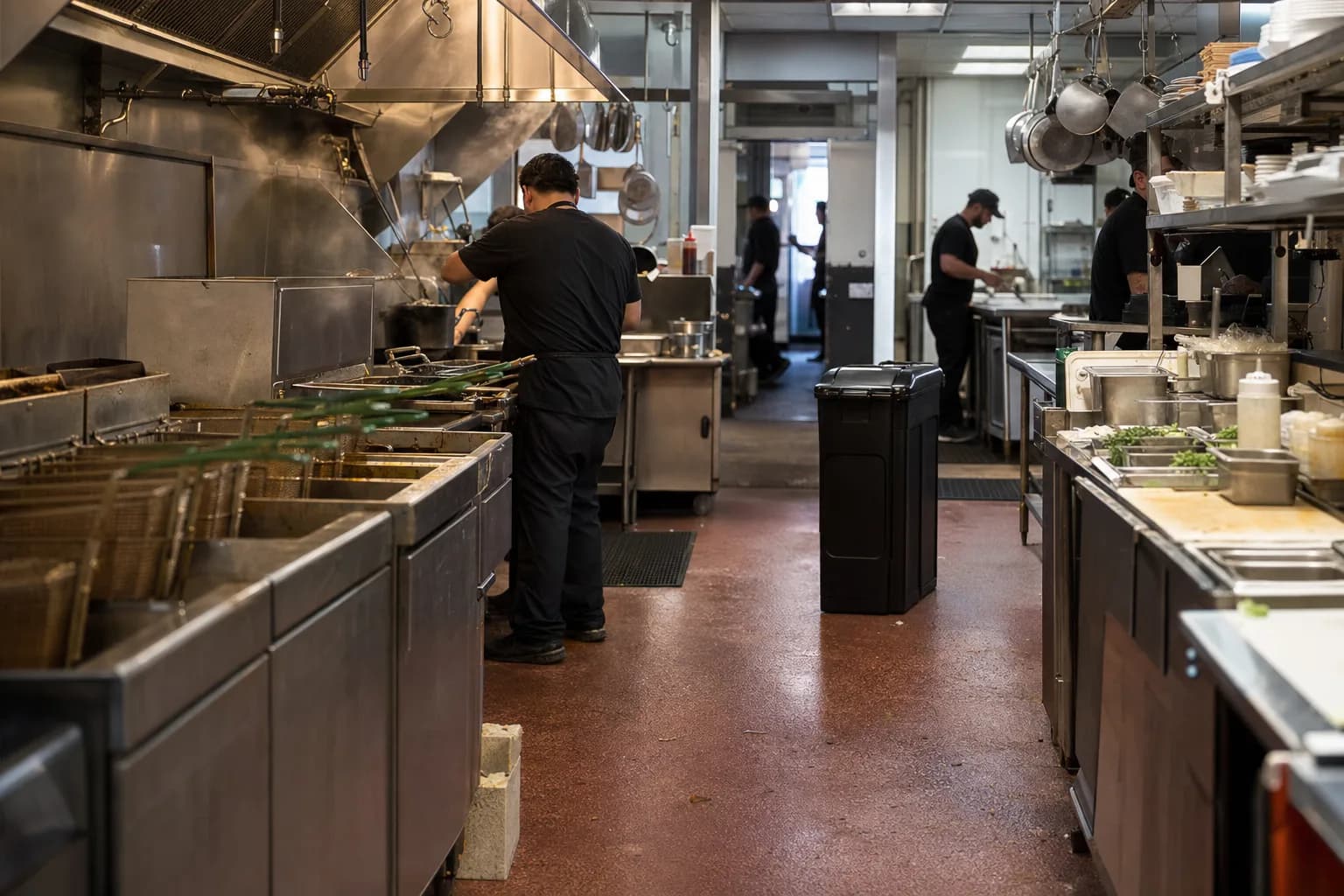
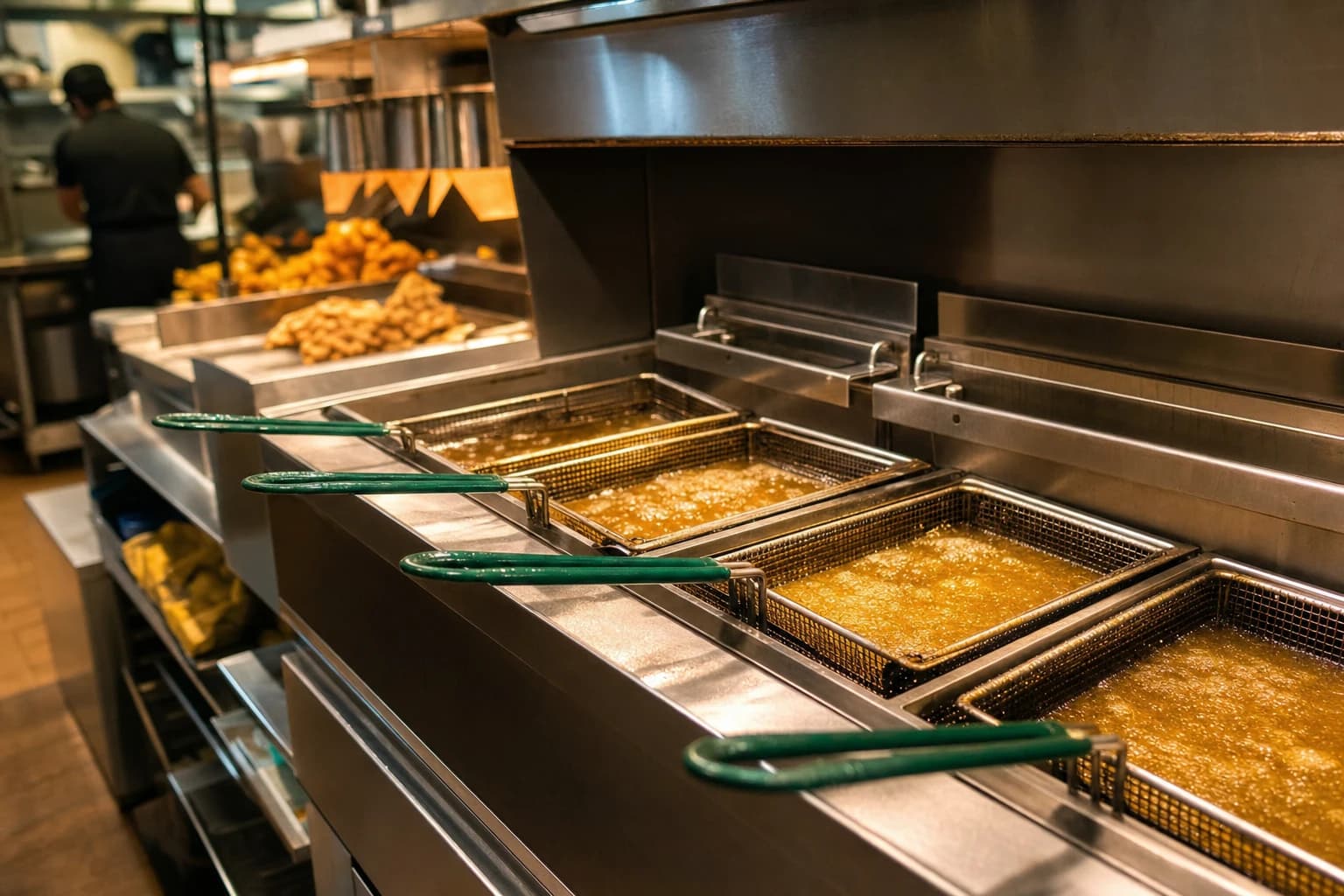
This is the single biggest lever. A store with one 40-pound fryer produces a fraction of what a store running four large fryers does. Count your fryers and note each one's oil capacity in pounds, a common commercial fryer holds 40 to 50 pounds, because total fryer capacity sets the upper bound on how much oil you can cycle through.
2. Menu mix
A fried-chicken or fries-heavy concept turns over oil far faster than a store where the fryer is a side player to a grill or assembly line. Heavy breading and high-volume frying also degrade oil quicker, forcing more frequent changes. If your top sellers come out of the fryer, expect to sit at the high end of the range, or above it.
3. Traffic and dayparts
More covers means more frying means more oil to change. A store on a busy corner with strong lunch, dinner, and late-night dayparts will out-produce a quiet location with the same equipment. Seasonality matters too, a summer rush or holiday stretch can push a normally moderate store into high-volume territory for weeks at a time.
4. Oil-change discipline
How aggressively you change oil for quality affects total volume. Stores that change on a tight quality schedule produce more used oil than stores that stretch each batch, a real tradeoff between food quality and oil cost. Neither is wrong; just know that your change cadence is part of the equation when you estimate volume.
Turning the Number Into a Container and a Schedule
Once you know roughly how much oil a store produces, two decisions follow: what container goes behind it, and how often it gets emptied.
Size the container for 7 to 10 days of capacity, never to the brim. At ~35 lb (≈4.7 gal) a day, a single store accumulates roughly 33 gallons a week. That math is why container size and pickup frequency have to move together:
| Store profile | Approx. gallons / week | Starting container | Typical pickup cadence |
|---|---|---|---|
| Light fryer use, lower traffic | ~15 to 25 gal | 55-gal locked container | Biweekly or monthly |
| Typical fast food (~35 lb/day) | ~25 to 40 gal | 55-gal+ locked container | Weekly or biweekly |
| Heavy fried-food / high traffic | ~40+ gal | 150-gal locked bin | Weekly or twice weekly |
The goal is simple: schedule a pickup before the container reaches its fill line, not after it's overflowing. An overflowing bin creates slip hazards, draws pests and odor complaints, and can trigger health-code issues. Right-sizing is the cheapest insurance against all of it. With Oil Guyz, the container is a free locked anti-theft unit sized to your output, and because service is month-to-month with no minimum-volume requirement, you can change the cadence with a phone call when a store's volume shifts.
For groups running many stores, this is where one program beats many. See Multi-Location Cooking Oil Collection for how a single agreement and one Filtrate dashboard handle different store volumes without a separate vendor at each site, and Restaurant Cooking Oil Management for the full picture of how scheduling, containers, and compliance fit together.
Why a Locked Container Is Worth It at This Volume
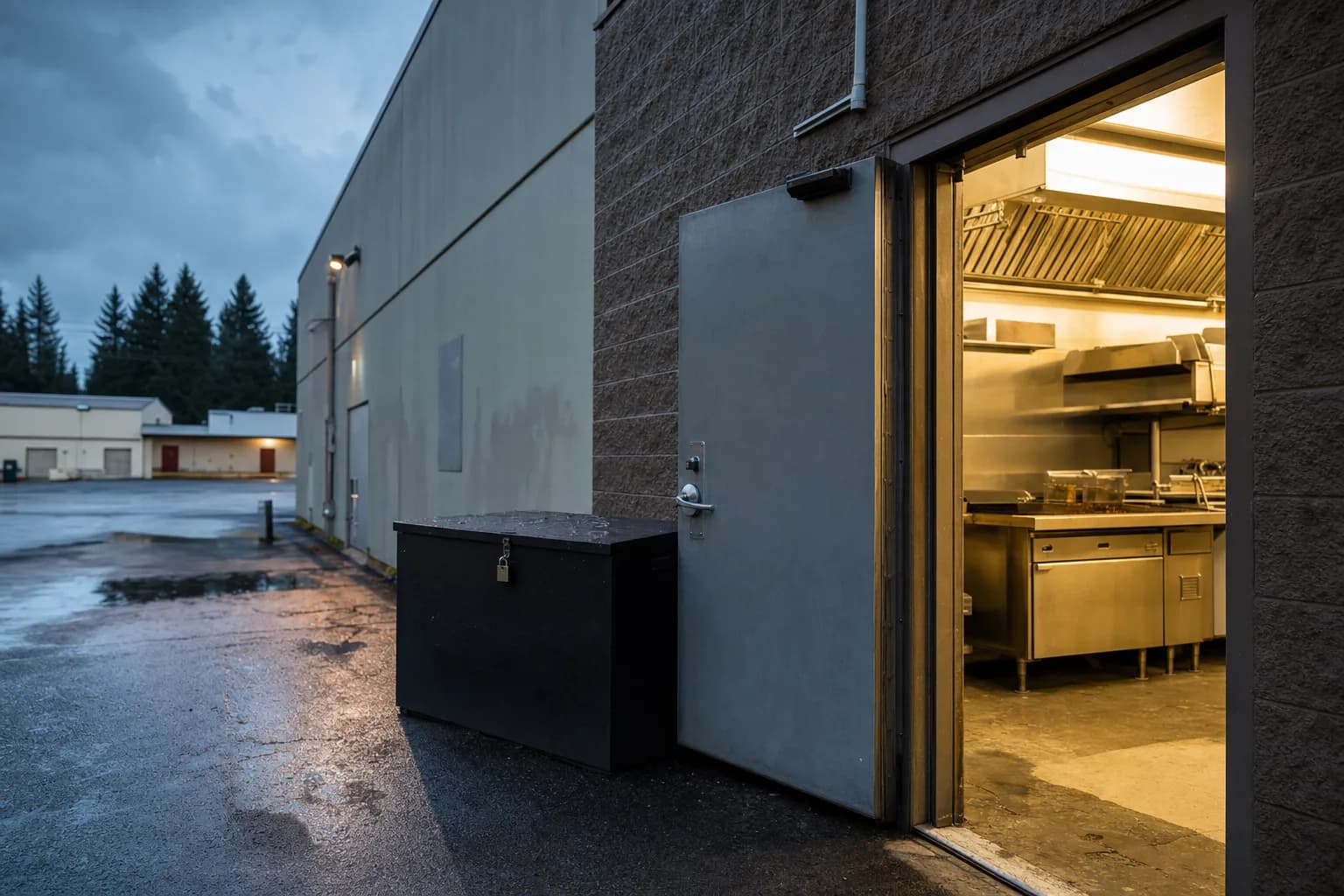
A fast food store quietly producing ~1,700 gallons a year is sitting on a genuine commodity, and that makes the container a target. Grease theft is not a hypothetical, an estimated $75 million of used cooking oil is stolen annually, and the USDA has valued roughly 100 pounds of it near $25 (industry reporting). An unlocked bin behind a busy store is easy to tap.
There's a compliance angle too. When a thief siphons your container, they also break your chain of custody, the documented trail showing your oil went to a licensed processor and not into a storm drain. A locked anti-theft container keeps both the oil and the paper trail yours. That trail is more than good housekeeping: in California, a manifest is required for every used cooking oil pickup, electronic manifests are legal, and records must be retained for at least two years (3 CCR §1180.24). Oil Guyz routes every load to a CDFA-licensed renderer and emails a CDFA-compliant digital manifest after each pickup, so every store keeps a clean record automatically. The details of that paper trail live in Cooking Oil Compliance & Reporting.
Where All That Oil Actually Goes
The ~12,775 pounds a year your store sets out doesn't get landfilled, it becomes renewable-fuel feedstock. Used cooking oil is refined into biodiesel and renewable diesel, and the environmental payoff is significant and well documented:
- Renewable diesel delivers roughly a 65% average carbon-intensity reduction compared with petroleum diesel (DOE/CARB, AFDC).
- Waste-feedstock (UCO) biodiesel and renewable diesel cut lifecycle greenhouse gas emissions by about 79 to 86% versus petroleum diesel (Argonne National Laboratory, Environmental Science & Technology, 2022).
- Under the EPA Renewable Fuel Standard, biomass-based diesel must achieve at least a 50% lifecycle GHG reduction to qualify, and used cooking oil clears that bar (EPA RFS).
Put those figures next to your annual volume and the story tells itself: a single fast food store's ~1,700 gallons of used cooking oil, diverted from the drain and recycled, displaces a meaningful slice of fossil diesel every year. Across a multi-location group, that becomes a real sustainability line item you can report honestly, backed by manifests, not estimates.
Quick Estimate for Your Own Stores
Want a number specific to your operation instead of the industry average? Estimate it in about two minutes per store:
- Count your fryers and note each one's oil capacity in pounds (most hold 40 to 50 lb).
- Estimate full oil changes per fryer per week.
- Multiply to get total pounds of oil dumped per week.
- Divide by 7.4 to convert pounds to gallons.
A worked example: two 50-pound fryers changed twice a week is 200 pounds, or about 27 gallons of used oil per week, right in the typical fast food band. If your estimate lands far above the ~35 lb/day baseline, that's a signal your fry program is heavy, not an error; size your container and cadence accordingly.
When you're ready to put a free locked container behind the store and a manifest in your inbox after every pickup, the Fast Food cooking oil program is built for exactly this volume, and you can compare options first in our guide to the best cooking oil management for multi-location restaurants.
Sources
- Frontline International, Cooking Oil Collection for Fast Food (per-location volume): https://nwbiofuel.com/blog/cooking-oil-recycling-in-fast-food-chains-setting-industry-standards/
- California Code of Regulations, Title 3 §1180.24 (manifest + retention): https://www.law.cornell.edu/regulations/california/3-CCR-1180.24
- U.S. DOE Alternative Fuels Data Center, Renewable Diesel (carbon intensity): https://afdc.energy.gov/fuels/renewable-diesel
- U.S. DOE Alternative Fuels Data Center, Biodiesel Production (lifecycle GHG): https://afdc.energy.gov/fuels/biodiesel-production
- U.S. EPA, Renewable Fuel Standard Program Overview: https://www.epa.gov/renewable-fuel-standard/overview-renewable-fuel-standard-program