
The best cooking oil collection contract for a multi-location restaurant group is the one with the least lock-in: month-to-month terms, your own retained compliance records, and one dashboard across every site. Choosing the best cooking oil management for multi-location restaurants is less about who picks up the grease and more about the contract you sign, who holds the records, and whether you can see every location from one screen. Used cooking oil collection looks like a small line item, but across twenty, fifty, or a hundred restaurants, the vendor model behind that line item decides how much lock-in you carry, who owns your compliance paper trail, and how fast you can switch if service slips.
This guide compares the major commercial oil management vendors restaurant chains actually evaluate, Oil Guyz, Restaurant Technologies (RTI), Mahoney Environmental, DAR PRO Solutions, Baker Commodities, and Filta, on the criteria that matter for a multi-location operator. Every competitor claim below is sourced and descriptive. National providers have real strengths, and we concede their footprint honestly. The goal is to help you pick the right model for your portfolio, not to tear anyone down.
TL;DR
- National footprint vs. contract flexibility are two different things. RTI, Mahoney, and DAR PRO can cover sites nationwide; the tradeoffs show up in the contract structure (leased equipment with UCC filings, sole-provider or requirements clauses, vendor-signed manifests).
- Read who holds title to the oil and who signs the manifest. With some national programs the customer assigns oil title to the vendor and the vendor signs manifests on the customer's behalf. With Oil Guyz, you keep your own CDFA-compliant digital manifest as your chain-of-custody record.
- A real portal is rare. RTI markets its T.O.M. portal and DAR PRO offers a web portal; several large vendors still run service through phone/email. Oil Guyz gives you the Filtrate portal, one dashboard across every site plus per-location apps.
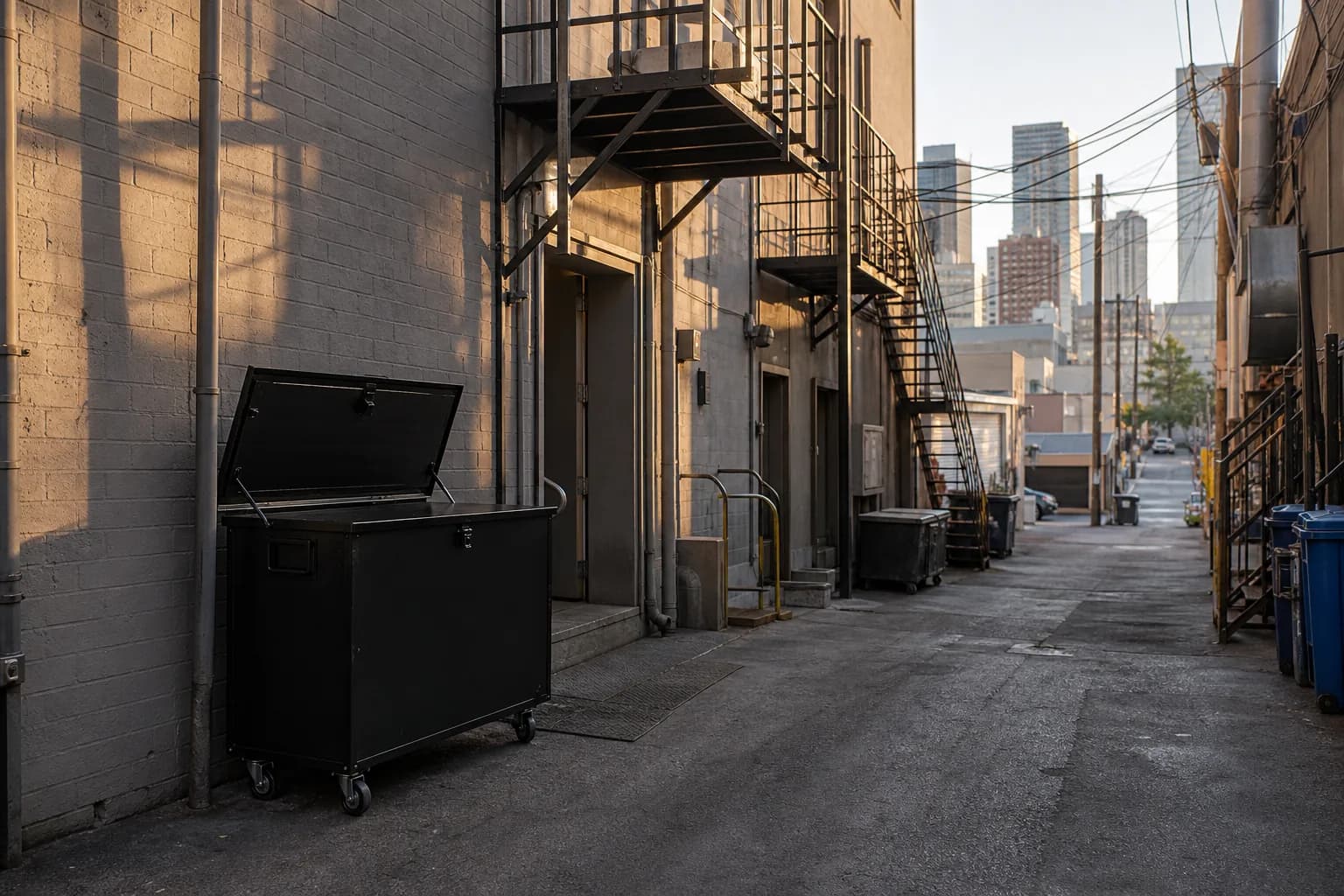
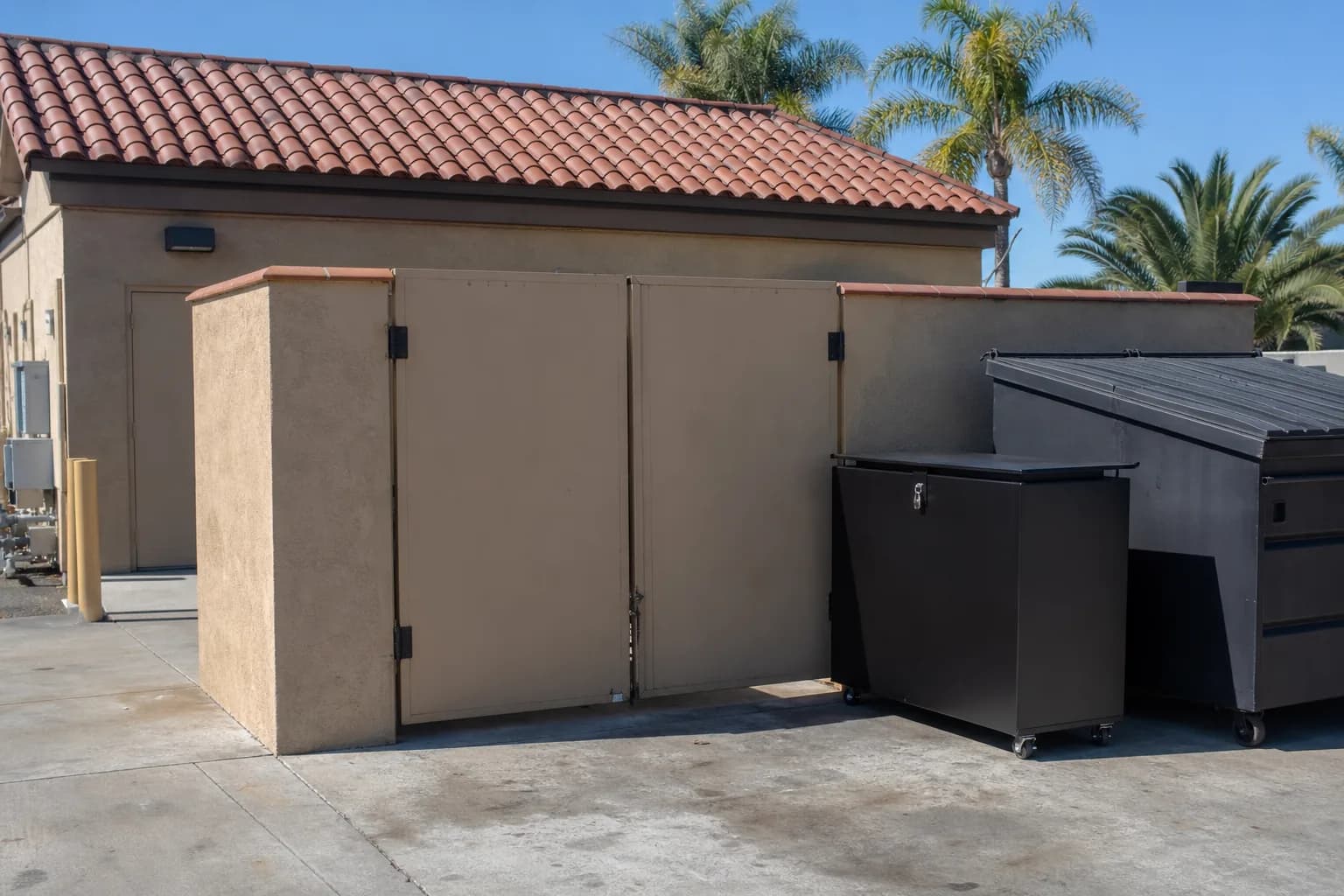
- Container security is non-trivial. An estimated $75M of used grease is stolen each year; a free locked, anti-theft container should be table stakes.
- Match coverage to your actual locations. If your portfolio is concentrated in California and the Pacific Northwest, a regional provider can be more responsive and far more flexible than a national one, without giving up the renewable-fuel end use.
- Oil Guyz is regional (CA + PNW), not national, month-to-month, no lease, no lien, free locked container, your own retained digital manifest, and one Filtrate dashboard for the whole portfolio.
Comparison table: commercial oil management vendors at a glance
Every competitor cell below is backed by the cited source. "Coverage" reflects each provider's own published footprint; "contract model" reflects each provider's own published terms.
| Provider | Coverage | Contract model | Customer portal / dashboard | Per-pickup CDFA digital manifest | Free locked container | Notes (sourced) |
|---|---|---|---|---|---|---|
| Oil Guyz | Regional: Orange County, LA, San Diego, Inland Empire, Bay Area, Tacoma/PNW, expanding | Month-to-month, no lease, no UCC lien, no fresh-oil requirement, no removal fee; cancel anytime | The Filtrate portal, one dashboard across all sites + per-location apps, role-based access | Yes, customer receives and keeps their own CDFA-compliant digital manifest after every pickup; retained for the required 2-yr CDFA minimum | Yes, free locked anti-theft container | Regional by design; oil routed to a CDFA-licensed renderer for biodiesel/renewable-diesel feedstock |
| Restaurant Technologies (RTI) | National, 41 depots / 30+ states / 45,000+ kitchens (source) | Equipment leased and remains RTI property with UCC financing statements filed; requirements contract (buy all cooking oil from RTI); lease auto-renews yearly unless 30-day written non-renewal notice; fees may rise each renewal; removal fee as liquidated damages on termination (T&C PDF) | Yes, Total Oil Management with the T.O.M. portal for multi-location visibility (source) | Customer assigns title to used oil to RTI and grants RTI authority to sign manifests on the customer's behalf (T&C PDF) | Equipment is leased, not free; RTI has no obligation to deliver TOM data to the customer (T&C PDF) | Real closed-loop fresh-oil-to-disposal program; strongest national footprint of the group |
| Mahoney Environmental | National, 50 states, 90,000+ establishments; owned by Neste; ISCC-certified feedstock (source) | Not publicly detailed as month-to-month; contact for terms | Public service channels for existing customers are phone / text / email / web form, no self-service portal or per-location app advertised (source) | No CDFA-specific per-pickup digital manifest publicly promoted | Grease-theft rewards program advertised (source) | Backed by Neste's renewable-fuel supply chain; large national establishment count |
| DAR PRO Solutions (Darling Ingredients) | National, 90+ plants, ~2,100 trucks, 200,000+ customers (source) | New customers sign an agreement making DAR PRO the sole service provider (source) | Yes, desktop web portal + DarLinQ anti-theft monitoring (source) | Not publicly promoted as a per-pickup CDFA digital manifest | DarLinQ anti-theft monitoring offered (source) | Compensation is a market-based rebate that moves with commodity prices (source) |
| Baker Commodities | National Account Center ("one call, one bill, one email, one company") (source); operating since 1937 | Not published online; contact for terms | Does not advertise a customer dashboard/portal or mobile app on its site | Does not advertise a CDFA per-pickup digital manifest on its site | Not published | Bundled Total Grease Management; dedicated national account support; rebate not published |
| Filta Environmental | Franchise network of 130+ franchisees (source) | Per-franchise; large accounts coordinated through a third-party national vendor (RTS/Elytus) (source) | On-site micro-filtration service model; not a centralized customer portal | Not publicly promoted | On-site micro-filtration extends oil life; collection is part of the service | Multi-location accounts coordinated by a third party with local franchisees performing service (source) |
Provider-by-provider breakdown
Oil Guyz
Oil Guyz is a regional used cooking oil pickup and recycling service across Orange County, Los Angeles, San Diego, the Inland Empire, the Bay Area, and Tacoma/PNW, and expanding. We are not nationwide, and we say so plainly. What we offer a multi-location operator inside that footprint is flexibility and ownership: free scheduled pickup, a free locked anti-theft container, and month-to-month terms with no lease, no UCC lien, no fresh-oil purchase requirement, and no removal fee. After every pickup you receive a CDFA-compliant digital manifest that you keep as your own chain-of-custody record from your kitchen to a CDFA-licensed renderer, retained for the required two-year CDFA minimum. Every location lives on one Filtrate dashboard with per-location apps and role-based access, corporate sees all sites, each GM sees theirs. Collected oil becomes biodiesel and renewable-diesel feedstock through a licensed renderer. The honest tradeoff: if your locations sprawl across thirty states, we can only cover the ones in our footprint today.
Restaurant Technologies (RTI)
RTI has the strongest national footprint in this comparison, 41 depots across 30+ states serving 45,000+ kitchens, and a genuinely sophisticated closed-loop "Total Oil Management" program that handles fresh oil delivery and used oil disposal, surfaced through its T.O.M. portal with multi-location visibility. For a nationwide chain that wants one vendor for fresh and used oil, that reach and that software are real advantages.
The wedge for a multi-location operator is the contract structure, which RTI itself publishes. Per RTI's posted Terms & Conditions: the equipment is leased and "shall remain the property of Restaurant Technologies," with UCC financing statements filed (Sec. 1.1); it is a requirements contract, the customer must buy all of its cooking oil from RTI (Sec. 2.1); the lease auto-renews yearly unless the customer gives 30-day written non-renewal notice, and fees may rise at each renewal (Secs. 4.1, 3.2); a removal fee applies "as liquidated damages, regardless of which party" terminates (Sec. 4.4(b)); the customer assigns title to all used oil to RTI and grants RTI authority to sign manifests on the customer's behalf (Sec. 2.2); and RTI has no obligation to deliver the monitoring (TOM) data to the customer (Sec. 1.2(f)(ii)). None of that is hidden, it is in the published terms, but a multi-location operator should read it before signing, because it shapes lock-in, oil-title ownership, and who controls the compliance record.
Mahoney Environmental
Mahoney is national, 50 states, 90,000+ establishments, owned by Neste, with ISCC-certified feedstock and a grease-theft rewards program. Being part of Neste plugs collected oil directly into one of the largest renewable-fuel supply chains in the world, which is a meaningful sustainability credential. For visibility and self-service, though, Mahoney's public channels for existing customers are phone, text, email, and a web form, there is no self-service customer portal or per-location app advertised, and no CDFA-specific per-pickup digital manifest publicly promoted. For an operator who wants a software dashboard across every location, that is the gap to probe in a sales conversation.
DAR PRO Solutions (Darling Ingredients)
DAR PRO, part of Darling Ingredients, brings enormous scale, 90+ plants, ~2,100 trucks, and 200,000+ customers, plus a desktop web portal and DarLinQ anti-theft monitoring. The structural points to weigh: new customers sign an agreement making DAR PRO the sole service provider, and compensation is a market-based rebate that moves with commodity prices, so what you are paid for your oil can swing with the market. For a chain that values one national vendor with anti-theft tech and is comfortable with sole-provider terms and a variable rebate, DAR PRO is a serious option; for one that wants month-to-month flexibility, it is a different model.
Baker Commodities
Baker Commodities has been operating since 1937 and runs a dedicated National Account Center built around the "one call, one bill, one email, one company" promise, with bundled Total Grease Management. That single-point-of-contact model can simplify procurement for a large chain. The transparency gaps for a software-minded operator: Baker does not advertise a customer dashboard/portal feature set, a mobile app, or a CDFA per-pickup digital manifest on its site, and its rebate terms are not published. Those are worth asking about directly.
Filta Environmental
Filta is distinctive in this group because its core service is on-site micro-filtration that extends fryer oil life, a different value proposition from straight collection. It operates as a franchise network of 130+ franchisees, and large multi-location accounts are coordinated through a third-party national vendor (RTS/Elytus) with local franchisees performing the service. For a chain whose priority is squeezing more life out of oil before it is collected, Filta's filtration is a genuine strength; for one that wants a single accountable team and one dashboard across sites, the franchise-plus-third-party coordination layer is the thing to understand.
How to choose: a checklist for multi-location operators
Run every shortlisted vendor through these six questions, and get the answers in writing before you sign:
- Contract term and renewal. Is it month-to-month, or a multi-year lease that auto-renews? What notice is required to leave, and can fees rise at renewal? (RTI's terms, for example, describe a yearly auto-renewing lease, see the T&C.)
- Who holds title to the used oil, and who signs the manifest? You, or the vendor on your behalf? This determines who controls your chain-of-custody record. In California a manifest is required for every used cooking oil pickup, with a two-year minimum retention, make sure you can produce yours on demand.
- Portal and visibility. Is there a real dashboard where corporate sees every site and each GM sees theirs, plus per-location apps? Or is service run through phone and email? Confirm whether the vendor is obligated to give you the data.
- Container security. Is the container free and lockable? Grease theft is a real crime, an estimated $75M of used grease is stolen annually, with the USDA valuing ~100 lb at ~$25.
- Coverage that matches your map. Does the footprint actually cover your locations? Do not pay for national reach you will not use; do not assume a regional provider can cover out-of-area sites.
- Transparency. Is billing readable and consolidated? Are rebate terms, if any, clear and not tied to opaque commodity swings? Is there a clean exit with full data export?
Where Oil Guyz fits
Oil Guyz is the regional answer on this list, and that is the point. If your restaurant group is concentrated in California or the Pacific Northwest, you get a local team that answers the phone, month-to-month terms with no lease, no UCC lien, no fresh-oil requirement and no removal fee, a free locked anti-theft container, and, the part most vendors do not offer, your own CDFA-compliant digital manifest after every pickup that you keep as your retained chain-of-custody record from kitchen to a CDFA-licensed renderer. Every location rolls up into one Filtrate dashboard with per-location apps and role-based access, so corporate sees the whole portfolio and each GM sees their site. The collected oil becomes biodiesel and renewable-diesel feedstock, renewable diesel averages ~65% lower carbon intensity than petroleum diesel, and waste-feedstock biodiesel/renewable diesel runs [~79 to 86% lower lifecycle GHG](Argonne National Laboratory, Environmental Science & Technology, 2022).
What we will not pretend: we are not nationwide. If all your locations sit inside our footprint, we can cover them today. If some sit outside it, we will cover the in-footprint ones now and you can tell us where your other locations are so we can notify you as we expand. For the full program details, included service, and a deeper look at how the Filtrate portal works across a portfolio, see our multi-location cooking oil collection page.
Sources
- Restaurant Technologies, locations / footprint: https://www.rti-inc.com/locations/
- Restaurant Technologies, Total Oil Management & T.O.M. portal: https://www.rti-inc.com/oil-management/
- Restaurant Technologies, posted Terms & Conditions (equipment lease/UCC, requirements contract, auto-renewal, removal fee, oil-title assignment, manifest authority, TOM data): https://www.rti-inc.com/wp-content/uploads/2026/02/TC-for-Oil.pdf
- Restaurant Technologies, used cooking oil theft data: https://www.rti-inc.com/blog/prevent-used-cooking-oil-theft/
- Mahoney Environmental, company / footprint / Neste / theft-rewards: https://mahoneyes.com/
- Mahoney Environmental, new client service channels: https://mahoneyes.com/new-client/
- DAR PRO Solutions (Darling Ingredients), footprint & portal: https://www.darlingii.com/darpro
- DAR PRO Solutions, sole-provider agreement & rebate: https://www.darlingii.com/darpro/faq
- Baker Commodities, National Account Center: https://bakercommodities.com/our-locations/national-account-center-ca/
- Filta Environmental, franchise network & service model: https://gofilta.com/
- Filta multi-location coordination (RTS/Elytus): https://retailrestaurantfb.com/filta-environmental-kitchen-solutions-partners-with-100-whole-foods-locations/
- CDFA manifest requirement & retention (3 CCR §1180.24): https://www.law.cornell.edu/regulations/california/3-CCR-1180.24
- Renewable diesel ~65% average carbon-intensity reduction (DOE AFDC / CARB LCFS): https://afdc.energy.gov/fuels/renewable-diesel
- Waste-feedstock biodiesel/renewable diesel ~79 to 86% lifecycle GHG reduction (Argonne National Laboratory, Environmental Science & Technology, 2022)
- EPA Renewable Fuel Standard, biomass-based diesel ≥50% lifecycle GHG reduction: https://www.epa.gov/renewable-fuel-standard/overview-renewable-fuel-standard-program