
San Francisco restaurants that cook food must install and maintain approved grease capturing equipment under the SFPUC Fats, Oils and Grease (FOG) Control Ordinance, and used cooking oil has to go to a permitted recycler, not the drain or the trash. The fastest compliant path is free scheduled pickup from a manifest-documented service that leaves you a documented manifest after every collection. Here is exactly how the rules work in San Francisco, where the oil goes, and what records you need to keep.
The short version for San Francisco kitchens
If you run a food service establishment in San Francisco, two separate things are happening in your kitchen and the city treats them differently.
The first is the greasy wastewater that runs off your sinks, dishwasher, and floor drains. That is what the SFPUC FOG program targets through grease traps and interceptors.
The second is bulk used cooking oil, the spent fryer oil you pour out at the end of the night. That is a recyclable commodity, and it has its own disposal rules.
Confusing the two is the most common mistake we see. A grease interceptor is not a place to dump fryer oil. Pouring used oil into your interceptor overloads it, forces more frequent pumping, and can put you out of compliance fast. Keep them separate and both systems stay clean.
SFPUC FOG control: what the ordinance requires
San Francisco runs one of the stricter FOG programs in the state. It is administered by the San Francisco Public Utilities Commission through its pretreatment program, and the legal backbone is the city's FOG Control Ordinance in the San Francisco Public Works Code, Section 140.
Here is what that means in practice for a food service establishment.
You need grease capturing equipment. Any restaurant or food service business that cooks food, and therefore puts grease into its wastewater, has to install approved equipment. The SFPUC and the San Francisco Plumbing Code recognize three main types:
- Hydromechanical Grease Interceptors (HGIs), the under-sink or near-sink units
- Gravity Grease Interceptors (GGIs), the larger in-ground vaults
- Grease Removal Devices (GRDs), which automatically skim grease
You get assigned a Discharger Category. SFPUC places each establishment into FOG Discharger Category 1, 2, or 3 based on how much grease your operation is likely to send to the sewer. Your category drives the specifics of what equipment you need and how closely you are watched. A high-volume fryer-heavy kitchen and a coffee shop are not treated the same way.
Your equipment has to be cleaned on a schedule. San Francisco follows the standard FOG benchmark: grease capturing equipment must be cleaned out when it reaches 25 percent of its capacity in grease and solids. Many small kitchens service roughly every 90 days, but high-volume kitchens hit the 25 percent trigger well before that, so do not assume a quarterly pump is enough. Match the schedule to your actual grease load.
There is a financial carrot. Once your grease capturing equipment is installed and you submit the SFPUC Installation Verification Form, your business qualifies for a reduction on the sewer service charge portion of your water and sewer bill. Compliance is not just a cost. It lowers your monthly bill.
For the full program and the category fact sheets, the official source is the SFPUC Fats, Oils and Grease Control page.
Where used cooking oil goes in San Francisco
Now the other stream: your bulk fryer oil.
Used cooking oil cannot go down any drain, including your grease interceptor, and it does not belong in your trash or compost in any meaningful quantity. It is a recyclable feedstock, and in California it is regulated as inedible kitchen grease.
San Francisco actually used to run its own free residential collection bins for cooking oil. The SFPUC retired that 12-year program in September 2019 because the private recycling market had matured enough to handle the volume on its own. So the answer to "where does my oil go" today depends on whether you are a household or a business.
Residents can take small amounts of cooled, strained cooking oil to Recology's Household Hazardous Waste facility at 501 Tunnel Avenue, San Francisco. It is open Thursday, Friday, and Saturday from 8 am to 4 pm, accepts up to 10 gallons per trip, and requires proof of San Francisco residency. Calling ahead at 415-330-1400 is recommended. This facility takes residential oil only, not oil from a business.
Restaurants and commercial kitchens do not use the household drop-off. You arrange recycling through a registered used cooking oil hauler that collects on a schedule. The SFPUC's own Used Cooking Oil Disposal page points commercial customers to private grease haulers and lists the SFPUC commercial information line at 415-695-7310 for questions about your options.
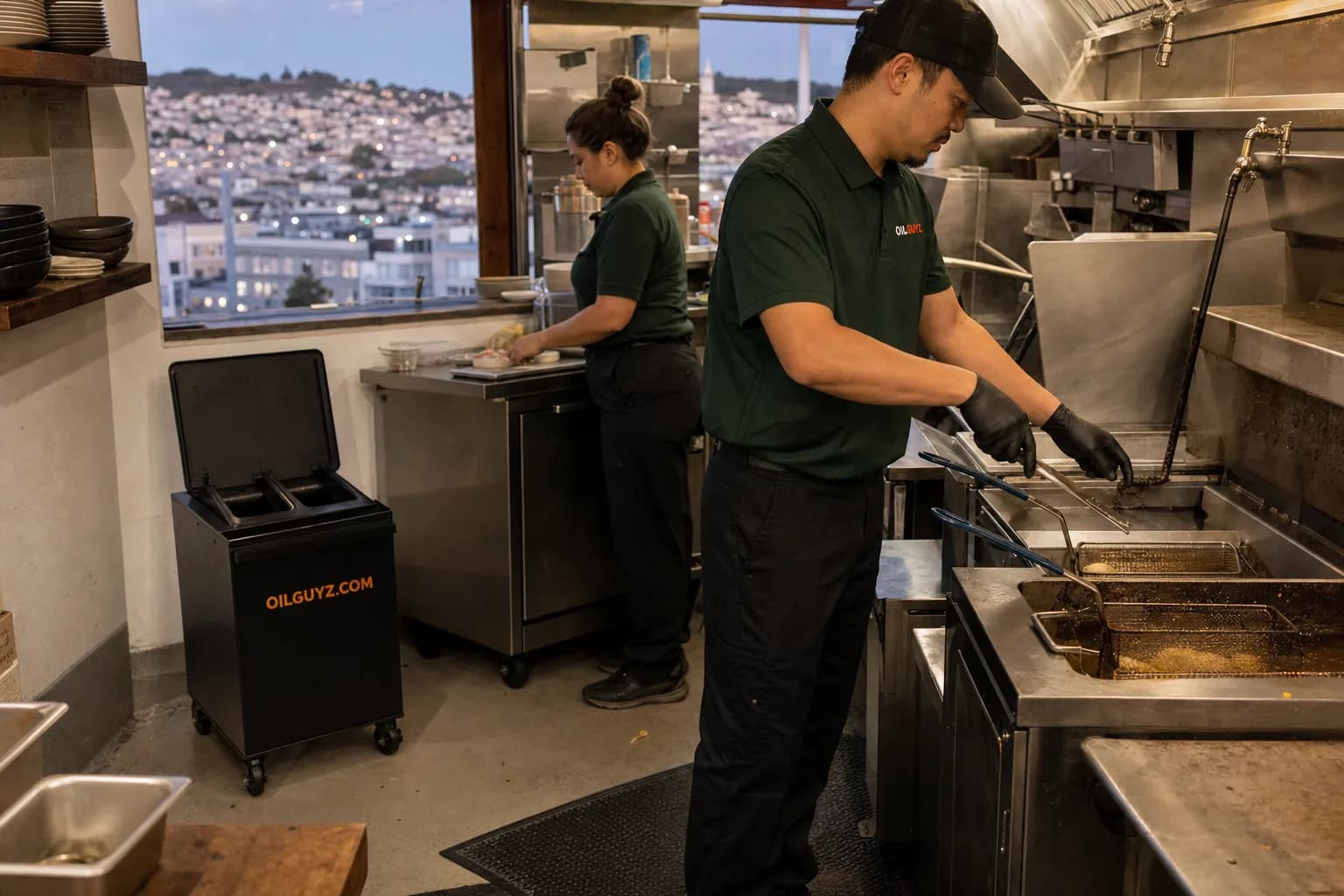
That is where a free scheduled pickup service fits in. You keep a collection bin, the oil gets picked up before it overflows, and it leaves your kitchen headed for a recycler instead of a sewer line.
What "registered hauler" means in California
This is the part San Francisco kitchens often miss. In California, you cannot hand your used cooking oil to just anyone with a pickup truck.
Anyone who collects, transports, or processes used cooking oil in California has to be registered with the California Department of Food and Agriculture under its Inedible Kitchen Grease program, CCR Title 3, sections 1180.20 et seq.. A registered transporter is required to generate a manifest for every load and deliver the oil only to a licensed rendering facility. CDFA built this system specifically to fight grease theft, which is a real and persistent problem across the Bay Area.
What this means for you: when you choose a pickup service, confirm it carries a current CDFA Inedible Kitchen Grease registration and leaves you documentation after every pickup. That manifest is your proof that the oil left your kitchen legally and went somewhere legitimate. If a "free" collector cannot show you that paperwork, that is a red flag, not a bargain.
Recordkeeping that actually protects you
San Francisco's FOG program runs on documentation, and so does the state's grease program. You want a paper trail for both streams.
For your grease capturing equipment, keep your maintenance and cleaning logs. SFPUC provides grease trap, interceptor, and grease removal device maintenance log forms for exactly this reason. When an inspector asks how often your interceptor is cleaned, the log is your answer.
For your used cooking oil, keep the pickup manifests. A compliant chain of custody shows the date, the volume, who collected it, and where it went. Under the CDFA program, transporter records for inedible kitchen grease are maintained and available for review. Holding onto your copies means a compliance question never turns into a scramble.
The cleaner your records, the less time you spend worrying about an inspection. A good pickup partner does this part for you automatically, so the documentation builds itself with every collection.
How Oil Guyz handles San Francisco
This is the gap we fill for San Francisco kitchens. Oil Guyz provides free used cooking oil pickup for restaurants and commercial kitchens, and we built the service around the paperwork, not just the hauling.
Here is what you get:
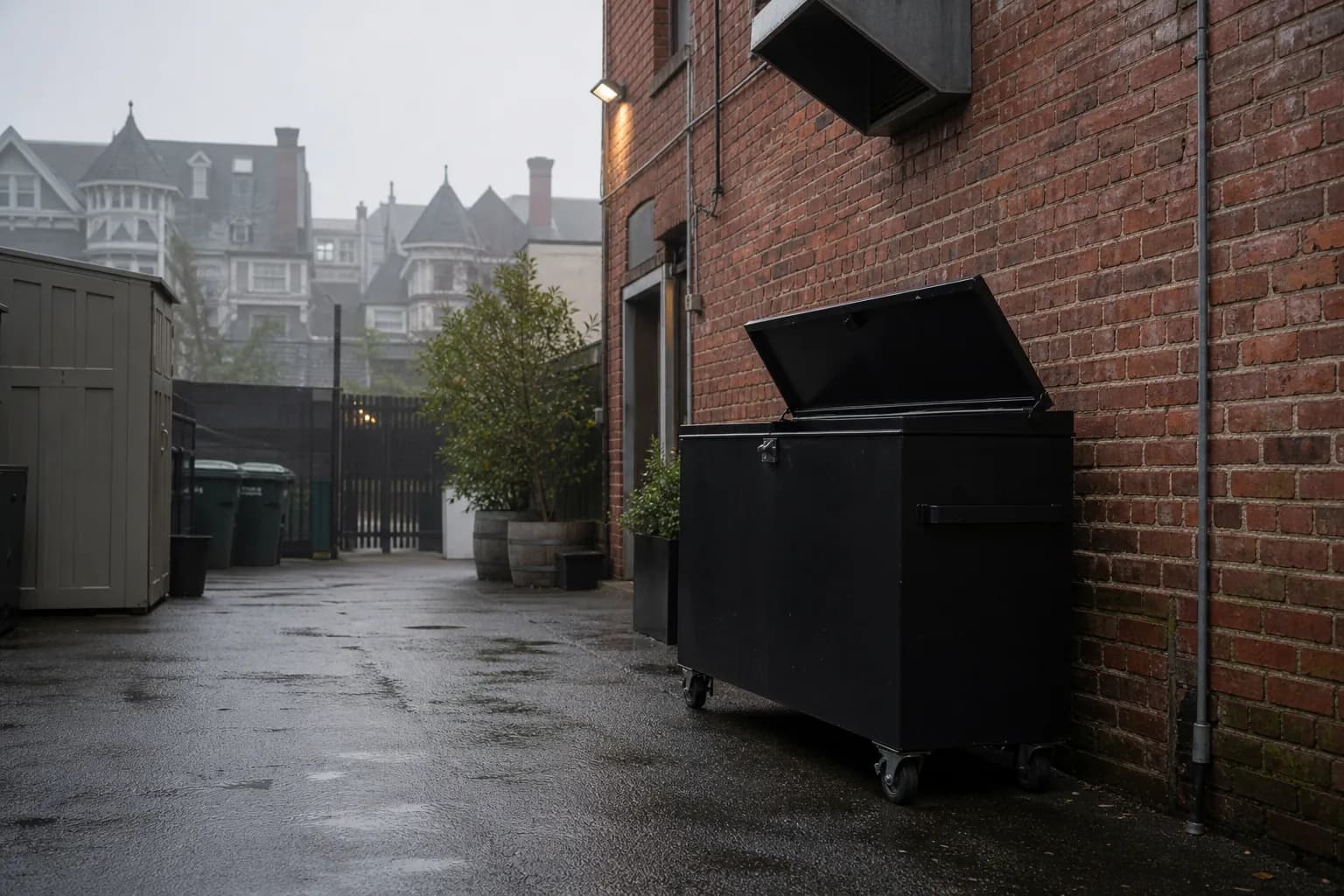
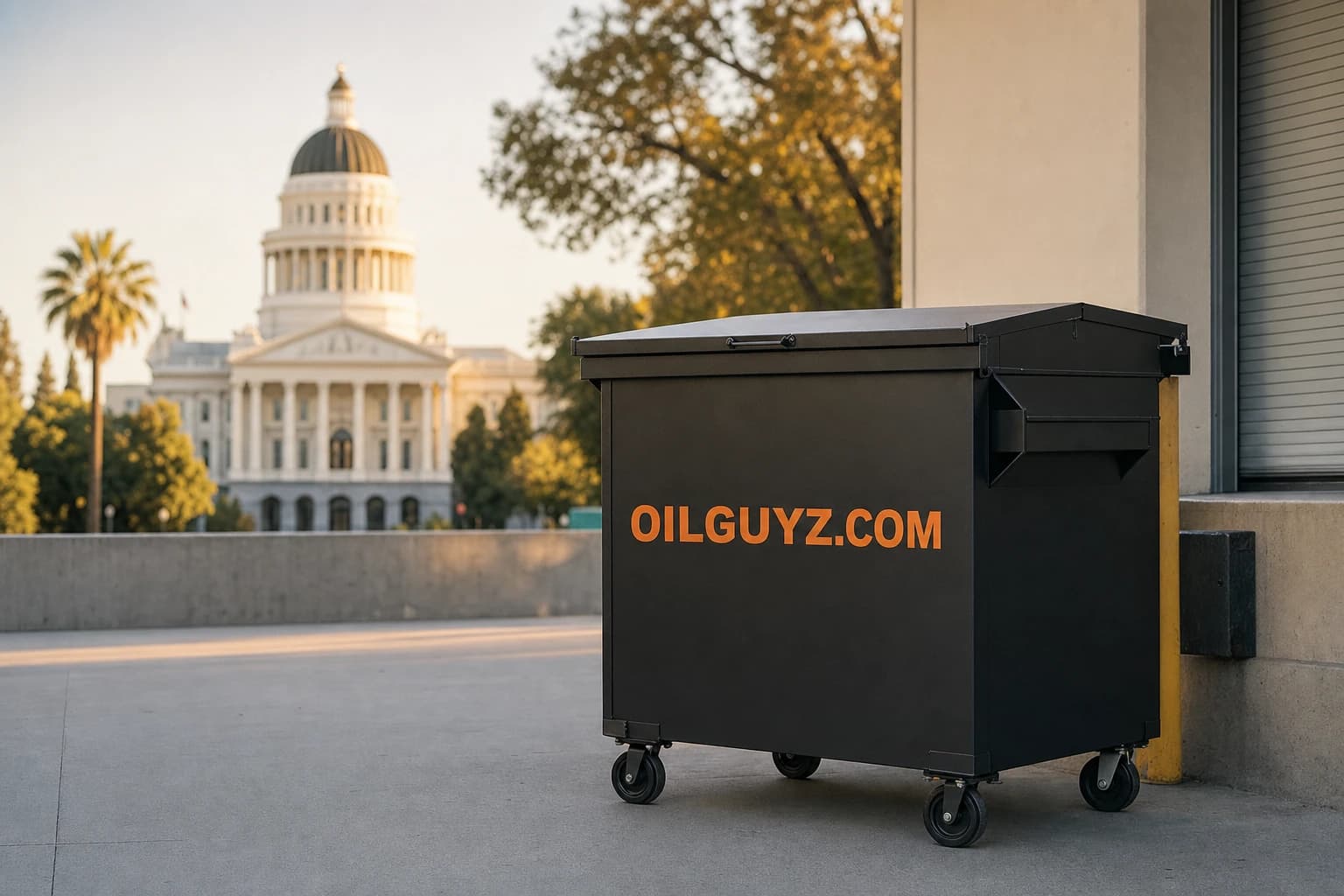
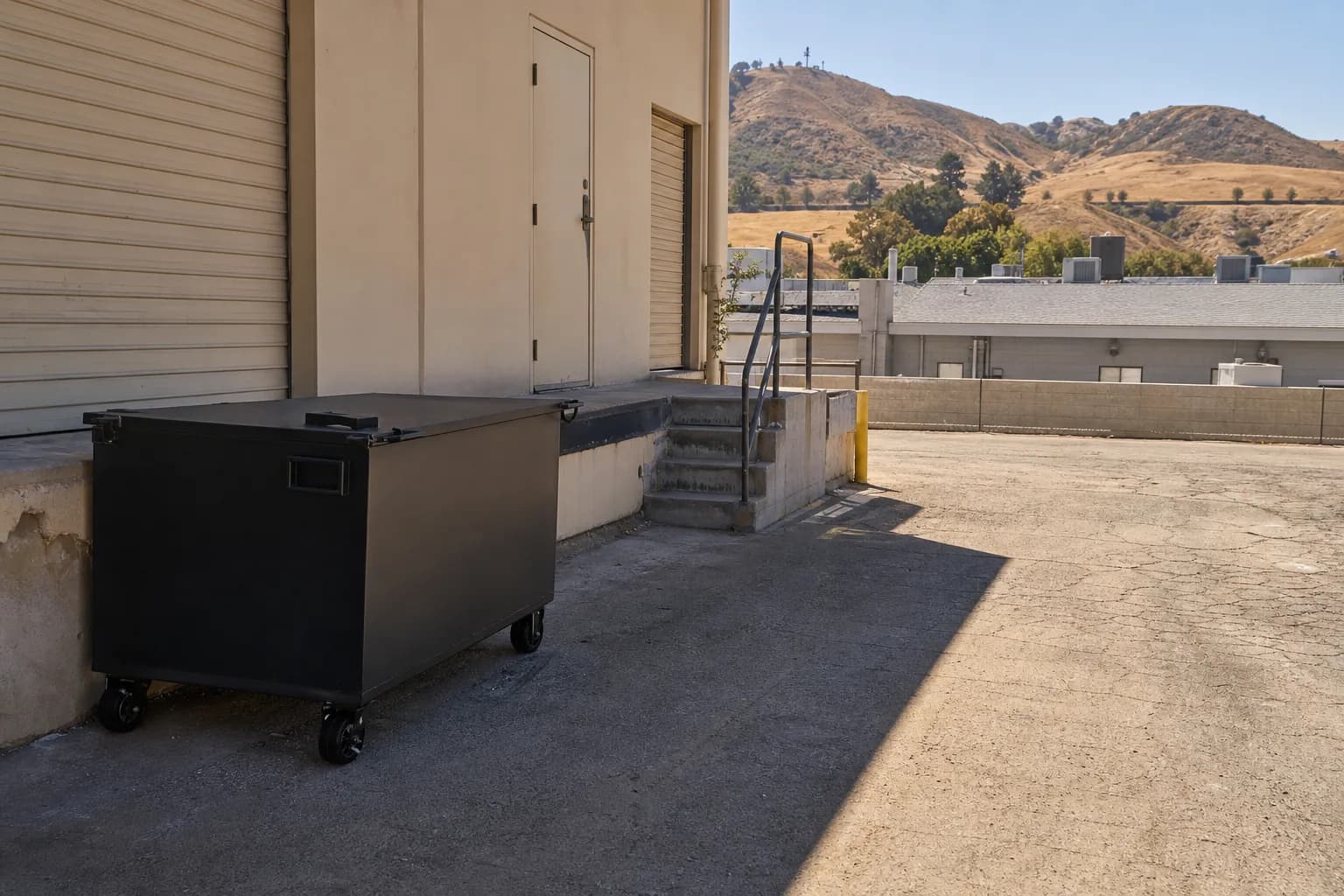
- A free locked, anti-theft collection bin sized to your kitchen, so your oil is secure and grease theft is not your problem
- Scheduled pickups that match your volume, so you are never overflowing or storing oil too long
- A compliant digital manifest with a documented chain of custody after every single pickup, the record you keep alongside your SFPUC maintenance logs
- Recycling into clean renewable fuel, biodiesel and renewable diesel feedstock, through our licensed renderer and refinery
- No contract, no lock-in, and a real person who answers the phone when you call
Your used oil leaves your kitchen, goes to a legitimate recycler, and you get the documentation to prove it. That is the whole point.
The bigger Bay Area picture
San Francisco is one piece of a regional system. The FOG rules, the agencies, and the haulers shift as you cross city and county lines, so if you run locations beyond the city, it helps to see how the whole region fits together.
For the full regional overview, start with our Bay Area used cooking oil pickup guide. It walks through the agencies, the rules, and how recycling works across every Bay Area county.
If your operation reaches across the bridge, the East Bay and Oakland cooking oil pickup guide covers the East Bay Municipal Utility District (EBMUD) FOG program and how Oakland and Alameda County kitchens handle the same two streams under different local rules.
For a county-by-county map of who actually inspects your grease across the region, see the Bay Area restaurant grease and FOG rules breakdown. And if you run a kitchen down the Peninsula toward the South Bay, the San Jose and South Bay pickup guide covers San Jose's SwiftComply program and Municipal Code 15.14.
Get free pickup in San Francisco
If you run a kitchen in San Francisco, you have two compliance jobs: keep your grease interceptor maintained on the 25 percent or 90-day schedule, and get your used cooking oil to a registered recycler with documentation to prove it.
Oil Guyz handles the second one for free. Locked bin, scheduled pickups, a real manifest after every collection, and oil that becomes clean renewable fuel. No contract, no games.
Call us at (714) 880-4788 or get started at oilguyz.com and we will set up free used cooking oil pickup for your San Francisco kitchen.