
Bay Area restaurants can get used cooking oil hauled away for free by a registered recycler, and the oil is turned into clean renewable fuel. You do not need a license to give your oil away, but your hauler does need a valid California Department of Food and Agriculture (CDFA) Inedible Kitchen Grease registration, and you should get a documented manifest after every pickup. This guide walks through the whole picture: the regional FOG rules from SFPUC to EBMUD to San Jose, what the law actually requires, how to choose a hauler, and how to protect yourself from theft and hidden costs.
The two waste streams every Bay Area kitchen has to manage
Before anything else, separate two things in your head, because regulators treat them differently and so should you.
The first is your grease trap or interceptor. This catches the fats, oils, and grease (FOG) that rinse off plates, pans, and equipment into your drains. It is plumbing, it is regulated by your local wastewater agency, and it has to be cleaned and logged on a schedule.
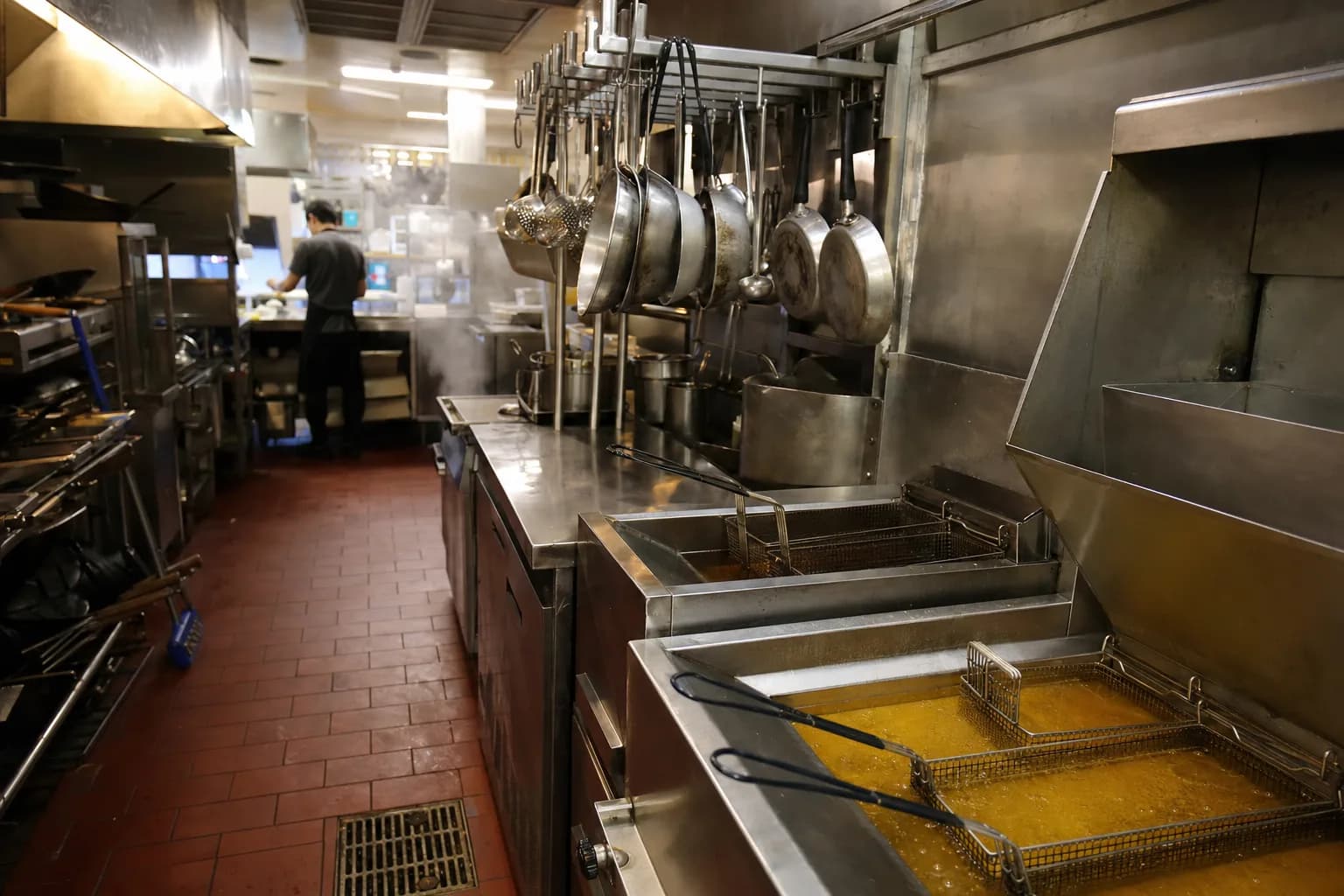
The second is your used cooking oil, the spent fryer oil you pour into a dedicated outdoor bin. This is a recyclable commodity. A registered recycler collects it, usually for free, and turns it into renewable fuel.
Mixing these up is the single most common mistake we see. Your trap is a compliance obligation you pay to service. Your fryer oil is an asset someone else pays to collect. This guide focuses mostly on the fryer oil side, but you cannot stay compliant without handling both, so we cover where they intersect.
The Bay Area FOG landscape, agency by agency
There is no single Bay Area FOG authority. The rules change depending on which city and which wastewater agency you fall under. Here is the lay of the land.
San Francisco: SFPUC
In the city, the San Francisco Public Utilities Commission (SFPUC) FOG Control Program requires every food service establishment that cooks to install grease-capturing equipment, either a trap or an interceptor. SFPUC assigns each business a FOG Discharger Category of 1, 2, or 3 based on its potential to discharge grease to the sewer, and each category carries its own maintenance and recordkeeping requirements.
There is a real upside to getting this right. SFPUC offers lease and loan options to reduce the cost of required equipment, and businesses that complete an Installation Verification Form can earn a 14.2% reduction on the sewer-service portion of their water and sewer bill.
It is also worth knowing that SFPUC retired its own free grease-collection program back in 2019. That is not a problem. It happened because private registered recyclers had matured to the point that the city no longer needed to run the service itself. Today, San Francisco restaurants use private haulers for fryer oil, and SFPUC focuses on the FOG-control side. For a deeper dive into the city's specific rules, see our San Francisco FOG rules guide.
The East Bay: EBMUD and StopWaste
Across the bay, the East Bay Municipal Utility District (EBMUD) runs a long-standing FOG control program, coordinating with the local wastewater collection agencies across its service area. EBMUD provides free best-management-practices guidance, grease-trap maintenance logs, and interceptor maintenance flyers, and it asks food service establishments to keep grease out of the drains that ultimately flow to San Francisco Bay. You can reach the program at cleanbay@ebmud.com or (510) 287-1651.
One nuance that trips up East Bay operators: EBMUD treats wastewater, but the sewer pipes themselves are owned by your local city. So while EBMUD sets the regional FOG expectations, you may also answer to your city's sewer agency on equipment requirements. When in doubt, check both.
On the recycling and diversion side, Alameda County's StopWaste agency runs RE:Source, an online directory for reuse, recycling, and safe disposal across the East Bay. It is a useful reference for understanding the county's broader waste-diversion goals, though for commercial fryer oil you will still want a dedicated registered recycler rather than a residential drop-off. We cover the East Bay in detail in our Oakland and East Bay used cooking oil pickup guide.
The South Bay: City of San Jose
San Jose runs one of the more modernized programs in the region. The City of San Jose Food Service Establishments FOG program requires grease control devices to be serviced regularly, with maintenance records kept onsite and produced at the time of inspection. Those records must comply with section 15.14.650 of the San Jose Municipal Code.
San Jose also launched a free digital compliance tool called SwiftComply, letting food service establishments manage and upload their grease-control maintenance records online. The stakes are real: under the city's municipal code, violations can run up to $2,500 per day per violation. You can reach the city's FOG Control Program at nogrease@sanjoseca.gov or 408-945-3000. For the full South Bay breakdown, see our San Jose and South Bay used cooking oil pickup guide.
County environmental health
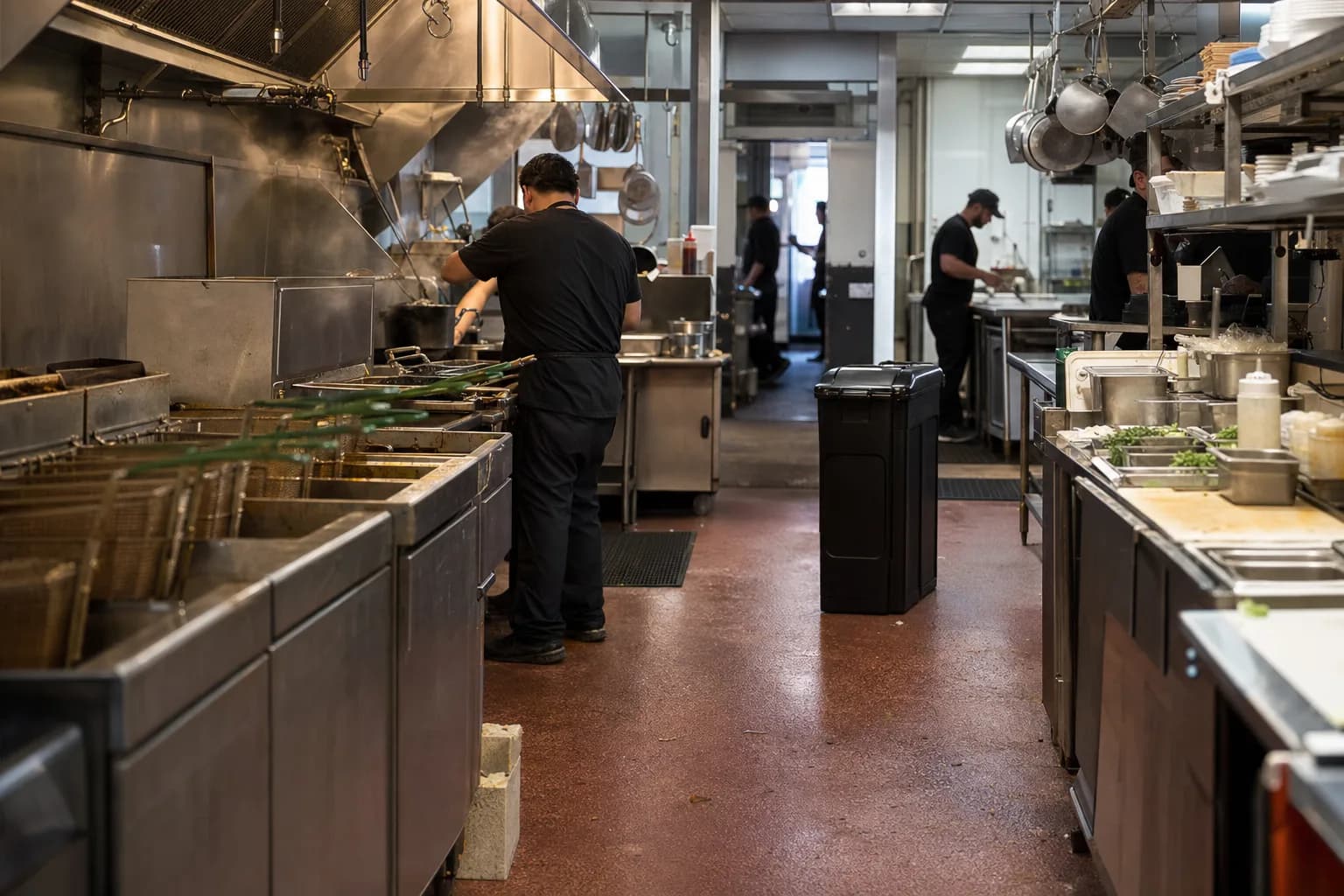
Layered on top of the wastewater agencies, your county environmental health department handles food-safety inspections, and inspectors do look at how you store and handle waste oil. An overflowing grease bin, an unsealed lid drawing pests, or missing pickup paperwork can all turn into findings. The fryer-oil bin is not just a recycling convenience, it is part of the picture a health inspector sees.
The California rule that applies everywhere: CDFA IKG
Here is the statewide layer that ties the whole Bay Area together. Used cooking oil is legally classified as Inedible Kitchen Grease (IKG) in California, and it is regulated by the California Department of Food and Agriculture (CDFA).
Every company that transports or renders used cooking oil must hold a valid CDFA IKG registration or license and generate a manifest for every load. The CDFA program registers transporters and licenses renderers specifically to document the chain of custody, which is the system's main defense against theft and illegal dumping.
A few practical points that matter for you as a restaurant:
- You do not need a license to give your oil away. The registration burden is on your hauler, not on you.
- The truck should prove it is legitimate. By California law, a transporter's truck must display the company name and a current IKG transporter decal issued by the state. The company name on the truck should match the label on your bin.
- Electronic manifests are fully legal. California's Uniform Electronic Transactions Act explicitly allows electronic manifests, so a clean digital record after each pickup counts.
- Records must be retained. CDFA requires manifest records to be kept for a minimum of two years, and registered transporters must carry at least $2 million in liability insurance or a surety bond.
If a "recycler" cannot produce a CDFA registration number or a manifest, that is not a recycler. That is a liability.
What actually happens to your oil
When a registered recycler collects your fryer oil, it does not vanish into a landfill. It gets filtered and processed by a licensed renderer, then sold as feedstock for biodiesel and renewable diesel, the cleaner fuels that power an increasing share of California's trucks and equipment.
This is the economic reason your pickup can be free. California's Low Carbon Fuel Standard has turned used cooking oil into a genuinely valuable commodity. A reputable recycler collects your oil, processes it, and earns its margin downstream from the fuel market, which means it can take the oil off your hands at no cost.
At Oil Guyz, your collected oil is recycled into clean renewable fuel through our licensed renderer and refinery. You get the disposal handled, the planet gets a lower-carbon fuel, and you get the paperwork that proves the chain of custody.
Used cooking oil theft is a real Bay Area problem
The same value that makes free pickup possible also makes oil a target. Used cooking oil theft is an ongoing and significant problem across California, and industry estimates from the renderers' association put national losses in the hundreds of millions of dollars a year. Organized crews drive around at night siphoning oil from restaurant bins, and some even impersonate legitimate recycling trucks.
The CDFA's IKG program exists in large part to fight this. Its guidance to restaurants is direct: watch for unmarked vehicles, especially after dark, and confirm that the company name on any truck servicing your bin matches the label on the bin and the name on the manifest.
Your two best protections are simple:
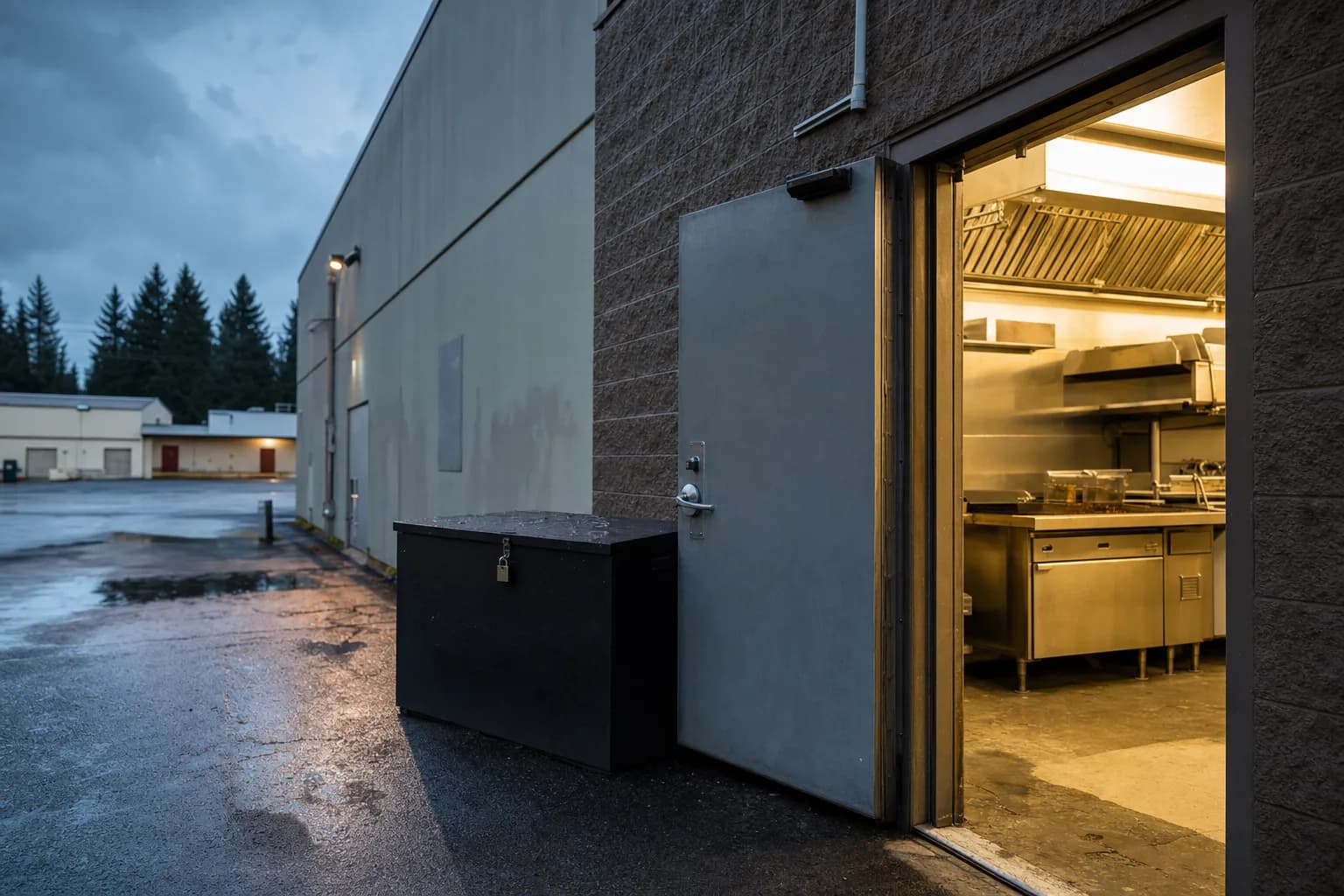
- A locked, anti-theft collection bin. If thieves cannot open it, they cannot drain it.
- A single registered, decaled hauler. When one accountable company holds the key and signs every manifest, there is no gray area about who took your oil.
Oil Guyz provides the free locked anti-theft bin as standard, precisely because this is a problem we see in Bay Area alleys every week.
What it costs (and the traps to avoid)
For a typical restaurant, used cooking oil pickup should cost nothing. The oil pays for the service. But "free" gets abused, so read the fine print.
Watch for these common traps:
- Equipment rental fees. Some companies advertise free pickup, then charge a monthly rental on the bin. A genuinely free service provides the bin at no charge.
- Long-term contracts with penalties. If you are locked into a multi-year deal with an early-termination fee, you have lost your leverage. Look for no-contract, cancel-anytime service.
- Fuel surcharges and "market adjustment" fees. These line items can quietly turn free pickup into a monthly bill.
- No manifest, no registration. If a hauler will not show you a CDFA IKG registration number or leave a manifest, the low price is not worth the compliance exposure.
The honest version is straightforward: free scheduled pickup, a free locked bin, no contract, a real registration, and a manifest after every visit.
How to choose a Bay Area hauler: a checklist
Run any potential recycler through these questions before you commit:
- Are you CDFA IKG registered? Ask for the registration number. Verify the truck carries a current IKG decal.
- Do I get a manifest after every pickup? You want documented chain of custody, ideally a digital manifest, on every visit.
- How long do you keep records? California requires a minimum of two years. Strong operators keep them far longer.
- Is the bin free, and is it locked? Both should be yes, with no rental fee and real anti-theft hardware.
- Is there a contract? Look for no contract and cancel-anytime terms.
- Will you set my schedule around my actual volume? A good recycler sizes your pickups to your fry output, not a one-size-fits-all calendar.
- Can I reach a real person? When your bin is full on a Friday night, you do not want a call center maze.
How Oil Guyz handles it
Oil Guyz was built around exactly this checklist. Across the Bay Area, you get:
- Free scheduled pickups sized to your real fryer volume, from a small cafe to a high-volume kitchen.
- A free locked anti-theft collection bin, so your oil stays your oil.
- No contract, ever. Stay because the service is good, not because you are trapped.
- A compliant digital manifest with documented chain of custody after every pickup, the paperwork a CDFA program, a health inspector, or an EBMUD or SFPUC reviewer wants to see.
- 2-year record retention, meeting the state minimum, so your history is always there when you need it.
- A real person who answers when you call.
And your oil is recycled into clean renewable fuel through our licensed renderer and refinery, so the carbon story checks out too.
More Bay Area resources
This guide is the hub. For the city-specific and county-specific details, dig into these:
- San Jose and South Bay used cooking oil pickup guide covers San Jose's SwiftComply program, Municipal Code 15.14, and the Santa Clara, Sunnyvale, and Milpitas kitchens across the South Bay.
- Fremont and Peninsula used cooking oil pickup guide covers Union Sanitary District's rules for Fremont and the Tri-City, plus the Peninsula running down toward the South Bay.
- Bay Area restaurant grease and FOG rules is the county-by-county map of which agency actually inspects your grease across Alameda, Santa Clara, and San Mateo counties.
- San Francisco FOG rules and used cooking oil guide covers the SFPUC FOG Discharger Categories, the city's equipment requirements, and exactly what San Francisco restaurants need to stay compliant.
- East Bay and Oakland used cooking oil pickup guide breaks down the EBMUD regional program, StopWaste resources, and how pickup works for Oakland and the wider East Bay.
- Oil Guyz Bay Area service area shows every city we cover, from San Francisco and Oakland to San Jose, Fremont, and the Peninsula.
Get free Bay Area pickup
If you run a restaurant or commercial kitchen anywhere from San Francisco to Oakland to San Jose, Oil Guyz will haul your used cooking oil for free, drop a locked anti-theft bin, and leave you a compliant manifest after every pickup. No contract, no surprises, and a real person on the phone. Call (714) 880-4788 to set up your free Bay Area pickup, or learn more at oilguyz.com. This is The Grease Report, helping Bay Area kitchens turn a daily headache into clean renewable fuel.