
Oakland and East Bay used cooking oil pickup is free for restaurants. Oil Guyz collects your used cooking oil at no charge across Oakland, Berkeley, Alameda, Emeryville, Hayward, Fremont, and the rest of Alameda County, with a free locked bin, scheduled service, and a compliant digital manifest after every pickup. The oil is recycled into clean renewable fuel. You just need a setup that keeps EBMUD, the City of Oakland, and Alameda County environmental health happy.
This is the East Bay chapter of our regional guide. For the full picture across all nine counties, start with the Bay Area used cooking oil pickup guide. For how the rules differ across the bridge, see San Francisco FOG rules and used cooking oil. And because Fremont and the Tri-City sit at the southern edge of the East Bay under their own sanitary district, they get a dedicated breakdown in the Fremont and Peninsula pickup guide.
Who regulates grease in Oakland and the East Bay
The East Bay does not have one single grease authority. You answer to a few different agencies, and they each look at a different piece of the same problem.
The East Bay Municipal Utility District (EBMUD) runs the fats, oils, and grease program for its East Bay wastewater service area. EBMUD treats the wastewater for Oakland, Alameda, Albany, Berkeley, Emeryville, Piedmont, and the Stege Sanitary District area. It provides free guidance on best management practices, grease trap maintenance, and grease interceptor maintenance, and it checks food service establishments for grease control devices. You can reach the EBMUD FOG team at cleanbay@ebmud.com or (510) 287-1651. One important nuance: EBMUD treats the wastewater, but the sewer pipes themselves are owned by your city, so some rules come from your local municipality.
The City of Oakland is where that plays out for Oakland kitchens. The city prohibits discharging fats, oils, and grease into the sanitary sewer system and requires food service establishments to install and maintain grease control devices. The teeth behind this sit in the Oakland Municipal Code, and the city enforces against violations that send grease into the sewer. That is not a headache anyone wants hanging over a busy kitchen.
The Alameda County Department of Environmental Health is the agency whose inspector walks through your door. DEH handles routine food facility inspections, and how you store and hand off waste oil is part of what an inspector sees. If a sanitarian asks how your fryer oil leaves the building, "a guy comes by sometimes" is not an answer that holds up.
Finally, the California Department of Food and Agriculture (CDFA) registers the companies that haul your used cooking oil. Used cooking oil is legally classified as inedible kitchen grease, and every company that transports it has to hold a CDFA Inedible Kitchen Grease (IKG) transporter registration. That registration applies in every California county, Alameda included.
What the rules actually require of your kitchen
Strip away the agency names and the requirements come down to a short list.
- Keep grease out of the drain. Use grease control devices, wipe cookware before washing, and never pour used fryer oil down a sink. EBMUD and the City of Oakland both treat sewer discharge as the cardinal sin.
- Store used oil in a sealed, contained way. Your outdoor collection bin needs a lid that closes and a container that does not leak or overflow. Overflowing exterior containers and unsealed lids are among the most common things inspectors cite.
- Use a registered transporter. Your hauler must hold a current CDFA IKG registration. This is not optional, and it protects you as much as it protects the state.
- Keep records. You need to be able to show where your oil went and prove it went to a legitimate recycler. This is the piece most kitchens overlook until an inspector asks.
None of this is exotic. It is the same compliance backbone we cover for the whole region in the Bay Area pickup guide. The East Bay just enforces it through this particular stack of agencies.
Where StopWaste and RE:Source fit in
If you have searched for a recycler yourself, you have probably landed on StopWaste, the public agency that has been reducing waste in Alameda County since 1976. StopWaste runs the RE:Source directory at resource.stopwaste.org, a searchable guide to reuse, repair, and proper disposal for the East Bay.
Cooking oil and grease live under item 13703 in that directory. For households, RE:Source points to free drop-off at the county household hazardous waste facilities in Oakland, Hayward, Fremont, and Livermore. For commercial kitchens, the guidance is simpler and direct: contact a grease hauler for service. The directory lists several collection companies that operate in the county.
RE:Source is a genuinely useful starting point, and it is worth a look. The one thing it cannot do for you is vet the provider. Before you let any company on your property, confirm they hold a current CDFA IKG registration and that they will hand you documentation after every pickup. A directory listing is not the same as a registration.
The renewable fuel side of it
There is a reason the agencies want this oil collected properly rather than dumped. Cooking oil dropped off through EBMUD's residential program is picked up by registered transporters and recycled into biodiesel, and the same logic drives the commercial side.
When Oil Guyz picks up your used cooking oil, it does not get thrown away. It goes to our licensed renderer and refinery, where it becomes feedstock for clean renewable fuel, the biodiesel and renewable diesel that power trucks and equipment across California. Your fryer oil stops being a disposal headache and becomes part of the fuel supply. That is the quiet upside of doing this right: the compliant path is also the sustainable one.
What good service looks like in the East Bay
Plenty of companies will haul your oil. The difference is in what you get along with the pickup. Here is what we set up for East Bay kitchens.
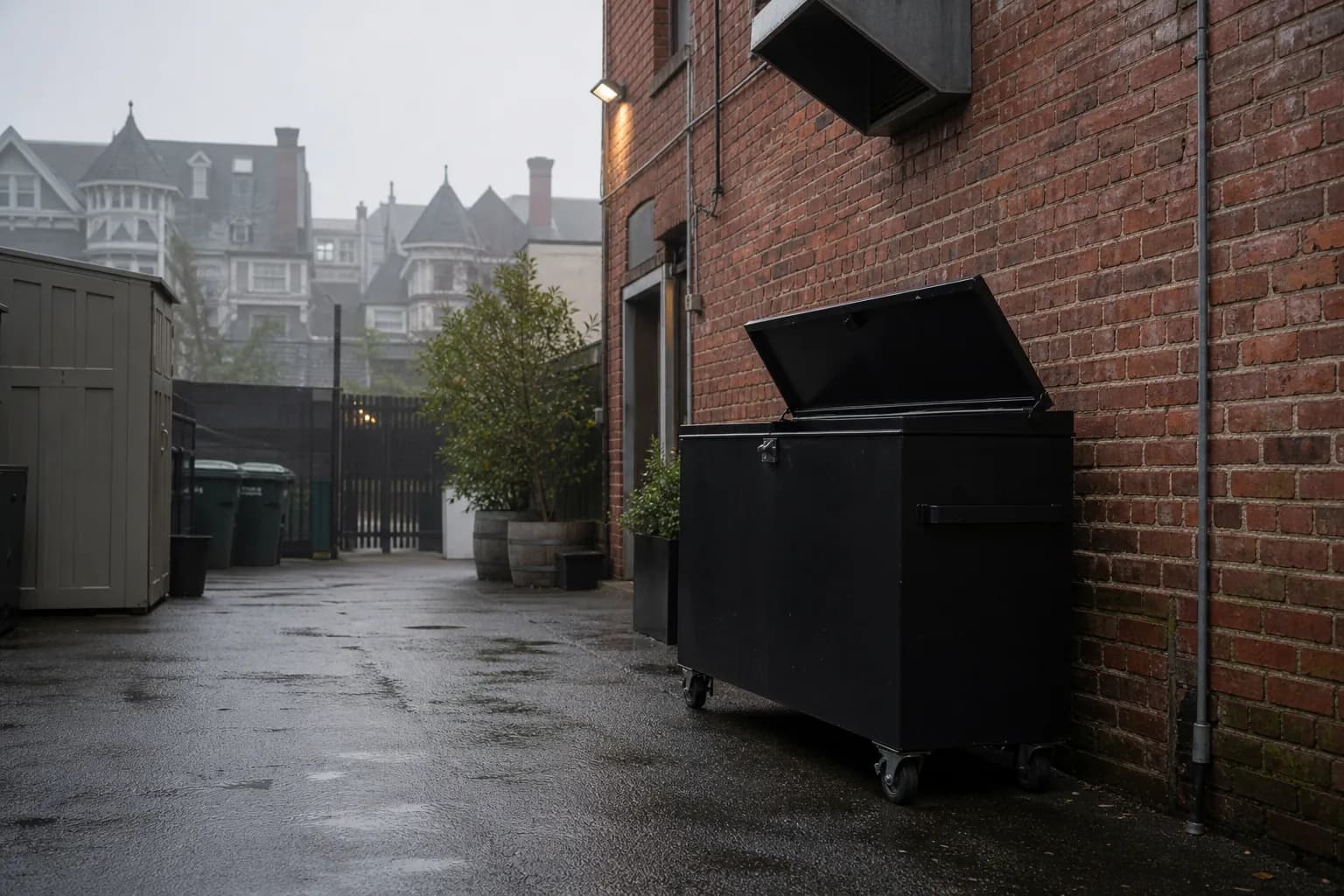
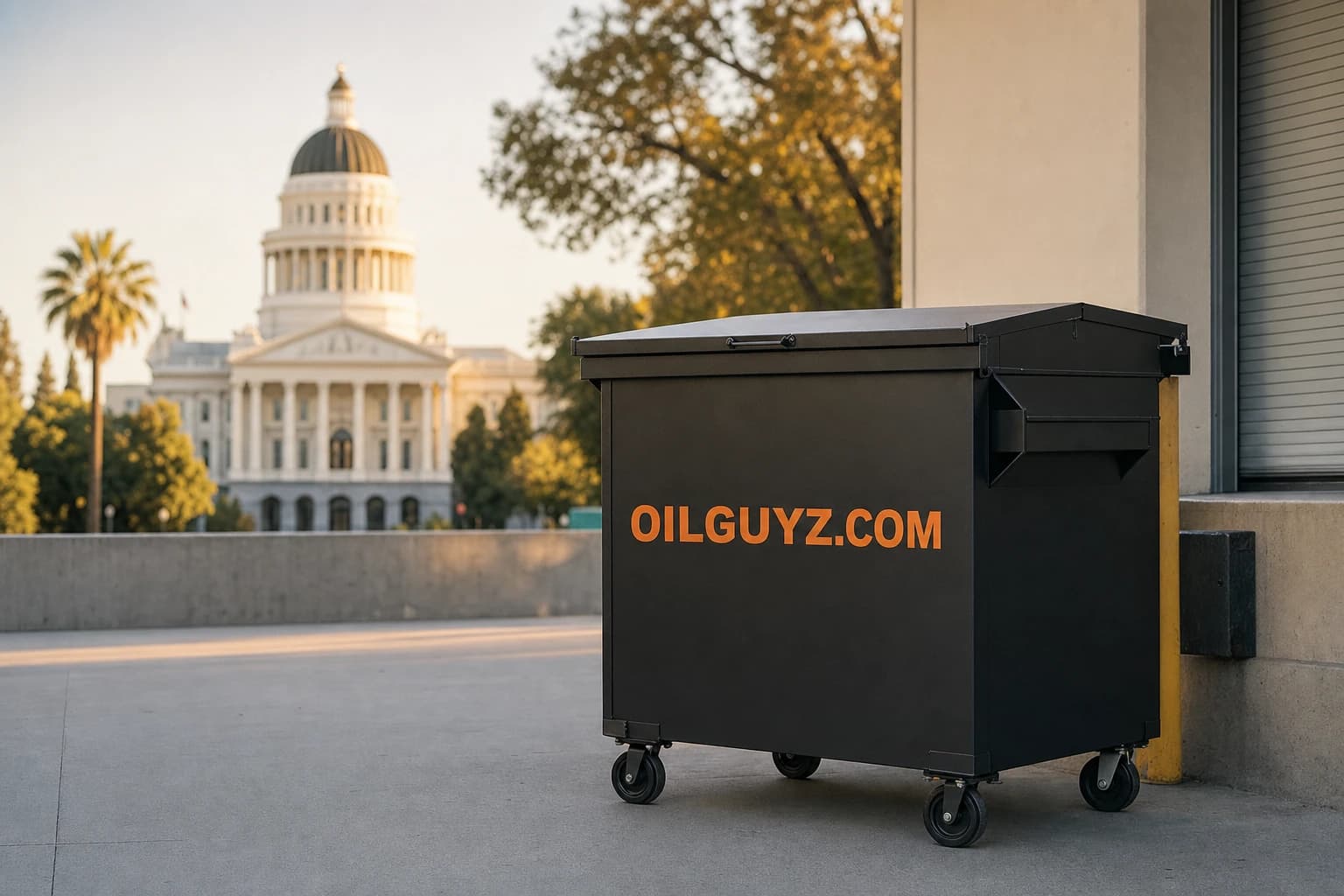
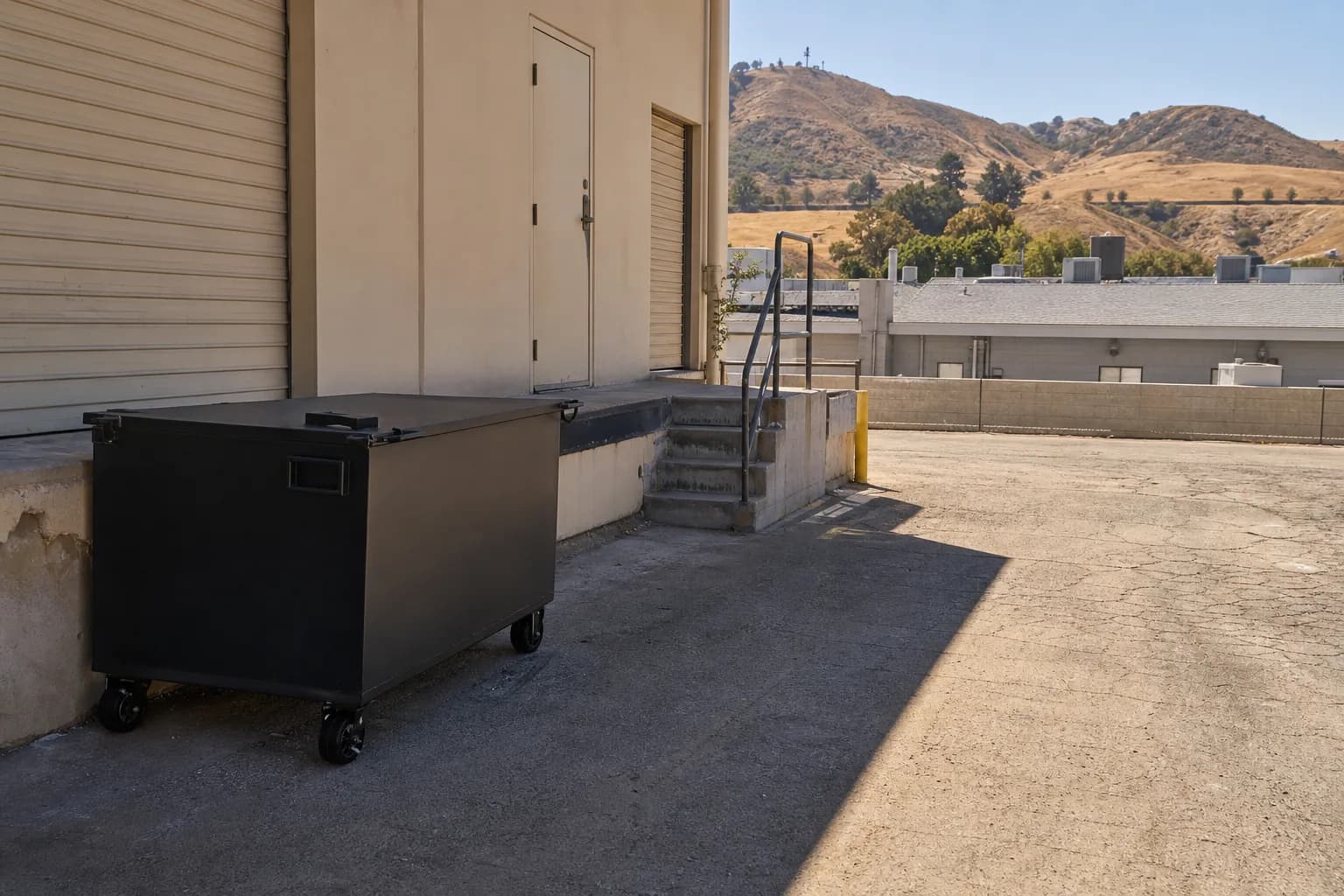
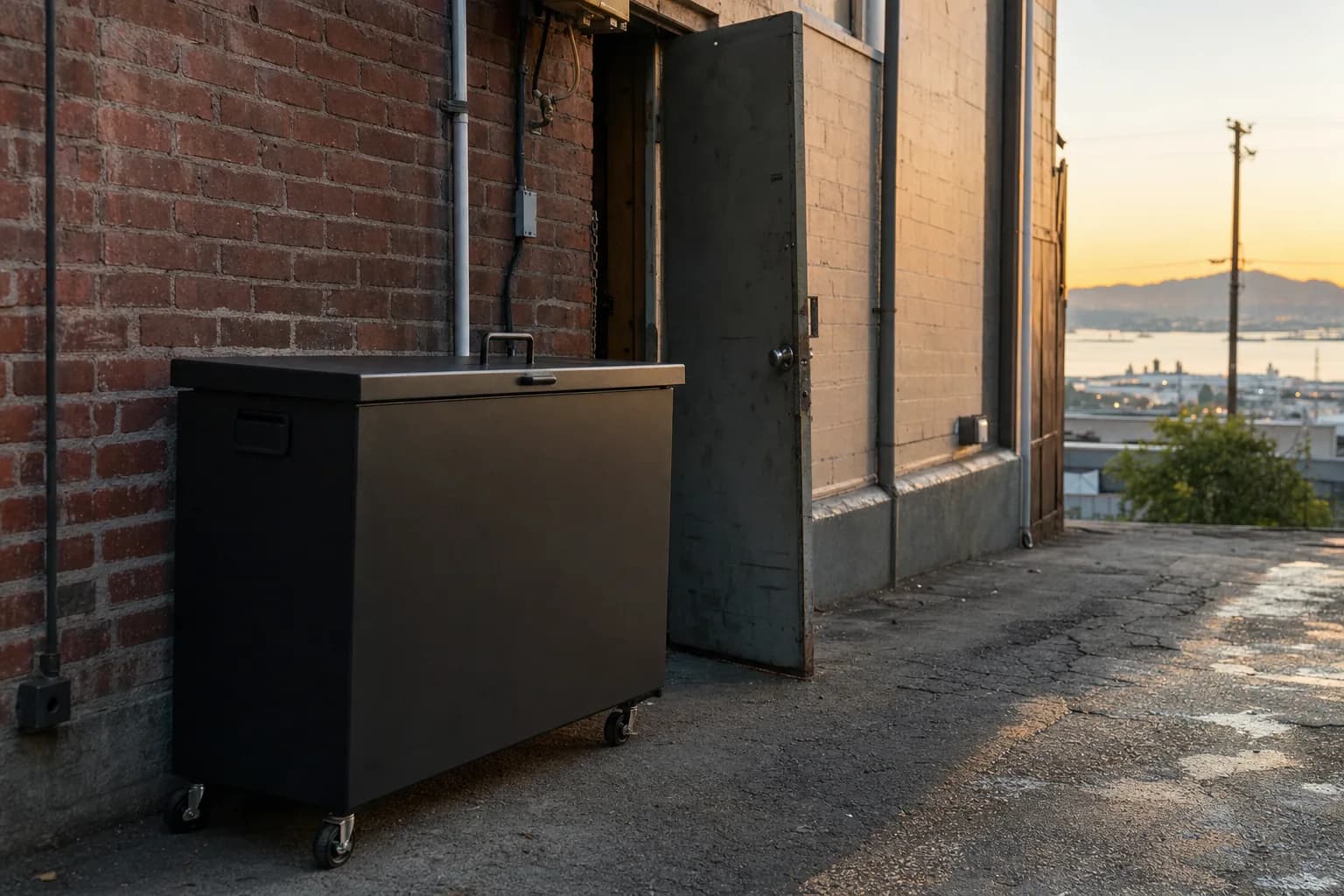
- A free locked anti-theft bin. Used cooking oil has real value, which is exactly why grease theft is a problem CDFA actively warns restaurants about. A locked bin means nobody siphons the oil you have set aside for pickup, and it keeps your storage tidy for inspections.
- Scheduled pickups that match your volume. A high-output Oakland or Fremont kitchen with several fryers might need weekly service. A smaller Berkeley cafe might go every few weeks. We set the cadence to your real output so your bin never overflows, and we adjust as your business shifts.
- A compliant digital manifest after every pickup. This is the documented chain of custody that proves your oil went to a licensed renderer. When Alameda County DEH or an EBMUD visit asks, you have the paperwork ready. We retain those records for two years.
- No contract. You are not locked into anything. If the service does not work for you, you walk.
- A real person answers the phone. When your bin is full before a holiday weekend, you call (714) 880-4788 and reach someone who can move your pickup up, not a ticket queue.
How to spot a hauler worth using
CDFA's own guidance to restaurants is a good filter. Watch for unmarked trucks lingering behind kitchens at night, because a legitimate transporter displays the company name and a current state IKG decal right on the vehicle. The servicing company's information on your bin should match the truck that shows up. And the provider should be registered by the California Department of Food and Agriculture to do this work in the first place.
Run any company, including us, through that checklist. A registered transporter with a locked bin and real documentation is the standard. Anything less and you are taking on the kitchen's liability for someone else's shortcut.
Get free Oakland and East Bay pickup set up
If you run a restaurant or commercial kitchen anywhere in the East Bay, from downtown Oakland to Fremont, Hayward, Berkeley, Alameda, or Emeryville, Oil Guyz makes used cooking oil one less thing to manage. Free locked bin, scheduled pickups on your timeline, a compliant digital manifest with two-year records after every visit, and oil recycled into clean renewable fuel. No contract, and a real person on the line.
Call (714) 880-4788 or request service at oilguyz.com to get your free East Bay pickup scheduled. While you are planning, the Bay Area pickup guide covers the whole region, and the San Francisco FOG rules breakdown is worth a read if you also operate across the bridge.