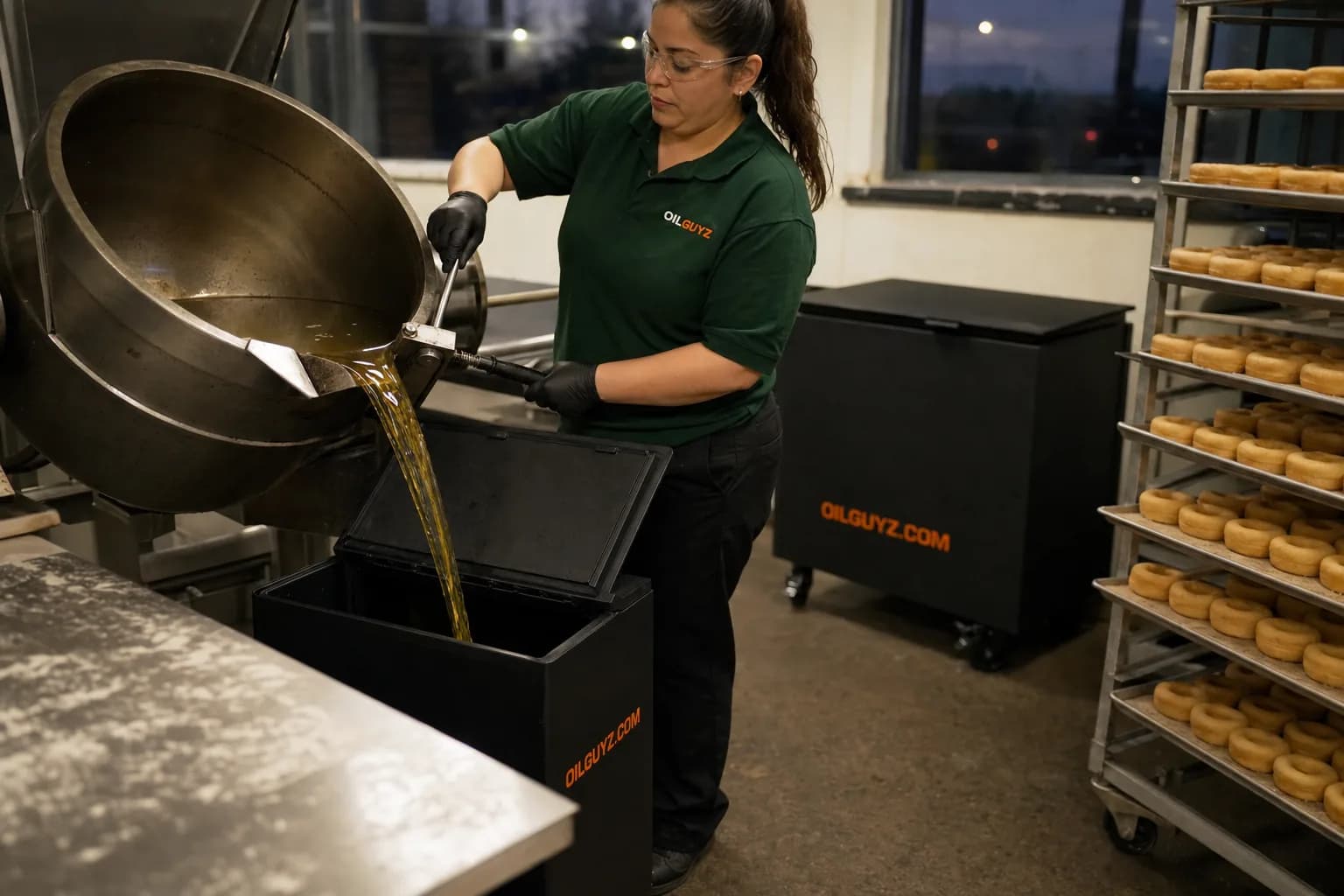

Switching your used cooking oil pickup provider does not have to be complicated or risky. Most restaurant owners put off the change because they worry about missed collections or compliance gaps. In reality, a well-planned transition takes about two weeks and results in zero missed pickups, provided you run it as a real sequence instead of a single phone call after your hauler misses a third pickup.
This guide covers that sequence step by step: the notice period and handoff timing, the contract-exit traps that turn an easy cancellation into a fight, and what actually happens to the container your current provider leaves behind.
Why Restaurants Switch Providers
Before getting into the logistics, it helps to understand why restaurants switch in the first place. The most common reasons are consistent across the industry:
- Unreliable pickups: The hauler frequently misses scheduled dates, arrives outside the agreed window, or requires repeated calls to confirm service.
- Missing documentation: The provider does not supply proper manifests or pickup confirmations, leaving the restaurant exposed during health inspections.
- Poor communication: Calls go unanswered, schedule changes are not communicated, and problems take days to resolve.
- Container condition: Collection bins are damaged, leaking, or not replaced when needed.
- No flexibility: The provider cannot adjust pickup frequency when your kitchen volume changes seasonally.
If any of these sound familiar, switching is the right move. A good provider offering reliable used cooking oil pickup eliminates these problems entirely.
Step 1: Evaluate Your Current Agreement
Before you call a new provider, pull your current service agreement and check three things.
Cancellation terms. Most UCO pickup contracts are month-to-month with a short cancellation window, commonly 7 to 30 days notice. Some run longer with an early-termination clause a few pages in. Read the notice language itself, not just the term length; the Contract-Exit Traps section below covers exactly which clauses to watch for.
Container ownership. Determine whether the container belongs to you or your hauler. If it belongs to the hauler, it should come off your property once you cancel, but do not assume that happens on its own. See "What Happens to the Old Bin" below.
Outstanding obligations. Confirm you are current on service fees with no open dispute. An unpaid invoice is the easiest excuse a hauler has to slow-walk your cancellation confirmation.
Step 2: Choose Your New Provider First
Do not cancel your existing service until you have confirmed start dates with your new provider. This is the single most important rule for a seamless transition.
When evaluating a new provider, verify these essentials:
- CDFA Inedible Kitchen Grease (IKG) transporter registration. This is non-negotiable. Any hauler collecting UCO in California must be registered with the California Department of Food and Agriculture.
- Insurance coverage. Request a certificate of insurance showing general liability and pollution liability.
- Manifest process. Ask specifically how they document each pickup. You need a manifest for every load.
- Schedule flexibility. Confirm they can match or improve your current pickup frequency.
- References. Talk to other restaurants they serve, ideally in your area.
Step 3: Run the Switch on a Real Timeline
A provider switch fails when it is treated as one event instead of a short sequence with dependencies. Here is what that sequence looks like.
About two weeks out, send written notice that cites the actual clause. Do not just call and say you are canceling. Send written notice citing the cancellation clause and your effective date, by whatever method the contract specifies, email is usually fine, but some require certified mail. Ask for written confirmation of receipt and keep it: that is your proof if the hauler later claims you never canceled, which is exactly how an auto-renewal clause gets used against a restaurant that thought it had already left.
About one week out, hand your new provider what they need to size your account. Sizing an account blind produces a container that is too small or a cadence that does not match your kitchen. Give them your fryer count and rough oil volume per change, your actual pickup cadence history (not the contracted frequency, pulled from your own manifests if the outgoing hauler has been missing dates), your container size, and access notes: gate codes, dock hours, alley approach. Confirm their delivery and first-pickup dates in writing, not a verbal "we'll get you set up this week."
Do not run two providers in the same week. A same-day handoff, old provider out and new provider in within hours of each other, is fine. Both haulers actively servicing the account across the same stretch produces duplicate charges and a break in your manifest trail right where an inspector is most likely to look.
Before you fully disconnect, get the outgoing provider's paperwork in writing: a final manifest matching your last pickup date, written confirmation the account is closed with an effective date (not just a canceled auto-pay), historical manifests going back as far as you can get, ideally 12 months, and confirmation the container was picked up, or acknowledgment that it is now yours to deal with. These records are your restaurant's compliance file, not the hauler's, and the trail has to be unbroken if you are ever audited.
First week after the switch: monitor the first pickup or two and confirm the new manifests are arriving on the cadence you agreed to.
Step 4: Update Your Kitchen Staff
Before the changeover, brief your kitchen team on the new provider's name and contact information (post it near the container), the pickup day and window, what to do if a pickup is missed, and whether the container itself has changed in size, color, or placement. A five-minute briefing during a pre-shift meeting covers it.
Contract-Exit Traps That Turn a Simple Switch Into a Fight
Most UCO agreements really are simple: month-to-month, no penalty for leaving. The ones that are not tend to hide the same handful of mechanisms, and any one of them can turn a routine switch into a dispute.
Auto-renewal clauses. A contract that renews automatically unless you cancel inside a narrow window, often 30 to 90 days before the renewal date, is the most common trap. Miss it by a few days and you can be locked in for another term even though you sent notice, just not soon enough. Treat the term length and the notice window as two separate numbers.
Notice-window requirements buried in the fine print. The cancellation clause is often stricter than the plain-English summary you got at signing. A contract billed as month-to-month can still require 60 or 90 days written notice sent to a specific address by a specific method, and notice that does not match what the contract requires may not start your clock at all.
Early-termination fees. Some longer-term agreements price your exit before you ever want one, a flat fee or a formula tied to the months remaining. If a provider will not give you this number when asked directly, that is itself the answer.
Equipment and bin ownership disputes. Who owns the container, and what happens to it at termination, should be spelled out in the agreement. When it is not, a hauler can charge a vague equipment fee or refuse to schedule removal until an unrelated invoice is settled. Get ownership and removal terms in writing before you sign with anyone; see "What Happens to the Old Bin" below.
Sole-provider or exclusivity clauses. Some agreements require you to use one hauler for all of your used cooking oil, occasionally reaching locations you have not even opened yet, a real clause in this industry worth checking for even in a contract that otherwise looks month-to-month.
Financing statements filed against your business. This is the trap restaurant owners are least likely to know to check for. A UCC-1 financing statement is a public lien filing some haulers record against the equipment on your account. It costs nothing to check: search your business name in the California Secretary of State's UCC filing index. If something is filed that you did not know about, resolve it before you sign with anyone new.
Fresh-oil purchase tie-ins. Some contracts hold the free-collection rate only if you also buy fresh oil, filters, or equipment service from the same company, and if collection stops being free the moment you buy oil elsewhere, that tie-in is doing more work than the pickup schedule.
Reading for these six mechanisms takes about ten minutes, and it is the difference between an exit that costs nothing and one that costs a fight.
What Happens to the Old Bin
The container behind your restaurant is the one detail that trips up more switches than anything else, mostly because nobody explains it until you need to know.
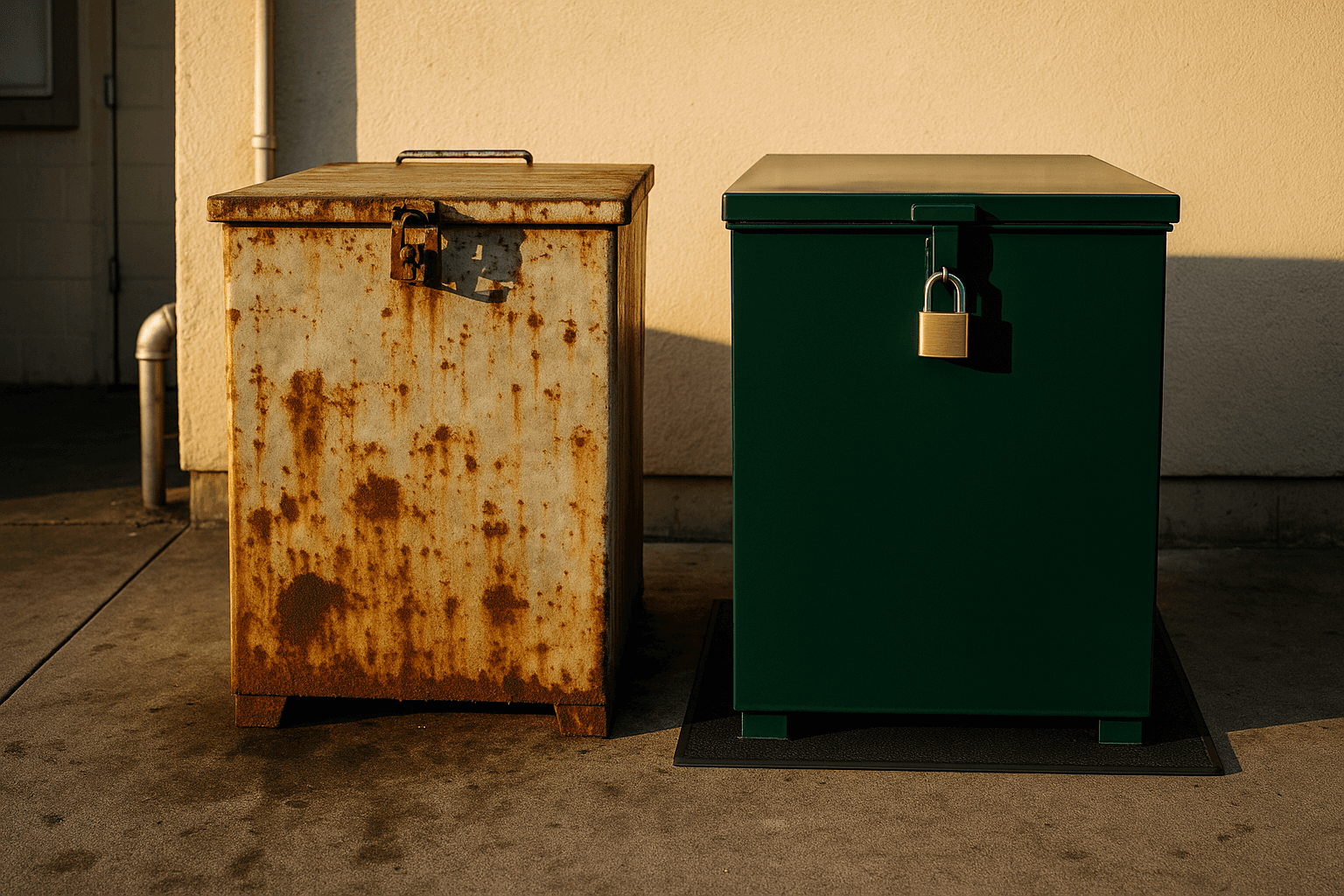
Ownership comes down to what your agreement says, not who is currently using it. Many UCO haulers supply the container as part of the service relationship, in which case it stays their property the entire time, even after years on your lot. Some restaurants own their container outright, usually because they bought it directly or it came with the building. A hauler cannot claim ownership of something they never actually provided.
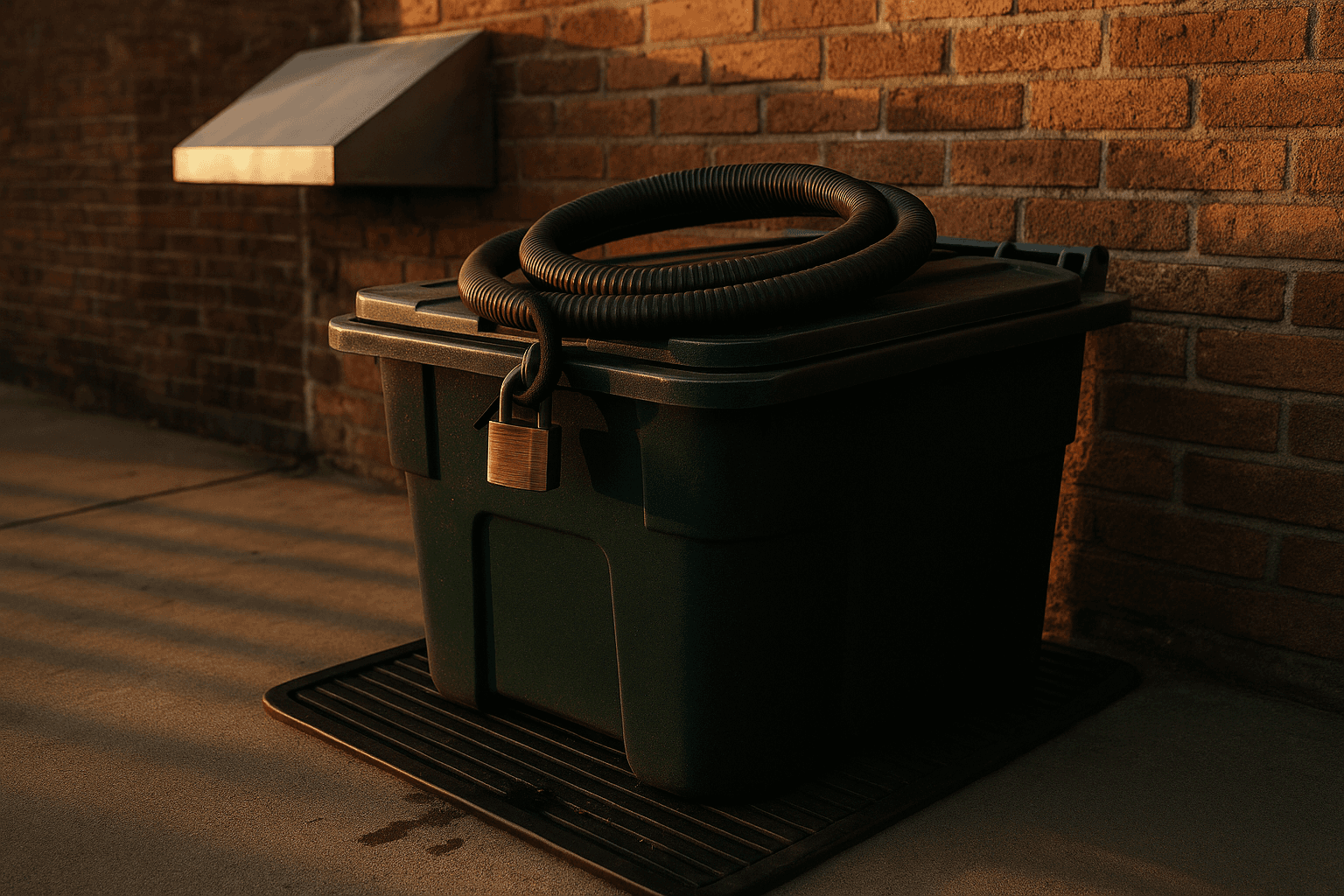
A responsible outgoing hauler picks up their own equipment once service ends, but not always on your timeline. Haulers deprioritize pickups for accounts that have already left, and a container generating no revenue is not high on anyone's route sheet. That is a real operational gap, not a compliance violation on your part, but it is still your property, and your problem if it overflows, leaks, or draws pests while you wait.
If they do not show up, you are not stuck. A defined removal window, put in writing, is how a responsible new provider handles a container a prior hauler left behind. Oil Guyz, for example, has an incoming customer sign a short authorization when a prior provider's container is still on site: it gives that provider 15 calendar days from signing to reclaim it, whether that is the old hauler, the customer, or any other CDFA-registered transporter. If nobody removes it by then, Oil Guyz arranges removal as the customer's authorized agent, at no cost and no payment owed for whatever oil is left inside. Until it is gone, keeping the container locked and not letting it overflow is on the restaurant, the same as with any container sitting on the property.
A written authorization like that protects you if the old provider later claims equipment was removed without permission, and it settles a question that otherwise drags on for weeks: whose job it is to make an abandoned container disappear. Ask any new provider you are evaluating how they handle this before you need the answer.
Common Mistakes to Avoid
Canceling before confirming your new provider. This creates a gap in service and leaves your container overflowing.
Assuming the old container will disappear on its own. It often does not; see "What Happens to the Old Bin" above for what actually gets it removed.
Switching during peak season without buffer. If your restaurant sees a major seasonal volume spike, switch during a slower period when a one-day hiccup will not cause overflow.
The Bottom Line
Switching UCO providers is one of those tasks that feels bigger than it actually is, right up until a container gets left behind or an auto-renewal clause surfaces three weeks after you thought you were done. Run the notice period, the documentation requests, and the handoff timing as a real sequence, read the agreement for the six traps above before you sign anywhere, and settle who is responsible for the old container in writing. Do that, and the actual changeover happens in a single day with zero disruption to your kitchen.