
Donut shops do not fry in oil. They fry in shortening, and that single difference changes how the used shortening has to be stored, moved, and collected once it leaves the kettle. If you are looking for someone to haul it, cooking oil collection for bakeries and donut shops covers how the service is set up.
If you have ever drained a donut fryer at close and found a solid white block waiting for you the next morning, that is not a problem with the product and it is not something you did wrong. It is the shortening doing exactly what it was engineered to do. Understanding why makes the disposal side much easier to plan around.
What Donut Shops Actually Fry In
Most commercial donut production in North America runs on palm-based shortening or an interesterified soy and palm blend rather than a liquid frying oil. Palm shortening became the category standard after partially hydrogenated oils were pushed out of the food supply over trans fat concerns, and it stayed there because it does something liquid oil cannot.
The saturated fat content causes the shortening to set up on the surface of the donut as it cools. That surface set is what powdered sugar clings to, and it is what keeps a glaze sitting on top of a raised donut instead of soaking into it. A hard shortening also means the donut absorbs less of the frying medium overall, which is why a properly fried cake donut does not read as greasy.
In other words, the property that makes the shortening annoying to handle after the fry is the same property that makes the donut work. There is no version of this where a donut shop switches to canola and the disposal problem goes away without changing the product.
Why Donut Shortening Goes Solid in the Container
Donut fry shortenings are formulated to a melting point in the range of roughly 100F to 115F. Palm fruit oil shortening specifically tends to land between 102F and 109F.
Compare that to the numbers you actually work with:
| Stage | Approximate temperature | State of the shortening |
|---|---|---|
| In the kettle, frying | Around 375F | Fully liquid |
| Just drained into a caddy | 200F and falling | Liquid, pourable, dangerous to handle |
| Back room, an hour later | Under 120F | Thickening, still soft |
| Back room, next morning | Room temperature | Solid block |
Nothing about that sequence is unusual or preventable. Room temperature in a Southern California back room sits far below the melting point of donut shortening, so the shortening firms up every single time. A restaurant using liquid canola never sees this, which is why generic fryer oil advice tends to skip right past it.
The practical consequence is that the window where the shortening is easy to move is not very long. It starts when the shortening is too hot to handle safely and ends when it is too firm to pour.
Getting Hot Shortening Out of the Fryer Safely
The riskiest part of this whole process is not disposal. It is the transfer, when a person is moving a large volume of extremely hot shortening by hand.
A few things separate shops that do this without incident from shops that eventually have a burn report:
- Let it drop before you move it. Shortening straight out of a kettle at frying temperature causes immediate full-thickness burns. Most operators wait until the shortening falls out of the danger range but before it starts to thicken.
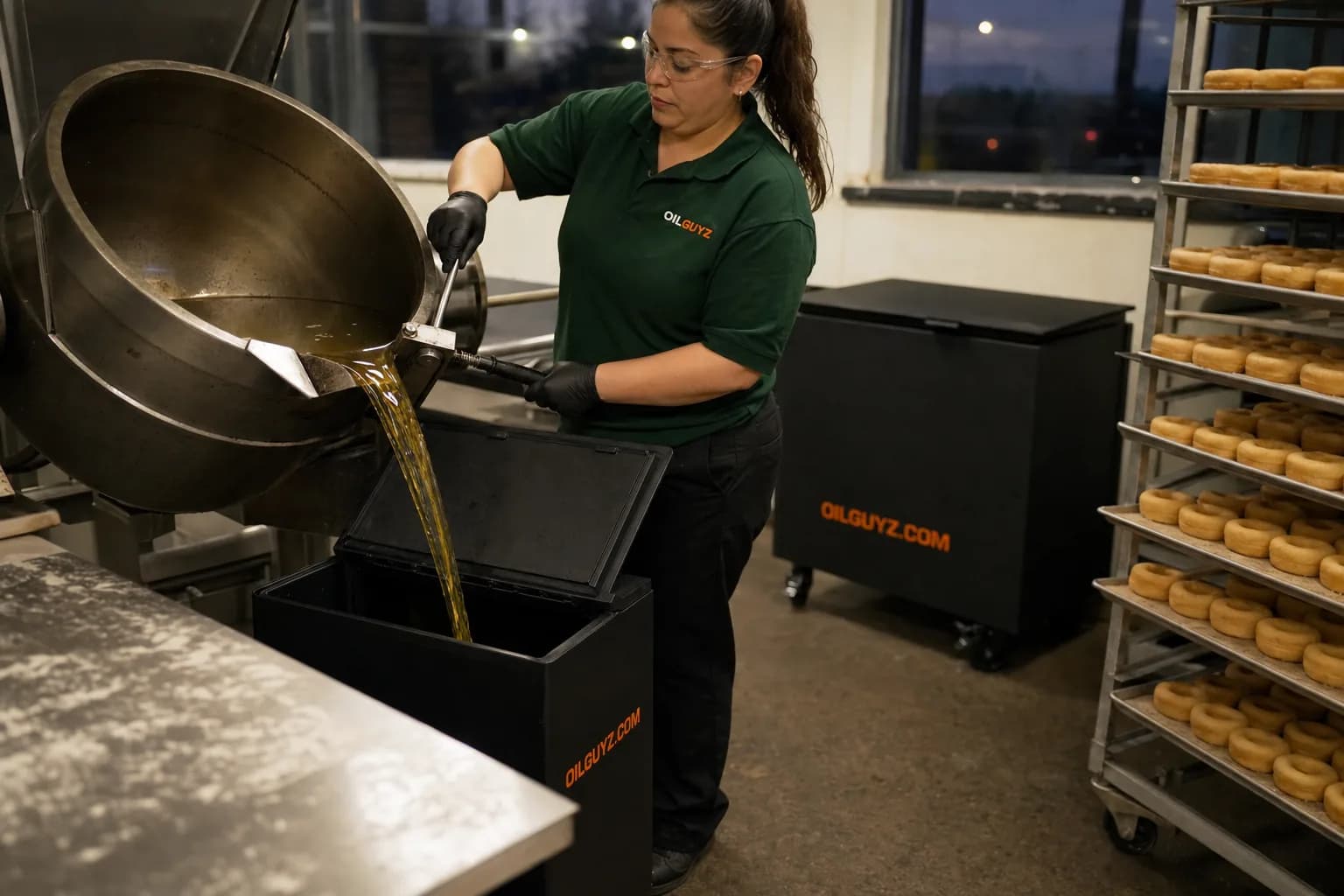
- Use a purpose-built shortening caddy or disposal unit rather than a stock pot. These exist specifically because carrying open containers of hot shortening across a kitchen floor is how people get hurt. A wheeled unit with a lid and a drain valve keeps the shortening contained and off anyone's forearms.
- Never move a container that is overfilled. Shortening sloshes, floors near a fryer are already slick, and a full container is heavy enough that a stumble becomes an emergency.
- Keep water completely away from it. Water flashing to steam in hot shortening throws the shortening outward violently. This is also why mopping near an open transfer is a bad idea.
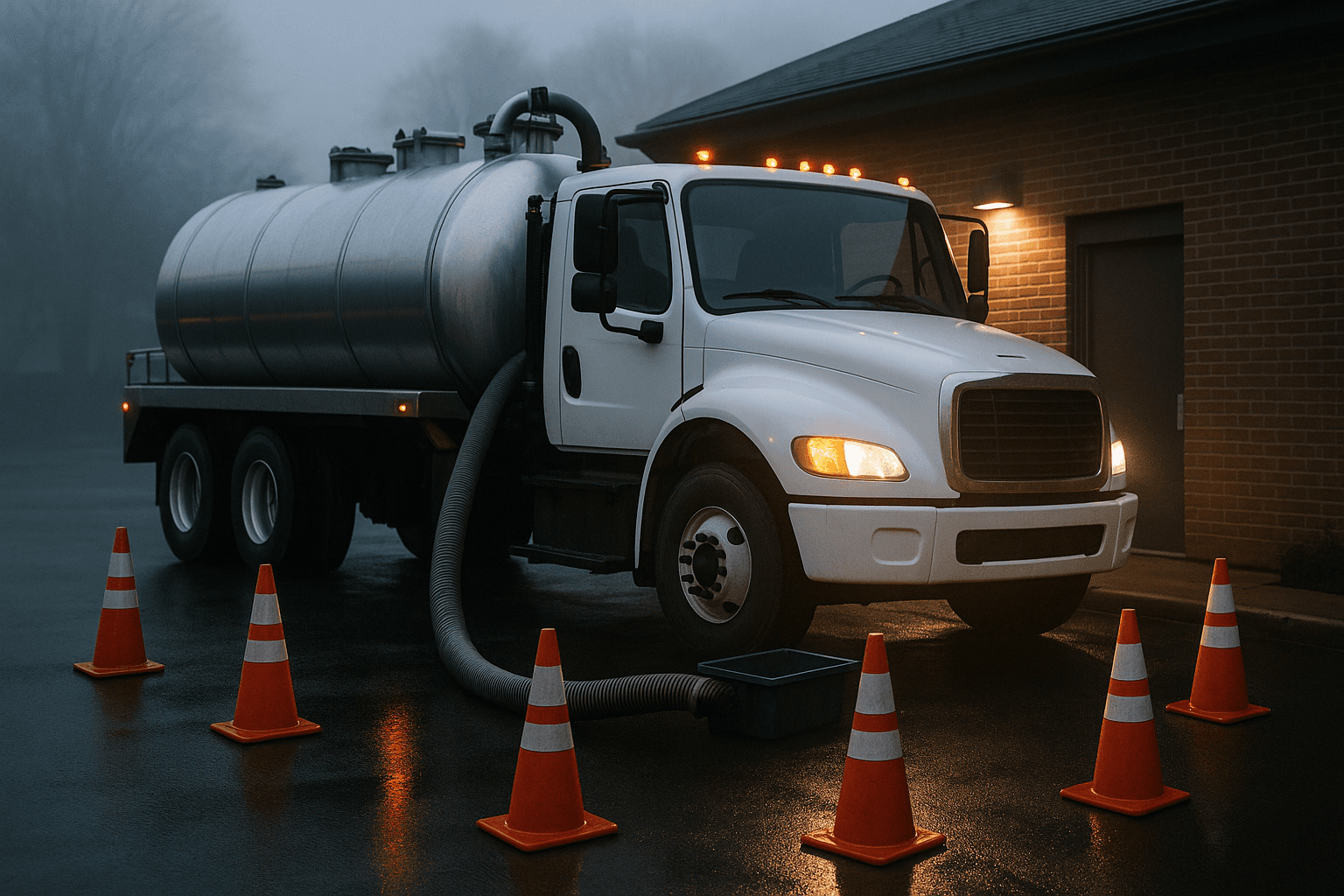
Larger operations avoid the manual transfer entirely by draining the shortening into a fixed holding tank or a rolling tank that gets moved to a dock for collection. If your volume has grown to the point where staff are making repeated trips with a caddy, that is usually the signal to look at bulk collection by tote or tank instead.
Why Donut Operations Get Extra Attention on Grease Rules
Donut production has a specific reputation with sewer authorities, and it is worth understanding where it comes from.
In 2009, Fairfax County, Virginia sued Krispy Kreme over waste from its production plant, alleging that years of fats, oils, grease and yeast had built up in the county sewer system, damaged iron pipes and pumps, and contributed to raw sewage leaks. The county sought roughly $2 million for repairs plus $18 million in civil penalties. The case did not go to judgment; the two sides settled about seven months later for $750,000.
The settlement figure matters as much as the original claim. This was not a company being handed a twenty million dollar bill, and quoting it that way misrepresents what happened. What the case does illustrate is that the combination of heavy grease loading and yeast is genuinely hard on municipal infrastructure, and that sewer agencies will pursue it.
For an independent shop, the lesson is not that anyone is coming after you for a few kettles of shortening. It is that fats from donut production are a known category, local fats, oils and grease programs know it, and the paperwork trail matters. In California, inedible kitchen grease has to move through a registered transporter, and you should end up with a manifest showing where it went. This compliance overview covers what that recordkeeping actually looks like.
What Not to Do With Used Donut Shortening
Three disposal routes for used donut shortening come up regularly and none of them are legal paths for a commercial kitchen in California.
Down any drain. This includes the mop sink and the floor drain, and it includes the case where someone melts the shortening first to make it pour. Fats, oils and grease rules apply to the shortening, not to its temperature at the moment it entered the pipe.
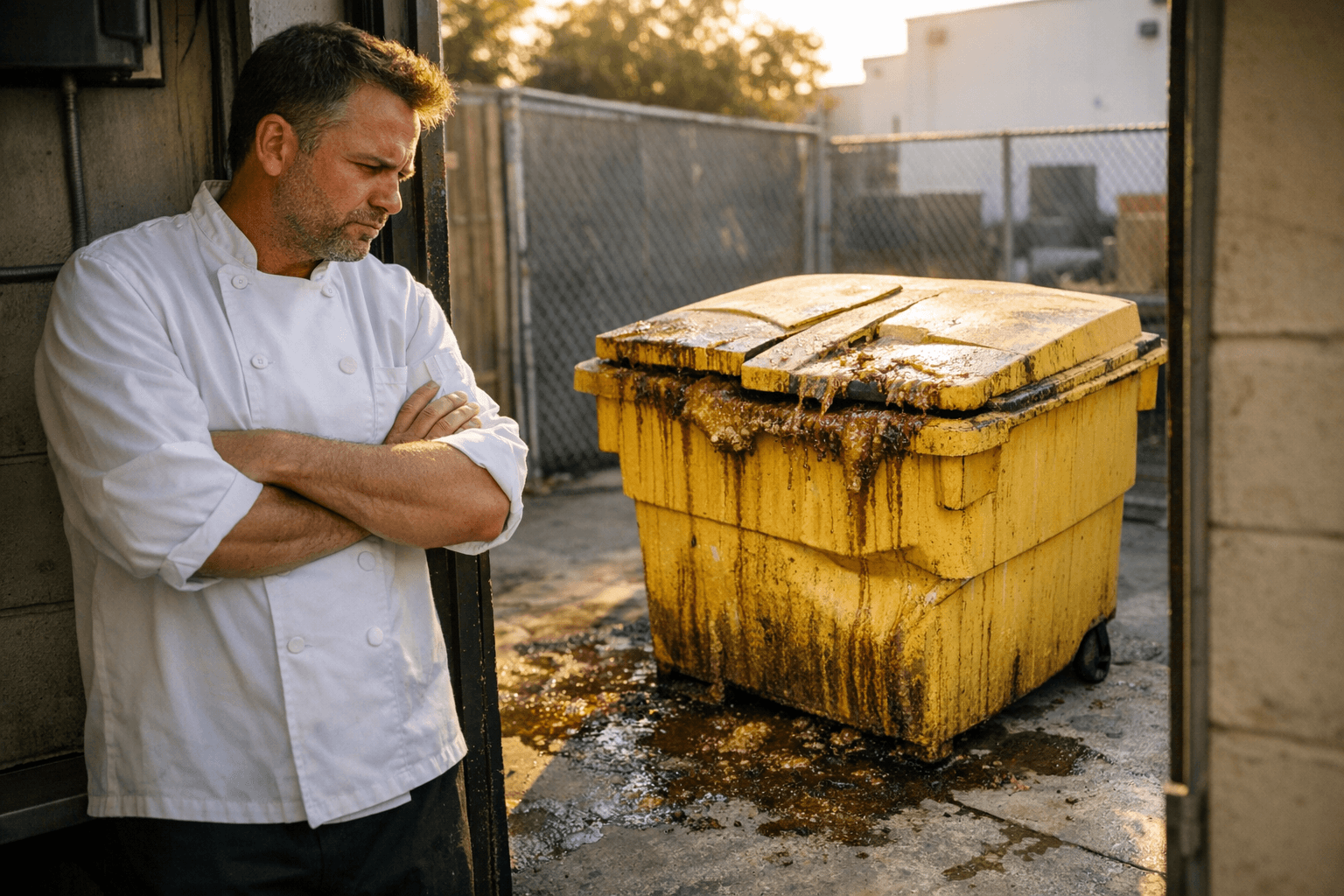
In the dumpster. Commercial quantities of inedible kitchen grease are not solid waste in California, and a container of fat in a dumpster tends to split, leak across the enclosure, and attract pests. That is a health inspection finding waiting to happen, on top of being the wrong disposal path.
Handed to whoever knocks on the back door. Unregistered grease collection is a real problem, and containers do get raided. Beyond the mess left behind, an unregistered pickup leaves you with no manifest, which means no proof of proper disposal if anyone asks for it later.
How Used Donut Shortening Gets Recycled
Used donut shortening is a recyclable waste stream, not garbage. Once collected, it enters the same rendering and recycling process as liquid fryer oil: a licensed renderer filters and refines it into feedstock for biodiesel and renewable diesel, which displaces petroleum diesel in the fuel supply. None of the recycled shortening is landfilled, and recycling it is what keeps the waste out of the sewer system entirely.
Hardened shortening in the container has no effect on whether it can be recycled. Solidifying is a physical change, not degradation or contamination. What genuinely ruins a load is what gets mixed into it:
| Keep out of the container | Why it matters |
|---|---|
| Water, ice, melted snow | Downgrades or disqualifies the load; also a splatter hazard during transfer |
| Food scraps and dough | Contaminates the fat and speeds up spoilage in the container |
| Cleaning chemicals, degreaser, mop water | Chemical contamination can refuse an entire load |
| Motor oil or any petroleum product | Never acceptable; contaminates everything it touches |
Keeping the container clean is the single highest-value habit in the whole process, and it costs nothing.
Choosing a Waste Container That Suits a Solid
Container selection is where most donut shops get poor advice, because the standard recommendation is written for liquid waste oil.
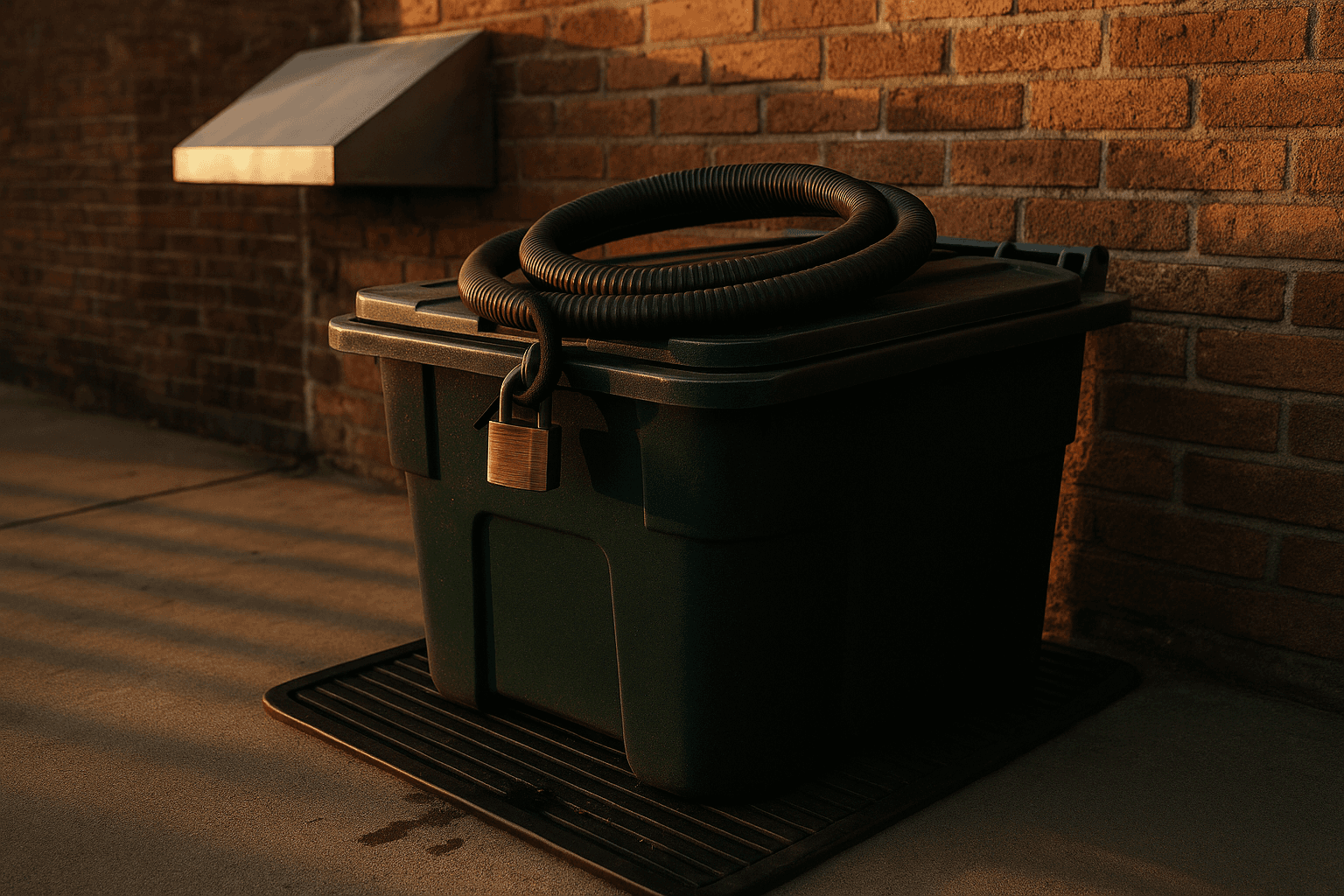
A tall, narrow container with a small opening works fine for canola. It is a poor choice for a waste stream that hardens, because the solid mass has to come out through that same opening. A wider container with a large lid gives the collection crew room to work and makes it far easier to recover the last several inches of hardened material rather than leaving it behind as residue.
Capacity should be matched to the changeover volume rather than to weekly average waste generation. A shop that does one complete kettle change generates its entire month of waste in a single evening, so a container sized to the monthly average will overflow on changeover night and sit nearly empty the rest of the time. Sizing to the changeover, then setting the collection interval to match, is the arrangement that avoids both overflow and wasted trips. That sizing is part of how bakery and donut shop collection gets set up.
Indoor placement is also worth considering in cooler months. A container stored outdoors overnight in winter sets harder than one kept in a back room, which narrows the collection window further. This is a routine consideration in waste handling for any material that changes state with temperature, and it is one of the few variables an operator fully controls.
Timing Pickup Around a Donut Shop's Schedule
Donut shops keep hours that most vendors are not built around. Overnight and pre-dawn frying is standard, the storefront is busiest early, and the back of house is often at its calmest in the mid-morning.
That schedule works in your favor for collection, because the fat drained at the end of an overnight run is still soft in the morning. A pickup timed to that window avoids the harder scenario, which is a container that has been sitting for several days and has fully set.
Two things are worth flagging when arranging service:
- Whether the fat will be liquid, soft, or fully solid at pickup time. This determines what equipment is appropriate and prevents a wasted trip.
- How the container gets to the collection point. A rolling tank staged at a loading dock is a different job from a caddy behind a strip mall storefront with limited rear access.
Operations that fry on a production schedule rather than a route schedule are common in this category. A bakery and food manufacturing setup may generate a very large volume in one changeover rather than a steady weekly amount, and the collection has to be built around the changeover rather than a fixed route day.
What a Compliant Pickup Should Leave You With
When the container is emptied, you should be left with three things.
A clean collection point. Shortening tracked across a back lot is the most common complaint about grease service, and it is avoidable.
A manifest. In California, this is the document showing your used cooking oil went to a registered transporter and on to a licensed renderer. It is what a fats, oils and grease inspector asks for, and it is the reason unregistered pickup is a false economy.
A container that is right-sized for your actual volume. A container that fills faster than the pickup interval is the root cause of most overflow situations, and the fix is a schedule or size change rather than more frequent emergencies.
Donut shortening is not harder to deal with than fryer oil. It is just different in one specific way, and once the solidification is planned around rather than discovered, the rest of it is routine. Free scheduled collection is available for donut shops and bakeries across Southern California, the Bay Area, and Pierce, King, and Snohomish Counties in Washington, with no contract and a manifest after every pickup.