
Cooking oil disposal in Los Angeles, also called fryer oil disposal, is legal exactly one way for a commercial kitchen: the used fryer oil stays in a closed container on your property until a transporter registered with CDFA empties it and leaves you a manifest. Residential drop-off sites cannot take it, and no city or county agency will collect it for you. Oil Guyz operates that route countywide at no charge, container included. Booking takes one conversation, so call Oil Guyz at (714) 880-4788
Every week our crews work kitchens across this county, from harbor fish houses in San Pedro to strip mall fry stations out in the San Fernando Valley. Below are the questions we field most often from LA owners before they sign anything, answered from what the city, the county, and the state publish today.
Can a Los Angeles restaurant drop used cooking oil at a S.A.F.E. center?
No. Those sites are built for households, and staff ask where the material originated before anything leaves your trunk. Los Angeles County Public Works lists the S.A.F.E. sites for city and county residents, and describes its own permanent centers as a free method for county residents to hand over household hazardous and electronic waste. A restaurant is not a resident, and the answer is the same at every gate.
There is a business lane at those same sites, and it fools people. Small businesses that qualify as Very Small Quantity Generators can book an appointment and pay to drop material at a S.A.F.E. center, and the county requires an EPA identification number to take part. Read that requirement twice, because it is a hazardous waste program. California does not classify spent fryer oil as hazardous waste at all, so the appointment does nothing for a kitchen holding four full jugs in the walk-in. The program terms are posted on the county's household hazardous waste collection centers page.
That wall stands whether the nearest site is Randall Street in Sun Valley, Gaffey Street in San Pedro, or the Hyperion center in Playa del Rey. Household oil, welcome. Restaurant oil, never.
Which agency will actually ask to see your grease file?
Whoever runs the sewer under your kitchen, and in this county that is five different answers depending on the block. The City of Los Angeles has LASAN. Unincorporated areas and contract cities answer to County Public Works. Long Beach and Pasadena each staff a city health department. Monterey Park enforces a FOG control program of its own. Same material, different desk.
| Where your kitchen sits | Who reviews your grease compliance |
|---|---|
| City of Los Angeles, DTLA through the San Fernando Valley | LA Sanitation and Environment, under the Industrial Waste Control Ordinance |
| Unincorporated county and contract cities | LA County Public Works, Environmental Programs Division |
| Long Beach | City Environmental Health, running its own grease program |
| Pasadena | The Pasadena Public Health Department |
| Monterey Park | A city-run FOG control program |
Inside city limits, a business putting non-domestic wastewater into the sewer needs an Industrial Wastewater Permit before it discharges, and LASAN charges a one-time application fee of $616 covering plan review, the first field inspection, and issuance. One exemption exists for food service establishments that generate no fats, oils, and grease at all, which no kitchen running a fryer can claim. Current requirements and the food service application sit on LASAN's industrial waste permitting page.
County program areas work off different triggers. Public Works pulls a kitchen into interceptor territory at 150 seats, at every food establishment in Lakewood, and at any address inside the grease trouble zones its engineers have mapped, a list that currently names Monterey Park, Gardena, West Hollywood, Cerritos, La Verne, La Puente, Hacienda Heights, Rowland Heights, and Marina del Rey. Once that equipment is in the ground, how full it may get before you pump is a separate subject we covered in the LA County 25 percent grease trap rule.
Does crossing a city line change how you get rid of the oil?
No, and that is the part worth internalizing before you build a program. Your permit, your interceptor requirements, and the inspector all change at the city line. The oil route does not. Moving inedible kitchen grease is state territory under the California Food and Agricultural Code, so commercial kitchen oil disposal looks identical in Torrance and in Pasadena even though the two cities answer to nobody in common.
For a single restaurant that is a relief. For a group it is the whole operating model. A company running a location downtown, one in Long Beach, and one in Monterey Park is facing three inspection regimes and one disposal method, which means you build the oil program once and keep three record folders. Where the local rules genuinely diverge is in what those folders must hold and for how long, which is why we sort the compliance side agency by agency in our county guide to used cooking oil pickup in Los Angeles, while the service itself runs the same at every address.
The practical read for a manager: never assume the kitchen across town has your rules, and never assume it has a different hauler requirement. One of those changes with geography. The other never does.
Can you haul your own fryer oil somewhere yourself?
Almost certainly not, and the state's own categories explain why. California does register personal transporters of inedible kitchen grease, but the lane is deliberately narrow: one vehicle, a ceiling of 165 gallons carried, and no selling, bartering, or trading the material. It exists for someone processing grease for their own use, not for a restaurant clearing a fry station on a Sunday night.
Commercial volume needs a commercial transporter, and the receiving end closes the loop. No licensed collection center or renderer may take grease from a company that skipped registration, which leaves an owner driving drums across town with nowhere lawful to unload them. The county's restaurant pretreatment guideline shuts the improvised alternatives too: collected grease may not be dumped on site or sent into drainage piping, a street, a gutter, a storm drain, or any sewer.
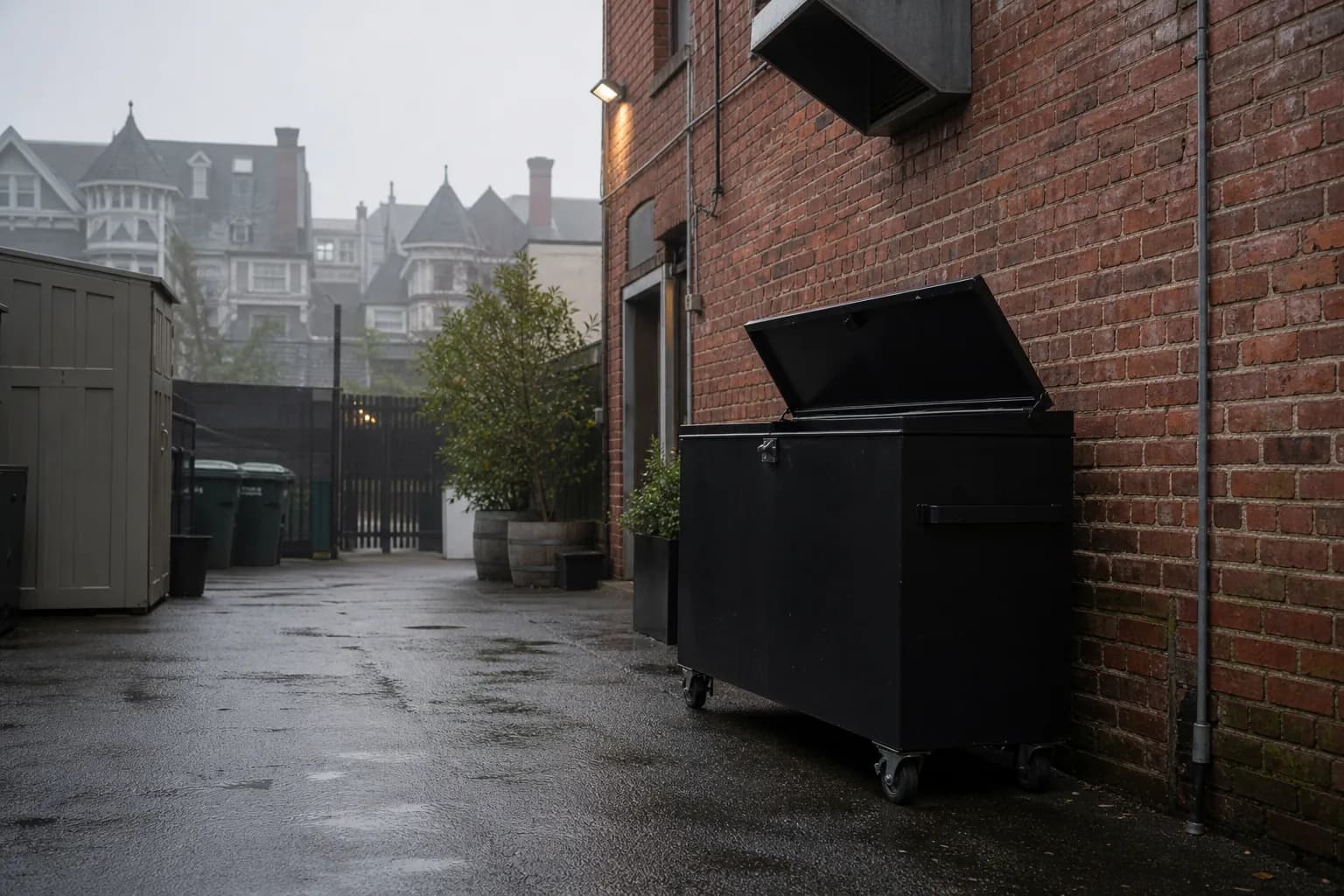
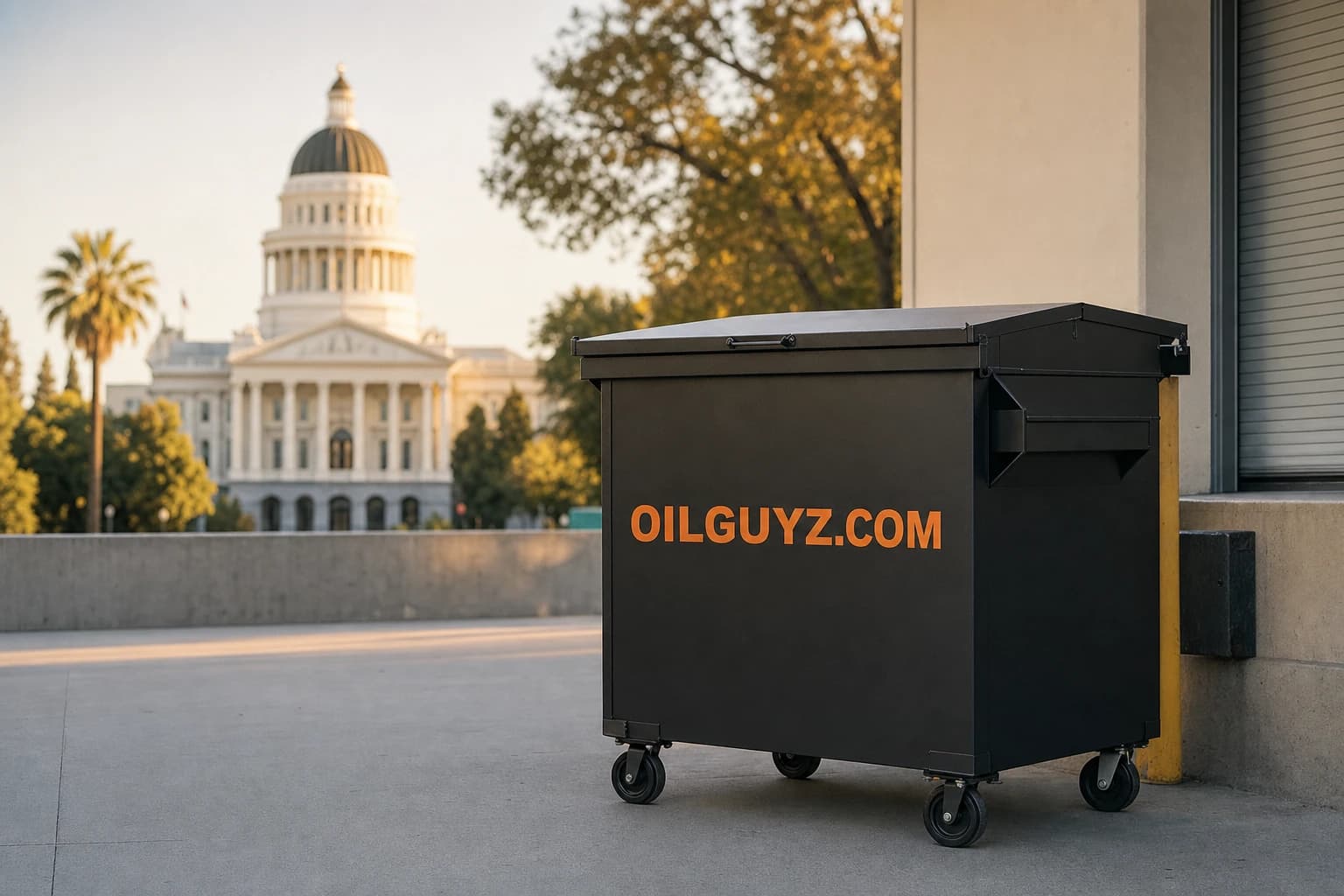
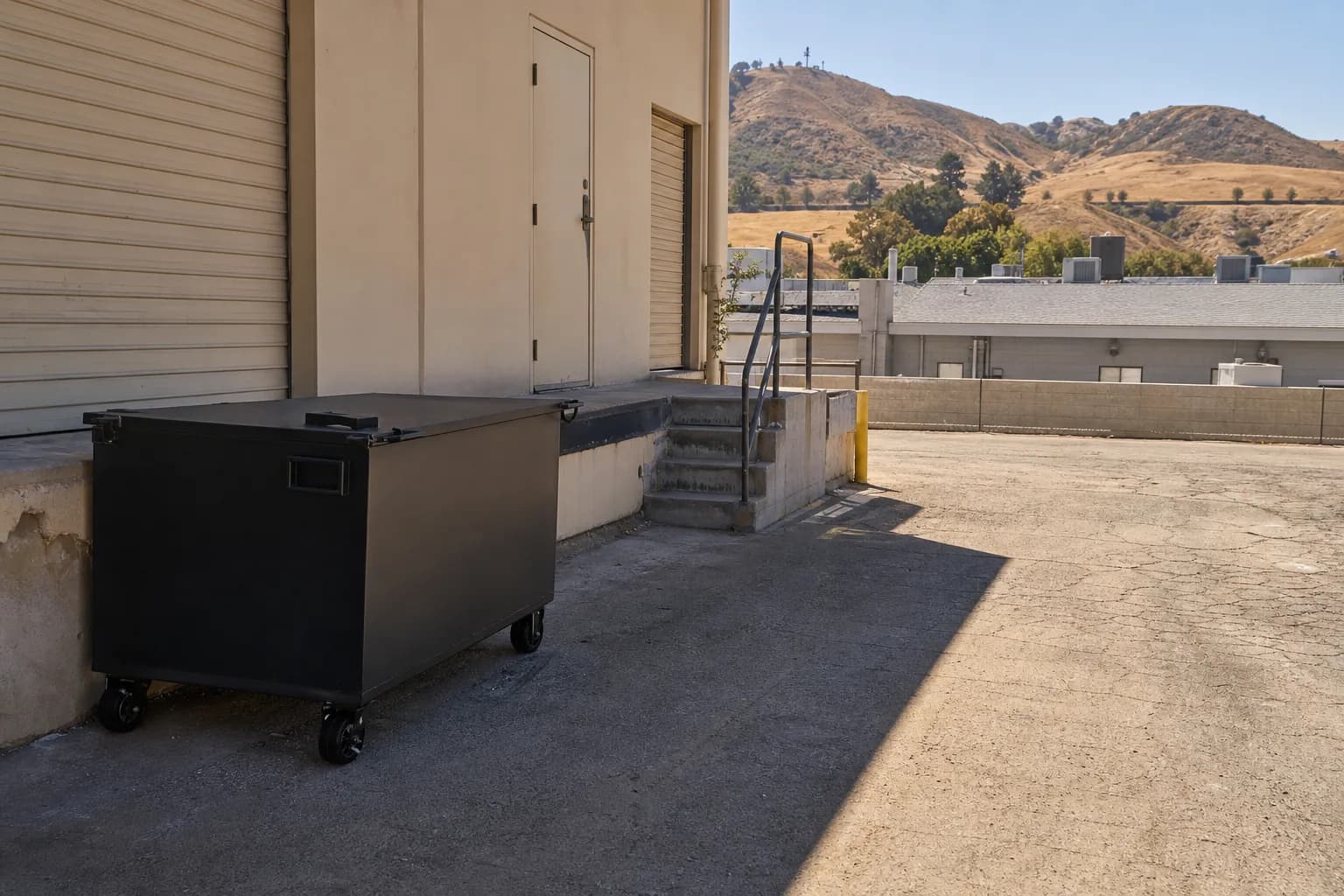
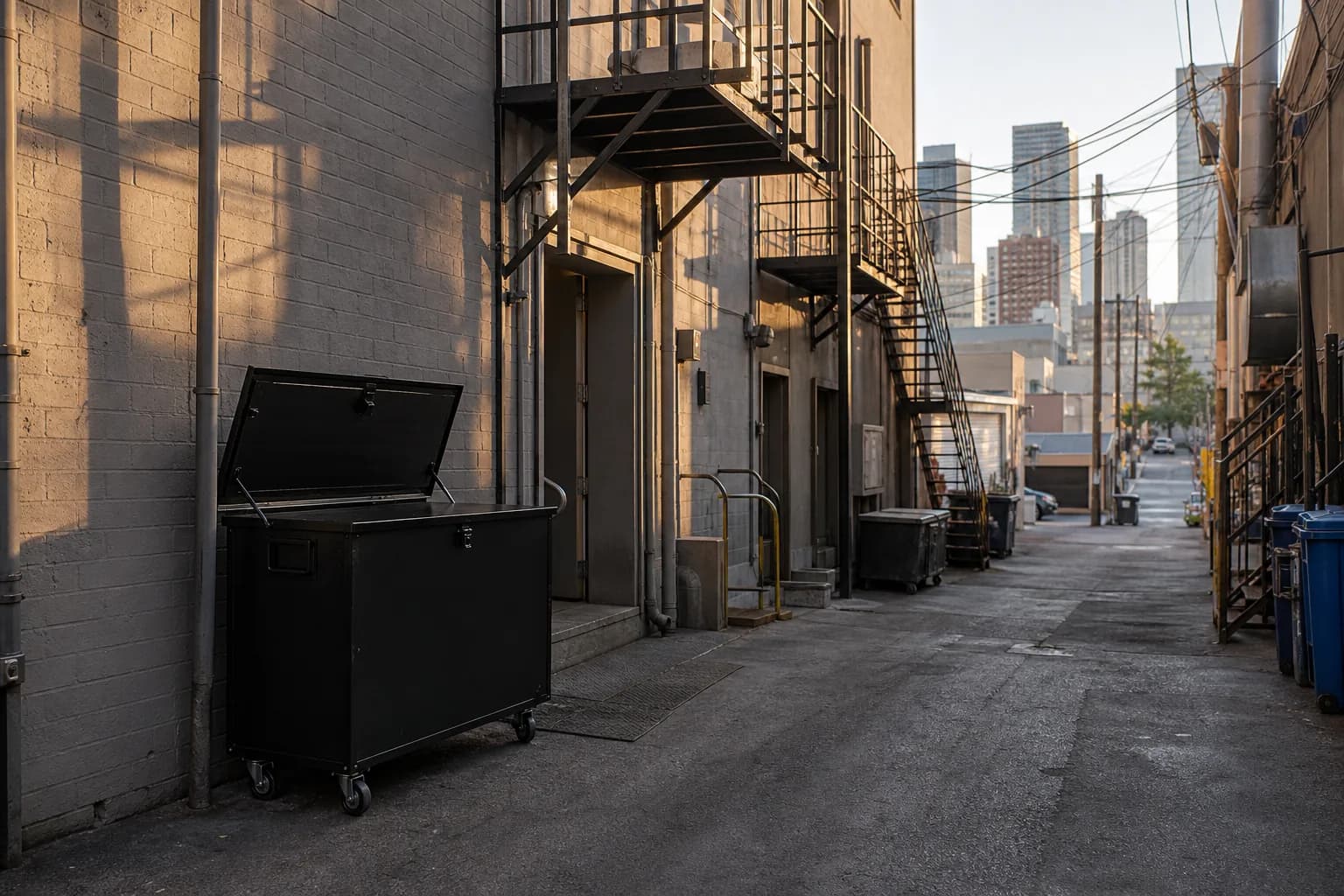
What remains is scheduled collection, and for a restaurant that means free used cooking oil pickup with the container supplied and the driver emptying it where it stands.
What should you ask a hauler before the first pickup?
Three questions, and you answer the first one yourself before anybody touches the container. Look the company up on the state registry. California lists a few hundred commercial grease transporters for the entire state, which makes the search quick, and a company missing from that list cannot lawfully carry a drop of your oil no matter how the truck is painted.
- Are you on CDFA's inedible kitchen grease transporter list? A real operator expects the question and knows the exact name they are registered under.
- Which licensed facility receives the load? Hesitation here is the tell.
- Do I get a manifest at every visit, or paperwork later? Later means never, and never is what an inspector finds.
The registry exists because of what happens in alleys at night. California built the inedible kitchen grease program in the 1990s specifically to attack grease theft and the container damage that came with it, and it still runs a public reporting tool for exactly that. In dense restaurant corridors, from the alleys behind Boyle Heights taquerias to the service lanes off Colorado Boulevard in Pasadena, an unlocked container is an open invitation. A lock plus a verified company closes both risks at once.
Every truck we send is registered with CDFA to move inedible kitchen grease, and a manifest lands in your records the same day we pull out.
Replacing a hauler that stopped answering? Request a free pickup, and see what free cooking oil disposal in California includes. Locked container, manifest every visit, no contract.
Where does LA restaurant oil end up after the truck leaves?
At a licensed renderer, and it comes back as something else entirely. The state describes rendering as the process that turns inedible material, used cooking oil included, into usable products such as feed protein, with the rendered output reaching everything from pet food to cosmetics. Nothing we collect is landfilled and nothing is poured out.
The fuel side is the reason the whole system pays for itself. The federal Alternative Fuels Data Center defines biodiesel as a domestically produced, biodegradable fuel made from plant oils, animal fat, or restaurant grease that has already been cooked with, which is the plain description of where a busy Los Angeles fry program ends up. Because that material has a buyer waiting, collection funds itself and a restaurant is never billed for the service.
Quality is the one thing you control in that chain. Water, mop bucket runoff, and food solids drag a load down and can get it refused outright, which turns a saleable material back into a disposal problem. Shut the lid, keep wash water away from it, and the economics stay in your favor.
Getting a container behind your kitchen this week
Whether you are opening in Highland Park, replacing a company that stopped answering the phone in Torrance, or staring at a bin in a Long Beach alley that should have been emptied twice already, the fix is one call. We size a locked container to your actual fry volume, set it where the oil already collects, empty it where it stands on your route day, and file the manifest for you afterward. Overflow situations jump the line. To put a container behind your kitchen, call Oil Guyz at (714) 880-4788 or request a free pickup online.