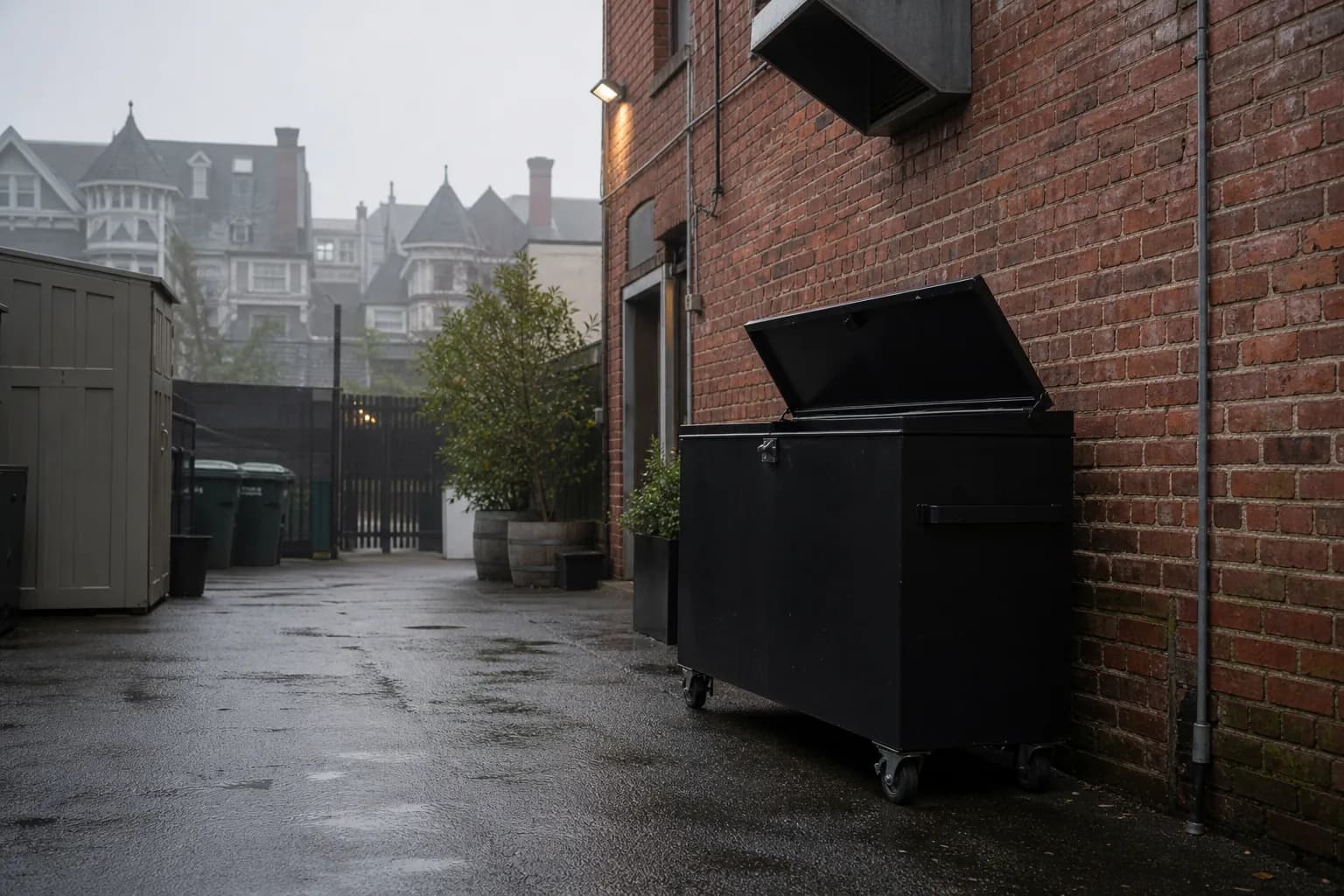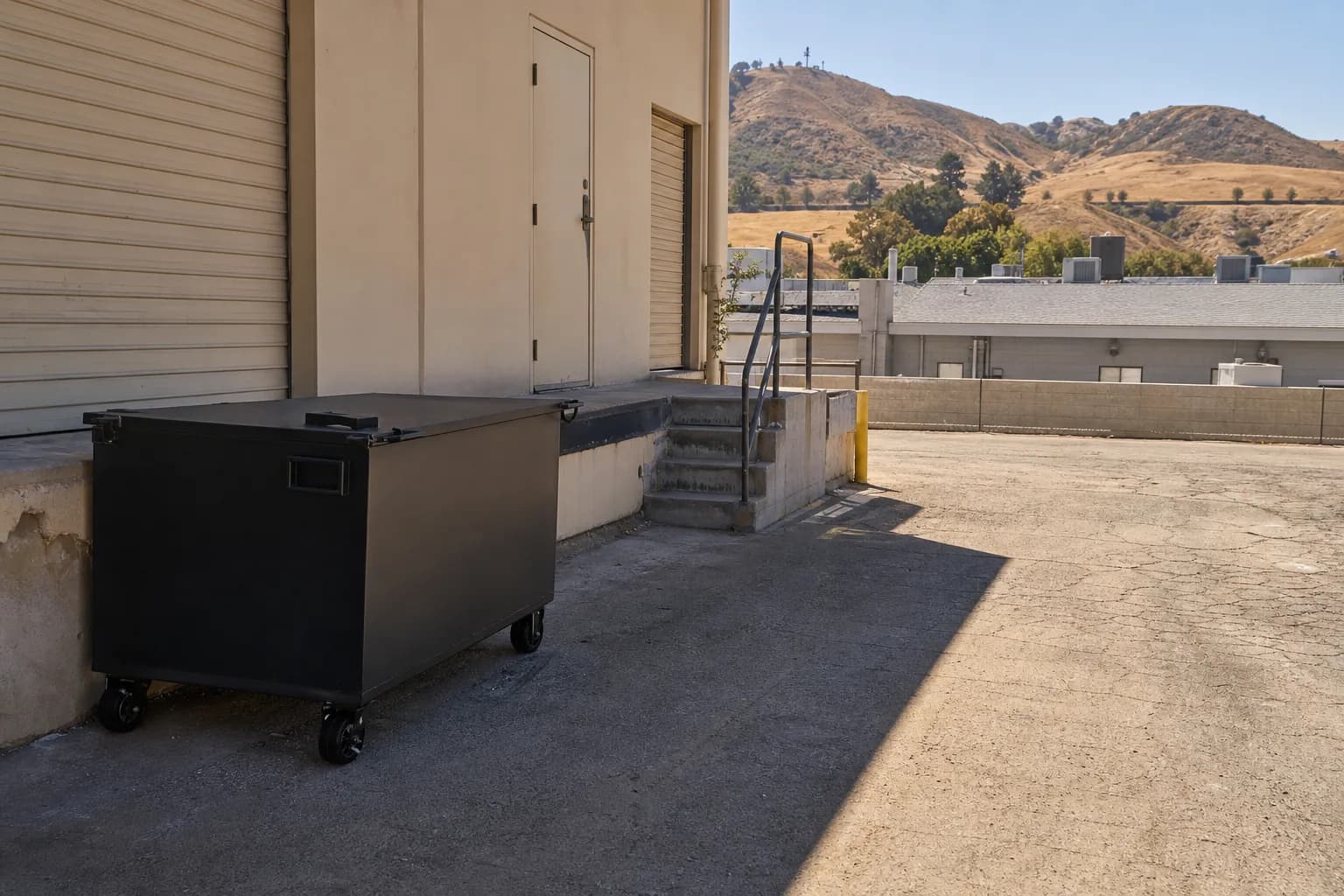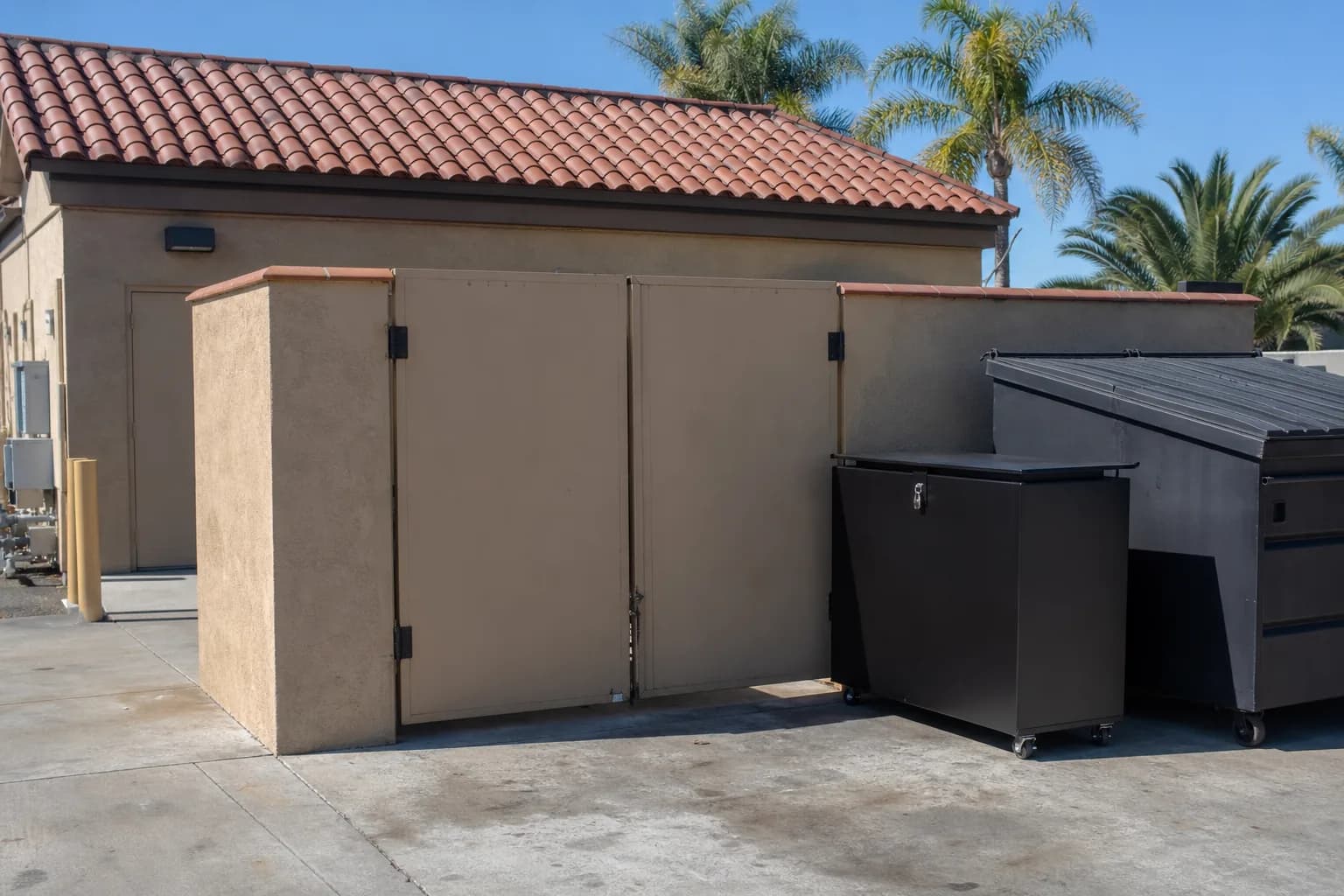

Cooking oil disposal in Orange County comes down to one compliant route for a commercial kitchen: store the used oil in a sealed container and have a CDFA-registered transporter collect it, with a manifest documenting every pickup. The county's household waste centers refuse business oil, and the drain was never an option. Oil Guyz runs that compliant route for OC restaurants at no charge, with a free locked bin and scheduled pickups. To start free pickup, call Oil Guyz at (714) 880-4788
We run used cooking oil routes through Orange County every week, and the same disposal questions come up at almost every new account. Here are the straight answers, based on what the county, the sanitation district, and the state actually require.
How do Orange County restaurants dispose of used cooking oil legally?
Legally, used cooking oil from an Orange County restaurant travels one path: from a dedicated container at your kitchen, onto a CDFA-registered transporter's truck, to a licensed renderer or collection center. State law treats fryer oil as inedible kitchen grease, so the company hauling it needs state registration, and you keep the manifest receipt from each pickup as proof of lawful disposal.
For a commercial kitchen, that breaks into three working parts. First, a container: your used oil needs its own sealed, dedicated home, separate from the trash and far from any drain. Second, a registered hauler: the company collecting it must appear on the state's transporter registry, which we cover below. Third, records: the manifest receipt from each pickup goes in your compliance folder, because that document is what a FOG inspector wants when they ask where your grease went.
None of this should cost you anything. Free used cooking oil pickup is the standard arrangement for restaurants, and the bin comes with it.
Orange County is not special in the structure of these rules, only in who enforces them locally. For the statewide picture, including the bulk and drop-off edge cases, our guide to the legal used cooking oil disposal options in California walks through all four routes.
Can you take restaurant cooking oil to an OC dump or hazardous waste center?
No. Orange County operates four household hazardous waste collection centers, in Anaheim, Huntington Beach, Irvine, and San Juan Capistrano, and by rule they serve residents only. OC Waste & Recycling states the centers "are not permitted to accept waste from businesses," a list that also covers churches, schools, nonprofits, and government agencies. Driving a drum of fryer oil to a county center is a wasted trip, not a disposal plan.
This is worth spelling out because it is the most common dead end we hear about. An operator searches for cooking oil disposal near me, the county's household hazardous waste centers come up, and somebody loads the truck. The centers are real and useful for residents, open Tuesday through Saturday, 9 a.m. to 3 p.m., closed on holidays and during rainy weather:
- Anaheim: 1071 N. Blue Gum Street
- Huntington Beach: 17121 Nichols Lane
- Irvine: 6411 Oak Canyon
- San Juan Capistrano: 32250 Avenida La Pata
But every one of them will turn your business waste away at the gate. The landfill is not a workaround either: under the countywide FOG framework, waste cooking oil leaves a kitchen through a registered hauler or an approved recycling facility, not in the trash.
The exclusion applies to the business, not to you personally. If you fry at home, the residential system is yours to use through your city's program. Everything else in this post is about the commercial side, where the rules are stricter and the paper trail matters.
What are the disposal rules and penalties in Orange County?
Three rulebooks touch an Orange County kitchen: the countywide FOG ordinance framework from the Orange County Sanitation District, the FOG program your city or sanitary district operates day to day, and state grease transport law under the CDFA. The practical translation: a FOG permit from your local agency, zero grease down the drain, and a records folder that can produce two years of hauling manifests on demand.
The enforcement pressure is not theoretical. OC San's own restaurant rendering fact sheet notes that a large percentage of the reported sewer overflows in Orange County are caused by FOG blockages, which is exactly why inspectors pay attention to kitchens. When a sewer line backs up, the investigation works its way upstream to the food service establishments on that line, and the operator with clean records has a very different conversation than the one without.
On the state side, the penalties attach to the hauling itself. The state made unregistered grease hauling a criminal offense: a first conviction carries as much as a year in county jail, up to $5,000 in fines, or both. A restaurant that used the unregistered collector is left with a records gap it cannot backfill.
Each city runs its program a little differently, and the details matter: who issues your permit, how often your interceptor gets inspected, what your city expects in the records folder. We keep the full agency-by-agency walkthrough on our used cooking oil pickup in Orange County page, from OC San's ordinance down to the city notes.
Is there free cooking oil disposal in Orange County?
Yes. Registered transporters collect used fryer oil from Orange County restaurants for free, because the rendering side of the chain covers the cost of collection. Free is the market rate here, not a promotion. Oil Guyz provides the locked bin, the scheduled pickup, and the digital manifest at zero cost, with no contract.
The economics are simple. Collected oil gets processed downstream into products with real demand, and that end of the chain funds the route. The sanitation district makes a related point in its guidance to restaurants: grease belongs in the recycling stream rather than the sewer. When a company charges a kitchen for basic fryer oil collection, they are billing for a service the recycling chain already pays for.
What free should actually include: the container at no charge, no rental or placement fees, no fuel surcharges, and a manifest after every single pickup. If a free service quietly grows line items over time, that is a switch signal, not an industry change. And if an unfamiliar collector offers to pay you cash on the spot for your oil, slow down and check their registration first, because cash-for-grease offers at the back door are a classic mark of the unregistered operators the state registry exists to filter out.
Paying a hauler for something the recycling chain already funds? Switch to free pickup. Locked bin at no charge, no fuel surcharges, a manifest after every visit.
How do you verify a cooking oil hauler is legit in Orange County?
Check the state registry before anyone touches your container. The CDFA publishes its roster of registered Inedible Kitchen Grease Commercial Transporters for anyone to search, and registration is the whole ballgame: hauling used cooking oil without it is unlawful in California, and a licensed renderer cannot legally take possession of oil from an unregistered transporter, so their loads have no lawful destination.
The check takes about two minutes:
- Open the CDFA's Rendering Program registration search and pull up the Inedible Kitchen Grease Commercial Transporters list.
- Find the exact company name you were given. No match means no pickup, whatever the story.
- Ask which licensed renderer or collection center receives the oil. A legitimate transporter answers immediately.
- Expect a manifest receipt documenting each pickup. That receipt is your proof of lawful disposal.
Orange County's restaurant density makes it a busy market for door-to-door grease collectors, and not all of them are registered. Grease theft from unlocked containers is also common enough that the state runs a dedicated theft reporting tool. A locked bin and a verified hauler close off both problems.
Our pickups run under a CDFA Inedible Kitchen Grease transporter registration. The manifest reaches your compliance folder after each visit, no chasing required.
What happens to Orange County cooking oil after disposal?
Every gallon ends up at a licensed renderer. There the oil is filtered, cleaned of water and solids, and processed into biodiesel and renewable diesel feedstock, plus animal feed ingredients. Nothing we collect goes to landfill. The manifest trail follows the oil the whole way, which is what makes the system auditable end to end.
Rendering itself is straightforward industrial recycling. The grease is tested for contaminants, settled to drop out solids, and heated to drive off water and impurities before the clean product moves on. The sanitation district's guidance describes the traditional end markets, from animal feed ingredients to soap and composting inputs. The renewable fuel market now sits on top of that, and it is the reason the oil behind your kitchen has enough value to make pickup free.
That value chain is also why oil quality matters. Recyclable grease is cooking-generated oil that has not been mixed with water, so a bin contaminated with mop water or food scraps can turn an asset back into a problem. Keep the lid closed, keep water out, and the system works exactly as designed.
Where to start if your bin is full this week
If you are setting up a new kitchen, switching haulers, or staring at a container that should have been emptied two weeks ago, the path is the same. Call Oil Guyz at (714) 880-4788, or request a free pickup online, and we set a locked bin beside wherever you keep oil today at no cost, the driver pumps it out on site, and a digital manifest follows each pickup into your records. Most new Orange County accounts see a first pickup inside a week, and stranded-bin situations move faster than that.
One phone call, zero cost, and your cooking oil disposal stops being a question you have to think about.