
Cooking oil management vendors come in three shapes, and knowing which one you are being sold decides whether it solves anything: a standalone tracking app, a collection service with a portal attached, and a platform that does both under one account. This review breaks down what each type of vendor actually delivers. The difference matters because a piece of software can show you a dashboard, log your volumes, and ping you when a pickup is due, but it cannot pump the grease out of your kitchen, haul it under a CDFA registration, or generate a real compliance record. The truck is not optional. So the useful question is not "software or service?", it is "does my provider include the software as part of the service, or am I being asked to run two systems that do not talk to each other?"
This guide breaks down what cooking oil management software actually does, what only a used cooking oil collection service can do, where the two overlap, and what most restaurants, single-location and multi-unit, actually need. We will also be straight about what the Filtrate portal is and is not, so you can tell the difference between a tool and a tool wrapped around a real service.
TL;DR
- Software is a tool; a collection service is the operation. A dashboard does not remove your oil or produce a valid manifest, a registered haul does.
- Compliance lives in the haul, not the screen. California requires a manifest for every used cooking oil pickup with a two-year minimum retention; a record only means something when a registered pickup produced it.
- A software-only tool can leave a hole, the truck. You still have to find, vet, and coordinate a registered hauler, then hope the data lines up.
- The value model that wins is "software included with the service." Oil Guyz bundles free scheduled pickup, a free locked anti-theft container, and the Filtrate portal where every digital manifest and per-location record lives, one relationship, nothing to reconcile.
- What Filtrate is not: not a standalone product you license without the pickup, not a hauler marketplace, and not a replacement for the physical collection.
- Oil Guyz is regional (Orange County, LA, San Diego, Inland Empire, Bay Area, Tacoma/PNW) and expanding, month-to-month, no long contract, cancel anytime.
What "cooking oil management software" usually means
When vendors say "cooking oil management software," they usually mean one or more of these:
- A tracking dashboard, a place to see pickup history, log volumes, and view records.
- Scheduling and reminders, alerts when a container is likely full or a pickup is due.
- Record storage, a digital home for manifests, invoices, and compliance paperwork.
- Sensors or fill-level monitoring, hardware on a tank that reports how full it is.
- Reporting, sustainability or volume reports you can export.
All of that is genuinely useful. The problem is what these features quietly assume: that the physical side, the registered pickup, the chain of custody, the actual manifest, is already handled by someone else. Software organizes information about pickups. It does not perform them.
The gap a software-only tool leaves
If you buy management software on its own, you still have to:
- Find a hauler who is properly registered for your region.
- Vet their registration and insurance, and re-verify it over time.
- Coordinate the schedule between the software and whoever shows up.
- Make sure the manifest the hauler generates actually flows back into your system.
- Reconcile mismatches when the hauler's records and your dashboard disagree.
That is two vendors, two systems, and a seam down the middle where things fall through. For a busy operator, the seam is where no-shows, missing manifests, and "wait, who picked up last Tuesday?" live.
How the three vendor categories actually compare
Every vendor selling into this space fits one of three categories, and knowing which one you are looking at is most of the work of choosing well.
| Dimension | Standalone tracking software | Collection service (any provider) | Combined platform (one vendor) |
|---|---|---|---|
| Physically removes the oil | No, it is not a hauler | Yes, that is the entire service | Yes, the same provider performs the haul |
| Generates a CDFA-compliant manifest | Only if you enter the pickup data yourself, after the fact | Yes, produced at the moment of collection | Yes, produced automatically and tied to that pickup |
| Per-location visibility for multi-unit operators | Sometimes, if the product was built for multiple sites | Rarely, most collection-only haulers run on paper routes or a shared inbox | Usually, this is the reason the category exists |
| Typical cost structure | A recurring subscription fee, billed whether or not a pickup happened that period | Usually no software fee; some haulers bill per pickup or require a fresh-oil purchase, terms vary by company | Bundled into the service relationship when the vendor is being straight about it; verify it is not a line item stacked on top |
Read the cost row before signing anything. "Combined platform" is a category, not a promise, some vendors that sell both a portal and a truck still bill separately for reporting, sensors, or a higher software tier. The category only delivers on its own premise when the software is genuinely included with the pickup, not licensed alongside it.
What a collection service does that software cannot
A used cooking oil collection service is the operational half, the part that actually touches the oil:
- Performs the physical pickup. Oil Guyz coordinates free scheduled pickups, performed by a CDFA-registered transporter. (Oil Guyz is the service relationship, the software, and the compliance documentation, not a fleet operator.)
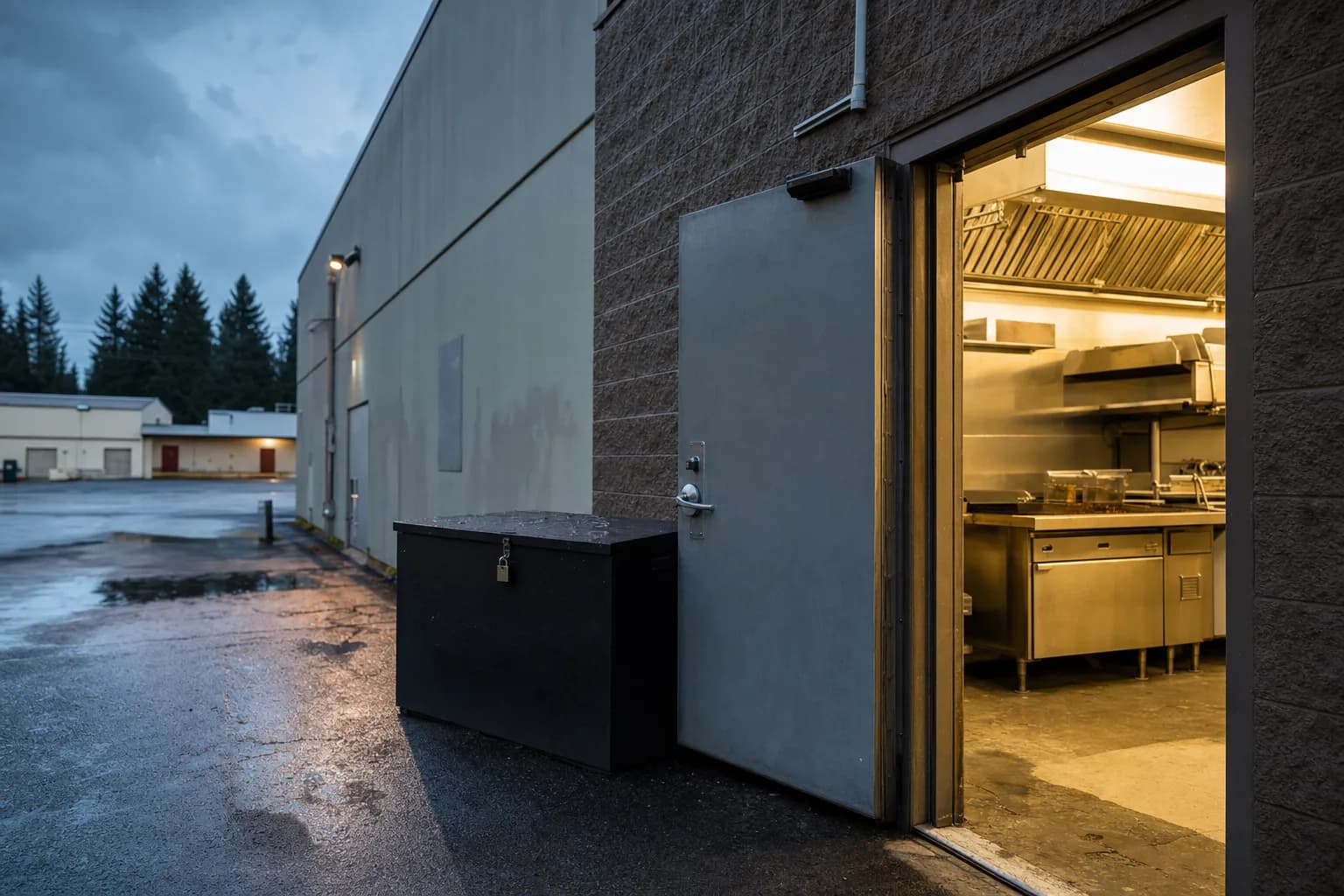
- Provides a free locked anti-theft container. Grease has real commodity value, which makes it a theft target, more on that below.
- Generates a CDFA-compliant digital manifest after every pickup, documenting chain of custody from your kitchen to a CDFA-licensed renderer.
- Recycles the oil into biodiesel and renewable-diesel feedstock, closing the loop on where every gallon ends up.
No app can do any of those four things. They require a truck, a registration, and a downstream renderer.
Where compliance actually lives
This is the part operators most often get wrong, so it deserves its own section.
In California, the CDFA requires a manifest for every used cooking oil (inedible kitchen grease) pickup, electronic manifests are explicitly legal under the state's Uniform Electronic Transactions Act, and records must be retained for a minimum of two years (3 CCR § 1180.24). The CDFA's Inedible Kitchen Grease (IKG) program registers the transporters, licenses the renderers, and documents the chain of custody to help prevent theft and illegal dumping (CDFA MPES).
Here is the key point: a manifest is only meaningful if a registered pickup produced it. Software can store a manifest beautifully, search it instantly, and export a year of records as a PDF, but if there is no registered haul behind the record, the record documents nothing. Compliance is a property of the physical transaction, not the dashboard that displays it.
That is why bundling matters. When the same provider performs the pickup and runs the software, the manifest in your dashboard was generated by the pickup you are looking at. There is no gap to fall through. For a deeper walkthrough of how the chain of custody is documented and stored, see Cooking Oil Compliance & Reporting.
The theft problem software cannot solve
Used cooking oil is worth stealing. It is priced at roughly 21 to 41 cents per pound, and an estimated $75 million worth of used cooking oil is stolen every year (industry reporting). A dashboard can tell you after the fact that your volume looks low, it cannot physically stop someone from siphoning your container at 3 a.m.
A free locked anti-theft container can. This is a clean example of where the service beats the software: protecting the asset is a physical control, not a data feature. Volume matters here too, a busy, fryer-heavy kitchen has real value sitting in its container, which is exactly what a locked container is for.
Software vs. service vs. both: a side-by-side
| Capability | Standalone management software | Collection service alone | Oil Guyz (service + Filtrate included) |
|---|---|---|---|
| Performs the physical pickup | No | Yes | Yes, coordinated, performed by a CDFA-registered transporter |
| CDFA-compliant digital manifest per pickup | Stores it (if you supply it) | Generates it | Generates and stores it automatically |
| One dashboard across all locations | Sometimes | Rarely | Yes, the Filtrate portal, with per-location apps |
| Free locked anti-theft container | No | Varies | Yes |
| Compliance record tied to a real registered haul | No (no haul behind it) | Yes (records may be theirs) | Yes, your retained record, tied to each pickup |
| Vendors you must coordinate | Two (software + a separate hauler) | One (but no software) | One, software and haul are the same relationship |
| Typical commitment | Subscription | Varies | Month-to-month, cancel anytime, no removal fee |
The middle two columns are where most operators get stuck: software with no haul, or a haul with no visibility. The right answer for most restaurants is the last column, the software included with the service, so there is nothing to stitch together.
What the Filtrate portal is, and what it is not
Being honest about the product is part of choosing well.
What Filtrate is:
- The software layer of the Oil Guyz service.
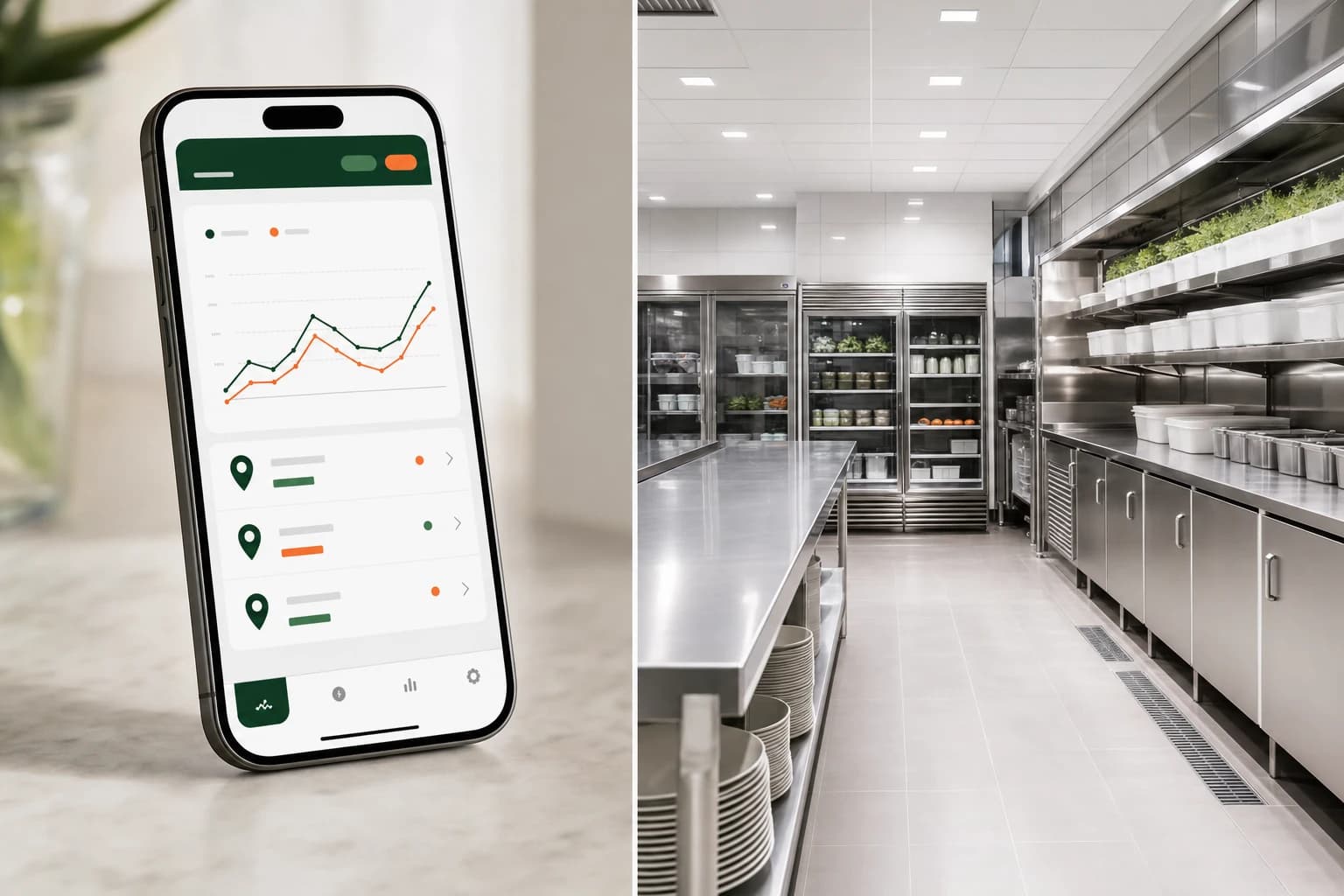
- One dashboard across every location, with per-location mobile apps.
- Role-based access, corporate sees all sites, each GM sees theirs.
- The home for your CDFA-compliant digital manifests, stored automatically after every pickup.
What Filtrate is not:
- It is not a standalone product you license without the pickup service.
- It is not a marketplace that finds you a random third-party hauler.
- It does not replace the physical collection, it documents and organizes it.
In other words, Filtrate is the visibility-and-records layer wrapped around a real collection service. Its data is generated by the pickups we coordinate, which is exactly why there is nothing to reconcile between two systems.
Who needs what
A single-location restaurant
You mostly need a reliable pickup and a clean record after each one. A heavy standalone software product is usually overkill, one more login to babysit. What helps is getting a digital manifest automatically so an inspector or auditor gets proof in seconds. With a bundled service, you get the record-keeping benefit without buying or running separate software.
A growing or multi-location operator
This is where software-only tools fall shortest. More pickups, more manifests, more sites to keep straight, and a bigger theft target, all of which need an operation, not just a tracker. One system that handles both the haul and the records, with role-based visibility across every location, is the difference between control and chaos. For portfolios, the Multi-Location Cooking Oil Collection model puts every site on one contract and one dashboard, and the broader Restaurant Cooking Oil Management hub explains how pickup, compliance, and the portal fit together.
What a genuine review should actually check
A genuine review of a cooking oil vendor checks the physical chain of custody, not the app's screenshots. Run through these before you sign anything.
- Ask for the CDFA IKG transporter registration number, then verify it yourself. Do not take a vendor's word for it. CDFA publishes a public transporter registry searchable by company name; a vendor who will not give you the number, or one who is not on the list, is not compliant, whatever the software looks like.
- Check the truck itself, not just the paperwork. A registered vehicle carries an individually numbered decal for the current calendar year, plus signage on both front doors with the business name and license plate information (3 CCR §1180.20). No decal means no valid registration, regardless of what the sales team says.
- Confirm the manifest is generated at the pickup, not reconstructed afterward. Ask what fields it captures, date, volume, the transporter's registration number, your business, and the receiving facility, and ask to see a real sample before you commit.
- Verify the receiving facility as its own, separate credential. Registration and licensing sit at two different points in the chain: the transporter is registered to move the oil, the renderer is licensed to process it. A vendor can be straight about one and vague about the other.
- For multi-location groups, ask to see the actual multi-site view. "Per-location visibility" means different things to different vendors, some genuinely offer role-based access across every restaurant, others mean you can filter one spreadsheet by column.
- Ask what happens to your data if you leave. A real review checks the exit as carefully as the pitch: does your manifest history export in full, or does it stay on the vendor's servers after you cancel.
None of the first four checks take more than a phone call and a few minutes on a state website. Running them is what separates a genuine review from a sales page dressed up as one.
Where the recycled oil goes (and why the service decides it)
A management app does not change where your oil ends up, the collection service does. Used cooking oil is a primary feedstock for biodiesel and renewable diesel. Renewable diesel reduces carbon intensity by an average of about 65% versus petroleum diesel (DOE/AFDC), and waste-feedstock biodiesel and renewable diesel deliver roughly 79 to 86% lower lifecycle greenhouse-gas emissions than petroleum diesel (Argonne National Laboratory, Environmental Science & Technology, 2022). Under the federal Renewable Fuel Standard, biomass-based diesel must achieve at least a 50% lifecycle GHG reduction (EPA RFS).
Oil Guyz routes every gallon it collects through our CDFA-licensed renderer for biodiesel and renewable-diesel feedstock, a destination determined by the service, not by any dashboard.
The bottom line
Do not shop for "software vs. service." Shop for a provider that includes the software as part of the service:
- A real, scheduled pickup, so the truck is never your problem.
- A CDFA-compliant digital manifest generated by that pickup, so compliance is real, not just displayed.
- A free locked anti-theft container, so the value in your container stays yours.
- One dashboard, so every location and every record live in one place.
That is the model Oil Guyz is built on, on month-to-month terms with no long contract. If you want to compare full vendor models side by side, our guide to the best cooking oil management for multi-location restaurants lays out the contract structures honestly. If you operate in Orange County, LA, San Diego, the Inland Empire, the Bay Area, or Tacoma/PNW, we can cover you today, and if you are outside that footprint, tell us where your locations are and we will notify you as we expand.
Sources
- CDFA inedible kitchen grease manifest + retention requirements, 3 CCR § 1180.24 (Cornell Law)
- CDFA Inedible Kitchen Grease program (transporter registration/renderer licensing, chain of custody), CDFA MPES
- Registered transporter vehicle decal and signage requirements, 3 CCR § 1180.20 (Cornell Law)
- CDFA public registry for verifying an Inedible Kitchen Grease transporter's registration, CDFA IKG Transporter Registry
- Renewable diesel ~65% carbon-intensity reduction, DOE Alternative Fuels Data Center
- Waste-feedstock biodiesel/renewable diesel ~79 to 86% lifecycle GHG reduction (Argonne National Laboratory, Environmental Science & Technology, 2022)
- EPA Renewable Fuel Standard (biomass-based diesel ≥50% lifecycle GHG reduction), EPA RFS overview