
TL;DR, How restaurant chains manage used cooking oil pickup across locations comes down to one principle: standardize everything so each new store inherits a working program instead of inventing its own. The winning playbook is one account with one set of terms, the same locked anti-theft container at every site, scheduled pickups sized to each store's volume, a single dashboard for all locations, and a CDFA-compliant digital manifest filed after every pickup. That turns a messy pile of per-store arrangements into one consolidated, audit-ready system, and the oil gets recycled into biodiesel and renewable diesel feedstock. This guide walks through the operational model location by location.
How restaurant chains manage used cooking oil pickup across one restaurant is simple. Doing it across 20, 50, or 200 locations is a different problem entirely, and most chains discover this the hard way, one inconsistent store at a time. One location has a reliable pickup; another has oil sitting in an open drum out back; a third signed its own contract with terms nobody at corporate can find. The fix is not more effort. It is a standardized program that makes the right behavior automatic at every site.
This is the operational playbook chains use to bring every location under one roof, and it is the model behind our Restaurant Cooking Oil Management hub.
Why multi-location cooking oil management breaks down
The trouble starts because used cooking oil is easy to ignore until it becomes a problem. Each location quietly accumulates its own habits, and without a standard, those habits drift apart.
A few realities make this harder than it looks:
- The volume is real. A single fast food location generates roughly 35 lb of used cooking oil per day, about 12,775 lb per year. Across a chain, that adds up to a serious, recurring waste stream that has to be handled the same way everywhere.
- The oil has value, which invites theft. Used cooking oil (yellow grease) is a traded commodity. Grease theft costs the industry roughly $75 million per year, and the USDA values about 100 lb at around $25. An unlocked drum at any one of your sites is an open invitation.
- Compliance is per-pickup, not per-chain. In California, a manifest is required for every used cooking oil pickup at every location. Miss the paper trail at one store and that store has a gap, regardless of how clean the other 49 are.
- Nobody owns it. Used cooking oil rarely belongs to one corporate role, so it falls through the cracks between operations, facilities, and individual store managers.
The answer to all four problems is the same: standardize, then centralize the records.
The chain playbook: six moves that scale
Here is the model that works across every location. Each step is designed so that adding store #51 is as easy as the first fifty.
1. One account, one set of terms
Stop negotiating store by store. A chain program runs on a single account with one agreement that covers every existing location and every future one. New stores get added under the same terms, no separate paperwork, no per-store contract hunting.
The terms that matter for a chain: month-to-month, no long contract, cancel anytime. You should not be locking each location into separate multi-year deals just to handle a waste stream. This is the core of Multi-Location Cooking Oil Collection, one relationship instead of dozens.
2. Standardize the container at every site
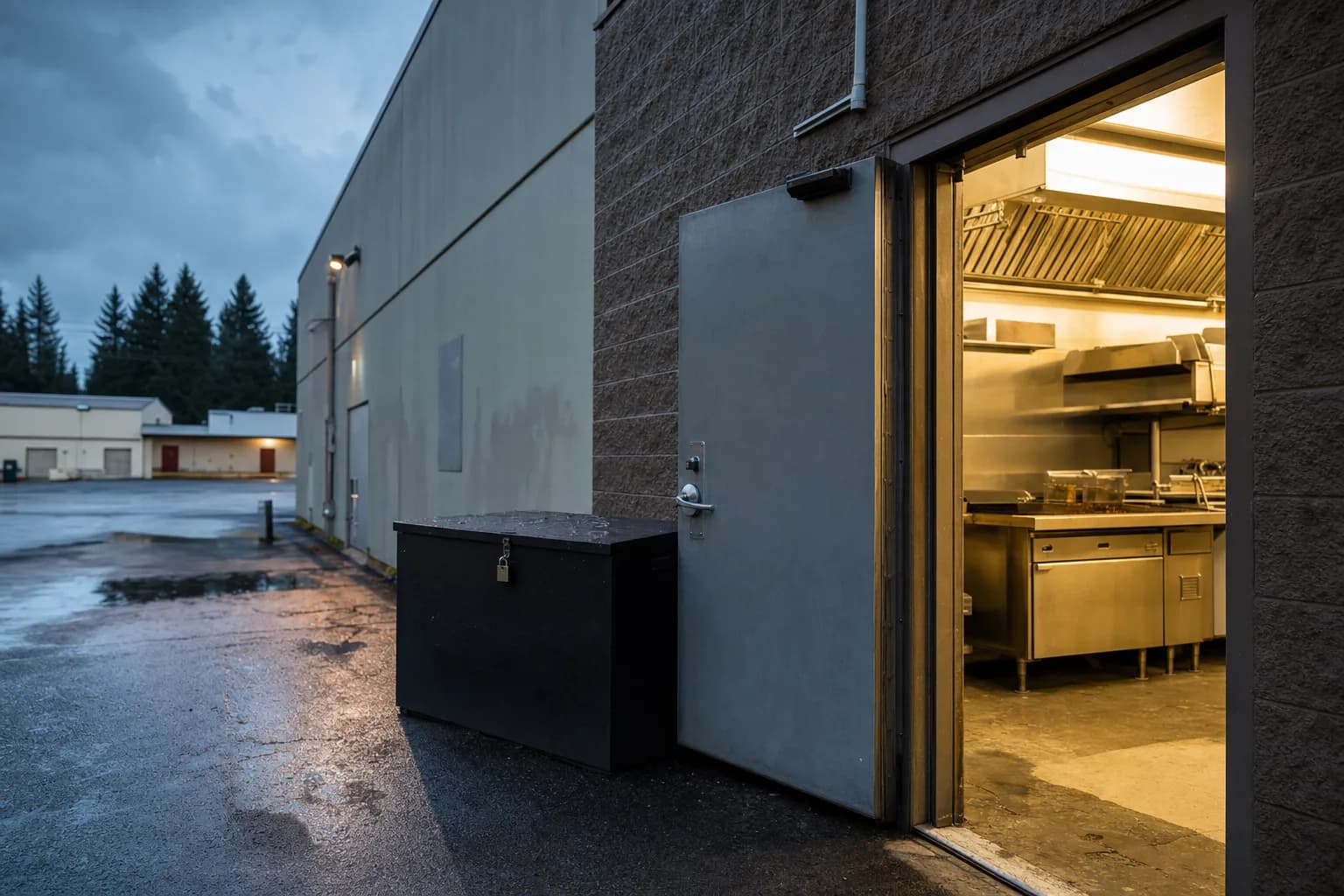
Every location gets the same free locked anti-theft container. Standardizing the container does three things at once:
- It protects the resale value of your oil from theft.
- It keeps the back-of-house consistent, so a manager who transfers between stores already knows the setup.
- It keeps your chain-of-custody records clean, because the oil is secured from the fryer to the pickup.
One container type, every site. No exceptions, no improvised drums.
3. Scheduled pickups sized to each store
Volume is not uniform, a high-traffic location frying all day produces far more than a smaller cafe format. So while the program is standardized, the cadence is tuned per store. Each location gets free scheduled pickups sized to its actual output, so containers never overflow and trucks never roll for a half-empty bin.
Pickup is performed by a CDFA-registered transporter, not by your staff. Your team's only job is to keep the lid down between pickups.
4. One dashboard for every location
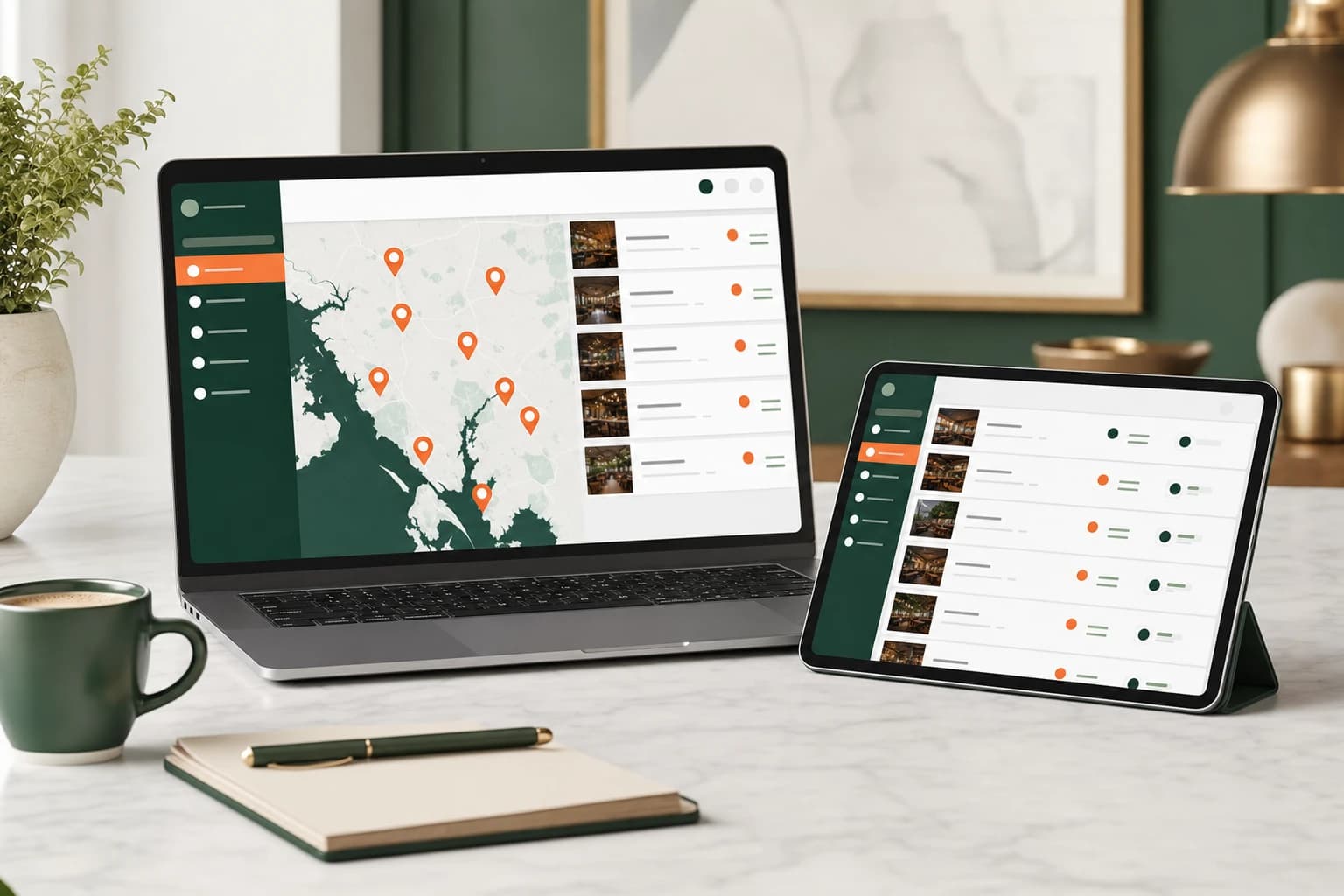
This is the difference between a chain program and a stack of separate accounts. Instead of logging into different systems or calling around to each store, an operations lead sees every location in the Filtrate portal, one dashboard for the whole chain, plus per-location mobile apps for the people on the ground.
From one screen you can see which sites are due, which have been serviced, and where the records live. The Filtrate portal is what makes "managing 50 locations" feel like managing one.
5. A digital manifest per site, automatically
After every pickup at every location, a CDFA-compliant digital manifest is generated and filed. This is not optional paperwork, California requires a manifest for every used cooking oil pickup, electronic manifests are legal under the state's Uniform Electronic Transactions Act, and records must be kept for a minimum of two years.
Doing this on paper across a chain is a nightmare. Doing it digitally means each manifest documents the chain of custody from that specific kitchen to a CDFA-licensed renderer, retained automatically, retrievable on demand. The deeper compliance and reporting mechanics live in Cooking Oil Compliance & Reporting.
6. Consolidated reporting that rolls up
Because the manifests are digital and the dashboard spans every site, chain-level reporting becomes a pull, not a project. Need to prove every California location was compliant last quarter? It is already consolidated. Need oil-volume data for sustainability reporting? It rolls up across the chain.
That last point matters more every year: collected oil is recycled into biodiesel and renewable diesel feedstock, and waste-feedstock biodiesel and renewable diesel cut lifecycle greenhouse gas emissions by roughly 79 to 86 percent versus petroleum diesel. That is a real, sourced sustainability number you can attach to your chain's footprint.
Per-store vs. standardized chain program
Here is the same operational reality, side by side.
| What you're managing | Per-store, ad hoc | Standardized chain program |
|---|---|---|
| Agreements | A different contract per location, terms unknown | One account, one set of terms, month-to-month |
| Containers | Mixed bins, some unlocked | Same locked anti-theft container everywhere |
| Pickups | Inconsistent, some sites overflow | Scheduled and sized to each store's volume |
| Visibility | Phone calls and spreadsheets | One Filtrate dashboard for all locations |
| Compliance | Paper manifests scattered per store | Digital manifest per site, retained automatically |
| Reporting | Manual chase, store by store | Consolidated and on demand |
| Onboarding a new store | Start from scratch each time | Add under existing terms, inherits the program |
Rolling out across your locations
If you are bringing an existing chain onto a standardized program, a clean sequence keeps it simple:
- Map your locations. List every site and its rough fryer volume so pickup cadence can be set correctly per store.
- Move to one account. Consolidate under a single agreement with month-to-month terms.
- Drop in standardized containers. Same locked container at every site, replacing any improvised drums.
- Set the schedules. Tune pickup frequency to each location's real output.
- Onboard the team to the dashboard. Get your operations lead into the Filtrate portal and store managers onto the per-location apps.
- Let the manifests run. From the first pickup, every site is generating its own digital chain-of-custody record.
New locations after that are trivial: they slot into the existing account, get a container, get a schedule, and start producing manifests on day one.
A note on coverage and honesty
This program operates across Orange County, Los Angeles, San Diego, the Inland Empire, the Bay Area, and Tacoma/Pacific Northwest, and we are expanding. If your chain has locations outside those areas, tell us where they are, we will capture them and notify you as we reach those markets, rather than pretend to cover ground we do not. Multi-location operators rarely fit a single region neatly, and the honest answer is more useful than an overpromise.
The bottom line
How restaurant chains manage used cooking oil pickup across locations is ultimately a standardization problem, not a logistics one. Get one account, one container standard, right-sized schedules, one dashboard, and an automatic digital manifest per site, and the chaos of per-store arrangements collapses into a single, audit-ready system. Your oil stays secure, your compliance stays clean, your reporting rolls up, and the oil itself becomes biodiesel and renewable diesel feedstock.
If you want to compare approaches before you commit, the best cooking oil management for multi-location restaurants guide breaks down what to look for. When you are ready to standardize, the Restaurant Cooking Oil Management hub is the place to start.
Sources
- Used cooking oil volume per fast food location, Frontline International: https://nwbiofuel.com/blog/cooking-oil-recycling-in-fast-food-chains-setting-industry-standards/
- California manifest requirement and electronic manifests (3 CCR §1180.24): https://www.law.cornell.edu/regulations/california/3-CCR-1180.24
- CDFA Inedible Kitchen Grease (IKG) program, transporter registration, renderer licensing, and chain of custody: https://www.cdfa.ca.gov/AHFSS/MPES/
- Waste-feedstock biodiesel lifecycle GHG reduction, DOE AFDC: https://afdc.energy.gov/fuels/biodiesel-production
- Renewable diesel carbon-intensity reduction, DOE AFDC: https://afdc.energy.gov/fuels/renewable-diesel