
Recycling used cooking oil turns a disposal cost into free, no-contract pickup. It keeps you compliant with CDFA and local sewer rules, it prevents grease backups in your drains, it protects your oil from theft, and it converts waste fryer oil into low-carbon renewable fuel, biodiesel, renewable diesel, and sustainable aviation fuel, that cuts lifecycle greenhouse-gas emissions by up to roughly 86% versus petroleum diesel.
That is the short answer. Below, each benefit is broken out with the rules and numbers behind it, so you can see exactly what recycling does for your kitchen, your compliance file, and the wider fuel supply chain.
It Lowers Your Disposal Cost, Often to Zero
Most kitchens are used to paying to haul waste away. Used cooking oil is the rare stream where a registered collector will pick it up for free instead.
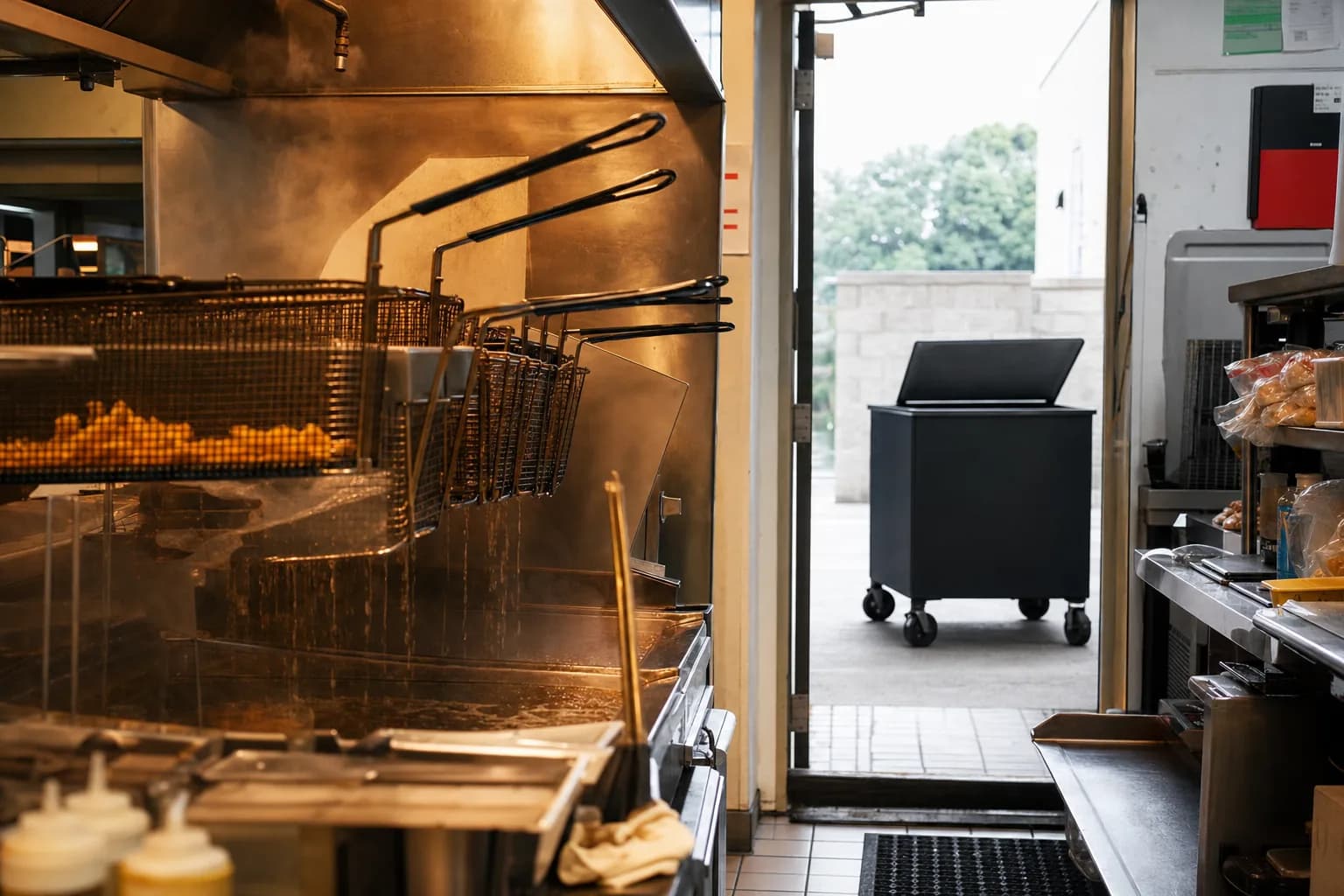
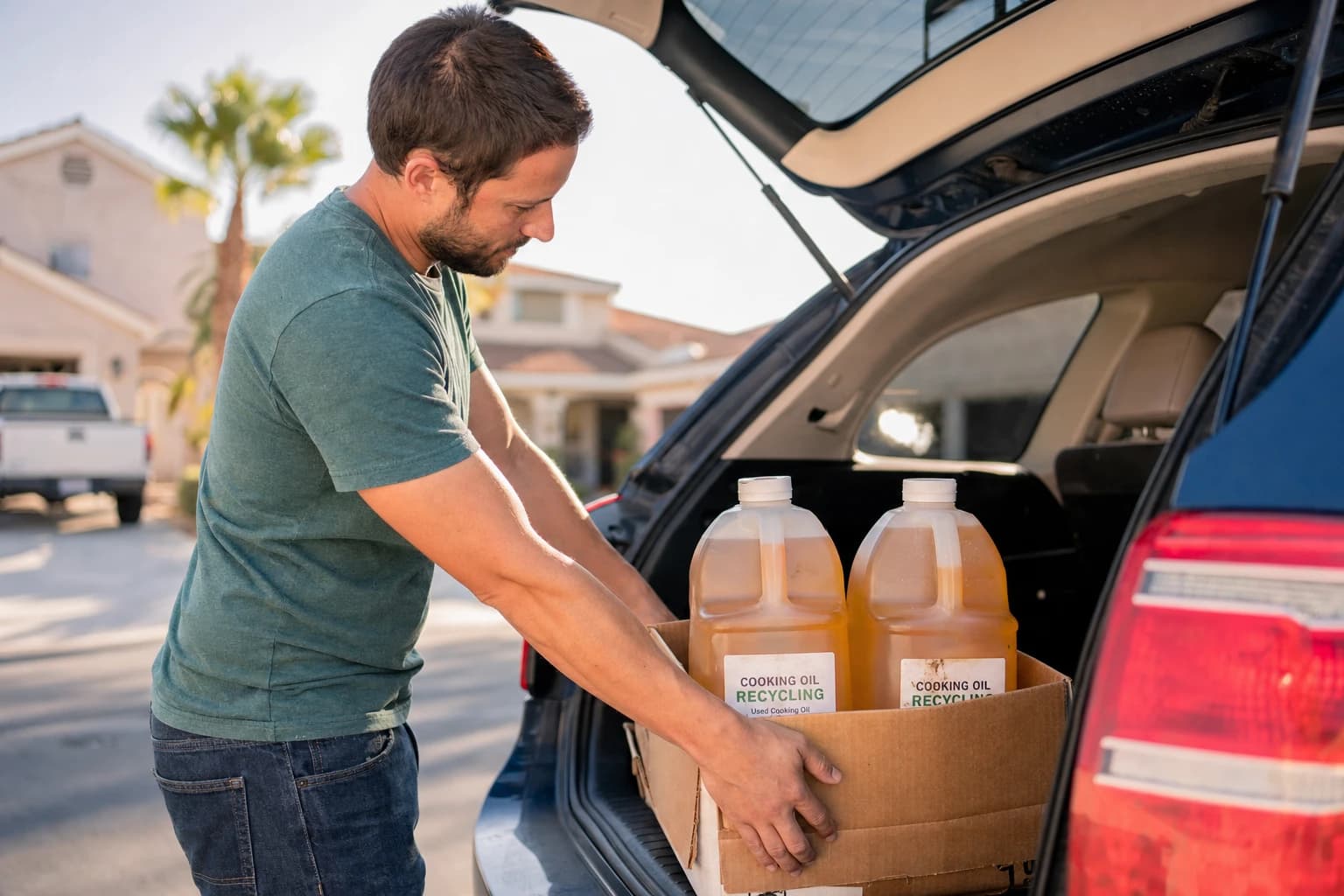
Here's why that's possible: the U.S. Department of Energy's Alternative Fuels Data Center confirms that biodiesel and renewable diesel are renewable fuels manufactured domestically from vegetable oils, animal fats, or recycled restaurant grease. The U.S. Energy Information Administration reports that U.S. renewable diesel production capacity has grown rapidly and surpassed biodiesel capacity, with waste feedstocks such as used cooking oil playing a central role. That demand from fuel producers is what lets registered collectors offer free used cooking oil pickup as the standard arrangement, no contracts, no fees, no minimum volume. Oil Guyz also drops off free locked anti-theft containers so your oil is protected until pickup. For the vast majority of kitchens, the benefit is direct: a disposal cost you used to pay is eliminated entirely.
It Keeps You Compliant With CDFA and Local FOG Rules
Recycling through the right partner is also the cleanest path to compliance, on two fronts.
California's grease-transport law. Under the CDFA Inedible Kitchen Grease Program (3 CCR §1180.20), every business that transports used cooking oil must hold a valid CDFA transporter registration, generate a manifest for every load, and deliver only to licensed rendering facilities. The program was created in 1995 specifically to combat used-cooking-oil theft, and the registration-plus-manifest system exists to keep oil in the legitimate, traceable supply chain. When you recycle through a CDFA-registered transporter, you get documented chain-of-custody for every pickup, the paper trail that proves your oil was handled legally.
Local sewer (FOG) rules. Separately, commercial kitchens are typically required by local fats-oils-and-grease (FOG) programs to keep grease out of the sewer, often via grease interceptors pumped on a schedule. Recycling your used cooking oil through a registered collector keeps that oil out of drains entirely, which supports compliance and reduces what reaches your interceptor in the first place.
Oil Guyz emails a CDFA-compliant digital manifest after every pickup and retains records for two years, so the documentation is ready whenever a health inspector or FOG auditor asks. Read more about how the collection process and paperwork work on our cooking oil disposal page.
It Prevents Sewer Backups, Fines, and Overflow Cleanups
Grease in the sewer is not a minor nuisance, it is the leading cause of blockages. The EPA's Report to Congress on combined and sanitary sewer overflows identified grease from restaurants, homes, and industrial sources as the most common cause, roughly 47%, of reported sewer blockages. EPA's official guidance names fats, oils, and grease as an inappropriate material that creates blockages and contributes to sanitary sewer overflows, events that discharge untreated wastewater into streets, homes, and waterways.
For an operator, a grease blockage is not abstract. It can mean a backed-up kitchen, an emergency plumber call, a sewer-overflow cleanup, and a notice of violation from the municipality. Recycling diverts the oil before it ever reaches a drain, removing the most common cause of the problem at the source, the difference between a scheduled pickup and a 2 a.m. overflow.
It Protects Your Oil From Theft
Used cooking oil can be resold into the biofuel supply chain, which is exactly why unlocked or infrequently serviced containers become a target. California's CDFA program was created in 1995 specifically to combat used-cooking-oil theft, and it still runs a dedicated reporting program for it today.
Two things stop it. A locked, anti-theft container removes the easy target sitting behind your building, and a manifested, traceable route means the person hauling your oil is a verified registered transporter, not someone who could disappear with it. Oil Guyz provides free locked containers and reliable scheduled routes, so the oil stays secured from your fryer to the licensed renderer, and the manifest documents that it got there.
Environmental Benefits
Recycling used cooking oil is also one of the highest-leverage environmental moves a commercial kitchen can make, across carbon, landfill diversion, fuel policy, and aviation.
Carbon Reduction
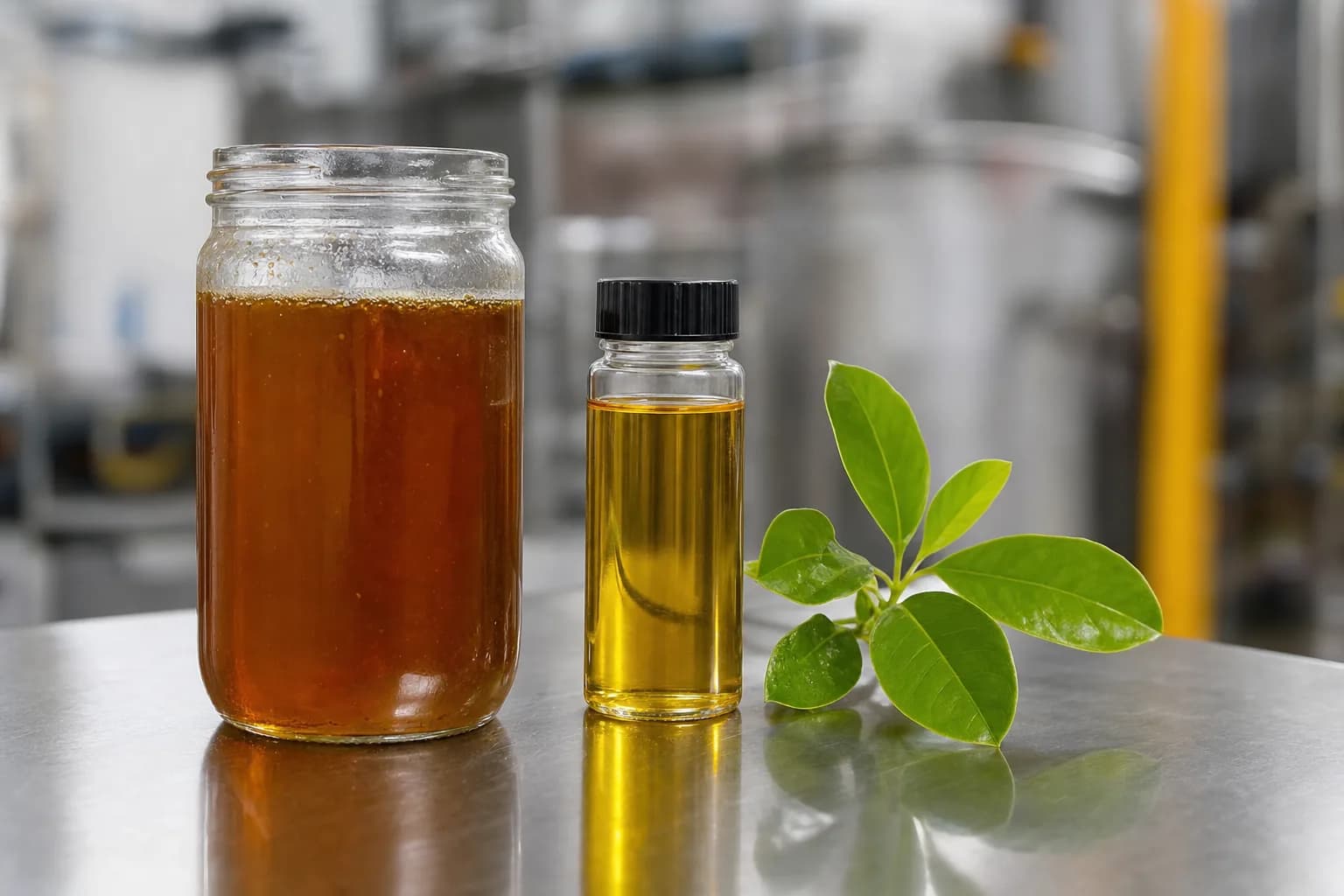
The U.S. Department of Energy's Alternative Fuels Data Center, citing a lifecycle analysis from Argonne National Laboratory, reports that 100% biodiesel (B100) produces 74% lower lifecycle greenhouse-gas emissions than petroleum diesel. When the feedstock is specifically waste oil rather than a virgin crop, the reduction climbs higher: the EPA's lifecycle analysis under the Renewable Fuel Standard found that biodiesel and renewable diesel made from waste grease, including used cooking oil, deliver roughly 79% to 86% lower lifecycle GHG emissions than petroleum diesel, because waste oil carries no upstream farming or land-use emissions.
Landfill Diversion
The two common "easy" disposal routes, pouring oil down the drain or throwing it in the trash, both carry a cost: the drain causes FOG overflows, and the trash sends a usable resource to a landfill where it does nothing but take up space. When your oil is collected for recycling, every gallon is diverted from the waste stream and converted into fuel feedstock instead. For a kitchen tracking sustainability or ESG goals, the CDFA-compliant digital manifest emailed after every pickup doubles as your diversion record.
LCFS and RFS
California's Low Carbon Fuel Standard (LCFS), administered by the California Air Resources Board under AB 32, requires reductions in the carbon intensity of transportation fuels through 2030. Used-cooking-oil fuels score exceptionally low on carbon intensity because the feedstock is a waste with no cultivation footprint, which is a policy reason fuel producers actively seek it out. Separately, under the federal Renewable Fuel Standard, used cooking oil qualifies as an advanced biofuel feedstock, a category that requires at least a 50% lifecycle greenhouse-gas reduction; biodiesel and renewable diesel made from waste grease clear that bar comfortably.
Sustainable Aviation Fuel
Sustainable aviation fuel (SAF) is jet fuel made from non-petroleum sources, and used cooking oil is one of its leading feedstocks via the HEFA processing pathway. The U.S. Department of Energy reports waste-derived SAF can cut lifecycle carbon emissions by up to about 80% versus conventional jet fuel, and the federal SAF Grand Challenge targets at least a 50% lifecycle reduction and 3 billion gallons of domestic SAF by 2030. Aviation is one of the hardest sectors to decarbonize, so a commercial kitchen's fryer oil becoming aircraft fuel is a striking illustration of how far this recycling chain reaches.
If you want the full breakdown of how the oil is processed, our cooking oil recycling and biodiesel feedstock collection pages walk through each step.
How to Start Recycling Your Used Cooking Oil
Getting set up is quick:
- Reach out. Call or message with your location and roughly how much oil you go through. A real person answers, no phone tree.
- Get your container. A free locked anti-theft container is dropped off, sized to your volume. There is no minimum to qualify.
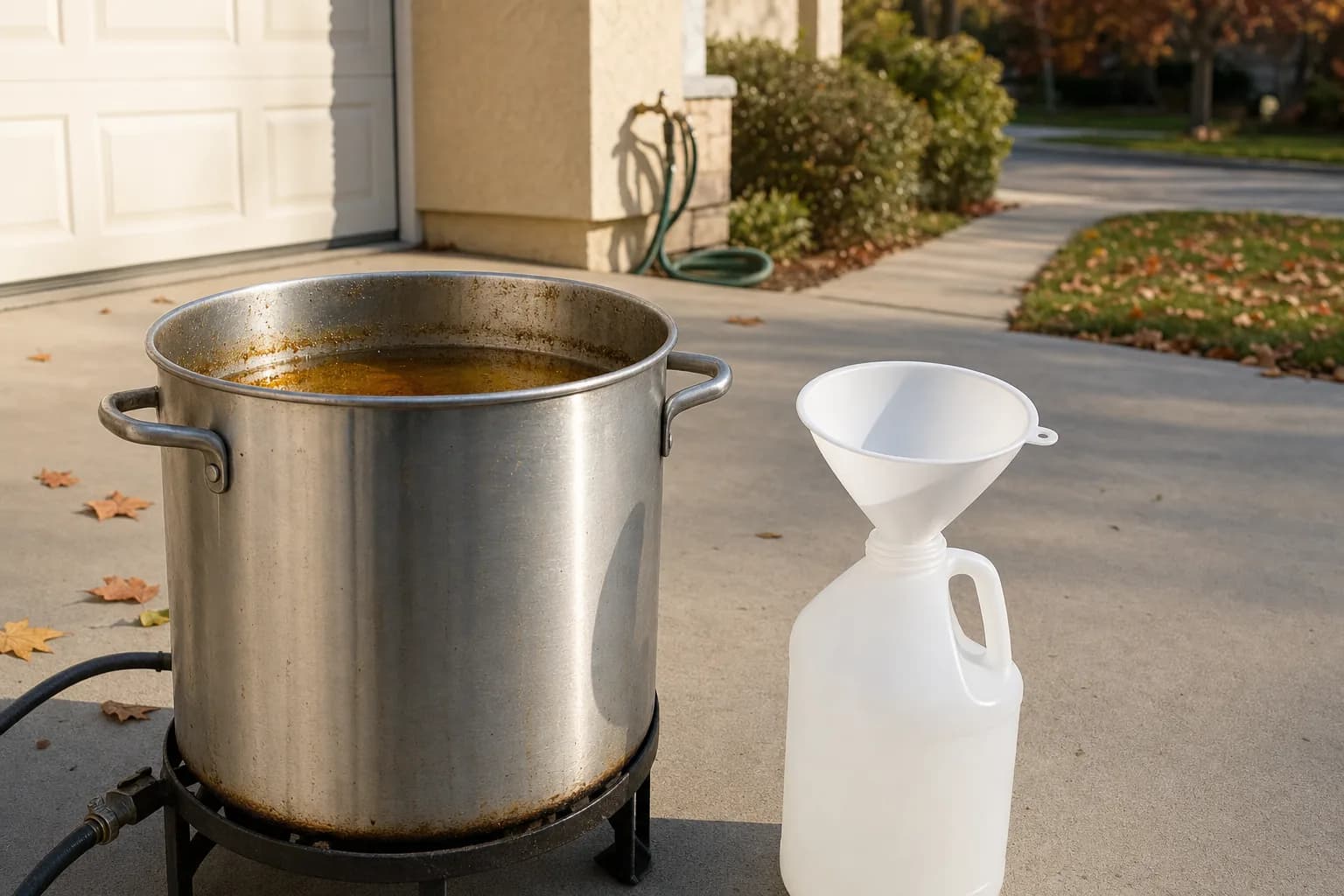
- Pour used oil into the container. Filter out solids where you can, keep the lid sealed, and keep water out.
- A CDFA-registered transporter collects it on a reliable schedule. You can also schedule by phone, text, or the online portal.
- Receive your digital manifest. A CDFA-compliant manifest is emailed after every pickup, retained for two years.
Most kitchens fit a simple volume-to-frequency pattern; see our full guide on how often to schedule cooking oil pickup for the volume table and seasonal adjustments. You can see coverage in your region directly, whether that's Orange County, Los Angeles, San Diego, the Bay Area, or Tacoma.
What's Accepted, and What Isn't
| Accepted for recycling | Not accepted in the oil container |
|---|---|
| Used fryer oil (vegetable, canola, soy, peanut) | Trap grease / brown grease from interceptors |
| Used cooking oil from sautéing and frying | Water or cleaning chemicals |
| Animal fats and tallow from cooking | Solid food waste and trash |
| Shortening and liquid frying fats | Motor oil or any petroleum product |
Keeping the container free of water and contaminants matters: cleaner oil processes more efficiently into fuel and keeps your pickup running smoothly. It's the single easiest thing a kitchen can do.
The Bottom Line
Recycling used cooking oil is one of the few decisions where the financial, regulatory, and environmental incentives all point the same way. You eliminate a disposal cost, you generate the CDFA manifests and chain-of-custody that keep you compliant, you stop grease before it can clog your drains, you protect your container from theft, and you put a low-carbon feedstock into the fuel supply that cuts emissions by up to roughly 86% versus petroleum diesel. The waste stream you used to pay to remove becomes a resource for someone else's fuel tank.
Ready to make your fryer oil part of the low-carbon fuel supply chain? Contact Oil Guyz for free, no-contract used cooking oil pickup, locked containers, scheduled routes, and a digital manifest after every visit.