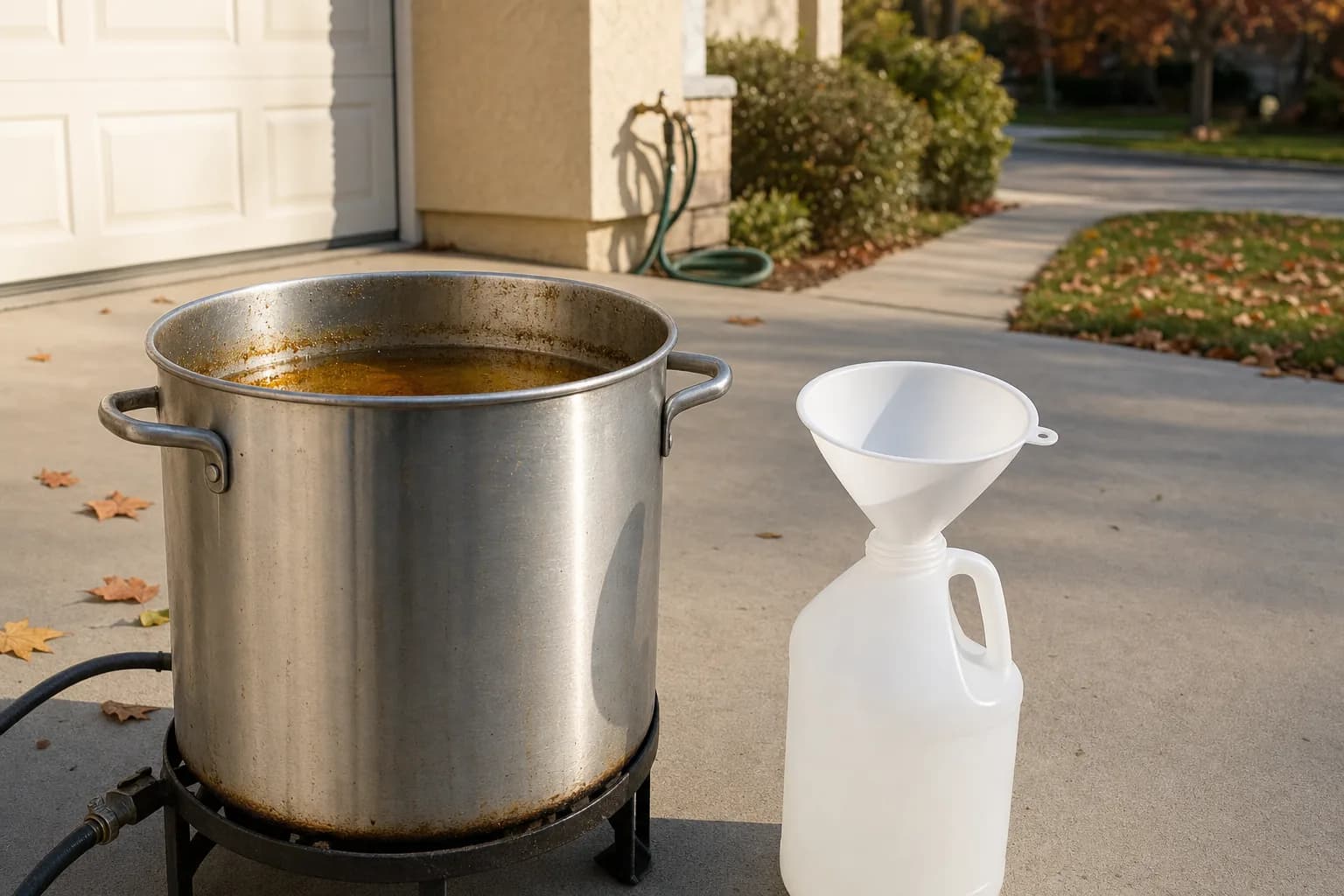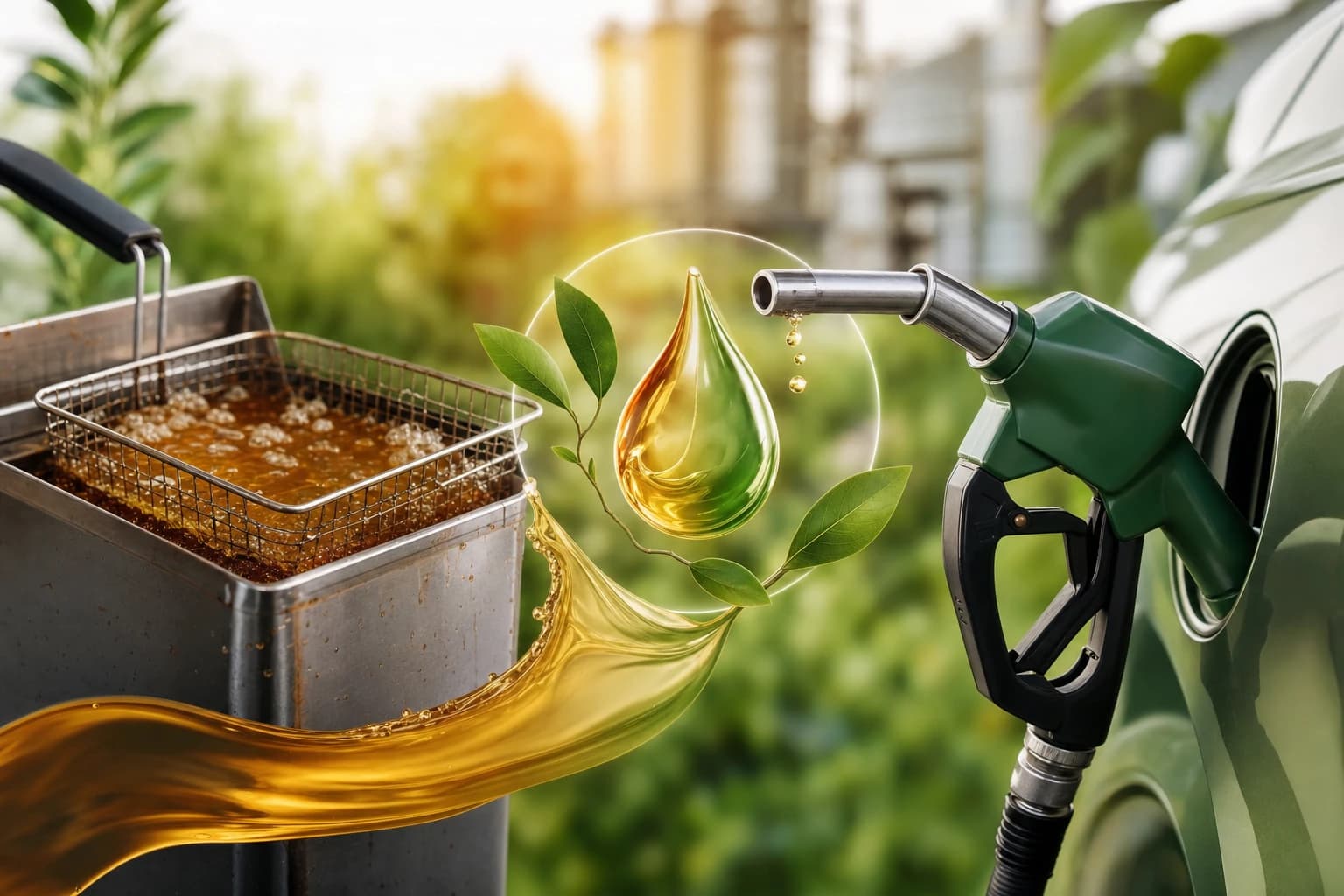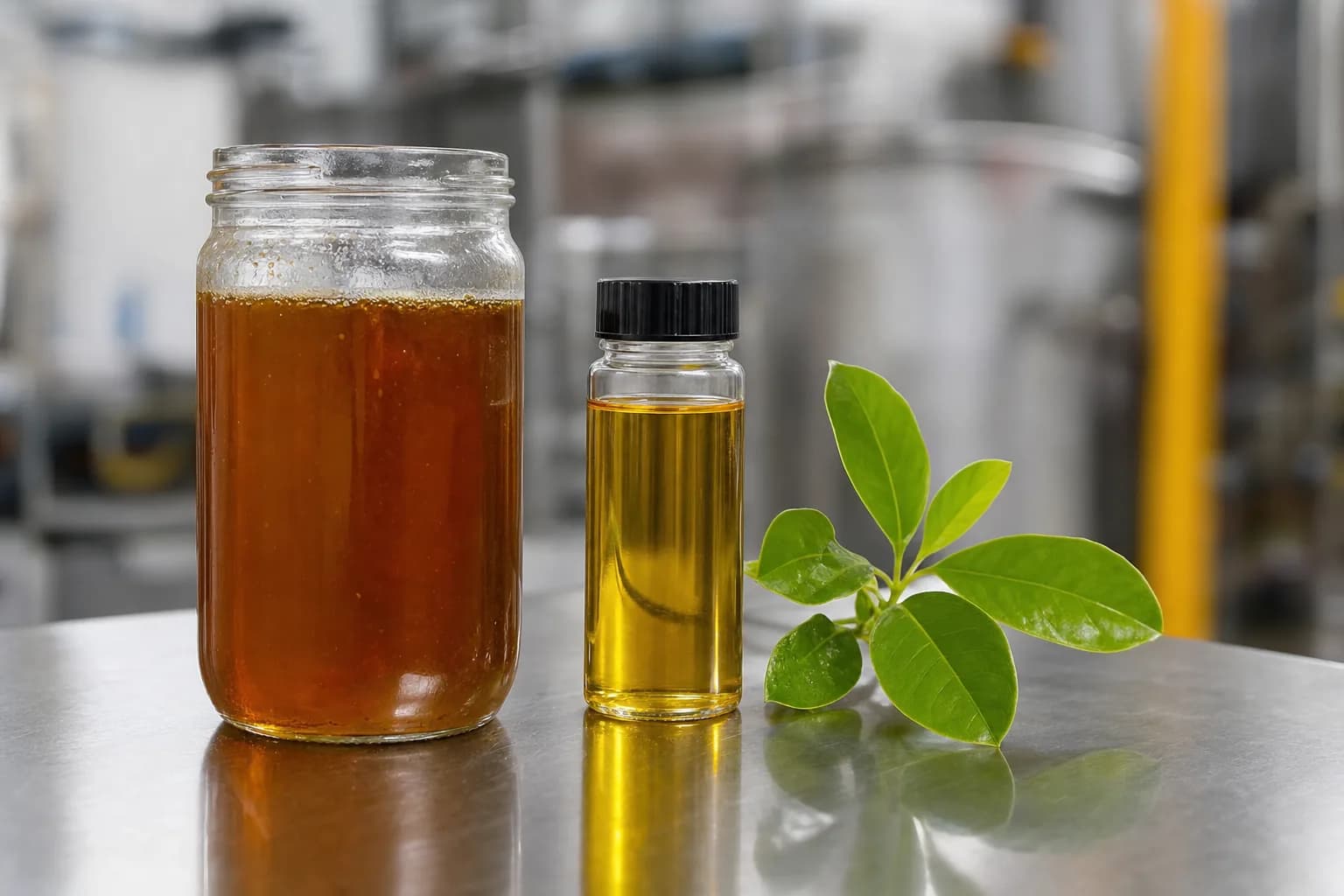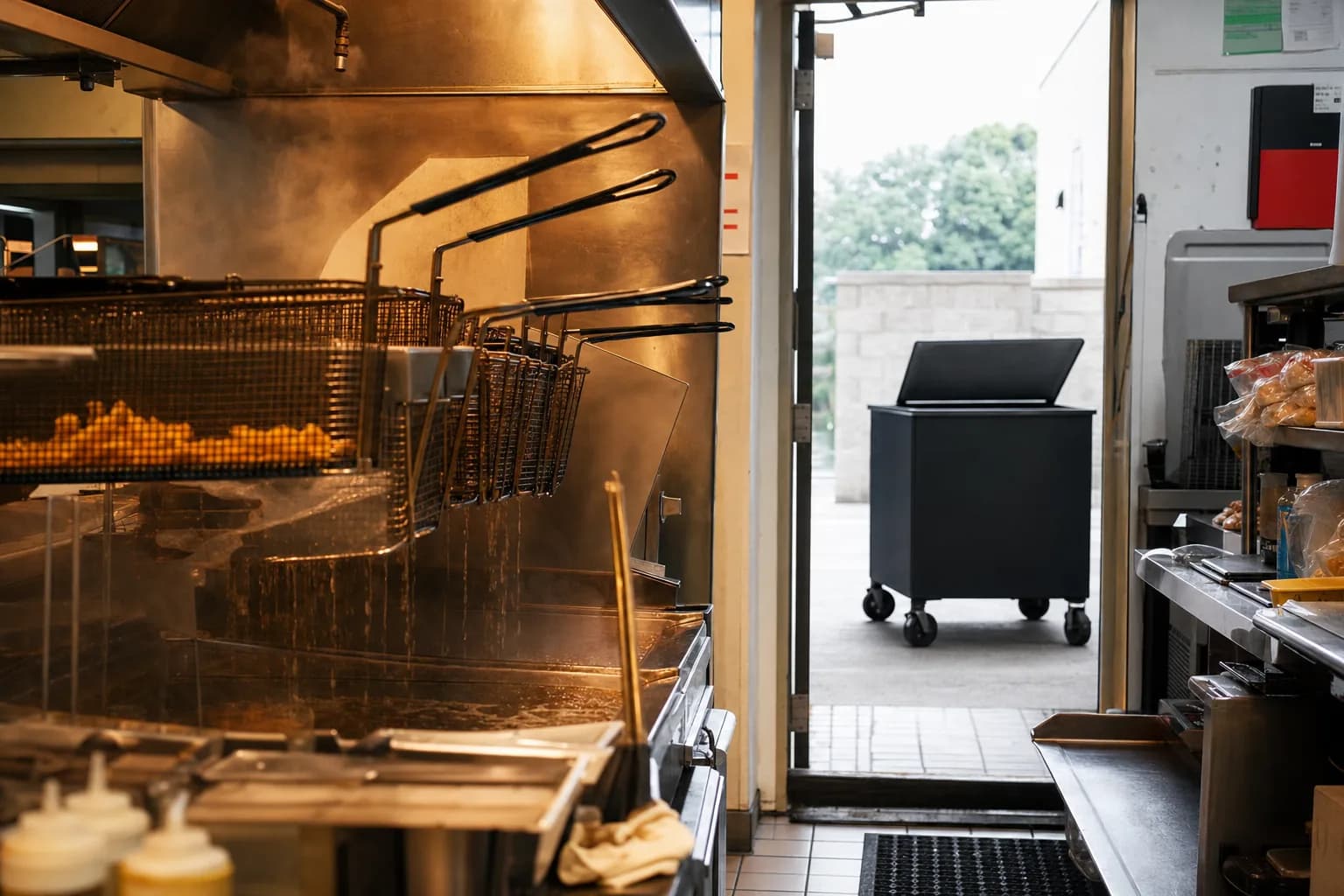
What Are the Benefits of Recycling Used Cooking Oil?
The benefits of recycling used cooking oil: lower disposal cost, CDFA compliance, fewer sewer backups, and turning waste fryer oil into clean renewable fuel.
Browse all articles about recycling & sustainability.

The benefits of recycling used cooking oil: lower disposal cost, CDFA compliance, fewer sewer backups, and turning waste fryer oil into clean renewable fuel.

The environmental benefits of recycling cooking oil: up to 80% lower lifecycle carbon as biodiesel, renewable diesel, and SAF, plus cleaner sewers and zero landfill.
Our Recycling & Sustainability articles focus on practical guidance for restaurant owners and kitchen managers dealing with used cooking oil management and grease trap compliance. You will find step-by-step guides, regulatory breakdowns, checklists, and actionable tips based on current California rules and real-world industry experience. Every article is written to save you time and help you avoid common mistakes that can lead to fines, failed inspections, or service disruptions. Whether you are new to managing grease disposal or just want to stay current on changing requirements, this category has content tailored to your needs.
These articles give you the specific information you need to make better decisions about grease management at your restaurant. Instead of searching through dense regulatory documents or guessing at best practices, you get clear explanations written for busy foodservice operators. Topics range from day-to-day maintenance schedules to preparing for health inspections and understanding CDFA manifest rules. By following the recommendations in our Recycling & Sustainability guides, you can reduce the risk of costly violations, prevent kitchen emergencies, and ensure your grease handling procedures meet all California requirements without adding extra work to your plate.
Free service, scheduled on your terms, fully CDFA-compliant manifests included.