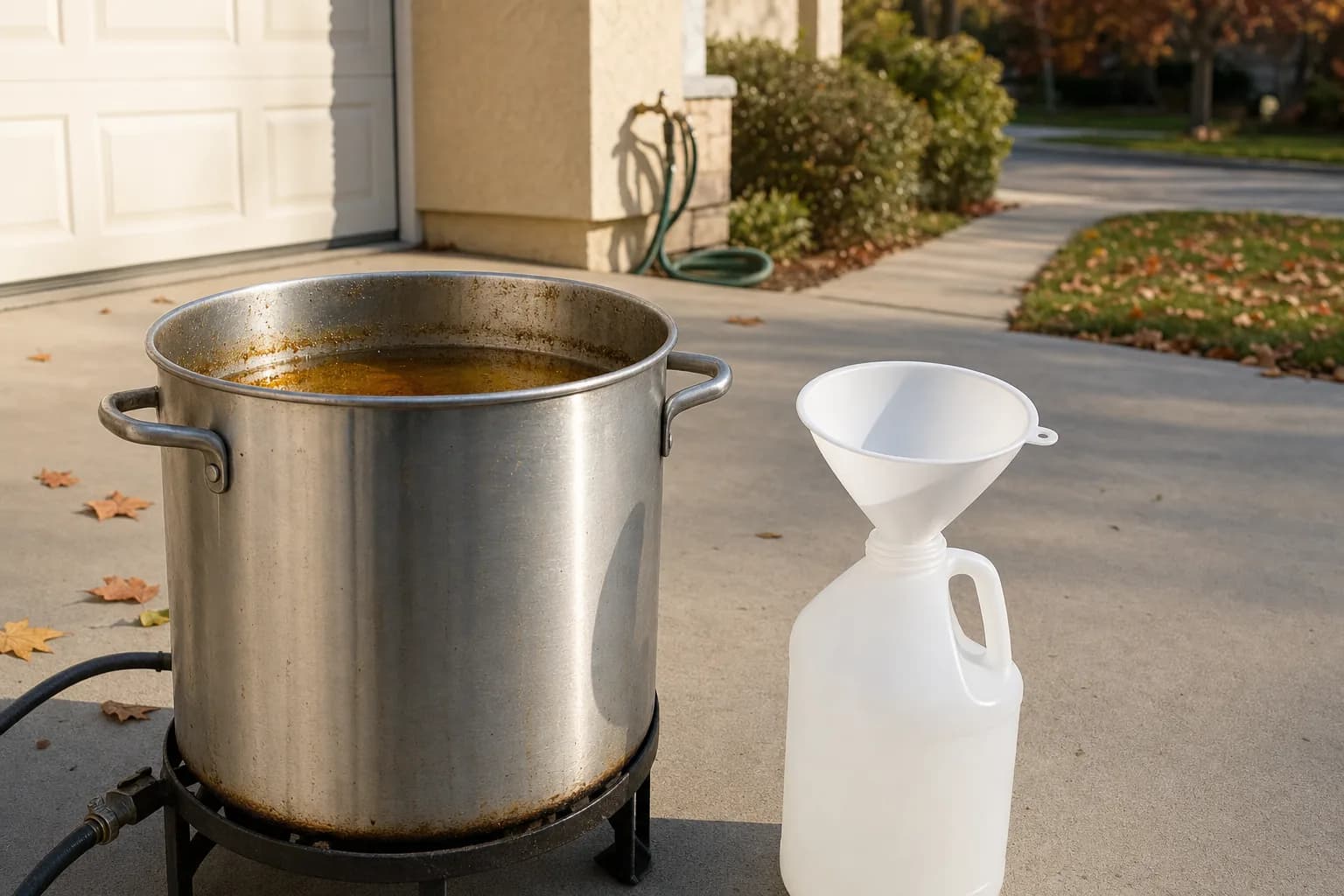

The short version: The day after Thanksgiving is the single busiest day of the year for plumbers, and grease is the culprit. Roto-Rooter sees service calls jump about 50 percent above a normal Friday, almost entirely from turkey-fryer oil and grease poured down drains the night before. The free fix is simple: never pour oil down any drain, and instead drop your cooled cooking oil at the free Oil Guyz Thanksgiving collection in Orange County or LA, where it gets recycled into clean fuel instead of wrecking a pipe.
Plumbers have a name for the Friday after Thanksgiving. It is not Black Friday. It is Brown Friday, and if you have ever spent a holiday weekend watching a sink refuse to drain, you already understand why.
Why "Brown Friday" Is the Busiest Day of the Year for Plumbers
Thanksgiving is a marathon of cooking, and the kitchen sink takes the hits. Mashed potato skins, gravy, butter, bacon fat, and the big one, turkey-fryer oil, all end up going somewhere. For a lot of households, that somewhere is the drain.
Here is what the numbers say. Roto-Rooter, the largest drain and sewer service company in the country, runs about 7,000 technicians and reports that incoming service calls spike roughly 50 percent above an average Friday the day after Thanksgiving. The whole four-day weekend runs around 21 percent busier than any other stretch of the year. That is not a coincidence of timing. It is grease, cooling and hardening inside pipes that were fine 24 hours earlier.
The mechanism is boring and brutal. Hot oil looks like a liquid going down the drain. It is not going to stay that way. Within a few feet of pipe it cools, congeals, and grabs onto the wall. Every greasy thing that follows sticks to it. Run the disposal with some celery and onion skins and you have given the clog its skeleton. By the time water stops draining, the fat has been building for hours, sometimes days.
The Costa Mesa Beach Closure: What Grease Does Once It Leaves Your House
If a clog only ruined your own evening, it would be an expensive nuisance. The bigger problem starts when grease makes it past your home and into the public sewer.
In 2025, a sewer line in Costa Mesa backed up from a blockage of roots and grease. The result was a sewage spill of roughly 4,000 gallons, enough to force an ocean water closure stretching from Huntington State Beach down to Newport Beach. Surfing, swimming, and diving were shut down along that coastline while crews recovered the spill and waited for water-quality tests to clear. Cooking grease from nearby drains was named as part of what choked the line.
That is the part most people never connect. The oil you rinse off a roasting pan does not disappear. It travels into a shared system, joins everyone else's grease, and builds into the hardened masses sewer crews call fatbergs. When one of those blocks a main line near the coast, the beach pays for it.
This is not a SoCal-only quirk. The EPA estimates that grease causes roughly half of the 400,000 sewer blockages that happen across the country every year, and those blockages drive tens of thousands of sanitary sewer overflows annually. Cities spend billions clearing it. New York City alone has reported spending around 18 to 19 million dollars a year fighting greasy clogs. Every one of those dollars traces back to oil that went down a drain instead of into a container.
What It Actually Costs You
Whether you run a kitchen for a living or just hosted 14 people for dinner, a grease clog hits the wallet in a predictable way. The table below breaks down what you are really risking when oil goes down the drain.
Here is the rough cost of doing it the wrong way, for both homes and restaurants:
| Scenario | Typical cost | What you also lose |
|---|---|---|
| Plumber clears a clogged drain (first hour) | $200 to $400 | A holiday evening, and your patience |
| Hydro-jetting a blocked main line | $770 or more | Possible repeat visits if grease keeps coming |
| Restaurant kitchen backs up during service | Plumbing bill plus lost revenue | A forced closure, refunds, reputation |
| Improper grease discharge (commercial) | Fines, up to shutdown | Regulatory scrutiny going forward |
| Cooled oil dropped at a free recycler | $0 | Nothing |
The contrast at the bottom of that table is the whole point. Doing it right is free. Doing it wrong is the only version that costs money.
For Restaurants: Surviving the Holiday Fryer-Oil Surge
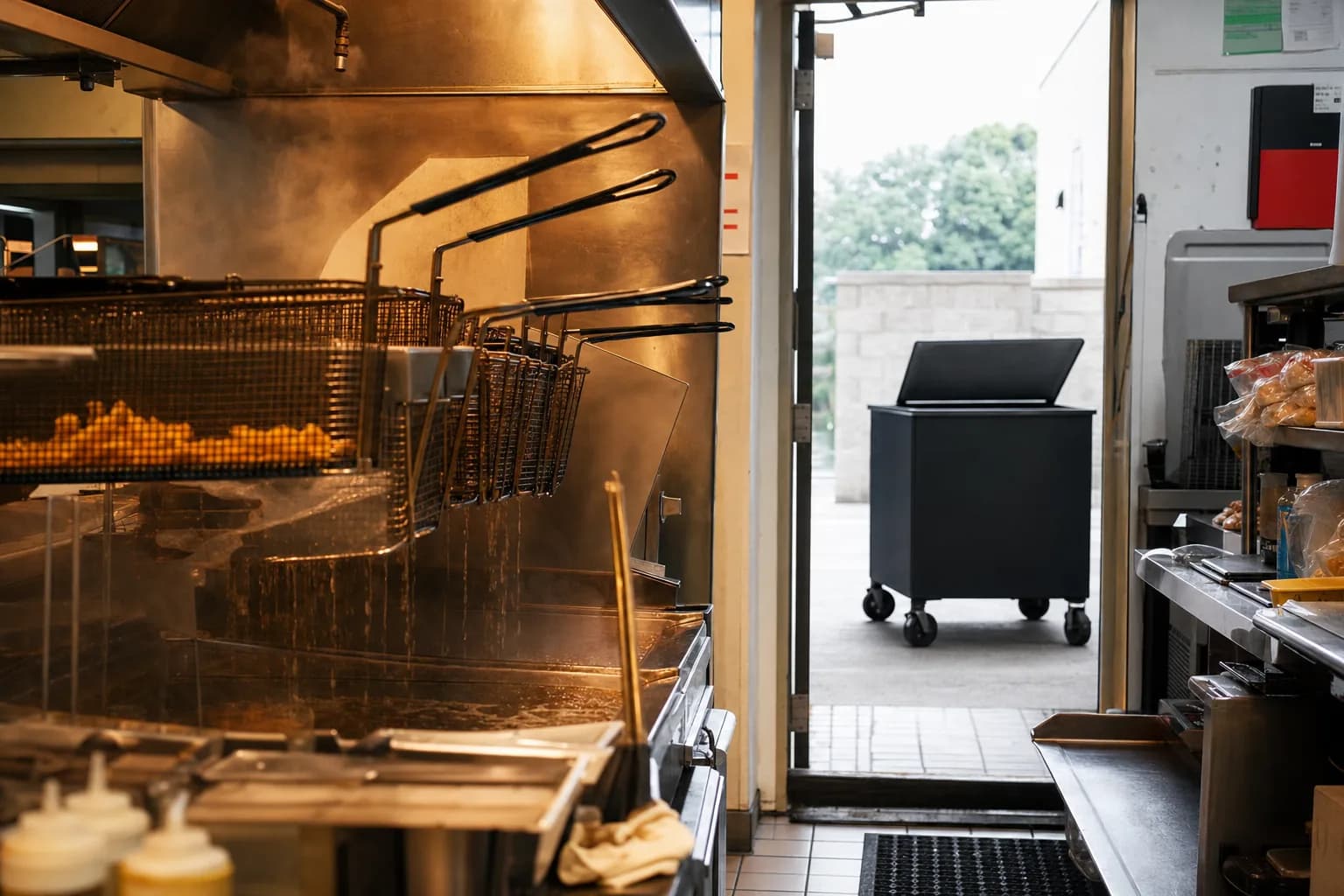
If you operate a kitchen in Southern California, Thanksgiving through New Year's is your highest-volume, highest-fryer stretch of the year. More frying means more spent oil, faster, and a grease trap that fills quicker than your normal schedule planned for.
Here is how to get through the surge without a backed-up kitchen or a compliance problem:
- Schedule an extra pickup before the rush, not after. Do not wait until the drum is overflowing the week of Thanksgiving. Get spent oil out ahead of your busiest days so you have empty capacity when volume peaks.
- Never let staff pour oil or fond down the floor drain. Under pressure, a line cook will reach for the nearest drain. One clear rule, posted at the station, prevents the most expensive mistake in the building.
- Keep the grease trap on a real maintenance cadence. A trap that is past due during a holiday surge is how a slow drain becomes a closed kitchen.
- Store used oil in a sealed, labeled container away from the cook line until pickup, so nobody is tempted to dump it.
- Keep your manifests. Documented, licensed recycling is your proof of proper disposal if anyone ever asks.
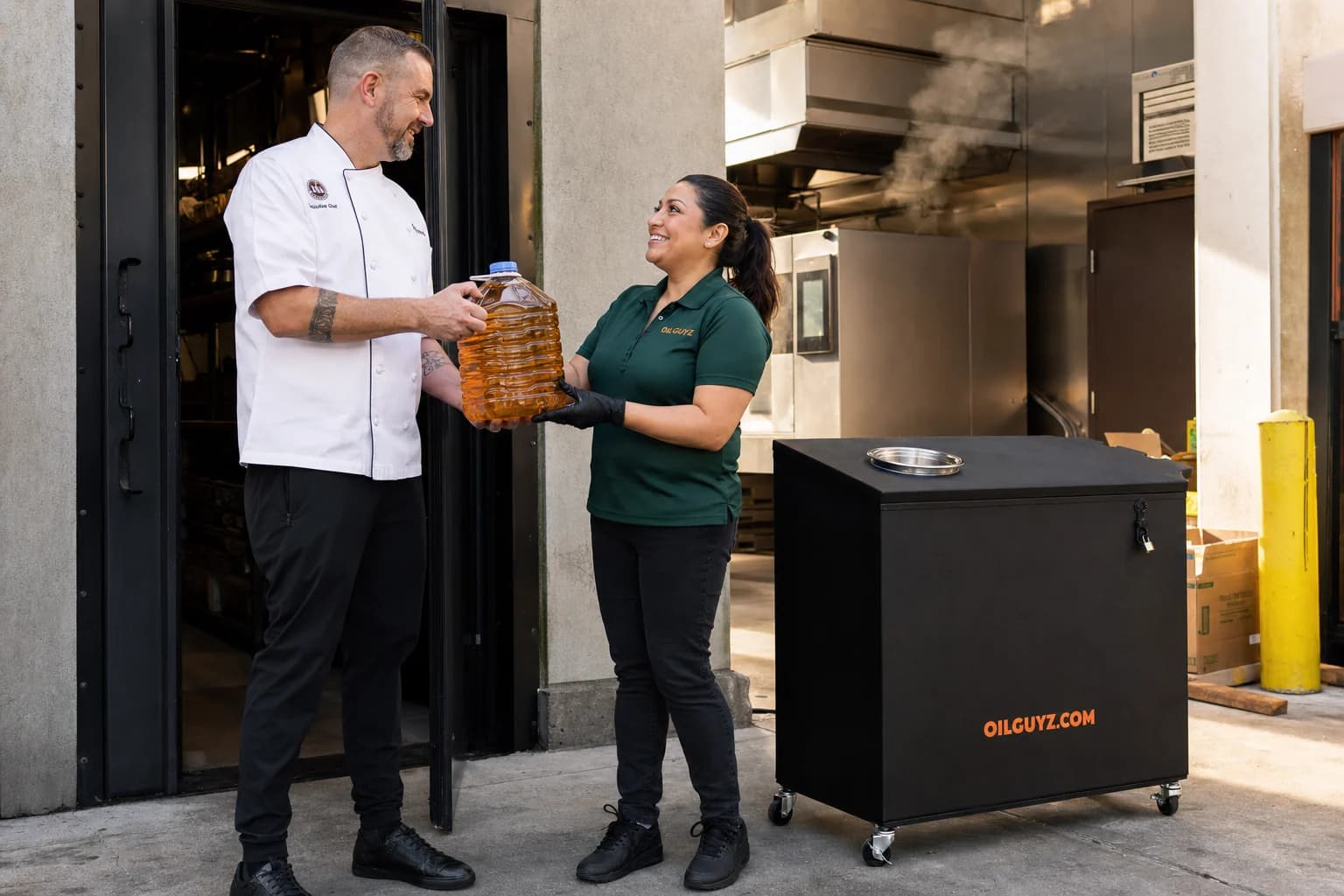
The good news is that the prevention is free. Oil Guyz collects used cooking oil from restaurants across Southern California at no charge, year round, and pickups are performed by CDFA-registered transporters. You get reliable pickups, clean documentation, and one less thing that can blow up during your busiest week. We can also add a temporary extra collection for the holiday surge so your storage never overflows.
For Residents: The Free Thanksgiving Drop-Off
Most households that fry a turkey do it once, maybe twice a year, and then face the same question: what do I do with three gallons of cooled oil? The wrong answers are pouring it down the drain, pouring it in the yard, or pouring it in the storm gutter, which sends it straight to the same sewer and the same beach.
The right answer is easy, and this year it is free and close by.
Oil Guyz is running a free community cooking-oil drop-off:
- Orange County: 506 Fee Ana St, Placentia
- Los Angeles County: 4570 Ardine St, Gate C, South Gate
- Open: November 27 through December 27
- Hours: Monday to Saturday, 9 a.m. to 4 p.m.
- Cost: Free, self-serve
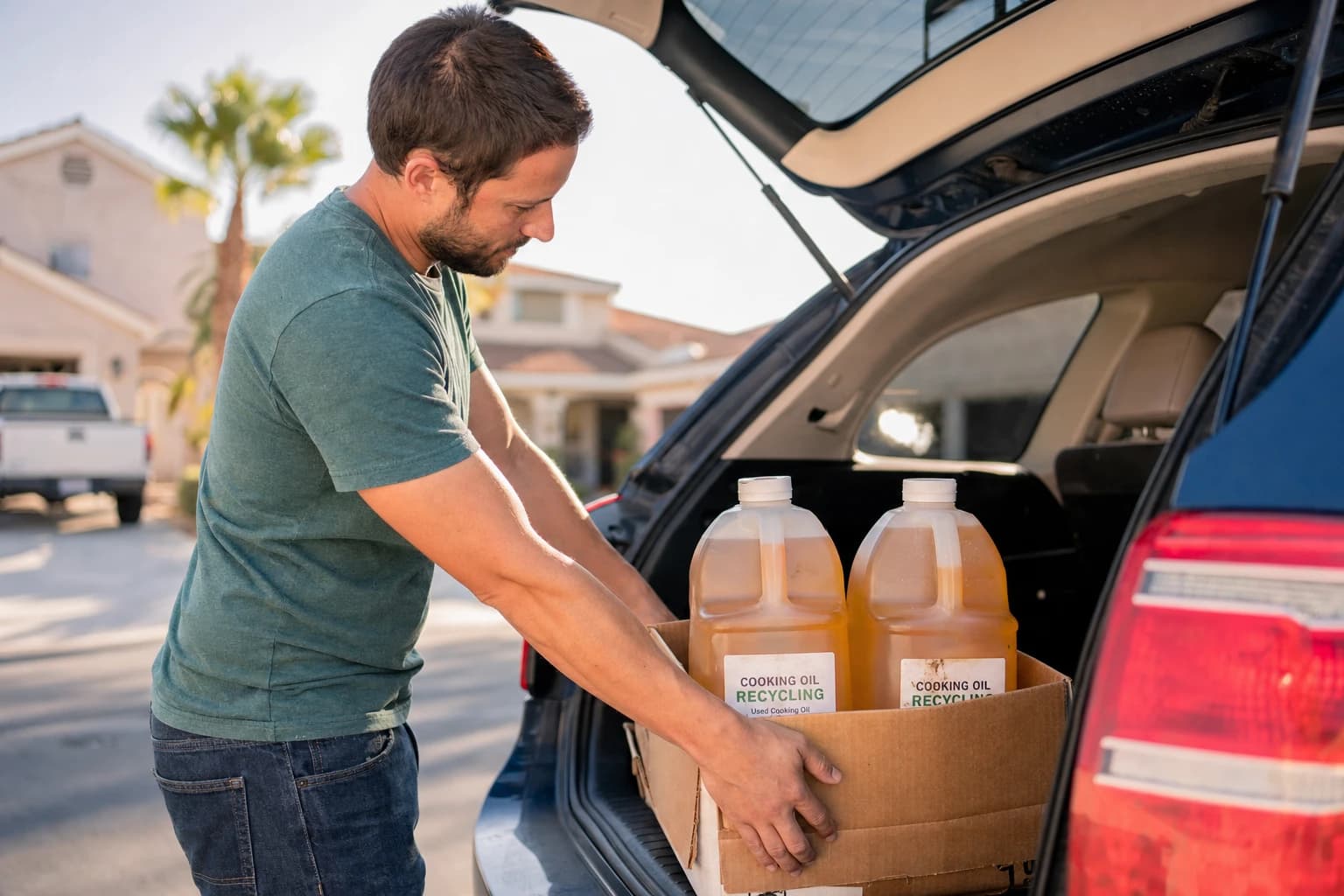
The process takes two minutes. Let your oil cool completely, funnel it into a sealable jug, drive to whichever location is closer, and pour it into the marked bin. That is the entire job. We handle everything after that. For the full step-by-step on getting oil from fryer to container safely, see our guide on how to dispose of used cooking oil safely. Everything you need for the event itself, including a map, is at oilguyz.com/thanksgiving.
Where Your Oil Actually Goes
Dropping oil at a recycler is not just keeping it out of a pipe. It is the start of a second life for the oil.
Collected used cooking oil gets filtered and sent to the refinery, where it becomes feedstock for renewable diesel and biodiesel. This is not a feel-good footnote. Under California's Low Carbon Fuel Standard, renewable diesel made from used cooking oil cuts carbon intensity by roughly 65 percent on average compared to petroleum diesel, and used-oil feedstock often lands even higher than that. The same jug that would have helped close a beach instead helps power trucks with a cleaner fuel.
That is the quiet upside of doing this right. You are not just avoiding a clog. You are turning a waste product into something genuinely useful. If you want the full picture on why this matters, we go deeper in our breakdown of the benefits of recycling used cooking oil.
The Bottom Line
Brown Friday is predictable, which means it is preventable. The day after Thanksgiving wrecks drains across OC and LA for one reason: oil goes down pipes it was never meant to enter. Keep it out, and the clog never forms, the beach stays open, and the oil becomes fuel instead of a fatberg.
Residents: Bring your cooled turkey-fryer oil to the free Oil Guyz drop-off in Placentia or South Gate, open November 27 through December 27, Monday to Saturday, 9 a.m. to 4 p.m. Full details at oilguyz.com/thanksgiving.
Restaurants: Get free, CDFA-registered used cooking oil pickup year round, plus an extra collection scheduled for the holiday surge. Call (714) 880-4788 and skip Brown Friday entirely this year.