
Restaurants cannot pour cooking oil down the drain. Used cooking oil cools and hardens inside the pipes, and the buildup blocks the sewer. Local sewer rules ban it, and inspectors check for it. Put the oil in a closed bin and have a registered transporter pick it up. This post is for California kitchens.
What happens when cooking oil goes down the drain?
Hot oil runs down the pipe like water. Then it cools and turns solid. It sticks to the pipe walls and mixes with other waste. The clog grows over time.
The San Francisco Public Utilities Commission says fats, oils, and grease stick to the sides of pipes and build up until they block the flow. Giant sewer clogs like this are called fatbergs. Sacramento says they cause sewer backups in neighborhoods.
EPA reports that grease from restaurants, homes, and industry is the most common cause of reported sewer blockages, at 47%. A backup can spill sewage into homes, streets, and storm drains.
Does a grease trap make it okay to pour cooking oil down the drain?
No. A grease trap catches the greasy film that rinses off plates and pans. It is not built for a fryer dump. Keep your trap clean so it keeps working.
Used fryer oil is a different stream. EPA calls it yellow grease: used cooking oil collected at the point of use in the kitchen. Collect it, and keep it out of every drain, including floor drains and mop sinks.
For the cost side of a violation, see California FOG violation fines.
What do city and sewer rules say about pouring oil down the drain?
Local sewer rules ban it. The permit for food businesses in San Francisco says that putting fats, oils, and grease into drains that lead to the sewer is prohibited. Sacramento's rules bar grease that causes a sheen, a buildup, or a block in the public sewer.
Federal rules point the same way. They bar solid or thick waste that can block a city sewer. Local agencies enforce this with permits and kitchen inspections.
Rules differ by city and sewer district. Call your own agency if you are unsure.
What should a restaurant do with used cooking oil instead?
Collect it and recycle it. Here is the short version:
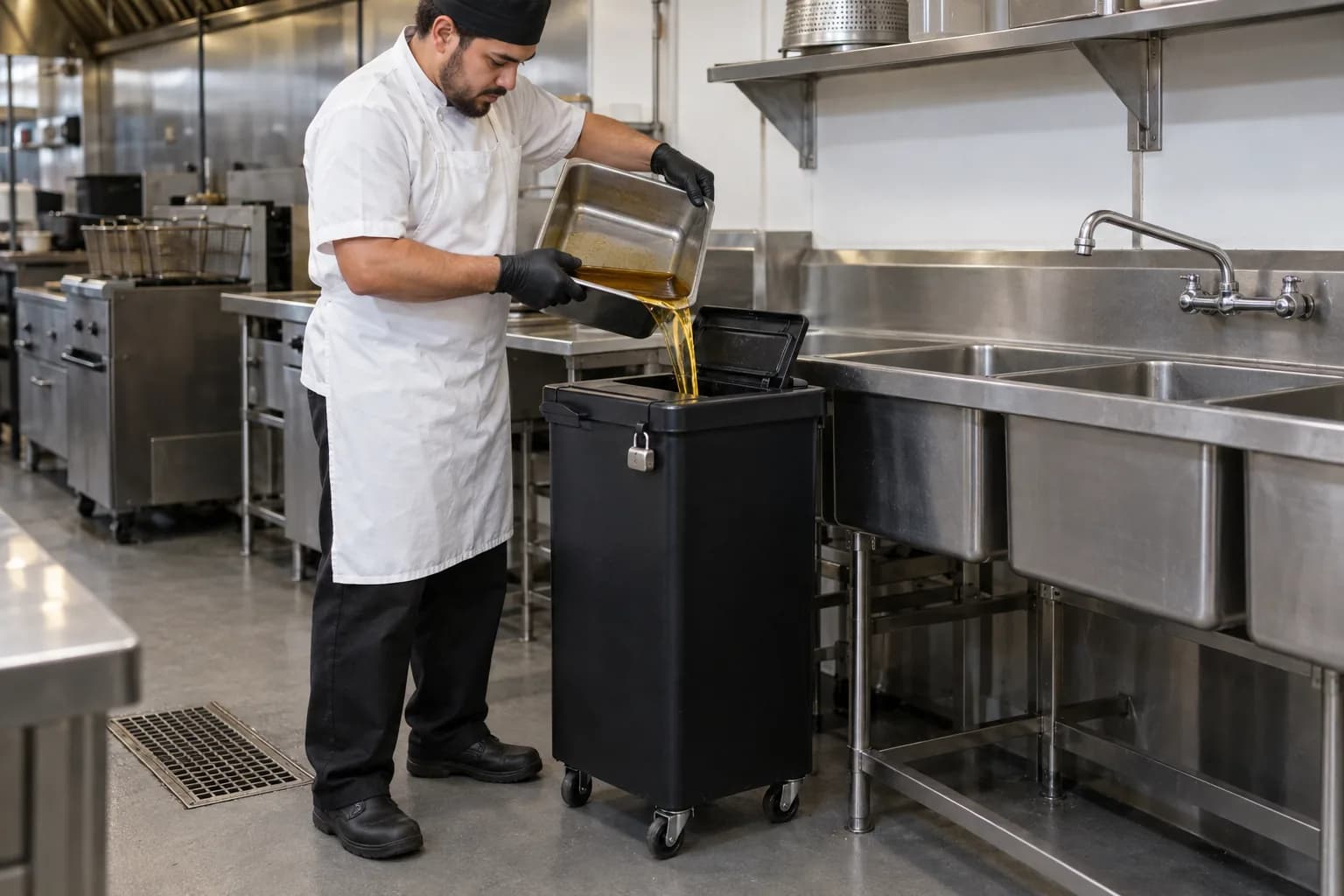
- Let fryer oil cool before you move it.
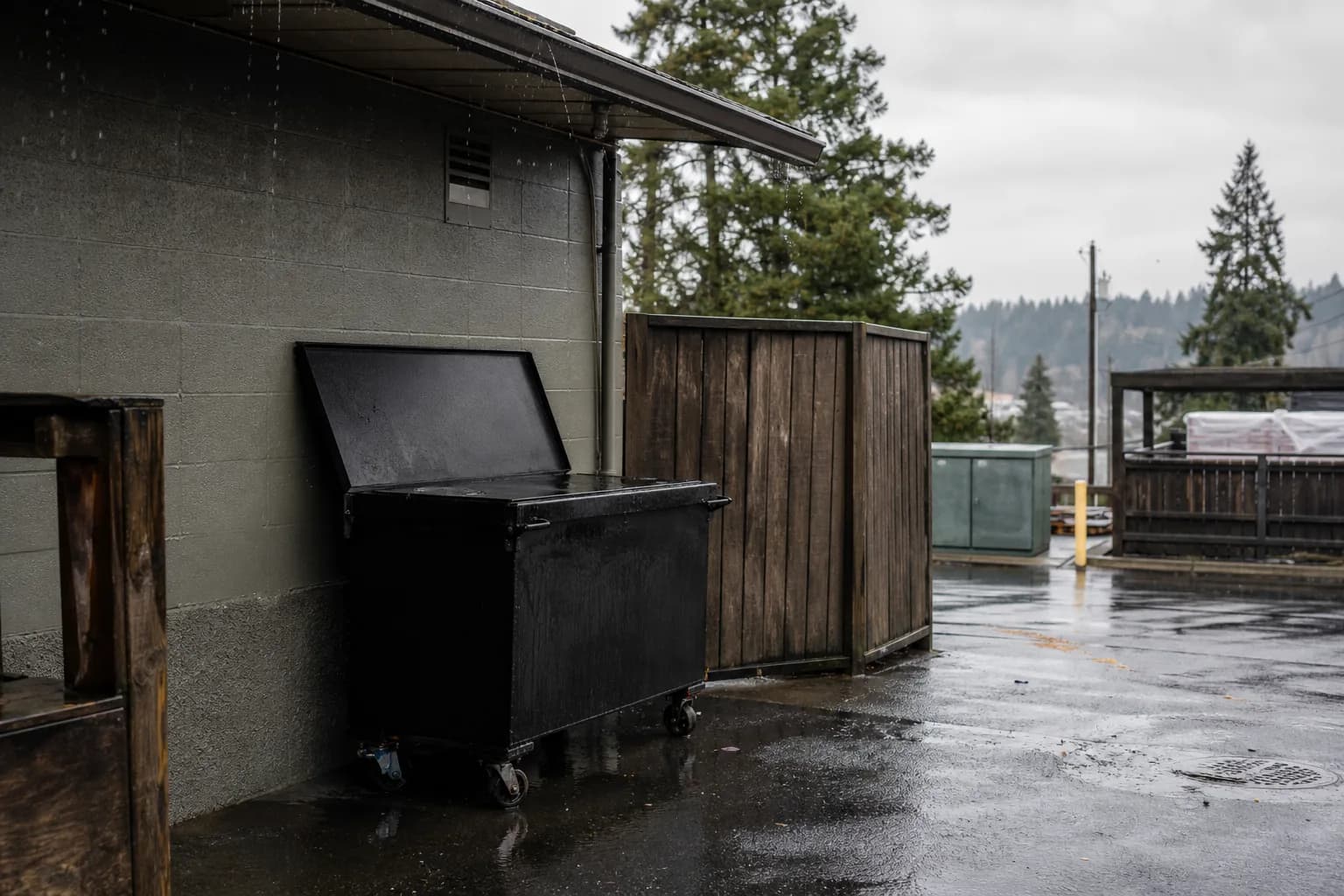
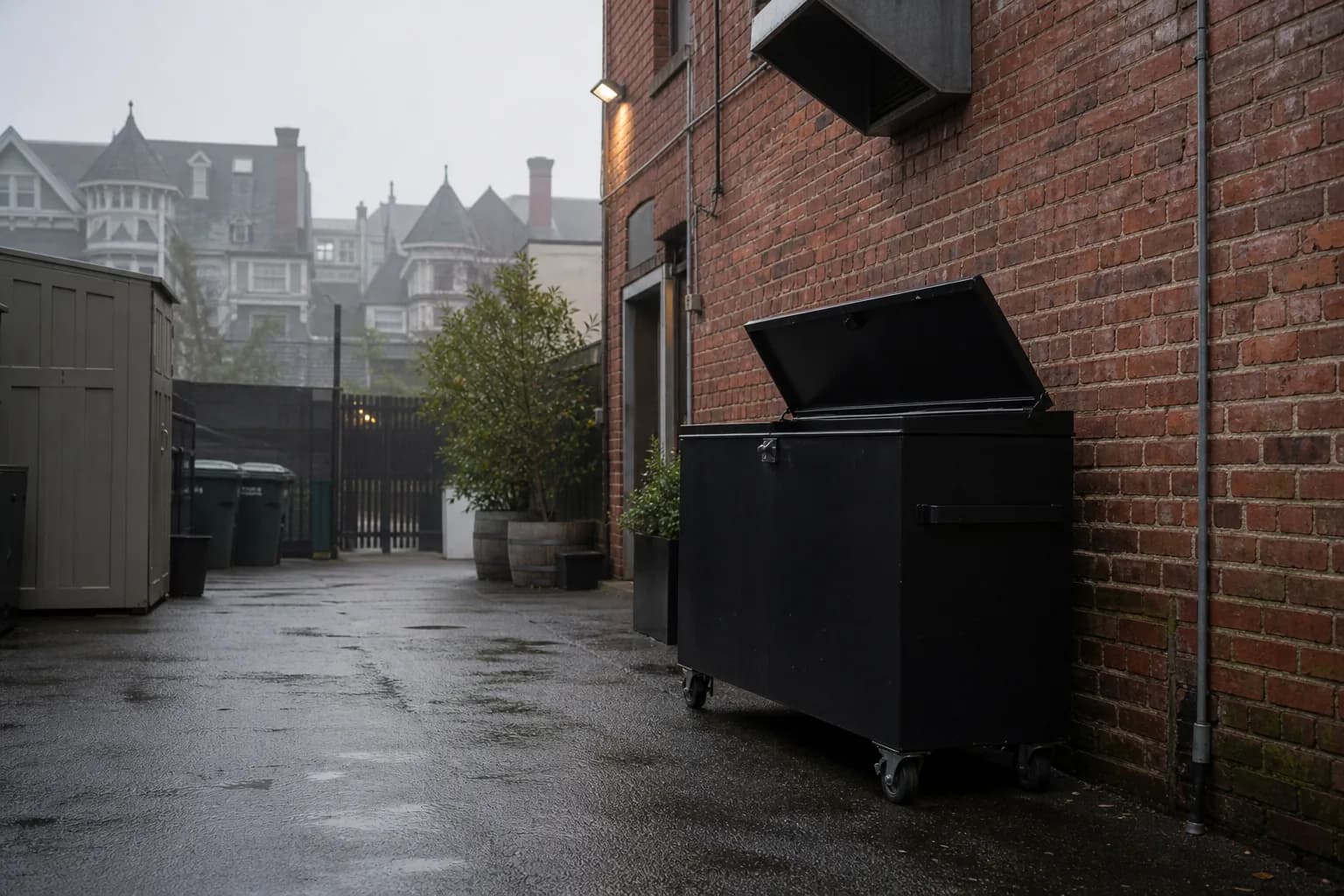
- Pour or pump it into a closed, locked collection bin.
- Wipe food off pans and plates into the trash before you wash them.
- Use a transporter that is on the CDFA registered list.
- Keep the manifest from each pickup.
Oil collected this way becomes feedstock for renewable diesel and biodiesel. More detail is in our guide to fryer oil disposal for commercial kitchens.
How does Oil Guyz handle used cooking oil?
Oil Guyz offers free used cooking oil pickup for restaurants and commercial kitchens. We place a free locked bin sized to your kitchen and pump the oil in place. Each pickup is done by a transporter registered under the CDFA Inedible Kitchen Grease program, and the oil goes to a licensed renderer. You get a CDFA-compliant digital manifest after every pickup, with no fee and no contract. See free used cooking oil pickup or call (714) 880-4788.