
Cooking oil disposal in Tacoma and Pierce County is simplest to get right when you know the map: scheduled recycler pickup is the cooking oil disposal service built for restaurants, the household drop-off sites are for home cooks only, and every drain and dumpster is off limits. Oil Guyz picks up used cooking oil free across Tacoma, Puyallup, Lakewood, Gig Harbor, and University Place, with a locked bin and a digital service record on every visit. For free pickup anywhere in the county, call Oil Guyz at (714) 880-4788
Pierce County kitchens ask us the same disposal questions every week, and the honest answers sound different here than they do in states that keep grease hauler registries. Washington keeps it local. Here is the full options map for a Pierce County kitchen, what each route actually accepts, and the records that keep the whole arrangement inspection ready.
What are a Tacoma restaurant's used cooking oil disposal options?
A commercial kitchen in Pierce County has two legal destinations for used fryer oil and a long list of banned ones. The two that count: a recycler's collection container behind your own building, or a household drop-off site if, and only if, the oil came from someone's home kitchen.
Route one is scheduled pickup, and it is the one built for restaurant volume. A recycler places a collection container at your kitchen, empties it on a cadence matched to your fryers, and leaves a service record behind each time. It costs nothing, because the oil itself funds the route as renewable fuel feedstock. Our free used cooking oil pickup page covers what the standard arrangement includes, and the used cooking oil pickup in Tacoma page maps the local coverage, from Lakewood and University Place out to the Gig Harbor side of the Narrows.
Route two is the residential drop-off lane at the county's two household drop-off sites. It is real, it takes cooking oil, and it is not for businesses. The next section runs through why.
Everything else violates somebody's code. Tacoma Environmental Services runs the city's FOG program and reports that nearly half of the city's sewer blockages come from improperly handled fats, oils, and grease, which is why its guidance points kitchens toward lidded containers and a recycling route rather than any drain. The suburbs enforce the same principle through their own sewer codes, whether the pipe under your kitchen belongs to Puyallup, to Gig Harbor, or to the county.
Can you take used cooking oil to a Pierce County transfer station?
Only if it came from your house. Pierce County's household drop-off program takes cooking oil at two locations, the Tacoma Recovery & Transfer Center at 3510 S. Mullen Street and the Hidden Valley Transfer Station on Meridian East in Puyallup, and the county lists it with a five gallon cap. Both serve households. Hidden Valley's operator states it flatly: no waste generated by businesses will be accepted.
Even without the gate policy, the arithmetic disqualifies the drop-off lane for a working kitchen. One fryer changed on a normal schedule produces several times the five gallon cap in a month, so a fry-heavy menu would need a parade of trips just to keep up. And a drop-off leaves nothing in your file. No date, no gallons, no destination, none of the documentation your sewer program expects a food service establishment to produce when asked.
Where the sites do earn their keep is at home. If you fry in your own kitchen in Lakewood or University Place, the residential lane is exactly where that oil belongs. The Mullen Street facility runs Friday through Monday, 8 a.m. to 5:30 p.m., and the household visit is free.
Does Washington license cooking oil haulers?
No. There is no state license for collecting used cooking oil in Washington, no registry to look a company up in, and no state paper that follows the load. One piece of state law explains why the system is built this way.
The state's garbage hauling law steps around recycling on purpose. Collecting solid waste for compensation requires a certificate under chapter 81.77 RCW, but the statute excludes collecting recyclable materials from a commercial generator and delivering them to a recycler for use or reclamation. Cooking oil bound for rendering rides in that excluded lane.
So the vetting a registry would do falls to you, and three questions do most of the work. Where does the oil physically go? The answer should be a licensed renderer, named without hesitation, because the renderer is the destination that turns your waste into biodiesel and renewable diesel feedstock. What documents each pickup? You want a service record after every visit, not a vague annual statement. And who answers when a pickup gets missed? In a no-license state, a company's paper trail and its phone habits are its credentials.
What should the record of every pickup show?
Four things: the date, the gallons collected, who collected them, and where the oil went. A service record carrying those fields answers the one question a sewer or health inspector actually asks about fryer oil, which is whether it leaves your building through a legitimate recycling channel.
Recordkeeping is where the local FOG programs put their teeth, so this is not optional filing. Tacoma expects food service establishments to document how grease is handled. The suburban authorities write their own versions, and some get specific about cooking oil paperwork down to the fields on the log. We walk through those programs, from the county sewer division serving Lakewood and University Place to the city codes in Puyallup and Gig Harbor, in our Pierce County grease rules guide, so this post will not repeat the details.
Two habits keep the folder clean. File oil service records next to your interceptor pump-out receipts, because the two streams are separate but every inspector asks about both in the same visit. And favor digital records over a fading thermal slip, since retention expectations in this county run to years, not months. Every Oil Guyz pickup ends with a digital service record in your file, and past records stay retrievable when someone with a clipboard wants to see last spring's.
How do you keep stored oil clean in South Sound weather?
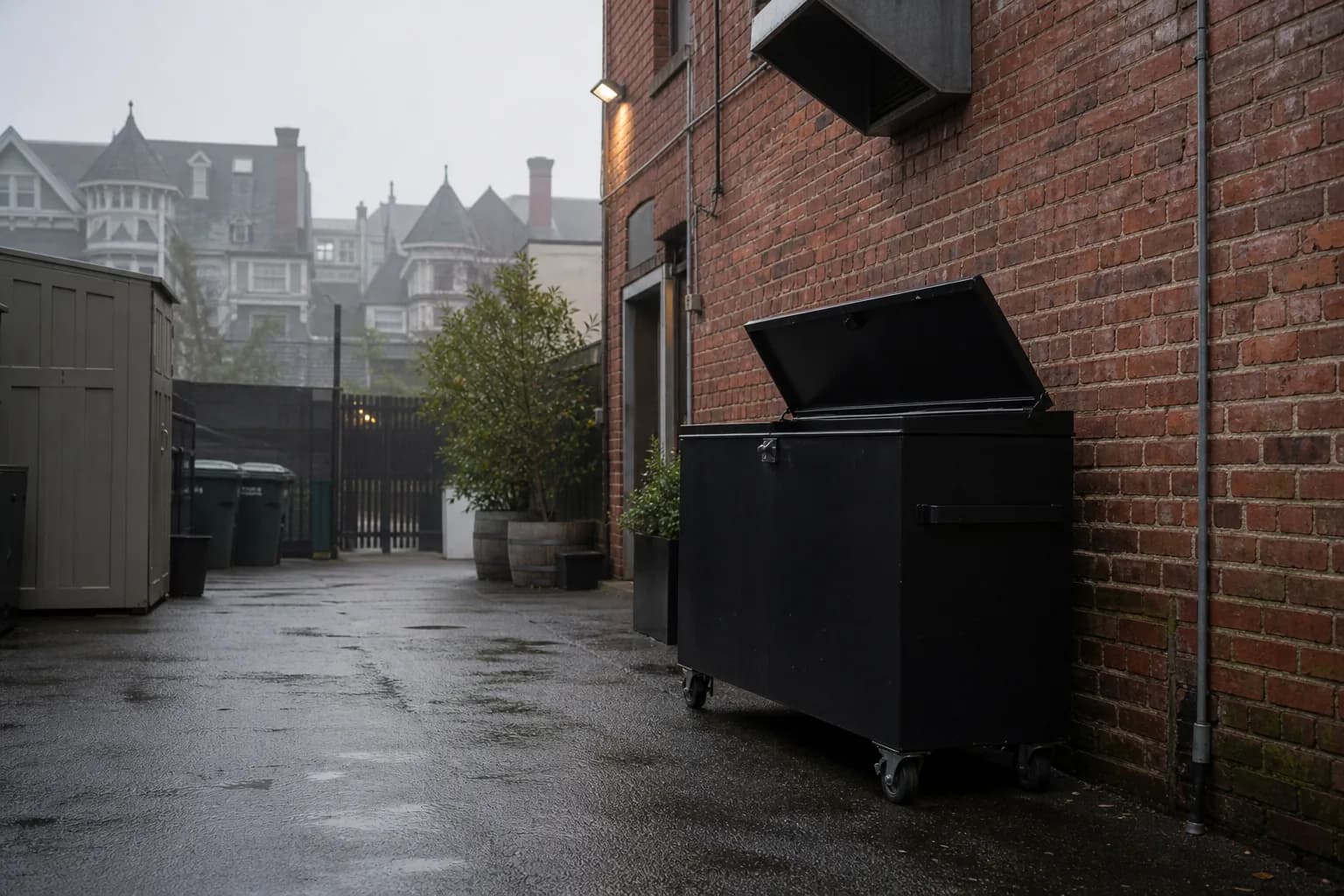
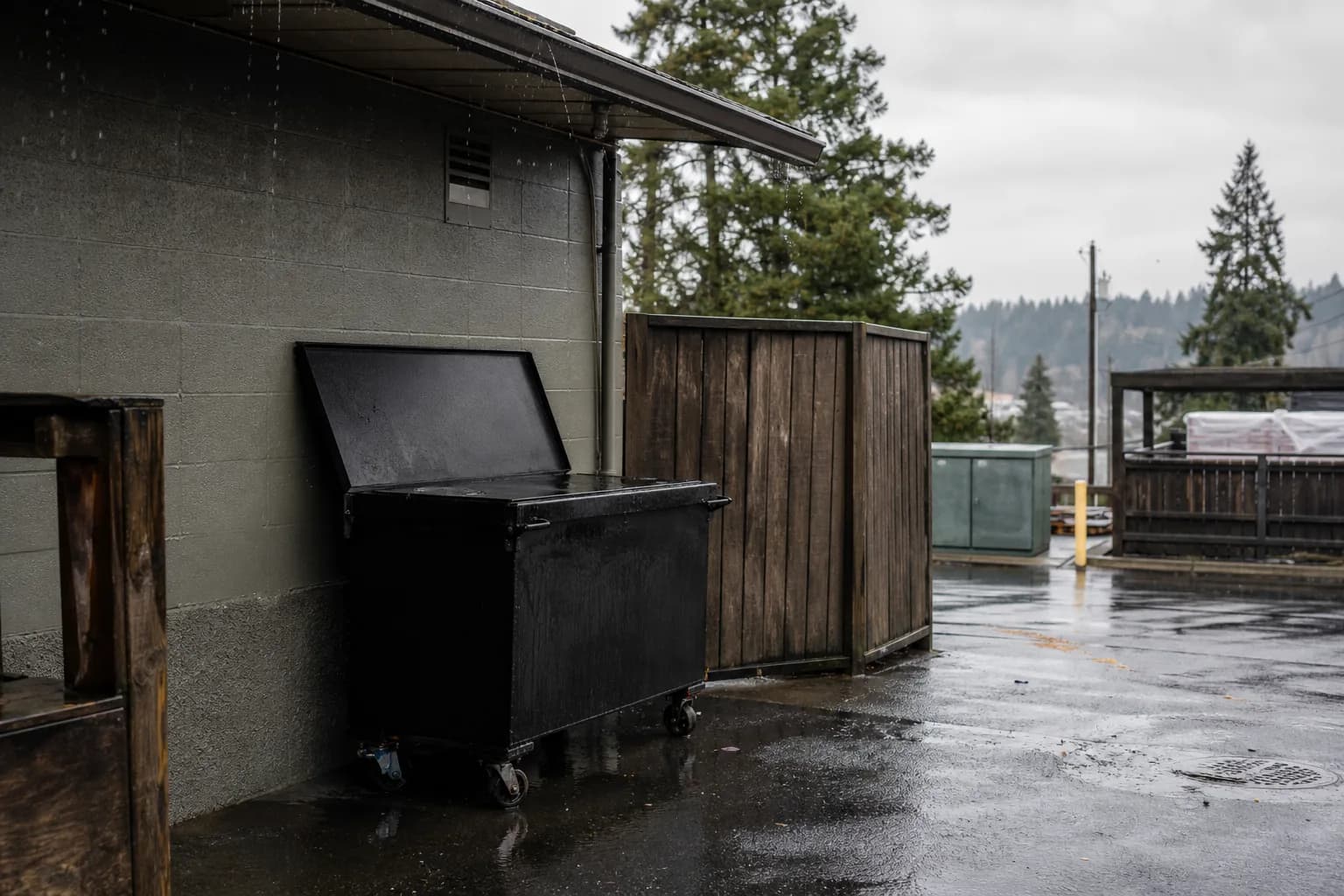
Start with the lid, because rain is the local contaminant. An open drum on an uncovered dock through a Tacoma winter takes on water week after week, and a watered-down load can be turned away instead of collected, which turns a routine pickup into a load you have to keep storing. Keep the container closed except while staff are pouring, and give it a covered spot if your dock has one.
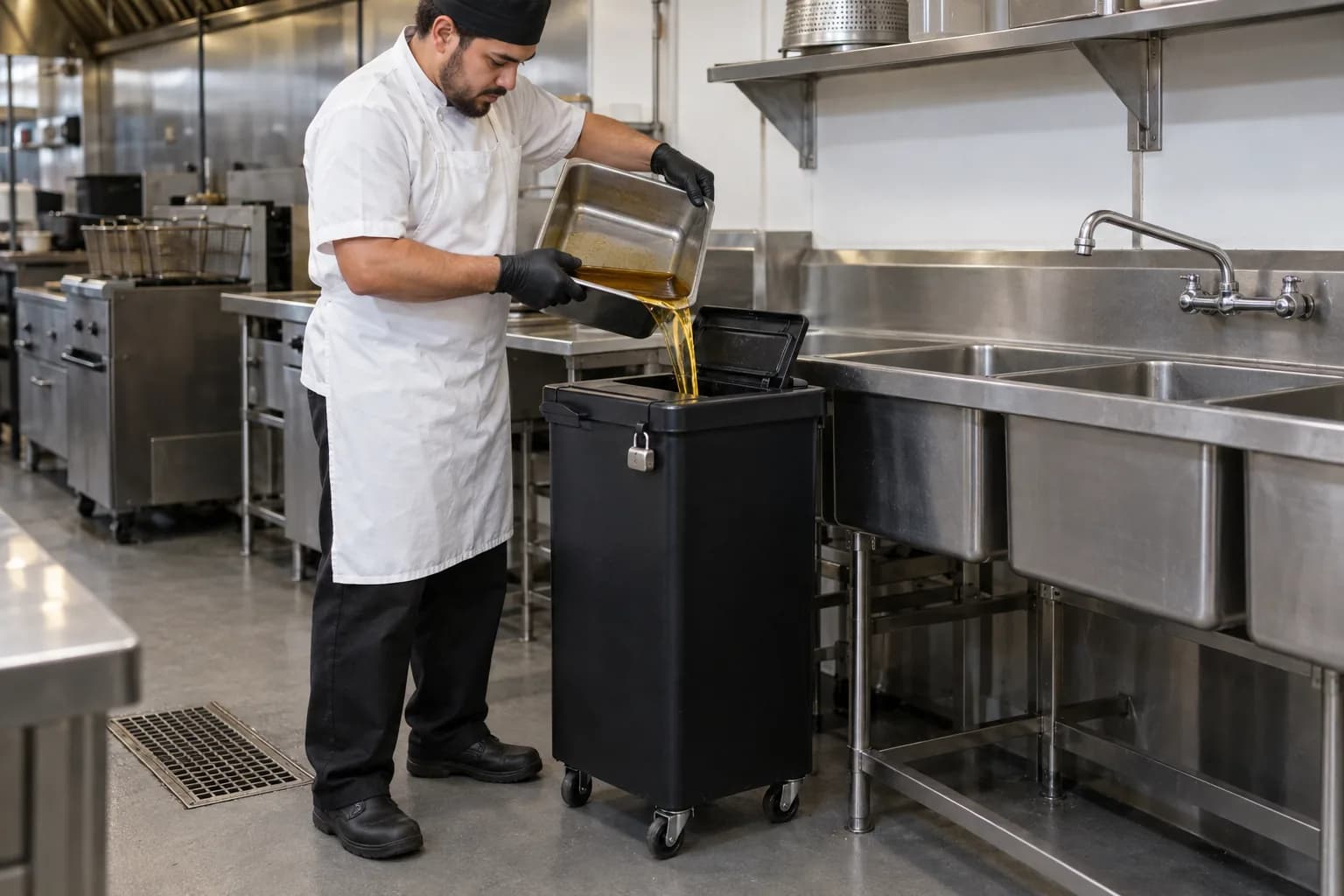
Placement matters almost as much. Set the container on solid pavement, away from the storm grate and off any slope that drains toward one, so a drip or a tipped caddy stays a mop job instead of a stormwater incident. Leave the path from the fryer to the container short and clear, because most oil spills happen in transit, not at the bin.
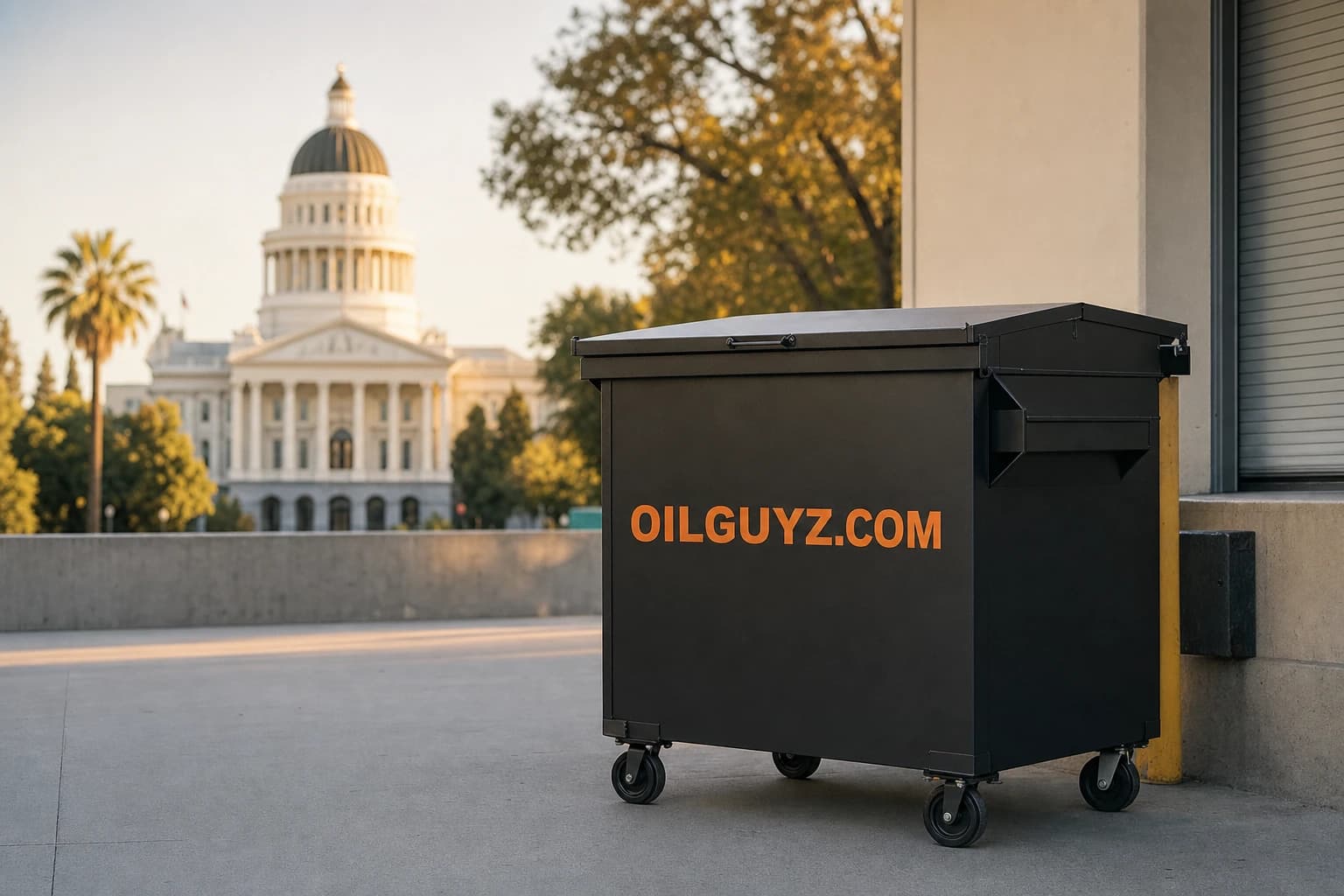
Lock it. Unsecured containers get hit here like anywhere else, and a theft leaves you with the spill, the cleanup, and a gap in your records. A locked bin closes that off, and ours comes free with the service.
Winter adds one more habit. Cold thickens oil, so let it cool after a fryer change, then pour before it sets up rather than after. Keep the pickup schedule steady through the slow months too. A full container in January is the hardest kind to deal with, and a cadence sized to your volume means you never meet one.
Getting a disposal route running anywhere in Pierce County
Whether the kitchen sits on Sixth Avenue in Tacoma, on Meridian in Puyallup, in a Lakewood strip mall, or across the bridge in Gig Harbor, setup is one phone call. We place a locked collection bin where you store oil today, at no charge and with no contract, the driver pumps it out in place on a schedule sized to your fryers, and a digital service record lands in your file after every visit, with the oil delivered to a licensed renderer and processed into renewable fuel feedstock. Call Oil Guyz at (714) 880-4788, tell us where the oil lives today, and pickup is usually running within the week, faster if a previous company left you staring at a full container and a dead phone line.