
Is used cooking oil hazardous waste? No. Riverside County says so plainly: "Cooking oil is not a hazardous waste, but it can cause damage to our environment." For California restaurants, the state regulates it as inedible kitchen grease, through CDFA. That means a registered hauler and a paper record. It does not mean a hazardous waste facility.
Is used cooking oil hazardous waste under California rules?
No. California's Department of Food and Agriculture (CDFA) calls restaurant oil inedible kitchen grease, "commonly called Used Cooking Oil." Its page says the Meat, Poultry and Egg Safety Branch regulates collection, transport and rendering of this grease in California. See the CDFA rendering program page.
That is a recycling chain. Your cooking oil goes from your kitchen to a renderer. It then becomes feedstock for fuels such as renewable diesel and biodiesel.
Used motor oil is a different material from cooking oil. It has its own program at CalRecycle.
Why do some hazardous waste centers take cooking oil?
Some county centers take cooking oil from households, and that confuses people. Taking cooking oil does not make it hazardous waste. Riverside County lists household hazardous waste centers as a place for residents to take cooking oil, and still says it is not a hazardous waste.
Hayward's facility says turkey fry oil and oil from holiday dishes can be dropped there. It asks for proof of Alameda County residency.
These centers are for homes. The San Pablo page on the West Contra Costa drop-off says, "Restaurants are not eligible for this free service." Orange County's centers accept household waste only.
Can a restaurant pour used cooking oil down the drain or in the trash?
No. Riverside County says cooking oil "should never be dumped down the kitchen sink drain or into the toilet bowl." Hayward says oil poured down a drain "clogs pipes and damages sewer systems." San Pablo warns that it can reach storm drains that flow to the Bay.
The trash is no better for a kitchen. Cooking oil poured into a dumpster leaves no record of where it went. The state system is built around a paper trail from your kitchen to the renderer. Your city may also have its own rules, so ask your local FOG program.
Who can haul used cooking oil in California?
Only a transporter registered with CDFA. The agency's rendering FAQ says, "It is unlawful for any person to engage in the transportation of IKG without being registered with the CDFA/MPESB."
Before the first pickup, look the company up on the CDFA transporter search. If you cannot find it, do not hand over the oil.
For more on what to check, read our guide to California used cooking oil disposal law.
What record proves the oil was handled right?
A manifest. Under 3 CCR 1180.24, a commercial transporter keeps a manifest for each collection. Your on-site person signs to confirm what was collected. The driver signs too, and the receiving facility signs when it gets the oil.
A copy of the collection part goes to you at pickup or within 45 calendar days. The transporter and the receiving facility each keep their parts for two years.
Keep your copy of the cooking oil manifest with your other kitchen records. Our post on CDFA manifest requirements for restaurants shows what each line means.
How does Oil Guyz handle it?
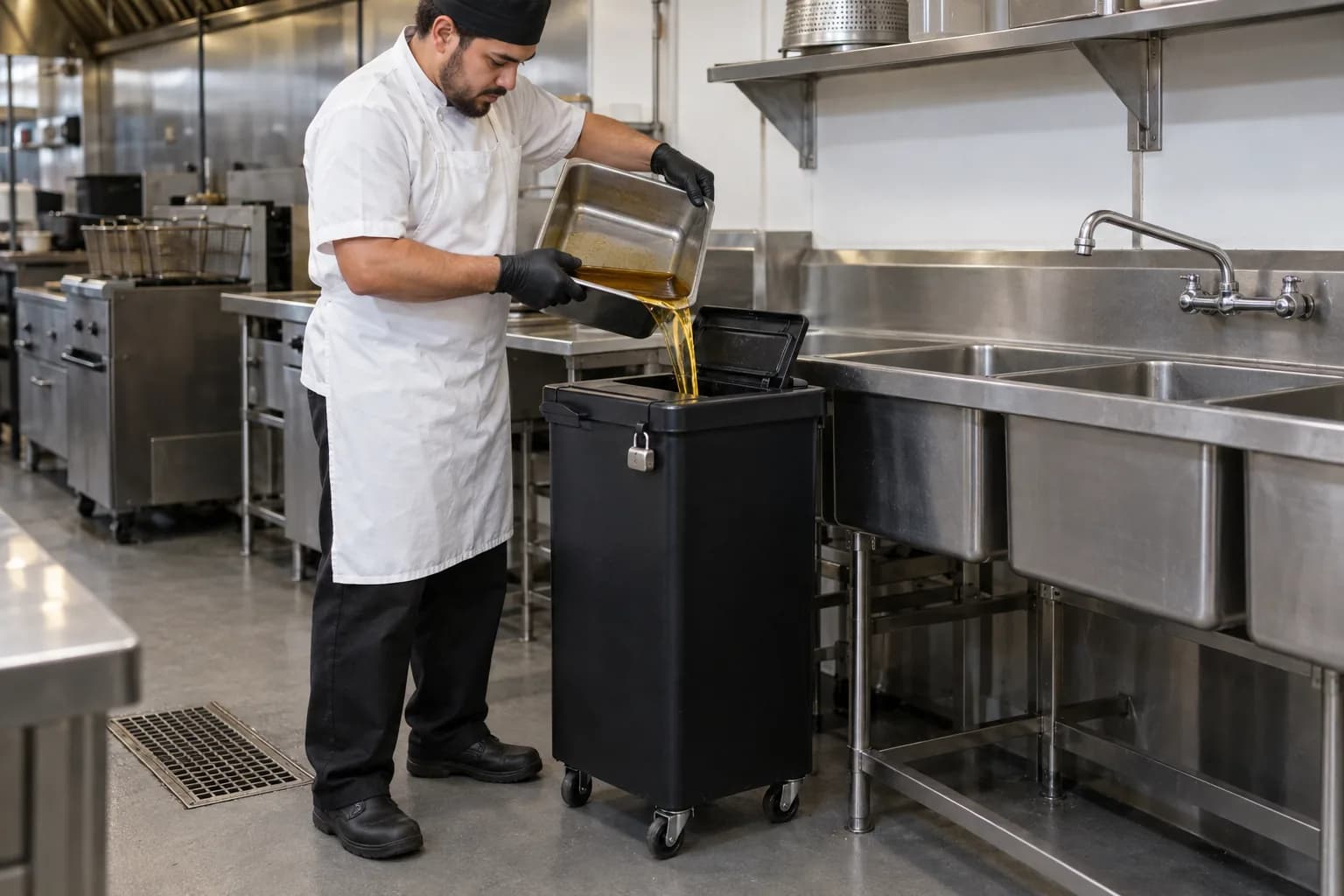
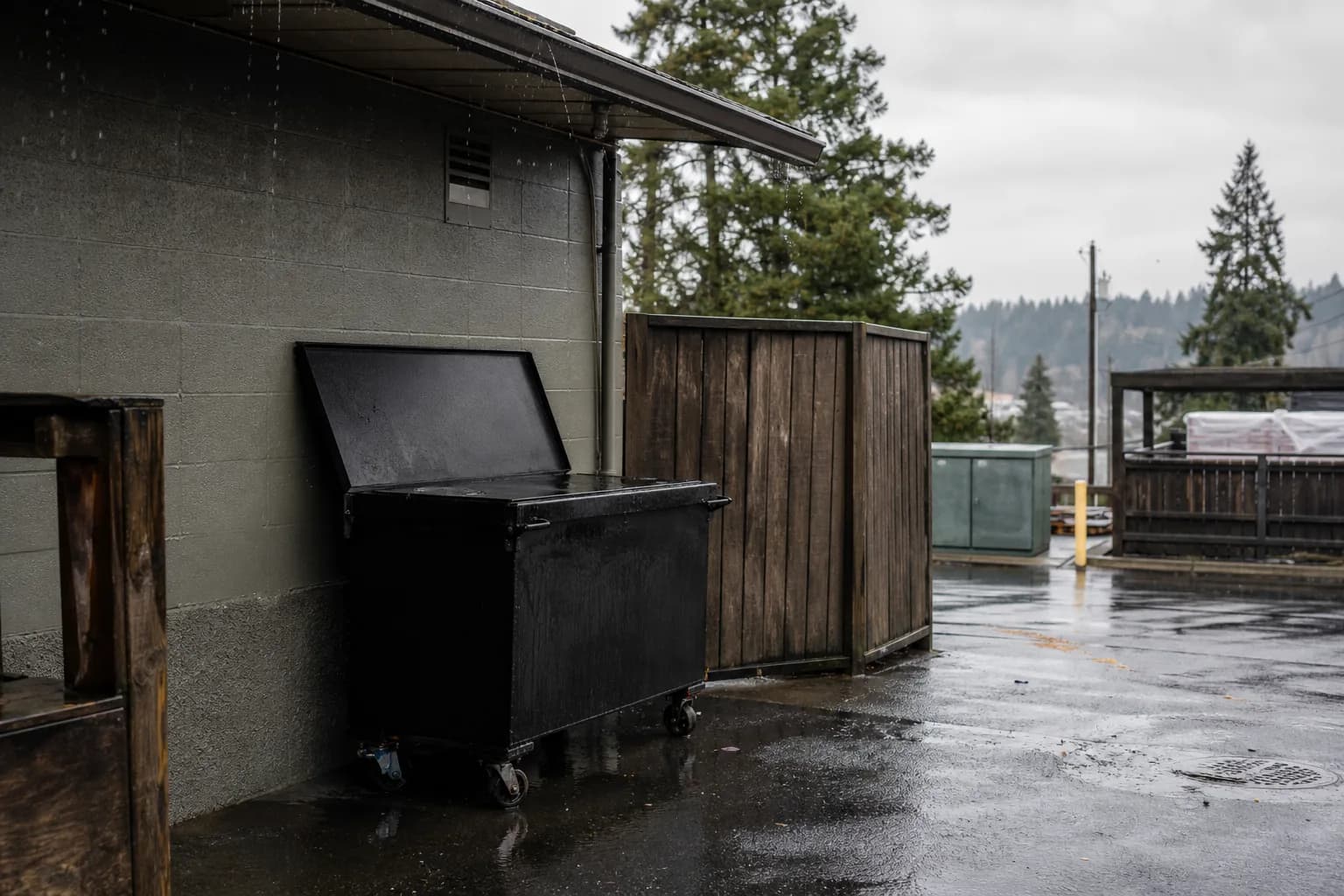
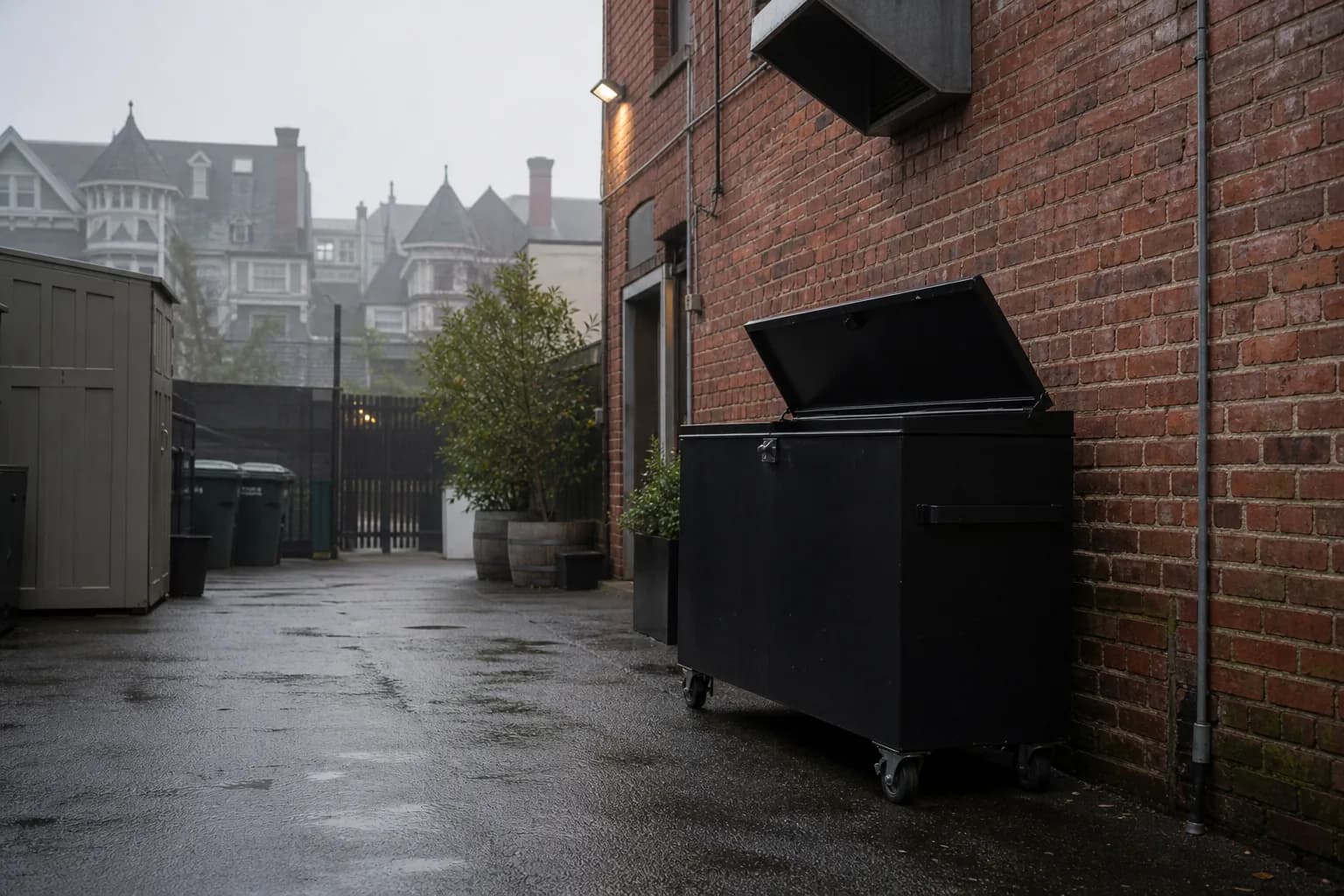
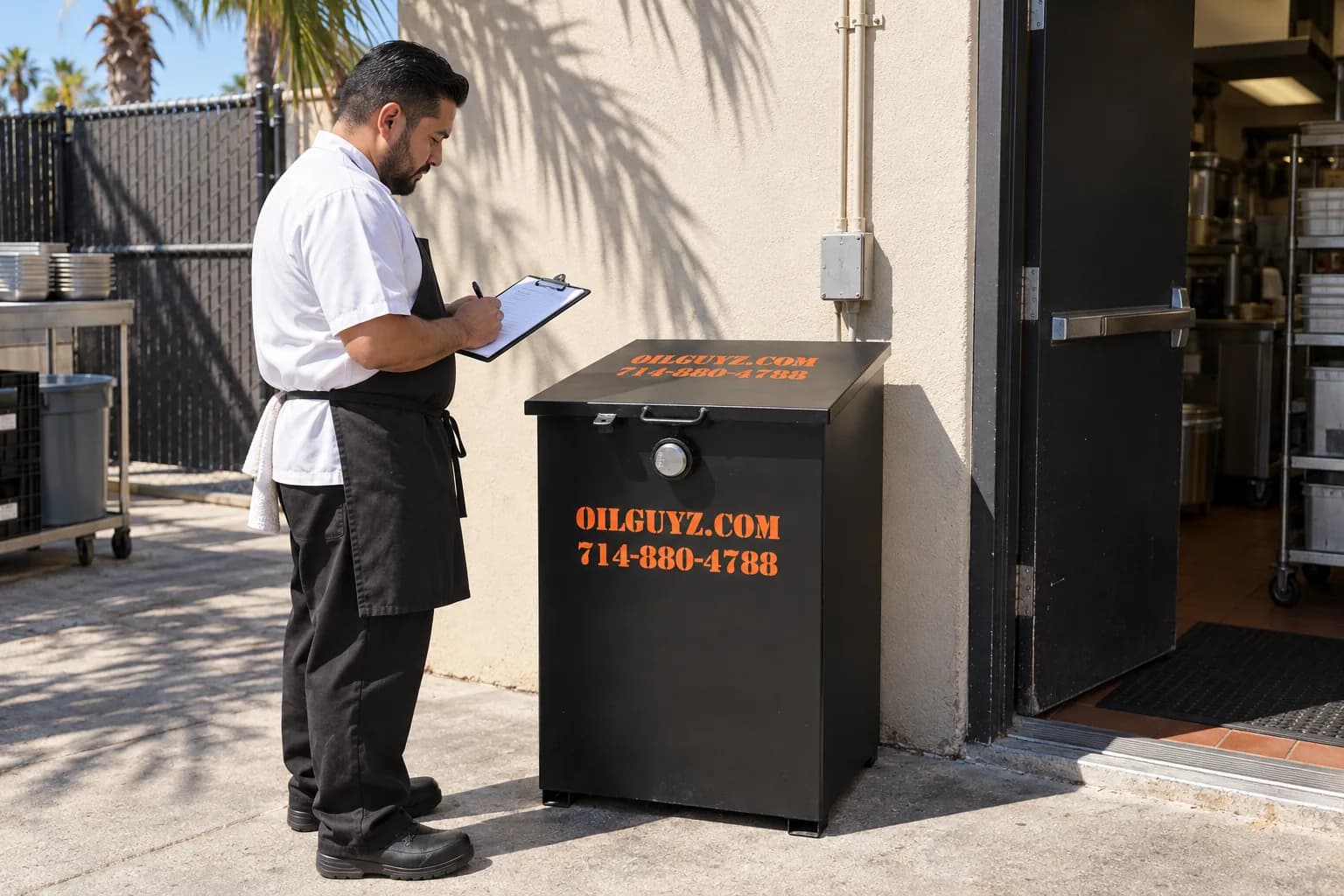
Oil Guyz provides free used cooking oil pickup for California restaurants. We place a free locked bin sized to your kitchen and pump it in place on a set pickup day. A transporter registered under the CDFA Inedible Kitchen Grease program performs each pickup, and the oil goes to a licensed renderer. You get a CDFA-compliant digital manifest after every pickup. There is no fee, no contract, and no minimum.