
TL;DR, Fried chicken restaurant used cooking oil is the heaviest-volume waste stream in commercial foodservice, and it degrades faster than almost any other kitchen's oil because breading, flour, and marinade shed sediment that breaks the oil down chemically. That combination, high volume plus fast breakdown, means chicken concepts need a real disposal cadence, not ad-hoc hauling. The right setup is free used cooking oil pickup scheduled to your fryer volume, a free locked anti-theft container, and a CDFA-compliant digital manifest after every pickup. Your spent oil becomes biodiesel and renewable-diesel feedstock, so you're handing off a commodity, not paying to dump garbage.
Why Chicken Kitchens Burn Through the Most Oil of Any Restaurant
Fried chicken restaurant used cooking oil is the highest-volume, fastest-degrading waste stream in foodservice, and if it feels like you change oil more than the burger joint down the street, you're right. Fried chicken and wing concepts are the oil-volume kings, and there are two reasons stacked on top of each other.
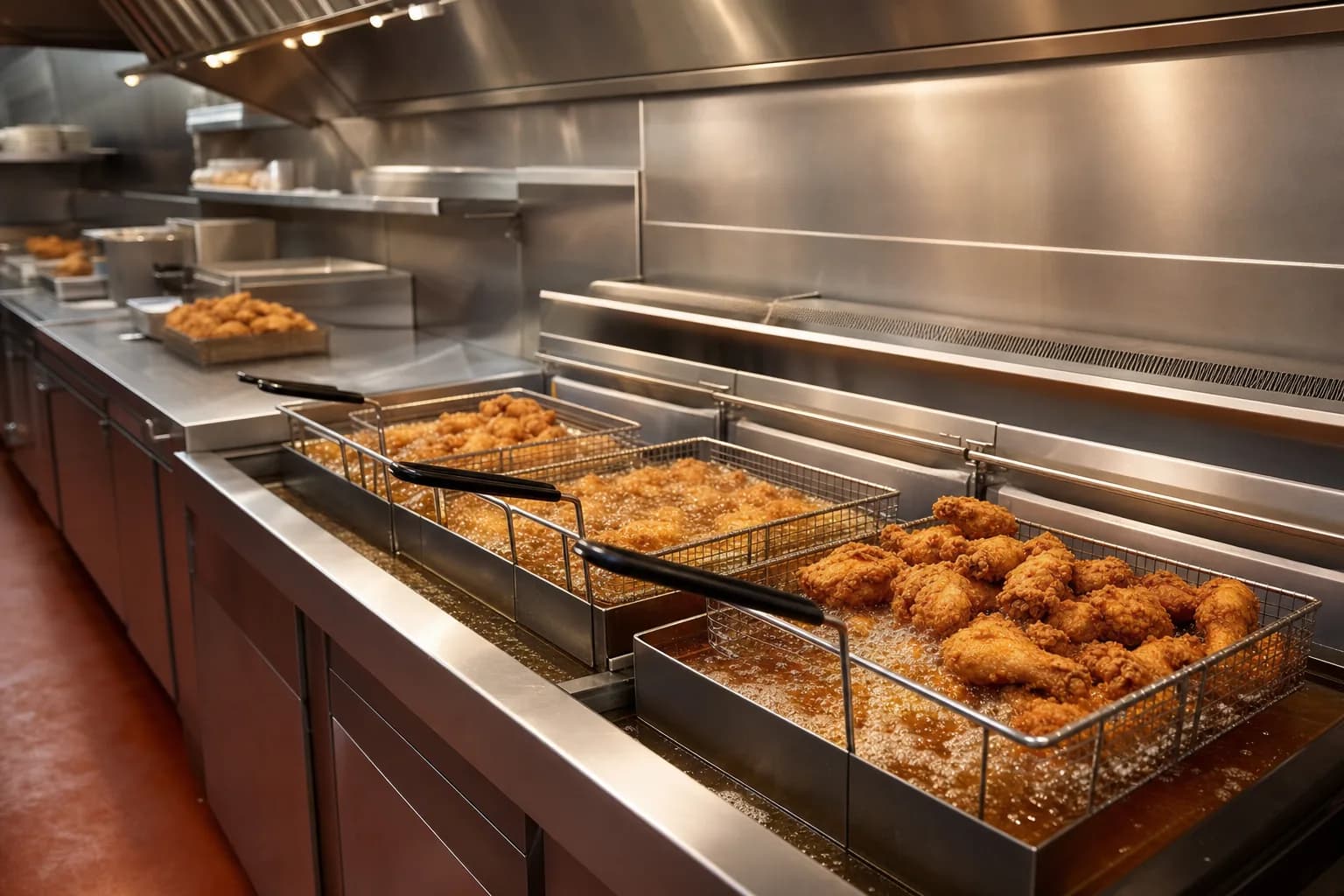
First, the math. A standard floor fryer holds roughly 40 to 50 lb of oil, about 5 to 6 gallons. High-volume chicken programs run multiple banks of fryers, so a busy kitchen is sitting on a lot of oil at any moment, and cycling it constantly (Wasserstrom).
Second, the chemistry. Breaded and battered foods shed far more debris into the oil than a basket of fries. Flour, marinade, and batter crumbs sink, carbonize, and sit in the fryer. Those residual solid particles accelerate the formation of free fatty acids and polar compounds, the actual chemical breakdown of the oil (Food Safety Magazine). More debris means faster degradation. As one industry breakdown puts it, kitchens frying breaded and battered items heavily should expect to change oil at the short end of their interval and filter more often during service (BOH).
Now add double-frying and all-day frying, both standard for chicken and wings, and you're compounding the breakdown. The result: a chicken kitchen disposes of high-volume fryer oil more often than nearly any other operation. (We go deeper on cadence in how often a fried chicken restaurant should change fryer oil.)
Stop Judging Oil by Color, Use an Objective Benchmark
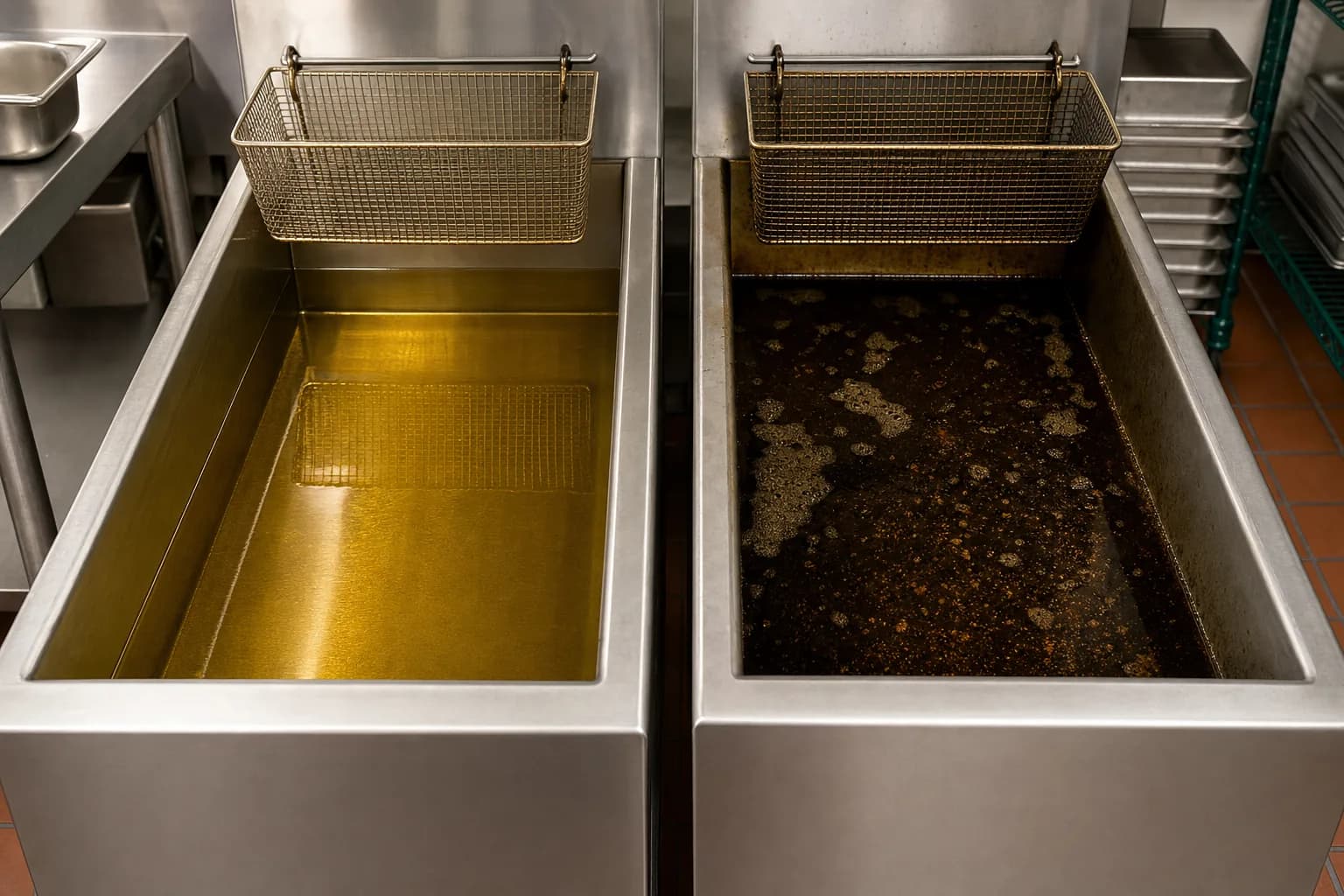
Dark oil isn't always bad oil, and light oil isn't always good. Color is an unreliable indicator of when to change (Klipspringer). The objective measure is Total Polar Materials (TPM), the share of degraded compounds in the oil. Many European kitchens discard around the 24% TPM mark. The US has no federal legal limit, so it's on you as the operator to set an internal benchmark and hold to it.
The practical takeaway for a high-volume chicken kitchen: build a cadence around your actual frying, filter daily to extend oil life, and don't wait for the oil to "look" done. Regular filtration removes the food particles that drive breakdown and extends usable oil life (Pitco).
The same discipline that protects your food quality is what makes the waste side clean and auditable, which brings us to compliance.
The Compliance Side: A Digital Manifest After Every Pickup
In California, every collection of inedible kitchen grease requires a manifest, a chain-of-custody record of what left your kitchen and where it went. Electronic manifests are explicitly legal, and the records must be retained for two years (3 CCR §1180.24). The renderers who recycle that grease are licensed, and the transporters are registered, both inspected by the CDFA's Meat, Poultry and Egg Safety branch (CDFA MPES).
Here's the part most operators miss: this isn't paperwork to chase. With the right program, the manifest is generated for you. After every pickup, a CDFA-compliant digital manifest lands in your Filtrate customer portal automatically, proof of proper disposal, ready for an auditor, with zero filing on your end. For multi-site operators, each location gets its own app, so a regional manager can see the full picture across every kitchen. That's the backbone of the Oil Guyz cooking oil compliance approach.
DIY / Ad-Hoc Disposal vs. a Managed Free-Pickup Program
Plenty of chicken kitchens still handle oil reactively, call someone when the drum is full, or worse, deal with it themselves. Here's how that stacks up against a managed program.
| Factor | DIY / Ad-Hoc Disposal | Managed Free-Pickup Program |
|---|---|---|
| Cost | Hauling fees, container costs, your time | Free pickup, free container |
| Labor | Staff wrangle full drums, schedule hauls | Driver pumps the container in place |
| Theft risk | Open or unsecured drums get poached | Free locked anti-theft container |
| Compliance record | You track and store manifests manually | CDFA digital manifest in Filtrate after each pickup |
| Spill / sediment liability | On you | Handled at pickup |
| Multi-site visibility | None, every location is its own island | Per-location apps, one dashboard |
| Recycling outcome | Uncertain | Biodiesel / renewable-diesel feedstock |
For a high-volume chicken concept, the ad-hoc route quietly costs more in fees, labor, and risk, while a managed program is free and produces a cleaner record.
How to Set Up Used Fryer Oil Pickup (Step by Step)
Getting on a real program is straightforward. Here's the sequence:
- Tell Oil Guyz your location and volume. We capture your address and roughly how much oil you go through, that's what sizes everything else.
- We schedule a cadence to your fryer volume. A multi-bank wing kitchen gets a tighter schedule than a single-fryer spot. The goal is you never overflow and never sit on spent oil.
- A free locked anti-theft container is placed. Indoor caddy or outdoor bin, locked, sized to your space. No charge.
- A driver from our CDFA-licensed renderer pumps the container in place. They pump it out on site, no swapping, no hauling drums through your kitchen.
- A digital manifest lands in Filtrate after each pickup. Your chain-of-custody proof, generated automatically.
- Multi-site operators get per-location apps. Each kitchen tracks its own pickups; you see all of them.
That's it. From there it runs in the background. See the full restaurant cooking oil management hub for how this fits a larger operation, and the restaurants overview for what other concepts run.
From Fryer to Fuel: Where Your Spent Chicken Oil Actually Goes
The reason pickup is free is that your spent oil is worth something. Used cooking oil, yellow grease, and animal fats are prime feedstocks for biodiesel (AFDC). High-volume chicken grease is exactly what refiners want.
The numbers are real. Renewable diesel made from fats, oils, and greases reduces carbon intensity by about 65% on average versus petroleum diesel (AFDC). And under the federal Renewable Fuel Standard, biomass-based diesel has to clear a 50% lifecycle greenhouse-gas reduction to qualify at all (EPA RFS). That regulatory floor is why your fryer waste is a valued commodity, recycled through our CDFA-licensed renderer, not trash.
This is true across foodservice, but it matters most where the volume is highest: fast food chicken concepts, and game-day stadiums and arenas moving thousands of wings.
FAQ
How often does a fried chicken restaurant need oil pickup? It depends on your fryer count and volume, which is why we set the cadence to your kitchen. Busy commercial kitchens typically change oil every one to two days, and regular filtration extends oil life. We schedule pickups so you never overflow your container. More on this in our chicken wing cooking oil disposal guide. Source: https://www.pitco.com/blog/real-reason-why-commercial-fryer-oil-isnt-lasting/
Why does fried chicken break down oil faster than other foods? Breading, flour, and marinade shed solid particles into the oil. Those residual particles accelerate free-fatty-acid and polar-compound formation, the chemical degradation of the oil. Double-frying and all-day frying compound it. Source: https://www.food-safety.com/articles/5522-monitoring-polar-compounds-in-fryer-oil
Is the pickup and container really free? Yes. Free scheduled pickup and a free locked anti-theft container. The economics work because your used oil is biodiesel and renewable-diesel feedstock, not waste. Source: https://afdc.energy.gov/fuels/biodiesel-production
Do I get a disposal record for compliance? Yes. California requires a manifest for every collection of inedible kitchen grease, electronic manifests are legal, and records are kept two years (3 CCR §1180.24). After each pickup, a CDFA-compliant digital manifest is posted to your Filtrate portal automatically. Source: https://www.law.cornell.edu/regulations/california/3-CCR-1180.24
Do you serve my area? Oil Guyz currently covers Orange County, Los Angeles, San Diego, the Inland Empire, the Bay Area, and Tacoma / Pacific Northwest, and we're expanding. If you're outside those areas, tell us your location and we'll capture it and notify you as we reach you.
Do you offer a rebate for high-volume kitchens? Larger operations, roughly 250+ gallons per month, may qualify for a rebate. It depends on your volume and location, so contact us and we'll talk specifics.
Sources
- California Code of Regulations, 3 CCR §1180.24 (manifest required per collection; electronic manifests legal; two-year retention): https://www.law.cornell.edu/regulations/california/3-CCR-1180.24
- CDFA Meat, Poultry and Egg Safety (renderer licensing, transporter registration, and chain of custody): https://www.cdfa.ca.gov/AHFSS/MPES/
- Food Safety Magazine, monitoring polar compounds in fryer oil (solid particles accelerate degradation): https://www.food-safety.com/articles/5522-monitoring-polar-compounds-in-fryer-oil
- Klipspringer, Total Polar Materials guide (24% TPM benchmark; color is unreliable): https://www.klipspringer.com/blogs/total-polar-materials-tpm-in-cooking-oil-a-complete-guide/
- BOH, how often to change fryer oil (breaded/battered items shed more debris): https://boh.ai/blog-article/how-often-should-restaurants-change-their-fryer-oil
- Pitco, the real reason commercial fryer oil isn't lasting (regular filtration removes sediment and extends oil life): https://www.pitco.com/blog/real-reason-why-commercial-fryer-oil-isnt-lasting/
- Wasserstrom, choosing the right size commercial fryer (standard floor fryer oil capacity ~40 to 50 lb / 5 to 6 gallons): https://www.wasserstrom.com/blog/2019/06/06/how-to-choose-the-right-size-commercial-fryer/
- AFDC, biodiesel production (used cooking oil, yellow grease, animal fats as feedstocks): https://afdc.energy.gov/fuels/biodiesel-production
- AFDC, renewable diesel (~65% average carbon-intensity reduction): https://afdc.energy.gov/fuels/renewable-diesel
- EPA, Renewable Fuel Standard overview (50% lifecycle GHG reduction for biomass-based diesel): https://www.epa.gov/renewable-fuel-standard-program/overview-renewable-fuel-standard