
TL;DR, Chicken wing restaurant cooking oil disposal is harder than most kitchens expect because wing demand is spiky: a sold-out game day, a Saturday rush, or a playoff run can fill your fryers and your grease container in days, not weeks. Wings also break down oil fast, breading sheds sediment that burns and contaminates the oil from the inside out. The fix is a used cooking oil program that flexes with your volume: a free, scheduled pickup sized to your kitchen, on-call pickups for surges, a right-sized locked anti-theft container, and a CDFA-compliant digital manifest after every pickup. Oil Guyz handles all of it for free.
Why chicken wing restaurant cooking oil disposal is its own problem
Chicken wing restaurant cooking oil disposal is not a steady, predictable chore, it comes in bursts. Wing joints, wing-and-sports-bar concepts, and bars that fry all game long don't burn oil at a constant pace. A quiet Tuesday and a sold-out Sunday are two different businesses, and your fryer oil load reflects that.
Two things make wings rough on oil:
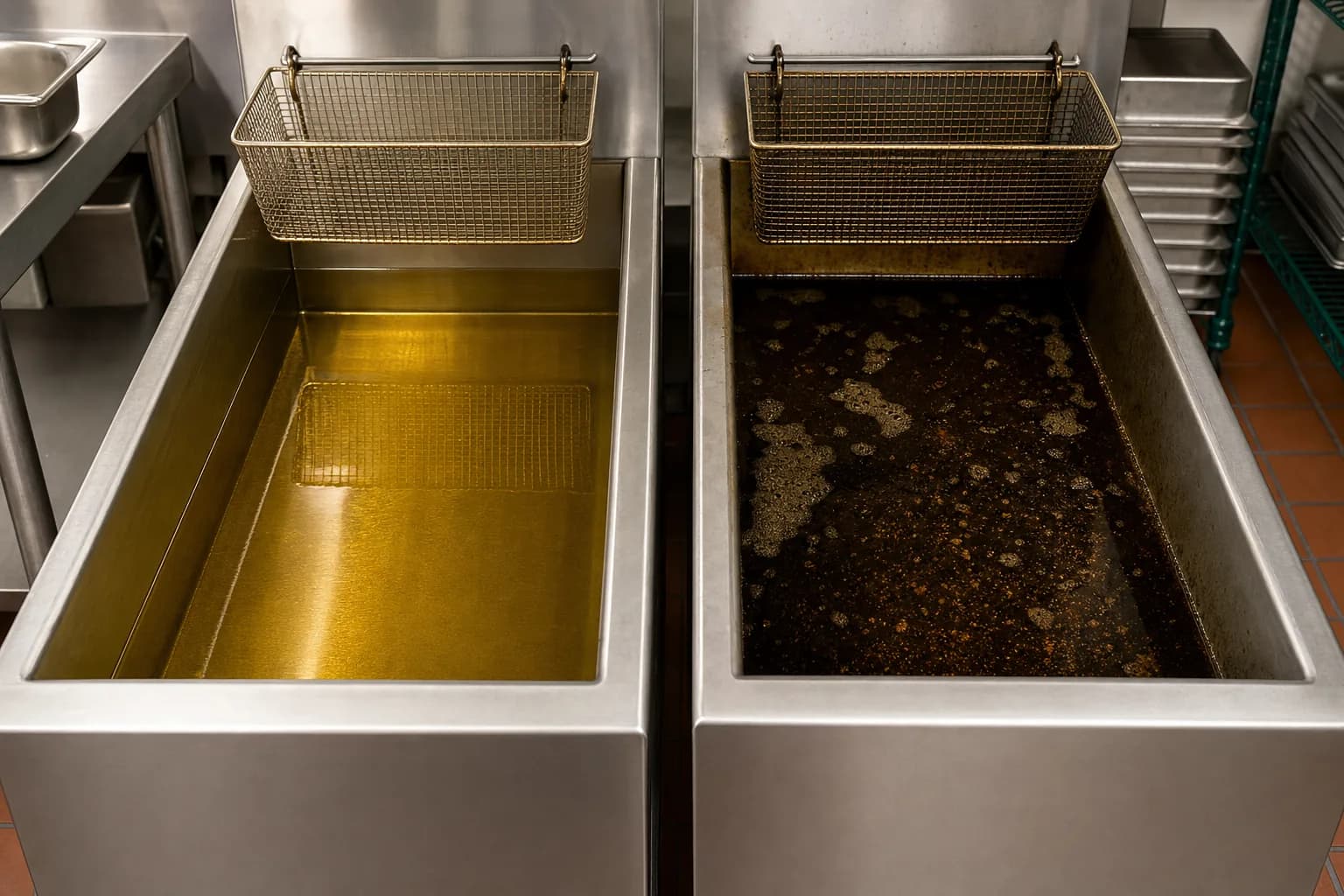
- Breading sheds sediment. Heavy breading and flour leave behind fine particles that sink, burn, and contaminate the oil. Even a clean-looking fryer breaks down from the inside out, because light, water, and sediment are the three main drivers of oil breakdown (Pitco). That's why kitchens frying heavily breaded items like wings should change oil at the short end of their interval and filter far more often than a vat devoted to plain fries (BOH).
- You fry hard and fry long. High-volume kitchens running fryers continuously change oil far more often, operations putting through 100+ frying orders a day often swap fryer oil every two to three days (BOH).
More frequent changes mean more used cooking oil to move, and on your biggest days, that volume comes all at once. That's the real disposal problem: not whether you'll generate used cooking oil, but whether your collection setup can keep up with a surge.
Game-day oil volume: when demand spikes, disposal has to flex
A normal week is manageable. Game day is a different animal. A single afternoon of NFL Sunday, a fight night, March Madness, or a championship run can put a week's worth of frying through your kitchen in hours.
If your only plan is a fixed monthly pickup, a surge leaves you with full containers and nowhere to put the next batch. That's when bad things happen out back, overflow, spills, and the temptation to dump.
A program built for wings handles the spike three ways:
- Scheduled pickups sized to your real volume, not a generic calendar.
- On-call pickups for surges, playoff weekend, a big event, a sold-out night.
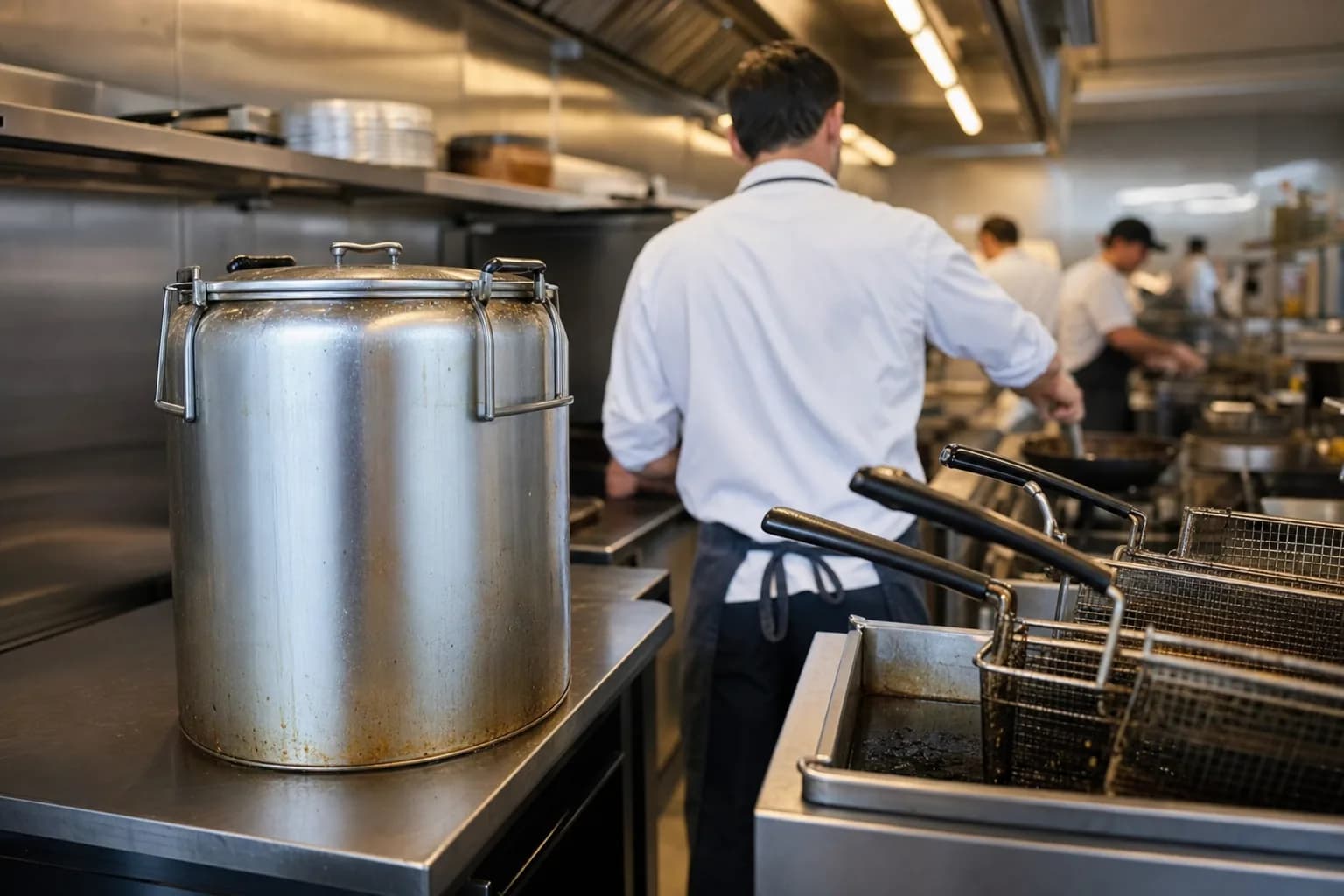
- A right-sized locked container so a busy game day never leaves grease sitting out.
If you run a high-traffic venue or pour for a stadium crowd, the volume math gets serious fast, see stadiums & arenas and fast food for how game-day and rush-driven kitchens handle the load. For multi-location operators, the Filtrate and per-location apps let you watch every site's pickups in one place.
Why dumping is a legal, theft, and safety trap
When a container is full and the rush is on, dumping looks easy. It isn't. Sports-bar fryer oil that goes down a drain, into a dumpster, or out behind the building creates three problems at once.
Legal exposure. California requires a manifest for every collection and delivery of inedible kitchen grease. Used cooking oil transport is registered and rendering is licensed, a chain-of-custody program under the CDFA Inedible Kitchen Grease rules (CDFA). No manifest, no proof your oil was handled legally.
Theft. Used cooking oil has resale value, and grease theft is real. An unlocked container out back is an open invitation. A locked anti-theft container keeps your oil yours until our licensed renderer collects it.
Safety. Hot oil is one of the most dangerous things in your kitchen. Commercial fryers run their oil at roughly 350°F to 375°F, hot enough to cause severe burns, and even cooled used cooking oil stays seriously hot (Restaurant Association of Metropolitan Washington). Trying to haul it yourself is how people get hurt.
The clean alternative: a compliant program where our CDFA-licensed renderer pumps the container in place, and you get a CDFA-compliant digital manifest after every pickup as your chain-of-custody record. Electronic manifests are legal in California and records are kept two years (3 CCR §1180.24). See cooking oil compliance for how the manifest protects you.
DIY dumping vs. a scheduled + on-call UCO service
| What matters | DIY dumping / self-hauling | Oil Guyz scheduled + on-call service |
|---|---|---|
| Cost | Your time, fuel, fees, fines | Free pickup, free locked container |
| Game-day surge | You're stuck when it's full | On-call pickups for spikes |
| Theft risk | Open container, easy target | Locked anti-theft container |
| Burn / spill safety | You handle 350°F+ oil | Renderer pumps in place |
| Legal manifest | None | CDFA digital manifest every pickup |
| Where the oil ends up | Drain / landfill | Biodiesel / renewable diesel feedstock |
| Multi-site visibility | None | Filtrate + per-location apps |
That last row matters: your used cooking oil isn't waste. Oil collected through a registered and licensed program becomes feedstock for cleaner fuel. Renewable diesel from fats, oils, and greases cuts carbon intensity substantially versus petroleum diesel (AFDC), and biodiesel from waste grease lowers lifecycle emissions too (AFDC). Your spent wing oil ends up powering trucks instead of clogging a drain.
Safe-handling steps before pickup
Until our renderer arrives, the oil is yours to handle safely. Most fryer-oil injuries happen during transfer, so slow down (Restaurant Association of Metropolitan Washington).
- Shut off the fryer and let the oil cool. Always wait, never move hot oil. Cooled oil is still dangerously hot, just safer to handle.
- Gear up. Heat-resistant gloves (mid-wrist or longer), a full face shield, a heavy heat-resistant apron, and closed-toe shoes.
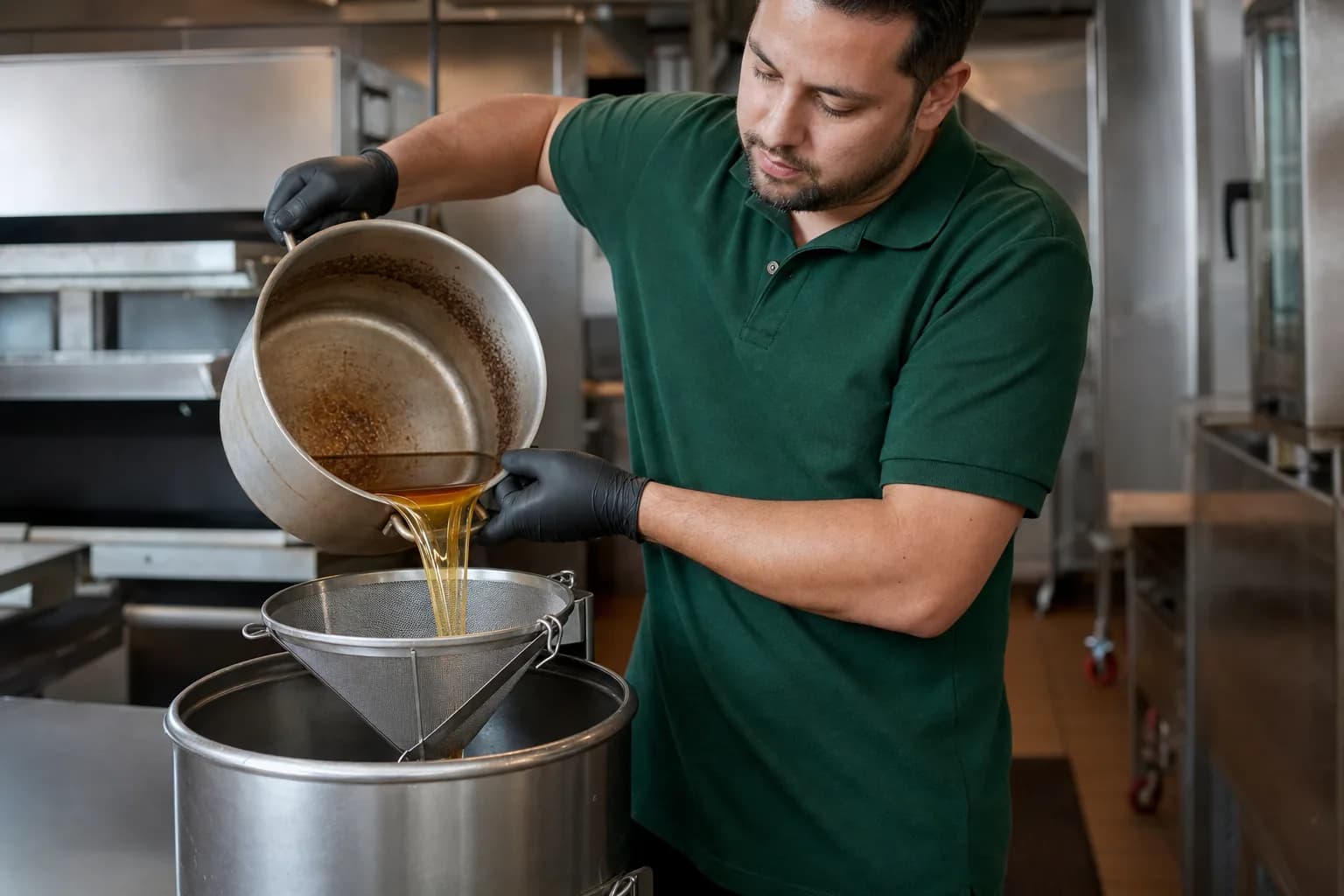
- Use a proper caddy or shuttle. Never an open bucket, pot, or pan, that's how spills and burns happen.
- Transfer slowly into the locked container. No splashing, no overfilling.
- Lock it and log the change. Keep a quick note of when you changed each fryer so your pickup cadence stays matched to volume.
- Watch for spent oil between changes. Darkening color, increased viscosity, persistent foaming, or a rancid/burnt smell all mean change it now, schedule aside (Food Safety Magazine).
For the bigger picture on cadence and cost across single and multi-unit kitchens, our restaurant cooking oil management hub and our restaurants page tie it together.
Frying a lot of wings is a good problem, it just generates a lot of used cooking oil, fast. For more on the fried-bird side of the business, see our companion guides on fried chicken used cooking oil management and how often to change fryer oil. When you're ready, free used cooking oil pickup gets the whole thing off your plate.
Sources
- Pitco, The real reason your commercial fryer oil isn't lasting (breading sheds sediment; light, water, and sediment drive breakdown): https://www.pitco.com/blog/real-reason-why-commercial-fryer-oil-isnt-lasting/
- BOH, How often should restaurants change their fryer oil (high-volume ops change every two to three days; heavily breaded items change at the short end and filter more often): https://boh.ai/blog-article/how-often-should-restaurants-change-their-fryer-oil
- Restaurant Association of Metropolitan Washington, Deep fryer safety (oil runs ~350 to 375°F, severe-burn risk, PPE and safe handling): https://www.ramw.org/articles/blog/deep-fryer-safety-what-every-commercial-kitchen-should-know
- Food Safety Magazine, Monitoring polar compounds in fryer oil (degradation signs: darkening, viscosity, off odor): https://www.food-safety.com/articles/5522-monitoring-polar-compounds-in-fryer-oil
- California Code of Regulations, 3 CCR §1180.24, manifest required per pickup, electronic manifests legal, 2-year retention: https://www.law.cornell.edu/regulations/california/3-CCR-1180.24
- CDFA, Inedible Kitchen Grease program (licensing + chain of custody): https://www.cdfa.ca.gov/AHFSS/MPES/
- U.S. DOE AFDC, Renewable diesel carbon-intensity reduction and feedstock: https://afdc.energy.gov/fuels/renewable-diesel
- U.S. DOE AFDC, Biodiesel production and lifecycle GHG reduction: https://afdc.energy.gov/fuels/biodiesel-production