For best results, empty your used cooking oil bin on a recurring schedule matched to your volume: high-volume kitchens usually need weekly or twice-weekly pickup, mid-volume kitchens do well on bi-weekly (the most common interval), and low-volume cafes often manage on monthly collection. The right cadence keeps the bin from ever overflowing while never letting oil sit long enough to smell, turn rancid, or attract pests.
Before going further, one distinction does most of the work in this article: your used cooking oil (UCO) collection bin and your grease trap are not the same thing, and they are not on the same schedule. Confusing the two leads to overflow, odor, contaminated loads, and code-enforcement headaches. Let's separate them clearly, then build a cadence that actually fits your kitchen.
First: The Grease Bin Is Not the Grease Trap
This is the single most common mix-up, and it changes everything about how often you "empty" each one.
Your grease trap (or larger in-ground grease interceptor) is plumbing. It sits under a sink or in the ground and captures fats, oils, and grease (FOG) from dishwashing and wastewater before that water reaches the sewer. What it holds is dirty "brown grease", a mix of food solids, water, and emulsified fat that must go to a permitted disposal facility. This matters because the U.S. Environmental Protection Agency identifies grease as a leading cause of sewer blockages and sanitary sewer overflows, much of it FOG poured down drains from restaurants, homes, and industry. That's why FOG belongs in the trap, never down the drain.
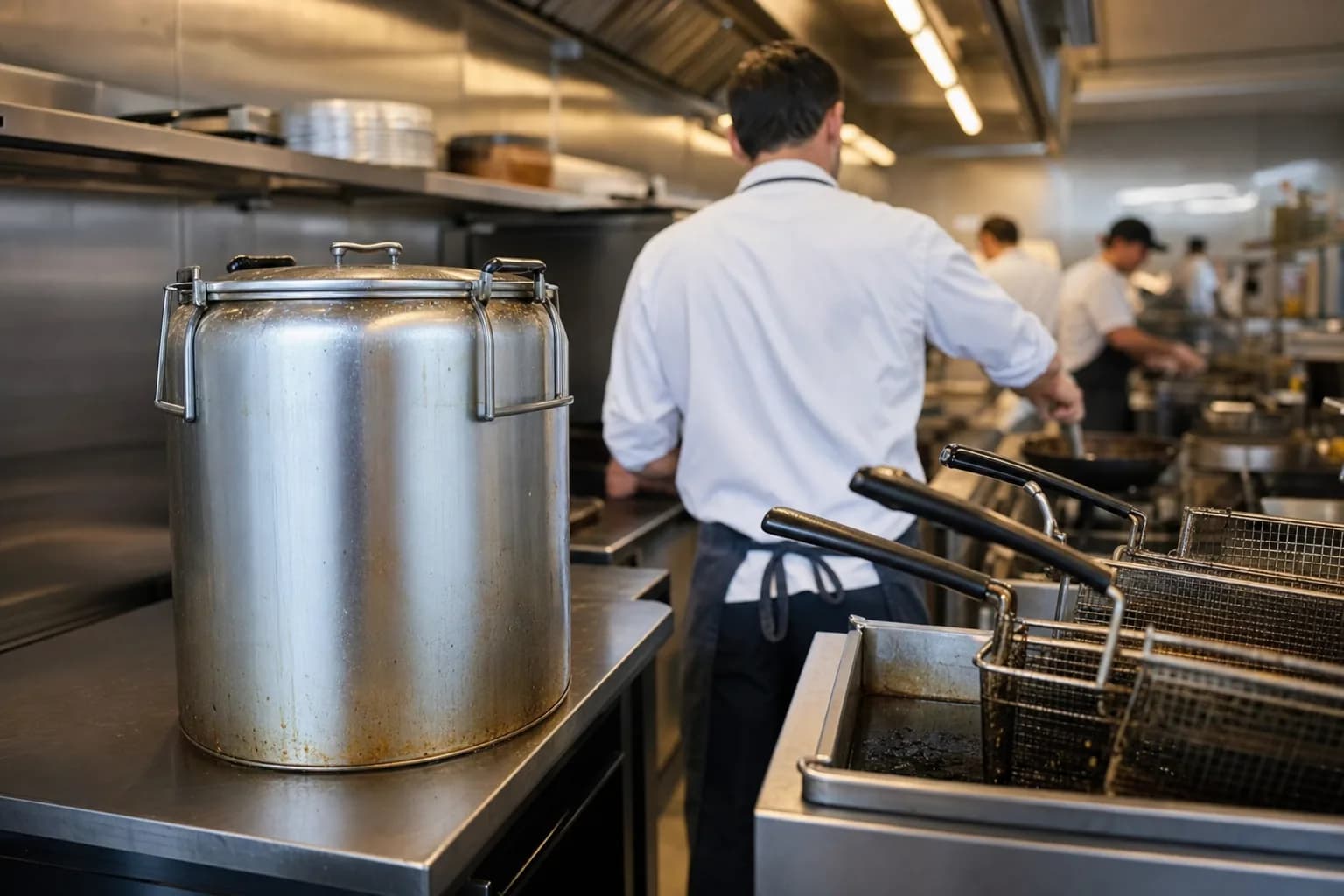
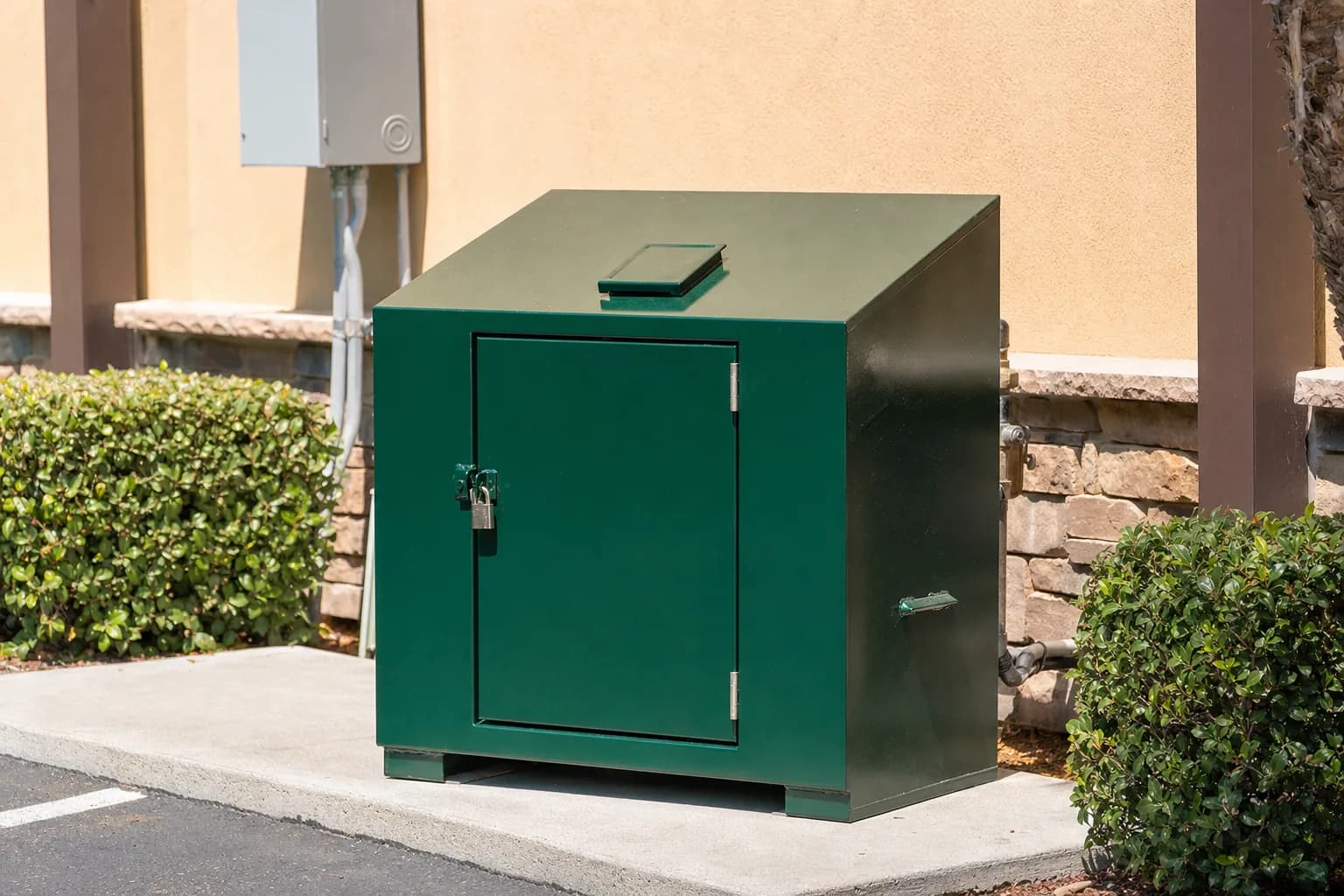
Your UCO bin is something else entirely. It holds clean, spent fryer and cooking oil, "yellow grease", that gets recycled into fuel. It's a dedicated, usually locked container that a CDFA-licensed route driver empties on a recycling schedule. The two streams are kept apart on purpose: trap equals plumbing and brown grease; bin equals recyclable yellow grease.
Here's the operational consequence: mixing the two ruins the product. If grease-trap waste or wash water contaminates your UCO bin, recyclers reject the load and the whole container becomes non-recyclable waste. Keeping fryer oil clean and separate is the entire point of having a dedicated bin. So when you ask "how often should I empty my grease bin," you're really asking about the UCO recycling cadence, a totally different question from how often your trap gets pumped.
| Grease trap / interceptor | Used cooking oil (UCO) bin | |
|---|---|---|
| What it is | Plumbing under a sink or in the ground | A standalone locked collection container |
| What it holds | "Brown grease", FOG, food solids, water | "Yellow grease", clean spent fryer oil |
| Where it goes | Permitted FOG disposal facility | CDFA-licensed renderer → biofuel feedstock |
| Schedule type | Plumbing maintenance | Recycling route |
| Service interval | Set by your trap size and local FOG rules | Picked up weekly, bi-weekly, or monthly by volume |
| Can they mix? | Never, mixing contaminates the UCO load and gets it rejected |
The rest of this guide is about the UCO bin cadence. (Trap pumping is a separate plumbing service on its own schedule, not what your recycling pickup covers.) For the bigger picture on keeping the two streams separated and your oil recyclable, see our overview of cooking oil disposal.
How Often to Empty Your UCO Bin: Cadence by Volume
There's no universal number, because a 24-fryer steakhouse and a single-fryer cafe generate wildly different oil volumes. The honest answer is: match pickup frequency to your actual output. Here's the practical guidance the industry uses.
| Kitchen type | Oil output | Typical pickup cadence |
|---|---|---|
| High-volume (multiple fryers, busy service, QSR, large kitchens) | High | Weekly or twice-weekly |
| Mid-volume (casual, fast-casual, hotel F&B) | Moderate | Bi-weekly, the most common interval |
| Low-volume (cafes, small kitchens, light fryer use) | Low | Monthly |
A few notes on reading this table:
- Bi-weekly is the default for a reason. Most mid-volume kitchens land here naturally, it's frequent enough to prevent overflow and keep oil fresh, without sending a route truck more often than needed.
- High-volume kitchens shouldn't fight their volume. If you're running multiple fryers through a busy lunch and dinner, weekly or twice-weekly isn't excessive, it's the correct cadence to keep oil moving.
- Low-volume doesn't mean "ignore it." Even a slow cafe shouldn't let oil sit indefinitely. Monthly works because the bin fills slowly, not because storage time doesn't matter (more on that below).
The right interval, in one sentence: a schedule that keeps the container from ever overflowing AND doesn't let oil sit long enough to turn rancid, smell, or attract pests. If you find yourself dealing with overflow more than about once a week, that's a signal, your cadence or your container size needs to go up.
The Two Failure Modes: Overflow and Aging
Every cadence problem is really one of two failures. Understanding both tells you exactly when to adjust.
1. Overflow, too little capacity between pickups. When the bin fills past the line before the next route arrives, oil pools around the container. That's not cosmetic. Overflow creates slip hazards, attracts pests, invites code-enforcement attention, and (because the spilled oil is now exposed to debris and weather) wastes a feedstock that had real value. Overflow means your capacity per cycle is too low, either pickups are too far apart or the container is too small.
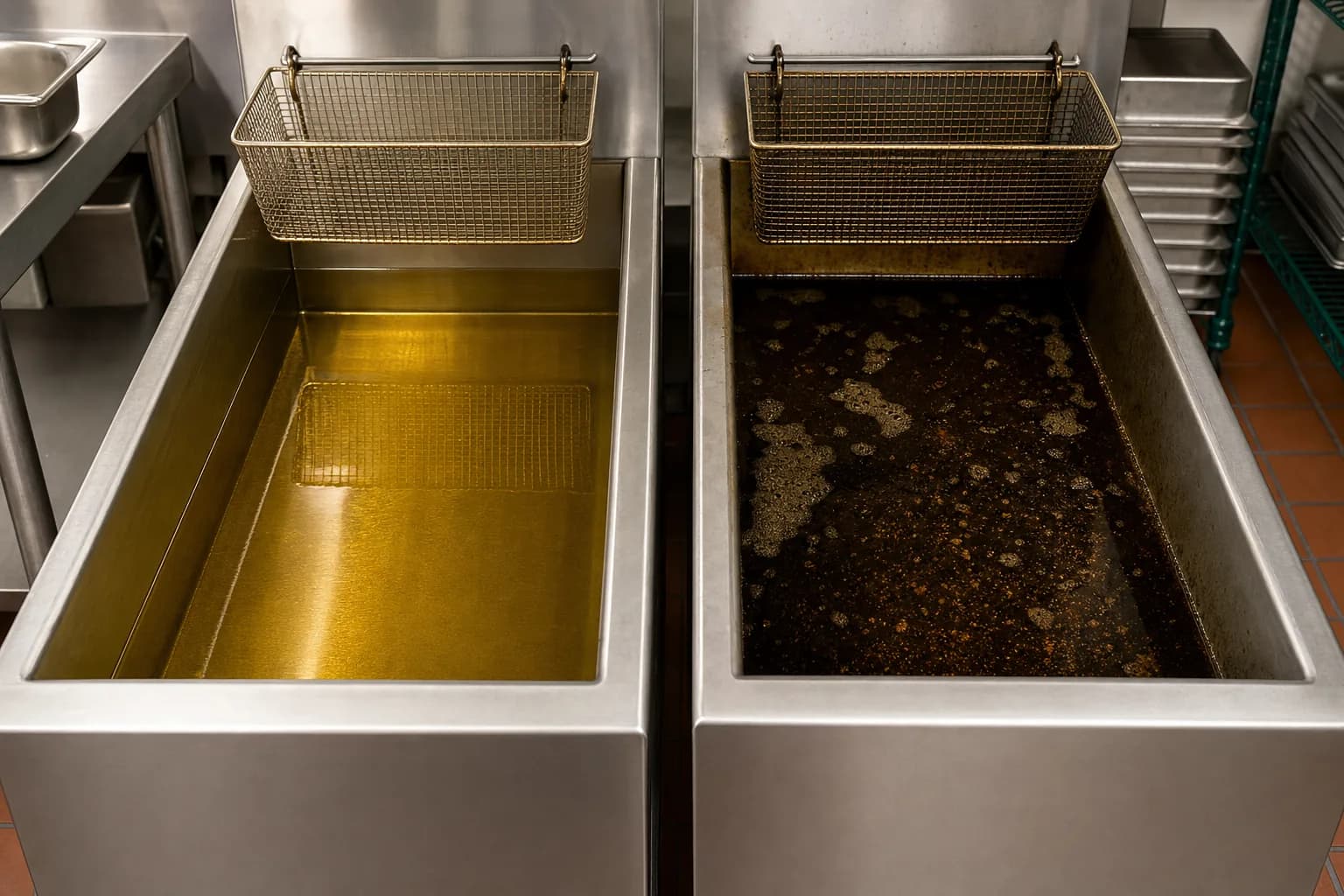
2. Aging, oil sitting too long. Used oil breaks down over time and releases strong odors as it degrades. A telltale sign: if you get a persistent grease smell even after you've cleaned your fryers and your kitchen, the oil in the bin is probably sitting too long. Treat odor as an operational red flag, not a nuisance, it means oil is aging past its window. Aging means your time between pickups is too long, even if the bin technically isn't overflowing.
The fix differs depending on which failure you're seeing:
- Chronic overflow → size up the container. Best practice is to match container size to actual output so the bin gets emptied on a reliable route before it overflows. A larger locked container often solves chronic overflow without adding a single extra route visit. This is usually the cleaner fix than cramming in more frequent pickups.
- Odor / aging → tighten the cadence. If the bin isn't overflowing but the oil is aging and smelling, you don't need a bigger container, you need to shorten the interval so oil moves before it degrades.
- Both at once → do both. High-volume kitchens sometimes need a bigger bin and a weekly route.
With Oil Guyz, the upsize is free and the route is adjusted to your real volume, there's no charge for a larger locked container or a tighter schedule, no contract, and no minimum volume.
How to Dial In the Right Cadence (Step by Step)
If you're not sure where you land, here's a simple process to find the right schedule.
- Confirm which container you're actually filling. Make sure you're tracking the UCO bin (clean fryer oil), not the grease trap. They're separate streams on separate schedules, never combine them.
- Track one to two weeks of real output. Note roughly how full the bin gets between today and when you'd normally call for pickup. This is your true volume, not a guess.
- Pick a starting cadence from the volume table above. High-volume → weekly/twice-weekly. Mid-volume → bi-weekly. Low-volume → monthly.
- Aim for the 75 to 80% mark, not 100%. Schedule (or set your recurring route) so the bin is collected around three-quarters full. That headroom absorbs a busy weekend without overflowing.
- Watch for the two red flags for a cycle. Overflow before pickup → size up the container. Persistent odor → tighten the interval.
- Lock in a recurring scheduled route. Once it's dialed in, set it and let the route handle it, a predictable cadence is what prevents both overflow and the "we forgot to call" gap. You can also schedule and adjust by phone, text, or the online portal.
The goal is to stop thinking about it. A reliable scheduled route matched to your volume means the bin gets emptied on time, every cycle, without anyone in the kitchen having to remember.
Why Cadence Also Protects You from Theft and Citations
Two more reasons the right schedule matters, and why "wait until it's totally full" is a bad strategy.
Theft. Used cooking oil has commodity value, which makes open or unlocked bins a target for grease theft. The defense is twofold: a locked, anti-theft container so the oil can't be siphoned, plus a predictable scheduled route so oil isn't sitting around in volume waiting to be stolen. Oil Guyz provides the locked container at no cost, see how that fits into the larger picture of yellow grease recycling. A bin that's emptied on schedule is a much smaller target than one that's overflowing and unsecured.
Storage limits and compliance. Many local FOG ordinances cap how long grease can be held on site, your city's sewer or wastewater authority sets the specific limit, which means a bin that's never emptied isn't just messy, it can be out of compliance. On top of that, California regulates used cooking oil as inedible kitchen grease (IKG): under the California Department of Food and Agriculture (CDFA), it's unlawful to transport IKG without CDFA registration, each collection vehicle must display a current CDFA decal, and transporters must keep records. That's exactly why a compliant pickup leaves a manifest and chain-of-custody record. The right cadence keeps oil moving before it ages out, and a compliant pickup gives you the paperwork to prove it.
After every Oil Guyz collection you get a CDFA-compliant digital manifest emailed to you, with records retained for seven years, so when a health or city inspector asks for proof, it's already on file.
Where the Oil Goes (and Why Fresh Oil Is Better Feedstock)
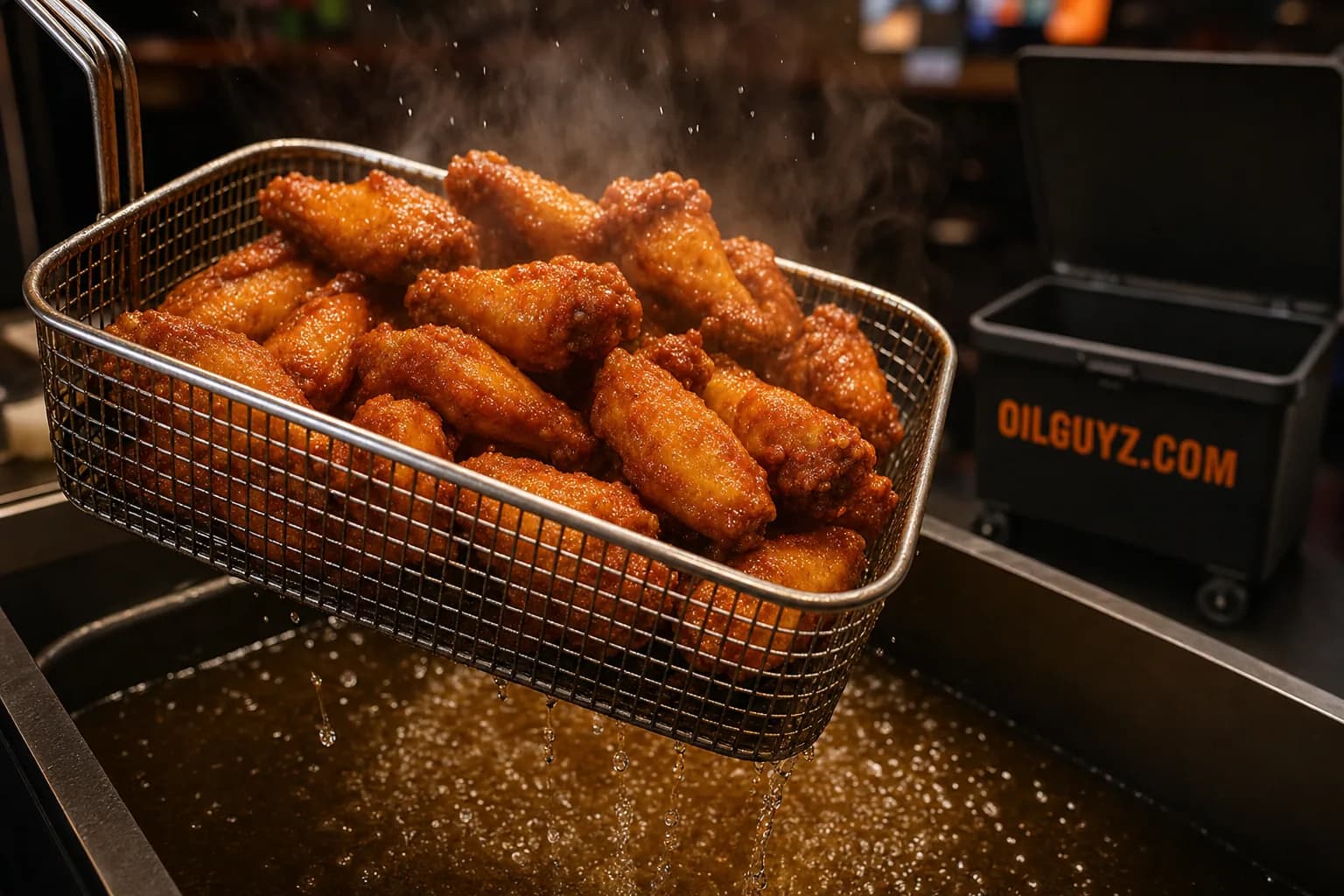
There's an upside to keeping a tight cadence beyond avoiding problems: cleaner, fresher oil is a better fuel feedstock. Every gallon of collected used cooking oil is a renewable-fuel input. The U.S. Department of Energy's Alternative Fuels Data Center states that biodiesel is "produced from vegetable oils, animal fats, or recycled restaurant grease," and used cooking oil is also a feedstock for renewable diesel and sustainable aviation fuel (SAF), fuels that the Department of Energy highlights as ways to cut lifecycle carbon emissions from transportation.
When your oil is collected clean and on schedule rather than sitting and degrading, it's worth more downstream and keeps the whole cooking oil recycling chain moving efficiently. A good cadence isn't just kitchen hygiene, it's how your spent fryer oil becomes transportation fuel instead of waste.
The Bottom Line
Empty your UCO bin on a recurring schedule sized to your volume: weekly or twice-weekly for high-volume kitchens, bi-weekly for most mid-volume operations, monthly for low-volume cafes, always before it overflows and before the oil ages enough to smell. If you're hitting overflow, size the container up; if you're hitting odor, tighten the interval. And keep it strictly separate from your grease trap, which is a different system on a different schedule entirely.
Oil Guyz handles free used cooking oil pickup across California, Orange County, Los Angeles, San Diego, the Inland Empire, and the Bay Area, plus the Pacific Northwest in Tacoma and Seattle, with free locked anti-theft containers, no contracts, no minimums, and a real person on the phone.
Ready to set a cadence that just works? Schedule free, no-contract used cooking oil pickup and we'll match your route and container size to your kitchen.