
How often you should schedule used cooking oil pickup depends on your gallons per week versus your container size, not a fixed calendar. High-volume kitchens dumping more than five fryers a week need weekly or twice-weekly service; moderate-volume kitchens run well biweekly or monthly; low-volume kitchens can go every four to six weeks or on-call. Size the container for 7 to 10 days of oil and schedule before it hits the fill line.
That answer is short on purpose, because the wrong way to do this is to accept whatever default cadence a provider offers and hope it fits. A monthly schedule that works fine for a sandwich shop will leave a fried-chicken concept with oil on the floor by week two. The right schedule is a simple calculation: estimate your weekly gallons, match a container size, then fine-tune the frequency after a few real pickups, adjusting for the season and for which container you're actually tracking. The rest of this guide walks through exactly how to do that.
Estimate Your Weekly Gallons First
Everything downstream depends on one number: how many gallons of used cooking oil your kitchen produces in a typical week. You can estimate it from your fryers in about two minutes.
- Count your fryers and note each one's oil capacity in pounds (a common commercial fryer holds 40 to 50 pounds of oil).
- Estimate how many full oil changes each fryer gets per week.
- Multiply to get total pounds of oil dumped per week.
- Divide by 7.4 to convert pounds to gallons. Used cooking oil weighs roughly 7.4 to 7.7 pounds per gallon, the standard conversion the collection industry uses.
A worked example: three 50-pound fryers changed twice a week is 300 pounds, or about 40 gallons of used oil per week. A small cafe with one 40-pound fryer changed once a week produces about 5 to 6 gallons. Those two kitchens need completely different schedules, which is exactly why a default calendar fails so often.
For a sanity check, a typical full-service restaurant generates on the order of 150 to 250 pounds of used cooking oil per week, roughly 20 to 34 gallons, though high-volume fried-food concepts produce far more. If your estimate lands far outside that band, that's a signal, not an error: heavy fryers genuinely run higher.
The Volume-to-Frequency Table
Once you know your weekly gallons and roughly how many fryers you dump, this table maps you to a starting container size and pickup cadence. Treat it as a starting point you'll refine, not a contract.
| Kitchen profile | Fryers dumped / week | Approx. gallons / week | Recommended container | Suggested pickup frequency |
|---|---|---|---|---|
| Low volume (cafe, limited fry menu) | ~1 to 2 or less | Under ~10 gal | 45-gallon container | Every 4 to 6 weeks or on-call |
| Moderate volume (casual dining, burgers, food truck) | ~3 to 5 | ~10 to 30 gal | 130-gallon bin | Biweekly to monthly |
| High volume (fast food, fried chicken, seafood, donuts) | More than 5 | ~30 to 60+ gal | 200-gallon bin | Weekly or twice-weekly |
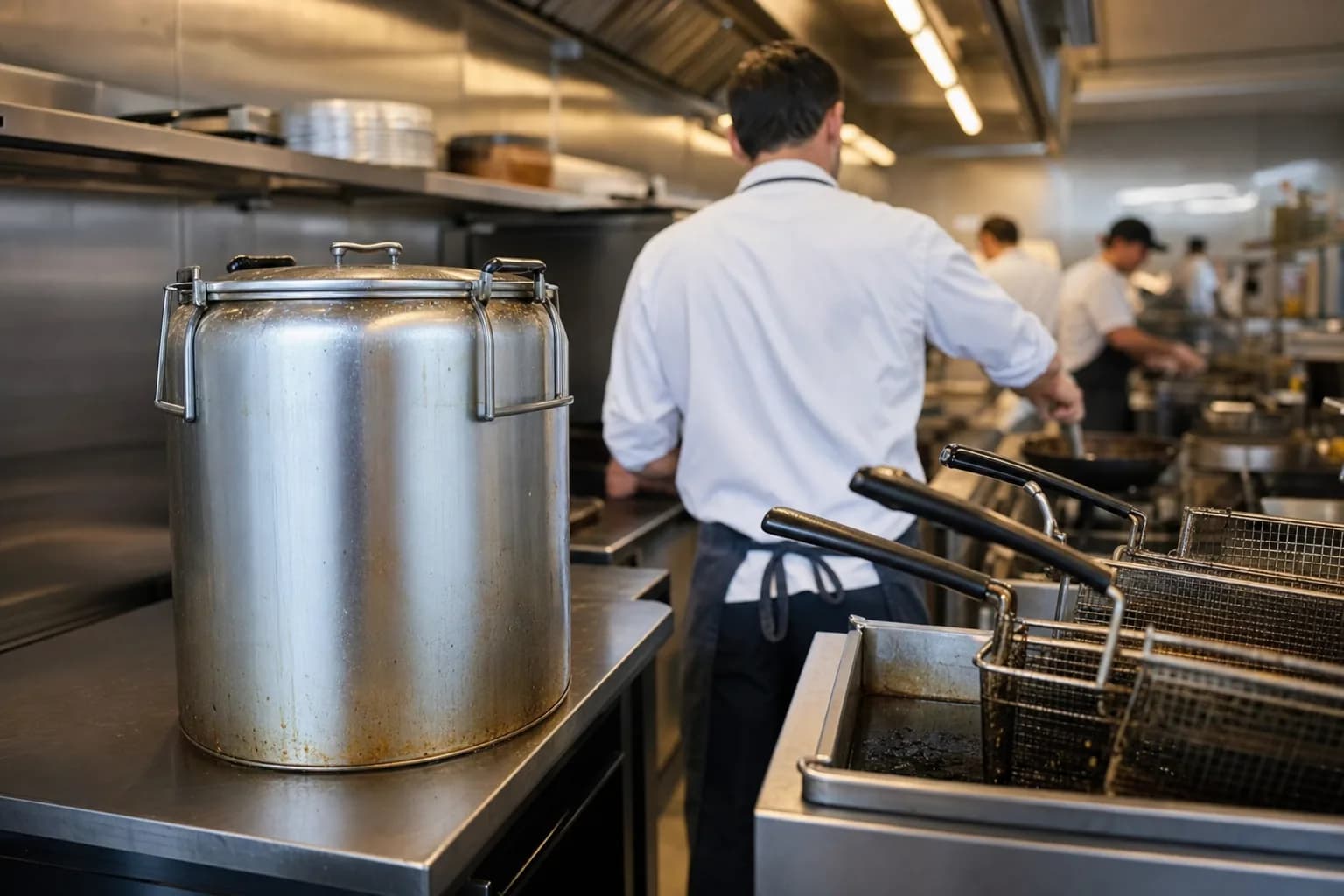
The governing principle is to size the container for about 7 to 10 days of accumulation and never fill it to the brim. You want a buffer for a busy night, a missed pickup, or a catering surge. Container size and frequency move together: a high-volume kitchen could keep a small drum and get pumped twice a week, but a right-sized larger bin on a weekly route is cheaper to service and far more forgiving. That trade-off, bigger container versus more frequent pickups, is the core of right-sizing.
Your Grease Bin Is Not Your Grease Trap
Confusing your used cooking oil bin with your grease trap is the single most common mix-up in scheduling, and it changes everything about how often each one gets serviced.
Your grease trap, or larger in-ground grease interceptor, is plumbing. It sits under a sink or in the ground and captures fats, oils, and grease from dishwashing and wastewater before that water reaches the sewer. What it holds is dirty "brown grease," a mix of food solids, water, and emulsified fat that must go to a permitted disposal facility on a schedule set by your trap size and local rules, commonly every 60 to 90 days for active kitchens.
Your UCO bin is something else entirely. It holds clean, spent fryer and cooking oil, "yellow grease," that a CDFA-registered transporter empties on a recycling route matched to your volume. The two streams are kept apart on purpose: mixing them contaminates the load, and a recycler will reject an entire container that's been tainted with trap waste or wash water.
| Grease trap / interceptor | Used cooking oil (UCO) bin | |
|---|---|---|
| What it holds | "Brown grease," FOG, food solids, water | "Yellow grease," clean spent fryer oil |
| Where it goes | Permitted FOG disposal facility | Licensed renderer, becomes fuel feedstock |
| Schedule type | Plumbing maintenance | Recycling route |
| Can they mix? | Never | Never |
The rest of this guide is about the UCO bin's cadence. Our overview of used cooking oil disposal covers how the storage-and-removal chain fits together for a commercial kitchen.
Seasonal Peaks and Kitchen Types in Southern California
A baseline schedule from the table above is a starting point, not a fixed number. In Southern California, volume swings with tourism, holiday dining, and school calendars, so the cadence that fits a coastal spot in March can leave it with oil on the floor by July.
Kitchen type sets your baseline. Fast food, chicken-focused concepts, seafood houses, and donut shops with continuous frying typically need weekly or twice-weekly pickup. Casual dining, burger bars, and food trucks with daily frying usually land on a one-to-two-week interval. Fine dining, cafes with occasional frying, and school or institutional kitchens with predictable volume often do fine on biweekly or monthly service.
Season tunes it from there.
- Summer (June to September): coastal markets in San Diego, Orange County beach cities, and the Los Angeles area see heavier tourist traffic, and theme-park proximity adds year-round volume that peaks in summer. Increase frequency by mid-May and hold it through Labor Day.
- Holiday season (November to January): Thanksgiving through New Year's drives some of the highest dining and catering volume of the year. Schedule pickups in advance rather than waiting for an on-demand call, since routes get busier for everyone during this stretch.
- Slower periods (February to March): volume typically drops after the holidays, and many kitchens can safely extend intervals without any overflow risk.
If you're not sure where you land, start with biweekly and track whether your container is consistently above 80 percent when the driver arrives. If it is, move to weekly. If it's routinely under half full, stretch the interval. Reach out to your provider a few weeks before each seasonal transition so the adjustment happens proactively instead of after an overflow.
Warning Signs Your Bin Is Emptied Too Rarely
Every cadence problem comes down to one of two failures, and each one has a different fix.
Overflow means the bin fills past the line before the next route arrives. The excess oil ends up on the floor, in the trash, or down a drain, and each of those is its own problem. On the floor, it's an immediate slip hazard and a magnet for pests. In the trash, liquid grease leaks and draws vermin. Down a drain is the most expensive outcome: the U.S. EPA's Report to Congress on sewer overflows found that grease from restaurants, homes, and industry is the single most common cause of reported sewer blockages, about 47 percent, and a leading driver of the sanitary sewer overflows reported each year.
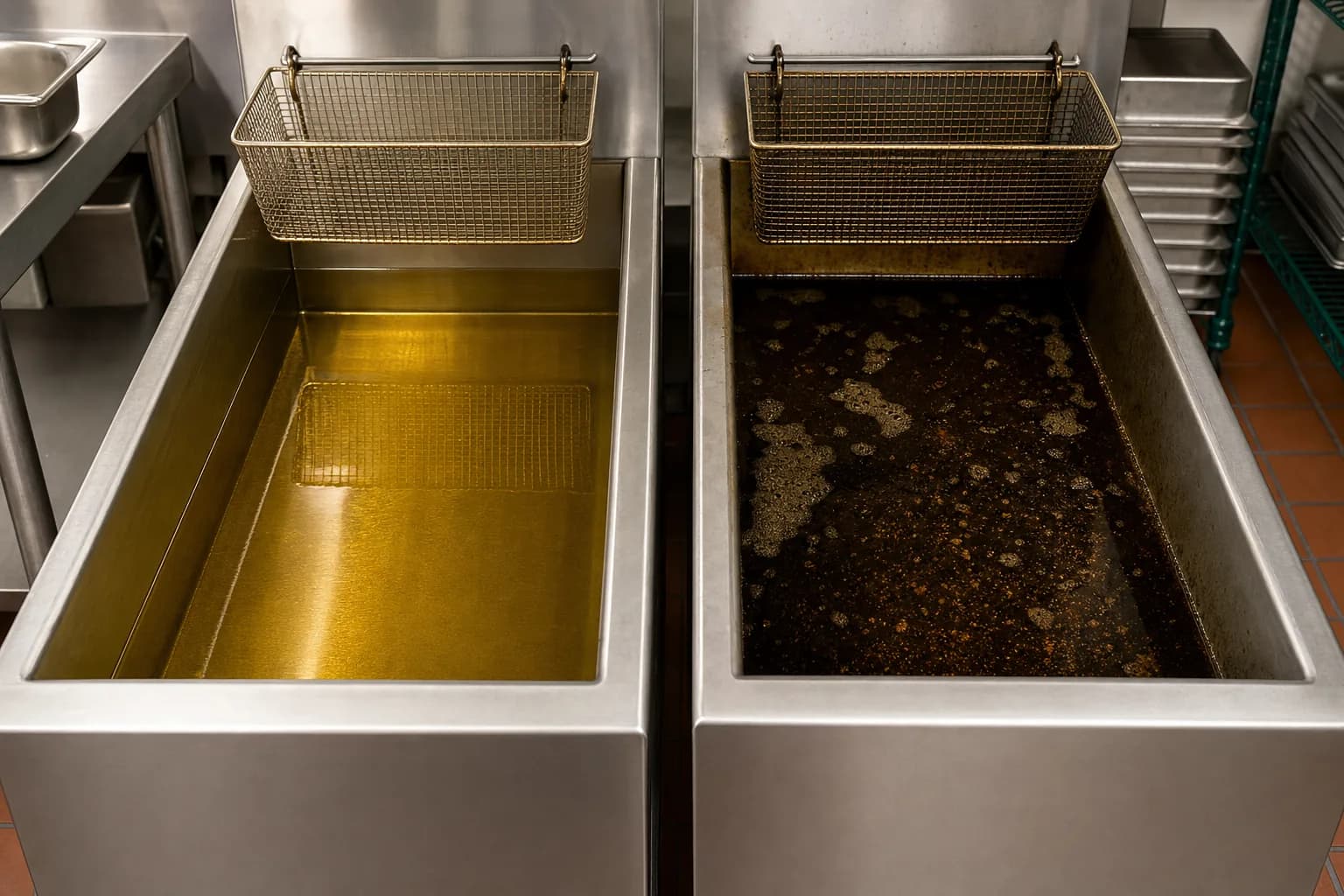
Aging means oil is sitting too long even if the bin isn't overflowing. Used oil breaks down over time and releases strong odors as it degrades. A persistent grease smell that shows up even after the fryers and kitchen have been cleaned is the telltale sign, and it means the interval is too long, not that the container is too small.
The fix depends on which one you're seeing. Chronic overflow calls for a bigger container so the bin gets emptied before it fills, and that's usually the cleaner fix than cramming in extra visits. Odor without overflow calls for a tighter interval so oil moves before it degrades. High-volume kitchens sometimes need both.
Mark the 80 percent level on every container as a visual fill line, and make it staff policy to flag management when oil reaches it. That fill line is a safety control, not a suggestion, and it's your cue to upsize the container or tighten the cadence before either failure mode shows up.
Compliance, Theft, and Freshness Are All Tied to Frequency
Schedule isn't only an operations question in California, it's a compliance one, and it protects your oil from theft along the way.
Used cooking oil is regulated as inedible kitchen grease (IKG) by the CDFA Meat, Poultry and Egg Safety Branch, not by CalRecycle, whose used-oil program covers motor oil. Anyone transporting IKG must be CDFA-registered, carry a valid registration certificate, and hold at least 2 million dollars in liability coverage, under California Code of Regulations Title 3 sections 1180.20 and 1180.25. Every collection also requires a manifest documenting the transporter, generator, date, and amount, with a copy reaching you at pickup or within 45 calendar days. Many local fats-oils-and-grease ordinances separately cap how long grease can sit on site, so check with your city's sewer or wastewater authority for the exact limit.
Why does this connect to frequency? A reliable, scheduled route is what produces a clean, unbroken paper trail. Sporadic on-demand pickups, a container that overflows into the trash, or oil piling up off-manifest all create gaps, and gaps are exactly what an inspector flags.
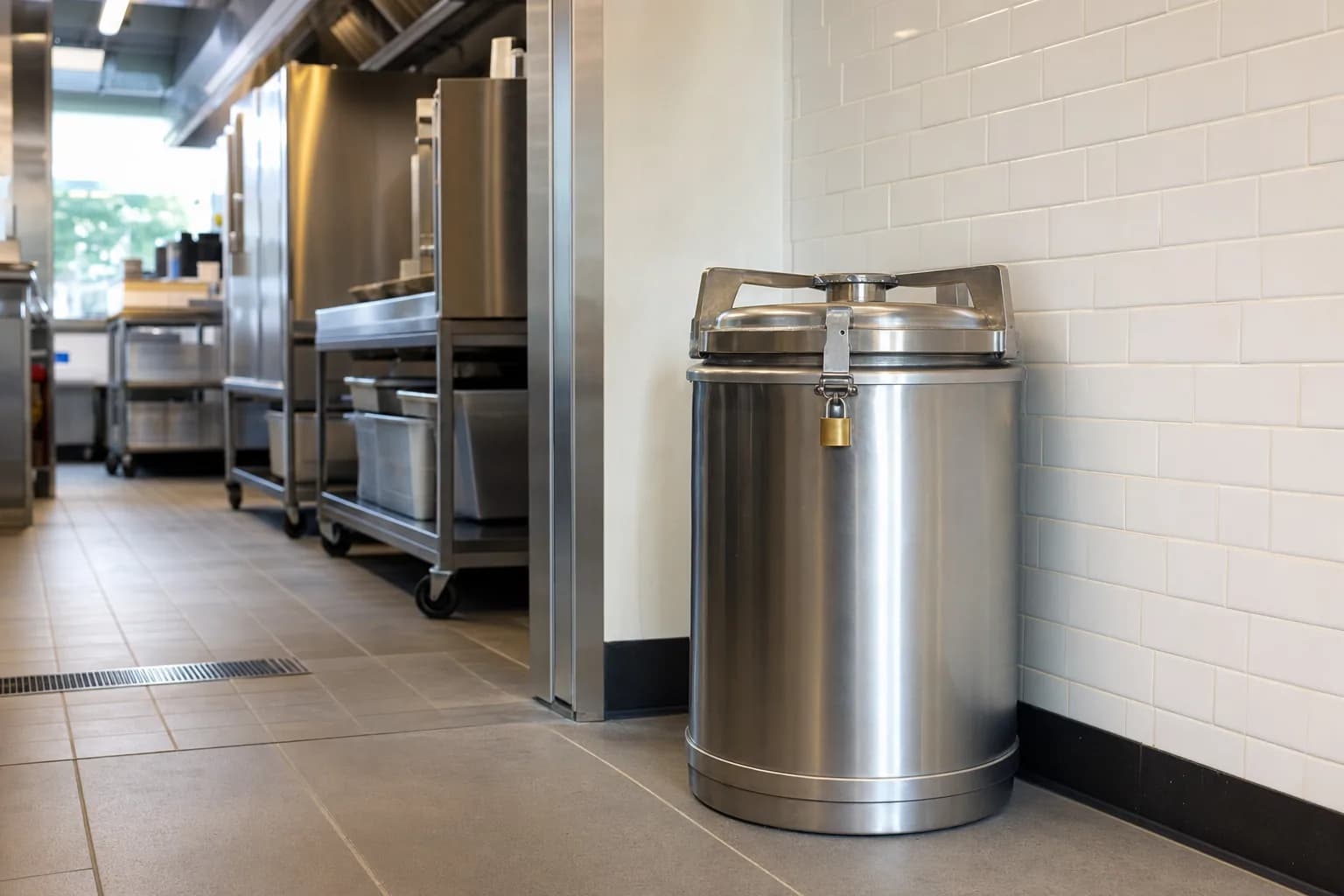
A predictable schedule also protects the oil itself. Because used cooking oil is a theft target, unlocked or infrequently serviced containers draw the most attention. A locked, anti-theft container combined with a reliable route removes the easy target, which is why Oil Guyz provides locked containers at no cost as part of every account.
Freshness matters too: oil that's collected clean and on schedule, rather than sitting and degrading, processes more efficiently at the renderer. A well-run pickup schedule keeps more of your oil captured clean and reused instead of lost to overflow or contamination. Our pages on cooking oil recycling and biodiesel feedstock collection explain where each gallon ends up.
How Oil Guyz Right-Sizes Your Schedule
Right-sizing isn't a one-time setup, it's a short feedback loop:
- Estimate weekly gallons from your fryer count, oil capacity, and change frequency.
- Match a container size from the table, sized for 7 to 10 days of oil with headroom, never the brim.
- Set a starting frequency based on volume and kitchen type.
- Watch the fill level on the first few pickups. If the container is routinely at 80 percent or higher, tighten the cadence or upsize the bin. If it's consistently under half full, stretch the interval.
- Adjust for season. Bump frequency heading into summer and the holidays, and dial it back in the February-to-March slow stretch.
There are no contracts, no fees, and no minimum-volume requirements, so changing your cadence is a quick phone call, text, or update in the online portal, and a real person answers the phone. The free locked anti-theft containers come in the right size for your volume, so upsizing means trading up to a larger container, not a purchase. And because pickup is free, the only thing you're optimizing is fit, there's no per-haul charge to weigh against how often you schedule.
Oil Guyz provides free used cooking oil pickup across Orange County, Los Angeles, and San Diego, plus the Bay Area and Tacoma, with free locked containers, CDFA-compliant manifests, and a schedule built around your actual volume and the season.
If you want your pickup schedule right-sized to your kitchen, start with free used cooking oil pickup, no contract, no fees, and a cadence matched to how much oil you actually produce.