
To prepare used cooking oil for pickup, let it cool completely, strain out large food debris through a coarse screen, and pour it into the provided locked collection container, keeping water, sanitizer, and other waste streams out. Then make sure the bin sits on a clear, paved path for the service vehicle and schedule a pickup before it overflows. That's the whole job: cool, strain, contain clean, keep access clear, schedule.
Done right, preparation takes a few minutes per oil change and protects both your kitchen and the quality of every gallon. Done wrong, hot oil poured into the wrong container, water and food scraps mixed in, a bin blocked behind a delivery pallet, you create burn hazards, contaminated loads, and missed pickups. This guide walks through each step, why it matters, and how a scheduled route takes the recurring work off your plate.
The 6 Steps to Prepare Used Cooking Oil for Pickup
Here is the complete process, in order. Each step exists for a specific reason explained in the sections below.
- Cool the oil completely before transferring it out of the fryer.
- Strain out large food debris through a coarse mesh or screen as you pour.
- Keep water and chemicals out, no ice, sanitizer, mop water, or rinse water.
- Use the provided locked container for spent fryer oil only.
- Keep the bin secure and the access path clear for the service vehicle.
- Schedule the pickup before the container overflows.
Step 1: Let the Oil Cool Completely
Never transfer hot oil. Cooling first is the universal first step in every restaurant grease-handling best-practice guide, and for good reason. Hot oil causes serious burns, can warp or damage some containers, and throws off heavy fumes and odors as you pour. Burns from improperly handled oil are among the most common kitchen injuries.
Let your fryer drop well below operating temperature before draining, many kitchens wait until oil is below 100°F and use a thermometer rather than guessing. A fryer drain wand, transfer pump, or transfer hose keeps hands away from the oil entirely. If staff are pouring manually, heat-resistant gloves and a slow, splash-free pour are non-negotiable.
Cooling also ties into a broader rule: the Los Angeles County CleanLA FOG program tells operators to cool grease before containing it, then store it sealed for recycling. Cooling is where safe handling and proper disposal start.
Step 2: Strain Out Large Food Debris
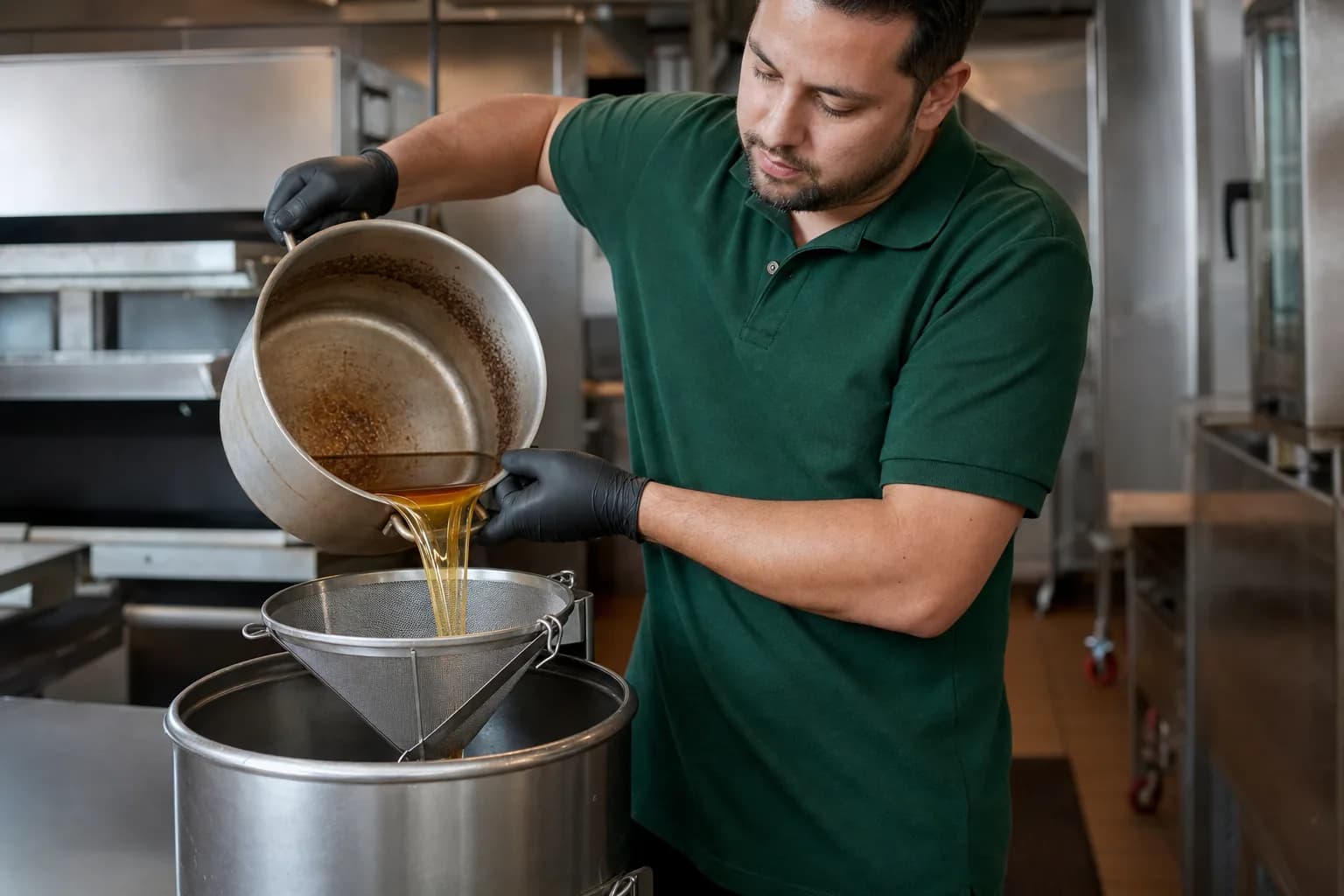
As the cooled oil leaves the fryer, run it through a coarse mesh strainer or screen to catch the big stuff, breading, fryer crumbs, food chunks. You are not fine-filtering the oil; that happens downstream at the processing facility. You're just keeping large solids out of the container.
This is part of "dry cleanup," a best management practice the U.S. EPA promotes in its FOG guidance: remove solids by scraping, wiping, and screening before anything touches a drain. Doing so keeps your collection oil cleaner, helps the container drain freely, and, when you scrape plates and pans into the trash instead of the sink, keeps your grease trap working longer between services.
A quick note on the difference between coarse straining and contamination: pulling out a fryer basket's worth of crumbs is good. Trying to filter the oil crystal-clear is unnecessary work. Find the middle ground.
Step 3: Keep Water and Chemicals Out
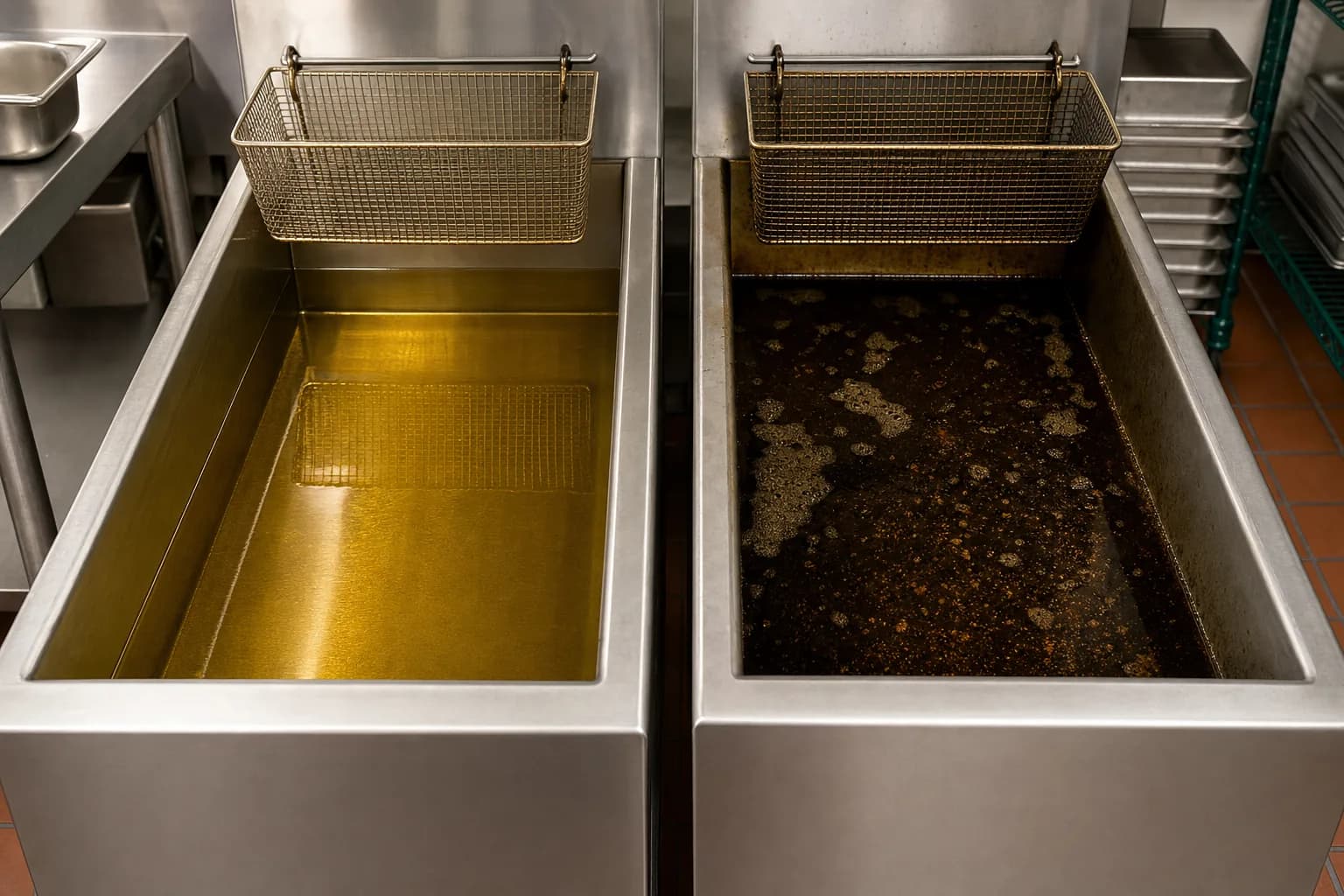
This is the step most kitchens underestimate. Water, cleaning chemicals, sanitizer, ice, and condensation all need to stay out of the used-oil container. Contamination lowers the oil's quality as a biofuel feedstock and can cause a load to be downgraded or rejected outright, processors want clean used cooking oil with water and debris minimized.
Common ways water sneaks in:
- Pouring oil into a container that still has rinse water in the bottom
- Storing the bin uncovered so rain or condensation collects
- Tossing ice or melt water into the same container during cleanup
- Mixing in floor-mop or sink-rinse water "to make room"
Keep the lid sealed between additions, store the container out of the rain, and never use the oil bin as a catch-all. Clean oil in means clean fuel out, and it's the clean stuff that becomes biodiesel feedstock and renewable diesel.
Step 4: Use the Provided Locked Container, for Fryer Oil Only
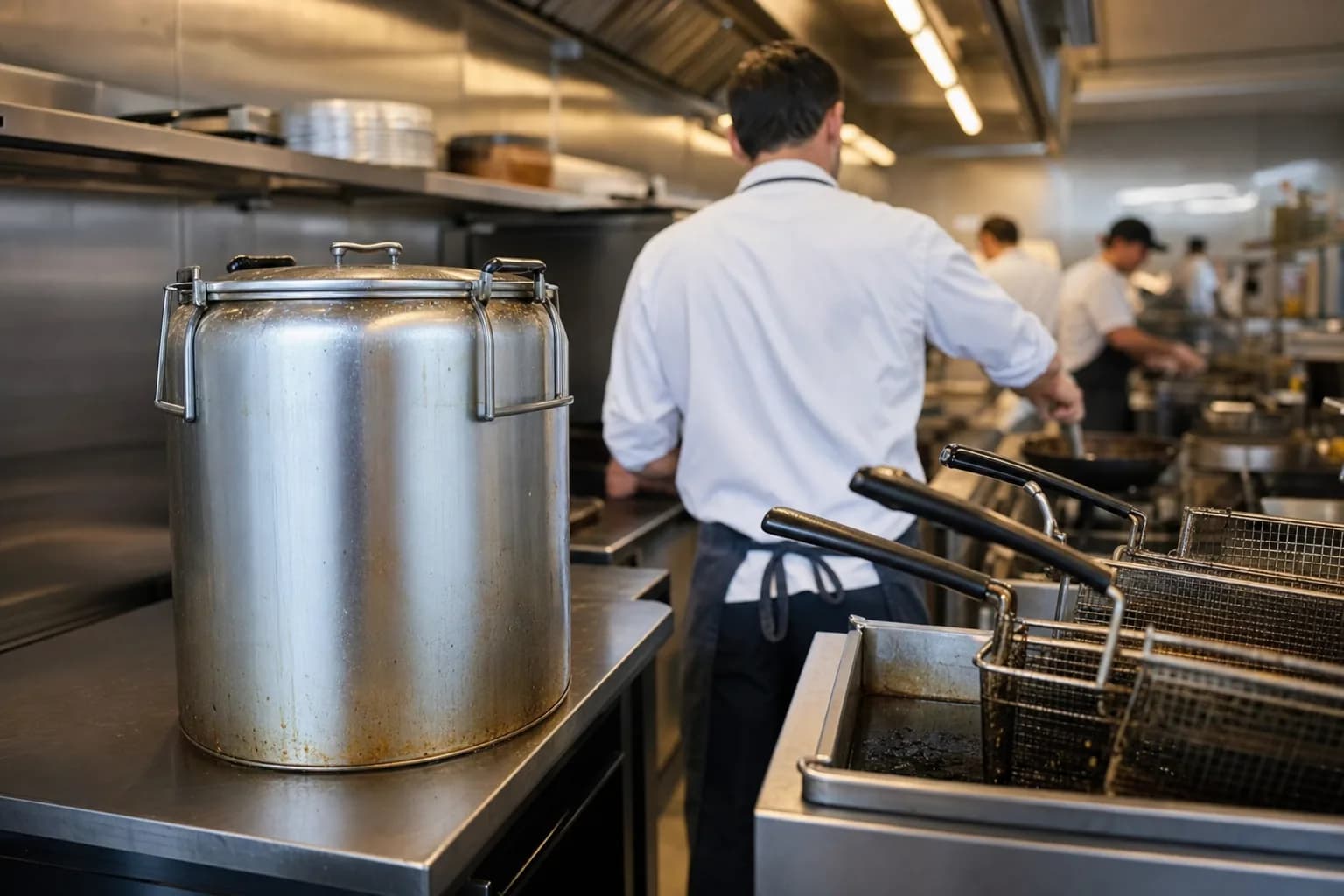
Oil Guyz supplies a free locked, anti-theft collection container sized to your kitchen. Use it for spent fryer oil and nothing else. This matters for two reasons: contamination and theft.
One waste stream per container. Used fryer oil, grease-trap waste, and motor oil are three separate streams handled three different ways. The table below makes the boundaries clear.
| Waste stream | Goes in the locked oil container? | Why |
|---|---|---|
| Spent fryer / cooking oil | ✅ Yes | This is the product, recycled into clean fuel |
| Grease-trap (interceptor) waste | ❌ No | Captured separately during trap service; different handling |
| Motor oil / automotive fluids | ❌ No | Regulated hazardous stream, entirely outside this service |
| Water, sanitizer, mop water | ❌ No | Contaminates the load; can cause rejection |
| Large food solids | ❌ No | Strain out first (Step 2) |
Mixing streams can get an entire load rejected, so keep the line bright: fryer oil only.
Theft protection. Oil theft from unsecured restaurant storage is common across Southern California. A locked container in a secure spot deters thieves and ensures your oil reaches a legitimate, CDFA-licensed recycling facility rather than disappearing into a gray market. The container is part of free used cooking oil pickup, no rental fee, no deposit.
Step 5: Keep the Bin Secure and the Path Clear
Where and how you store the container determines whether the route driver can complete the pickup smoothly. Municipal FOG guidance and rendering industry storage practices both point the same direction: a sealed, locked container in a fenced, well-lit area, away from storm drains, on an impermeable surface.
A practical placement checklist:
- Flat, paved surface (concrete or asphalt), not soil or gravel
- Away from storm drains to prevent stormwater contamination if a spill occurs
- Fenced or secure area, ideally lit, to deter theft and pests
- Clear, unobstructed path wide enough for the service vehicle and equipment
- Not blocked by dumpsters, delivery pallets, parked cars, or locked gates the driver can't access
Keeping the access path clear is the difference between a one-stop pickup and a rescheduled route. A CDFA-registered transporter running a reliable scheduled route can only collect what they can reach. If you have a locked gate or limited service hours, tell us up front so it's built into the route.
Step 6: Schedule the Pickup Before It Overflows
The final step is timing. Schedule a pickup before the container reaches capacity, a good rule of thumb is to call, text, or use the online portal at around 75 to 80% full, leaving headroom so it never overflows. An overflowing bin is a slip hazard, a pest magnet, and a stormwater risk all at once.
You don't have to track this manually. Oil Guyz matches pickup frequency to your actual volume, so most kitchens settle into a reliable scheduled route and rarely think about it. The table below gives a rough starting point, your real cadence is dialed in from your measured volume, not a one-size-fits-all default.
| Approx. monthly oil volume | Typical pickup cadence |
|---|---|
| Under 50 gallons | Monthly |
| 50 to 150 gallons | Bi-weekly |
| 150 to 400 gallons | Weekly |
| 400+ gallons | Twice weekly (or custom) |
There's no minimum volume and no contract, so the schedule can flex with your busy season. Coastal markets like San Diego and Orange County often need to step up frequency in summer and dial it back in slower months. You can schedule or reschedule by phone, text, or the online portal, and a real person answers when you call.
Why Preparation Actually Matters
It's worth understanding what's at stake, because it makes the steps stick.
Keeping grease out of drains protects the sewer, and your business. As grease cools it solidifies and clings to pipe walls, restricting flow until lines back up. The U.S. EPA identifies grease as a leading cause of sanitary sewer overflows, and local programs like LA County's CleanLA trace a large share of sewer blockages to FOG poured down drains. Pouring cooled oil down the drain and chasing it with hot water doesn't help, the grease simply re-solidifies further along the line. Cool, contain, recycle is the only compliant path.
Clean oil becomes clean fuel. When you keep water and debris out, every gallon stays usable as feedstock. The U.S. Energy Information Administration names recycled cooking oil and yellow grease among the major U.S. feedstocks for biodiesel, and the U.S. Department of Energy notes that fats, oils, and greases are a common feedstock for renewable diesel and sustainable aviation fuel, produced by hydrotreating those fats under heat and pressure. Demand for clean used cooking oil as fuel feedstock has grown in recent years, and clean oil is what processors want. Your spent fryer oil from a yellow grease recycling pickup genuinely ends up in someone's fuel tank.
A grease trap is not the same as the oil bin. Quick clarification, because operators mix these up: grease traps (or interceptors) capture FOG washed off during cleaning, while the locked container collects spent fryer oil for recycling. They're separate obligations with separate handling. LA County uses the "25% rule", pump the trap when grease and solids reach 25% of tank capacity. That's a trap-service trigger, not an oil-pickup trigger. Keep the two jobs distinct.
Compliance is documented, not assumed. In California, anyone transporting inedible kitchen grease must be CDFA-registered, display a current state decal on the vehicle, carry liability insurance or a surety bond, and keep a written record of each pickup for at least two years. Oil Guyz emails a CDFA-compliant digital manifest after every pickup and retains records for two years, so you always have proof on hand for a health or city inspection.
Putting It All Together
Preparing used cooking oil for pickup comes down to a short, repeatable routine your staff can run on autopilot: cool it, strain the big debris, keep water and chemicals out, pour it into the locked container for fryer oil only, keep the bin secure with a clear path, and schedule before it overflows. None of it is complicated, and the payoff is real, safer staff, cleaner oil, full compliance, and no overflowing bins. We serve commercial kitchens across California, including Orange County, Los Angeles, and San Diego, plus the Bay Area and Tacoma and Seattle in the Pacific Northwest.
If you'd like a free locked container and a scheduled route matched to your volume, no contract, no minimum, no fees, contact Oil Guyz to set up free used cooking oil pickup for your kitchen.