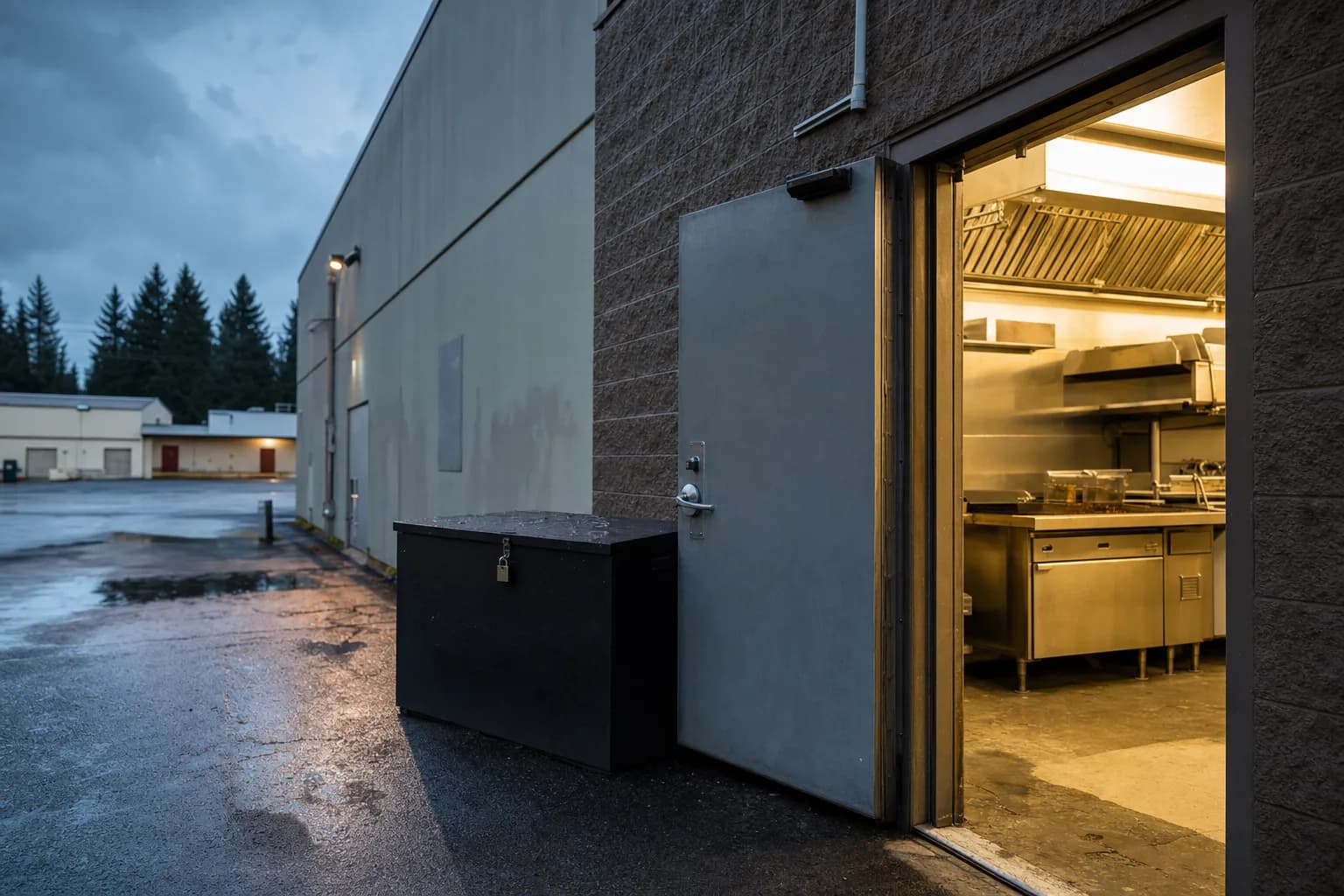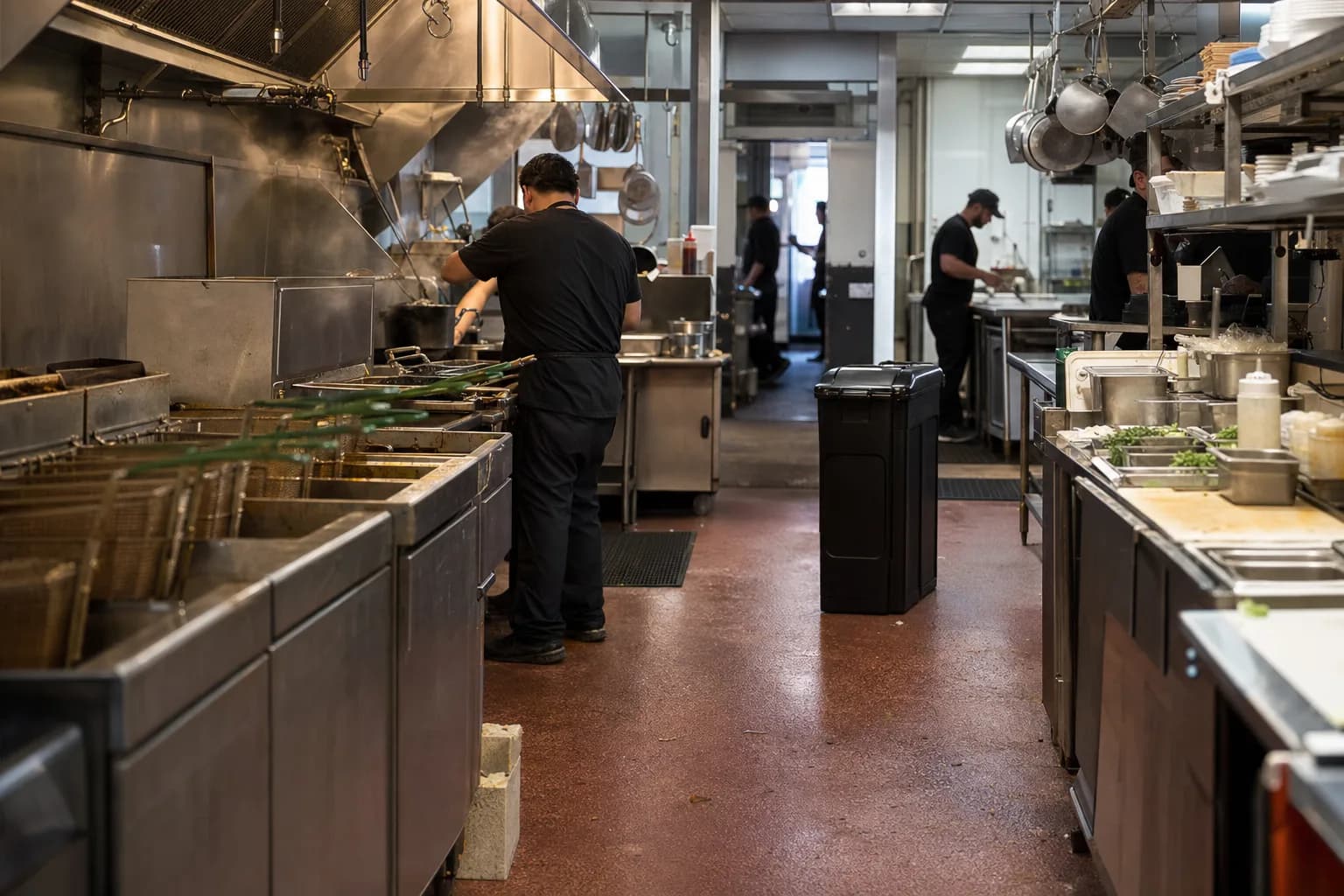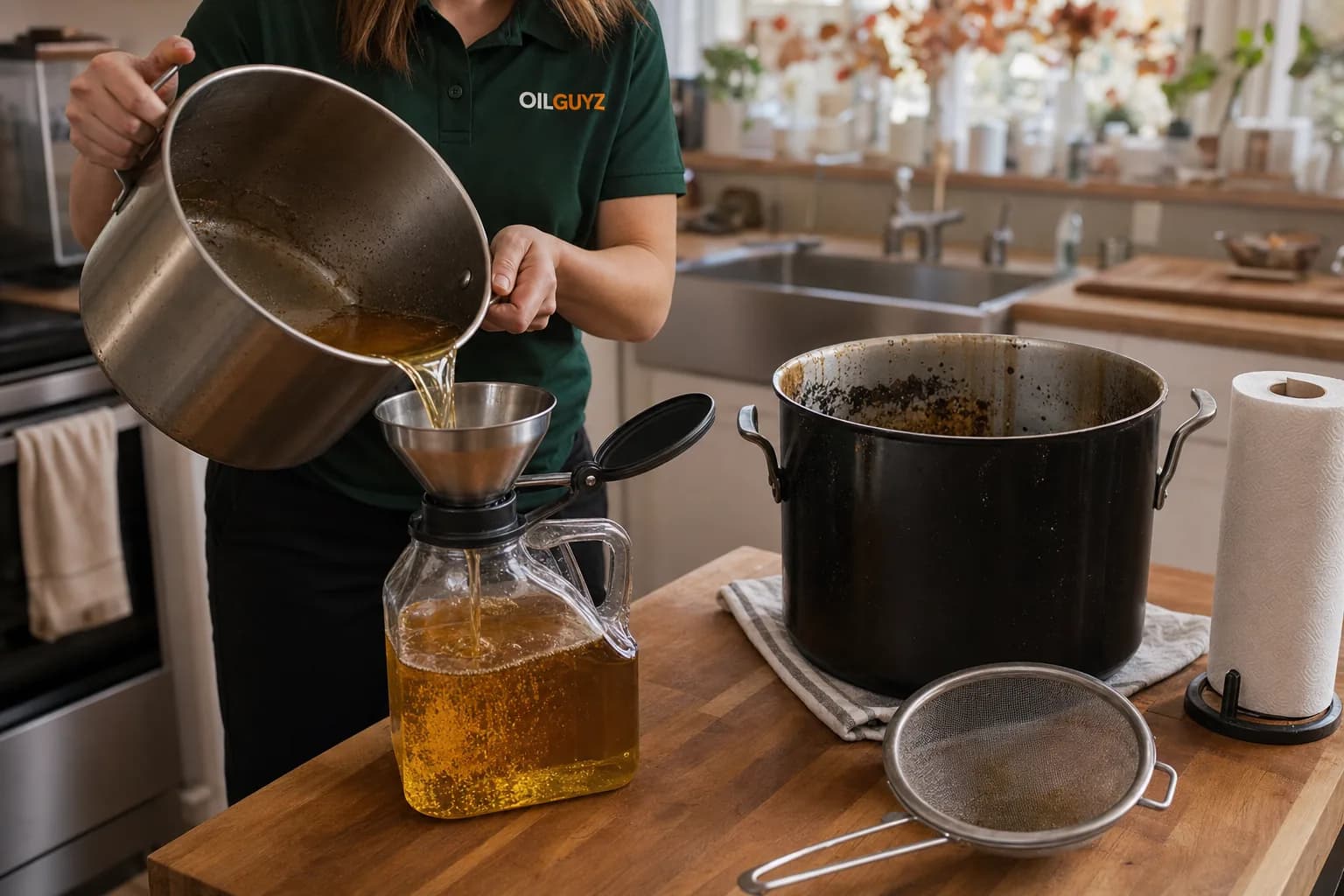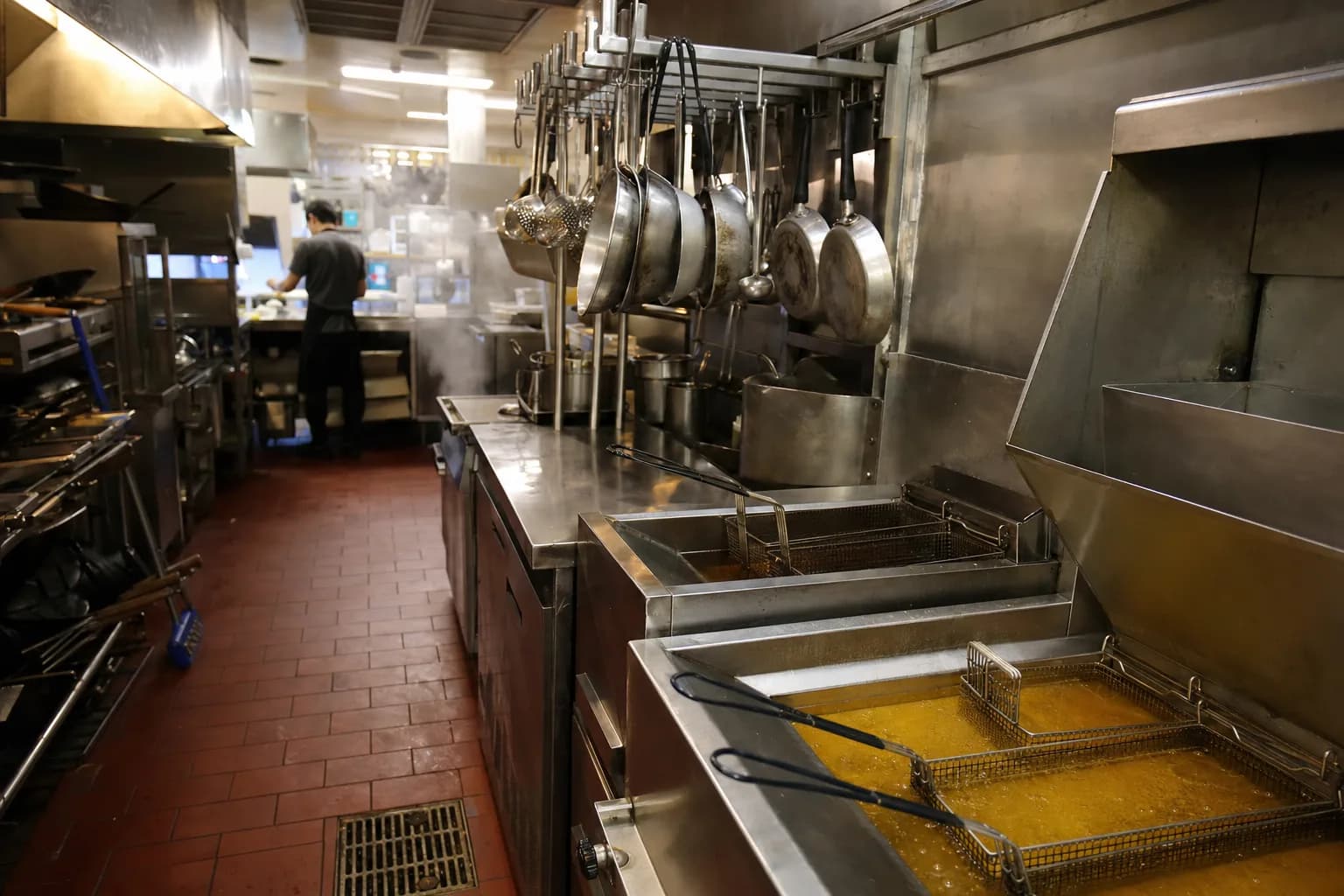

Used cooking oil pickup in Fremont is free for restaurants, and it fits neatly inside the local rules you already answer to. Oil Guyz collects your spent fryer oil on a schedule sized to your kitchen, drops off a free locked anti-theft bin, and leaves a compliant digital manifest after every pickup, so your oil is documented from your back door to our licensed renderer with a clear chain of custody. Whether you run a taqueria on Fremont Boulevard, a wing spot in Newark, or a cafe down the Peninsula in Redwood City or Palo Alto, the setup is the same: no contract, no equipment rental, and a real person answers the phone.
Fremont anchors the Tri-City area and the southeast corner of the Bay, so the grease rules here pull from both East Bay and Peninsula authorities. If you want the full regional picture first, start with our Bay Area used cooking oil pickup guide, then come back for the Fremont and Peninsula specifics below.
Who regulates grease in Fremont, the Tri-City, and the Peninsula
There is no single grease authority across this stretch of the Bay. Your rules depend on which city and which wastewater agency your kitchen falls under. Here is the lay of the land.
Fremont, Newark, and Union City are served by Union Sanitary District (USD), which runs the FOG program for all three cities under Tri-City Ordinance 38, adopted by the Tri-City Council in 2004. USD is your first call on grease device requirements and permits. Reach the FOG Program Coordinator at (510) 477-7630 or ContactUSD@unionsanitary.ca.gov.
Redwood City, San Carlos, and unincorporated San Mateo County fall under Silicon Valley Clean Water (SVCW), whose staff visit food service facilities directly to guide FOG handling before problems reach the sewer.
Menlo Park, Atherton, Portola Valley, Woodside, and parts of East Palo Alto are served by West Bay Sanitary District, which runs a proactive program and inspects FOG businesses on a monthly, quarterly, or annual basis depending on history.
Palo Alto and the surrounding communities answer to the Palo Alto Regional Water Quality Control Plant. Food service establishments must comply with Palo Alto Municipal Code Section 16.09.075. For help sizing a grease control device or reading the code, the plant staff take calls at (650) 329-2598.
The City of San Mateo runs its own grease control program under Municipal Code Chapter 7.38. On top of the wastewater agencies, your food permit and health inspection come from your county. San Mateo County Environmental Health can be reached at (650) 372-6200, and Fremont restaurants are permitted through Alameda County Environmental Health.
What the local FOG program requires
The specifics vary by agency, but the core obligations rhyme across the region. These are the ones that trip operators up most often.
- Install and size the right grease device. Union Sanitary District generally directs non grease intensive spots such as delis, bakeries, and pizza parlors toward a 200 lb grease trap, and grease intensive operations such as Mexican, Indian, Chinese, and buffet concepts toward a grease interceptor with a minimum 1,500 gallon capacity. The City of San Mateo requires sizing that meets or exceeds Uniform Plumbing Code minimums.
- Inspect it on a schedule and keep records. Under the City of San Mateo's rules (Municipal Code Chapter 7.38), the grease pretreatment system must be inspected monthly by the operator, or on a schedule approved by the Director, and you must keep a record of every inspection and maintenance activity at the facility.
- No garbage disposals. Union Sanitary District and Palo Alto both prohibit food grinders and garbage disposals in food service establishments, because ground food solids feed grease blockages.
- Permit before you build or change hands. USD requires a Food Service Permit Application and menu for new construction, tenant improvements, and ownership changes, with plan review running about ten business days.
- Keep FOG out of every drain. Palo Alto Municipal Code Section 16.09.075 prohibits discharging fats, oils, and grease to any sanitary sewer, storm drain, street, or waterway.
Grease trap vs used cooking oil (two different streams)
This is the single most common mix-up we see, so separate the two in your head.
Your grease trap or interceptor catches the fats, oils, and grease that rinse off plates, pans, and equipment into your drains. It is plumbing, it is regulated by your wastewater agency, and it has to be pumped and logged on a schedule. Servicing it is a compliance cost you pay.
Your used cooking oil is the spent fryer oil you pour into a dedicated bin. It is a recyclable commodity that a recycler collects, usually for free, and turns into renewable fuel. It never belongs in the trap, the sink, or the sewer.
You need a maintenance plan for the trap and a recycling plan for the fryer oil, and they are not interchangeable. Our East Bay and Oakland pickup guide walks through how neighboring kitchens handle both sides.
How free used cooking oil pickup works
Here is what the fryer oil side looks like with Oil Guyz, from setup to steady state.
- Free scheduled pickups, timed to your actual fry volume so the bin never overflows and never sits half full for weeks.
- A free locked anti-theft collection bin, because rising oil value has made grease theft a real problem across California. A locked bin and a marked, accountable recycler are your best protection. See our used cooking oil theft prevention guide for what to watch for.
- A compliant digital manifest after every pickup, with a documented chain of custody from your kitchen to the renderer.
- Two years of records kept, so you can produce proof of proper disposal for any inspector who asks.
- No contract and no equipment rental, and a real person answers the phone when you need to change your schedule.
What happens to your oil after pickup
Once your fryer oil leaves your kitchen, it is filtered and processed through our licensed renderer and refinery into clean renewable fuel feedstock for biodiesel and renewable diesel. California's Low Carbon Fuel Standard is what turned used cooking oil into a genuinely valuable commodity, and that value is the reason free collection works. It is never a payout to your restaurant, just the mechanism that keeps pickup free.
The whole loop is documented. Your digital manifest records the transfer with a clear chain of custody from your kitchen to our licensed renderer, the kind of paperwork an inspector wants to see. Local agencies push in the same direction. West Bay Sanitary District explicitly tells restaurants to collect fryer oil in a separate recycling bin rather than sending it to the sewer.
Getting set up in Fremont and along the Peninsula
The short version: confirm your grease trap or interceptor meets your agency's rules, keep your inspection records current, and hand your fryer oil to a recycler that documents every pickup. In the Tri-City, that means Union Sanitary District for the trap and Oil Guyz for the oil. Down the Peninsula, swap in Silicon Valley Clean Water, West Bay Sanitary District, or the Palo Alto plant for the trap side, and the fryer oil process stays exactly the same.
Getting started takes one phone call. We size a bin to your kitchen, set a pickup schedule around your real volume, and start leaving a manifest after every visit. Call Oil Guyz at (714) 880-4788 to set up free used cooking oil pickup for your Fremont, Tri-City, or Peninsula restaurant. No contract required.