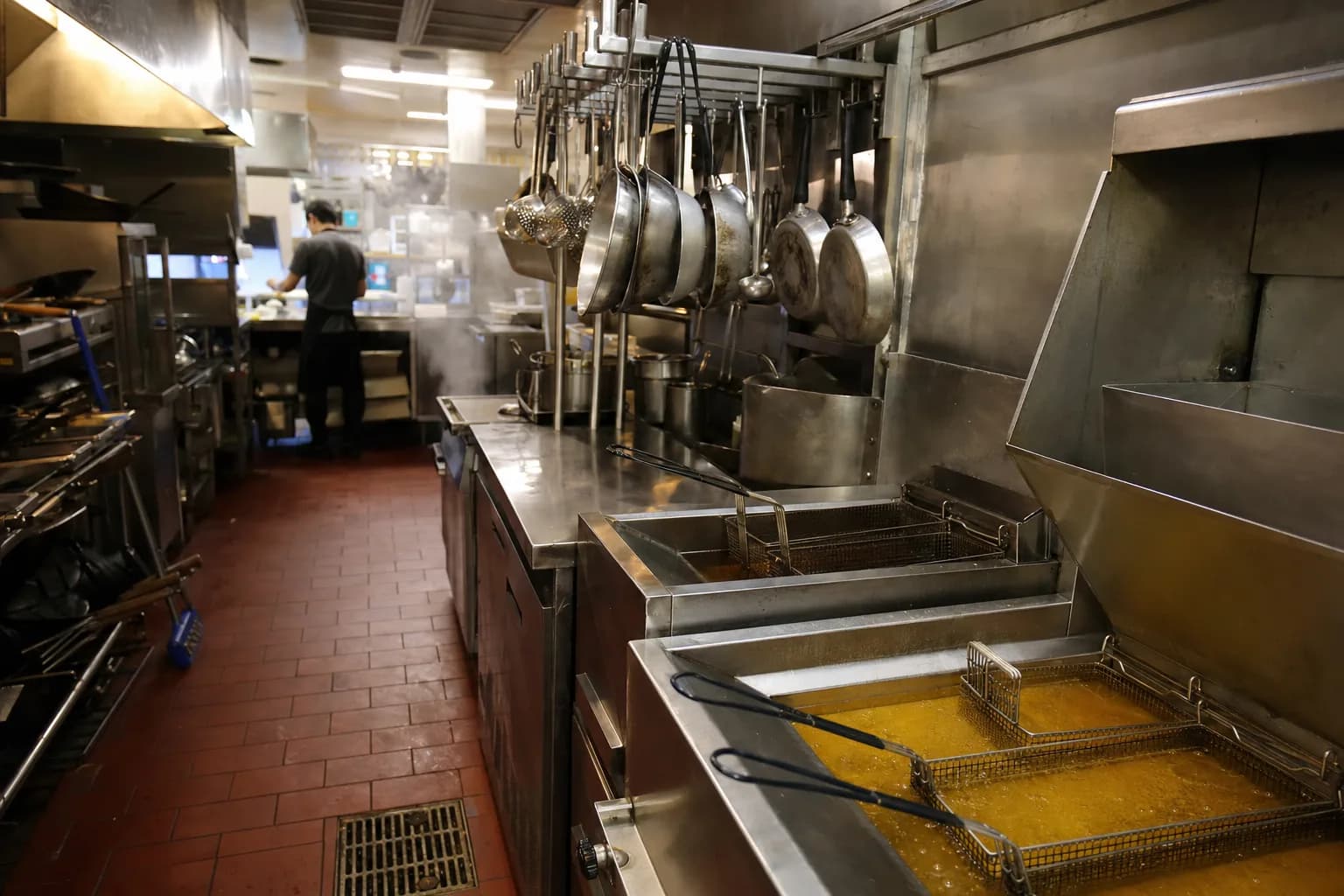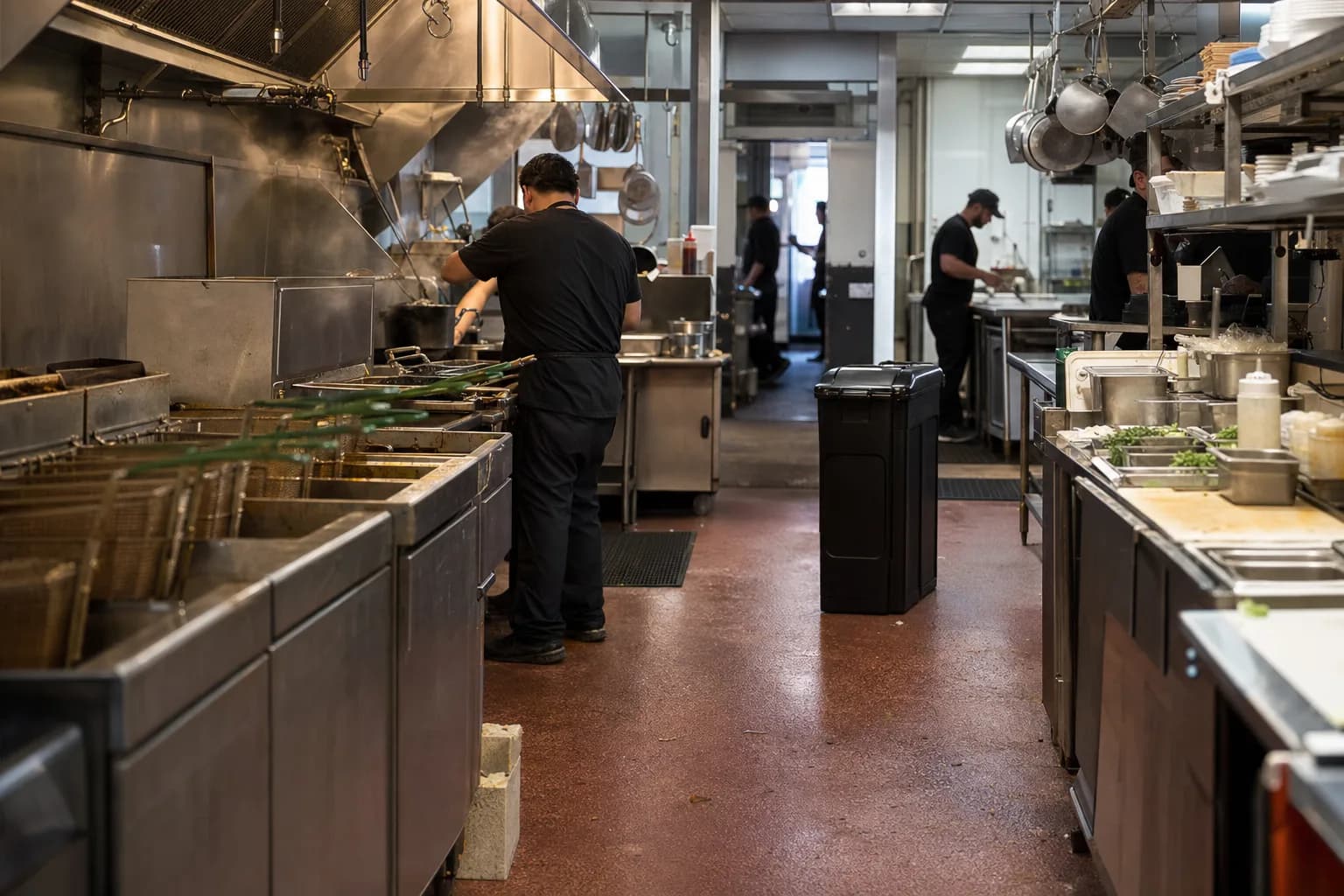

Used cooking oil pickup in South King County is free for restaurants across Kent, Renton, Auburn, Federal Way, Tukwila, and SeaTac. Oil Guyz drops a locked, anti-theft collection bin at your kitchen, sets a scheduled pickup sized to your fryer volume, and recycles every gallon into clean renewable fuel, with a compliant digital manifest handed to you after each visit. That paper trail is what keeps you onside with the King County Industrial Waste program and your city or sewer district FOG rules, without adding a cost to your operation.
This corridor sits between two markets we cover in depth. If you run locations on either side, start with our Seattle used cooking oil pickup guide to the north and our Tacoma and Pierce County guide to the south, then use this page for the South King County specifics.
Who Regulates Grease in South King County
Grease oversight in South King County is layered. One regional authority sets the baseline, and each city or sewer district enforces the day to day rules for your kitchen.
The King County Industrial Waste program (KCIW) is the regional pretreatment authority for the entire corridor. Nearly every restaurant in Kent, Renton, Auburn, Tukwila, and SeaTac ultimately discharges to King County's regional treatment system, so KCIW's limits apply on top of any city rule. KCIW caps nonpolar fats, oils, and grease at 100 milligrams per liter of discharged wastewater, and it also limits floatable polar FOG in what leaves your kitchen. Those limits are set in King County Code Title 28 and enforced through KCIW. You can reach KCIW at 206-477-5300.
On top of that regional baseline, each city or sewer district runs its own FOG program:
- Kent enforces grease rules through Kent Public Works under Kent City Code Chapter 7.04, Sanitary Sewers.
- Renton requires grease and oil interceptors on all restaurants under Renton Municipal Code 4-6-040, with the Utilities Engineer deciding type and capacity.
- Auburn makes you complete a FOG Control Plan as part of your business license application, under Auburn City Code 13.22.
- Federal Way is served by the Lakehaven Water and Sewer District, which runs its own commercial FOG program and requires food service establishments to install and maintain a grease trap or interceptor.
- Tukwila controls FOG under Tukwila Municipal Code Title 14, Water and Sewers, and ties its limits directly to King County wastewater standards.
- SeaTac addresses fall under local sewer districts such as the Southwest Suburban Sewer District, which requires every commercial kitchen that discharges FOG to install a grease trap or interceptor. SeaTac is split among more than one district, so confirm which one serves your address.
One Washington note. There is no CDFA and no statewide cooking oil hauler license here the way there is in California. Washington regulates used oil recycling through the Washington State Department of Ecology, and the state runs a public 1-800-RECYCLE database so you can confirm a recycler is legitimate. When you choose a used cooking oil partner, look for one that recycles through a properly permitted renderer and documents every pickup, not just a verbal promise.
What the Local FOG Programs Require
The wording differs city to city, but the core obligations are the same across South King County.
- Install and maintain a correctly sized grease interceptor. Kent, Renton, Auburn, Tukwila, and the Lakehaven and Southwest Suburban districts all require food service establishments to run a grease trap or interceptor. Auburn draws a clear line: a grease trap is the smaller indoor hydromechanical unit, while a grease interceptor is the larger outdoor gravity vault, often rated 500 gallons or more.
- Clean on a set schedule, not when it clogs. Auburn City Code 13.22.070 caps indoor grease trap cleaning at 90 days and requires quarterly pumping of outdoor interceptors. It also applies the 25 percent rule: once the combined grease and sediment reach 25 percent of the device's capacity, it has to be cleaned regardless of the calendar.
- Keep dated service records on site. Every program in the corridor expects you to produce a maintenance log on demand. Missing records are one of the fastest ways a routine inspection becomes an enforcement problem.
- Keep used cooking oil out of the interceptor and the drain. Your spent fryer oil is a separate stream. It belongs in a sealed collection bin bound for recycling, never poured into the grease interceptor or down a floor drain.
- File a FOG plan where required. Auburn ties a written FOG Control Plan to your business license, and the other jurisdictions can require a plan or a permit before you open or remodel a kitchen.
Grease Trap Versus Used Cooking Oil: Two Different Streams
South King County programs treat grease as two separate waste streams, and mixing them up is a common and costly mistake.
Your grease interceptor is plumbed into your sinks and dish line. It catches grease suspended in wash water before that water reaches the King County sewer. It holds a wet, dirty waste that a professional grease hauler has to pump, and it is not a clean recycling product.
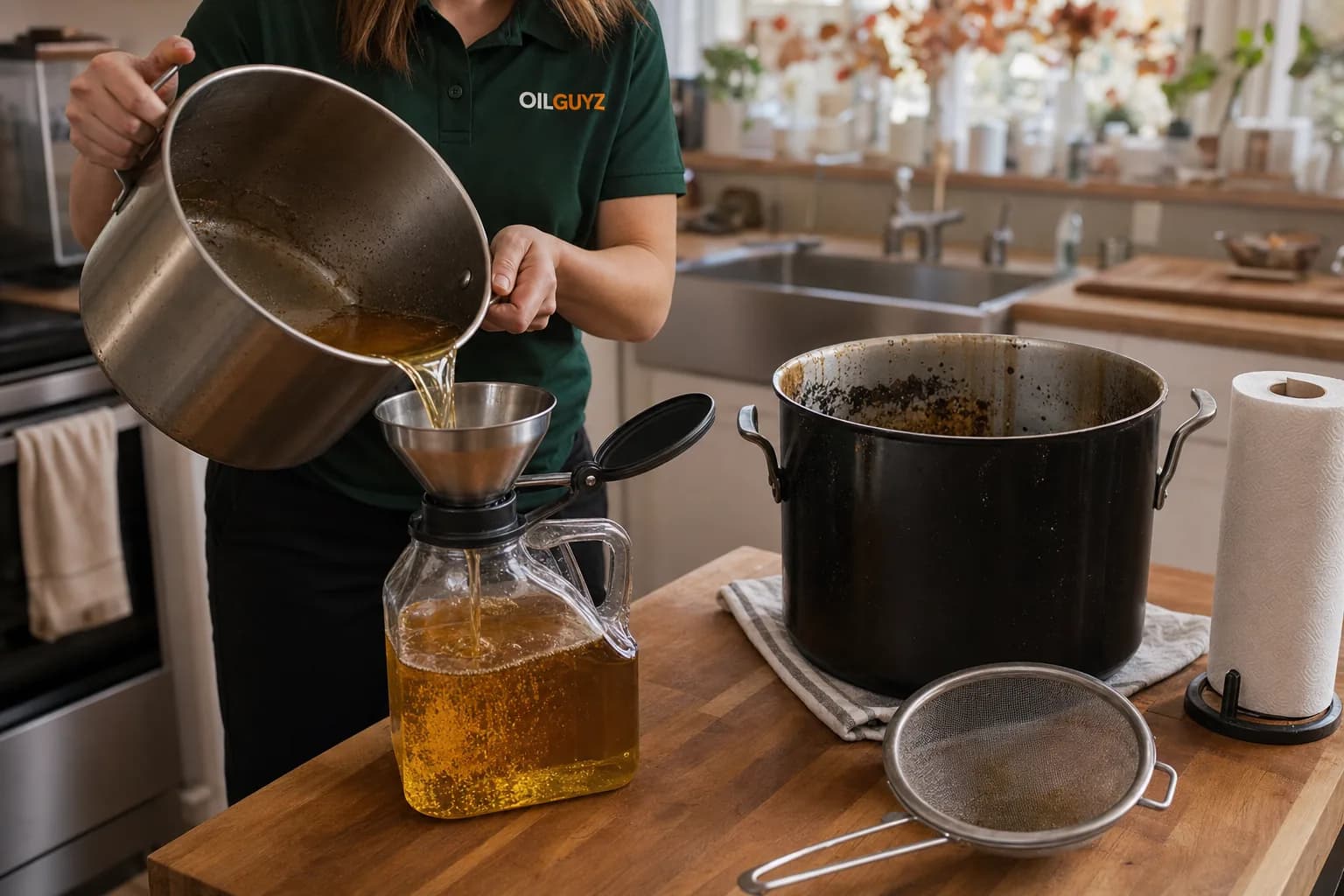
Your used cooking oil is the spent oil you pour off the fryer. Kept clean and separate, it is a valuable feedstock for renewable fuel, and that value is the entire reason a recycler can collect it for free. The cleaner you keep it, the more useful it is. For a step by step on keeping it collection ready, see our guide on how to prepare used cooking oil for pickup.
How Free Used Cooking Oil Pickup Works
Oil Guyz handles the used cooking oil side of the equation, not the grease trap. Here is what a South King County restaurant gets:
- Free service, no contract. No signup fee, no equipment charge, and nothing locking you in.
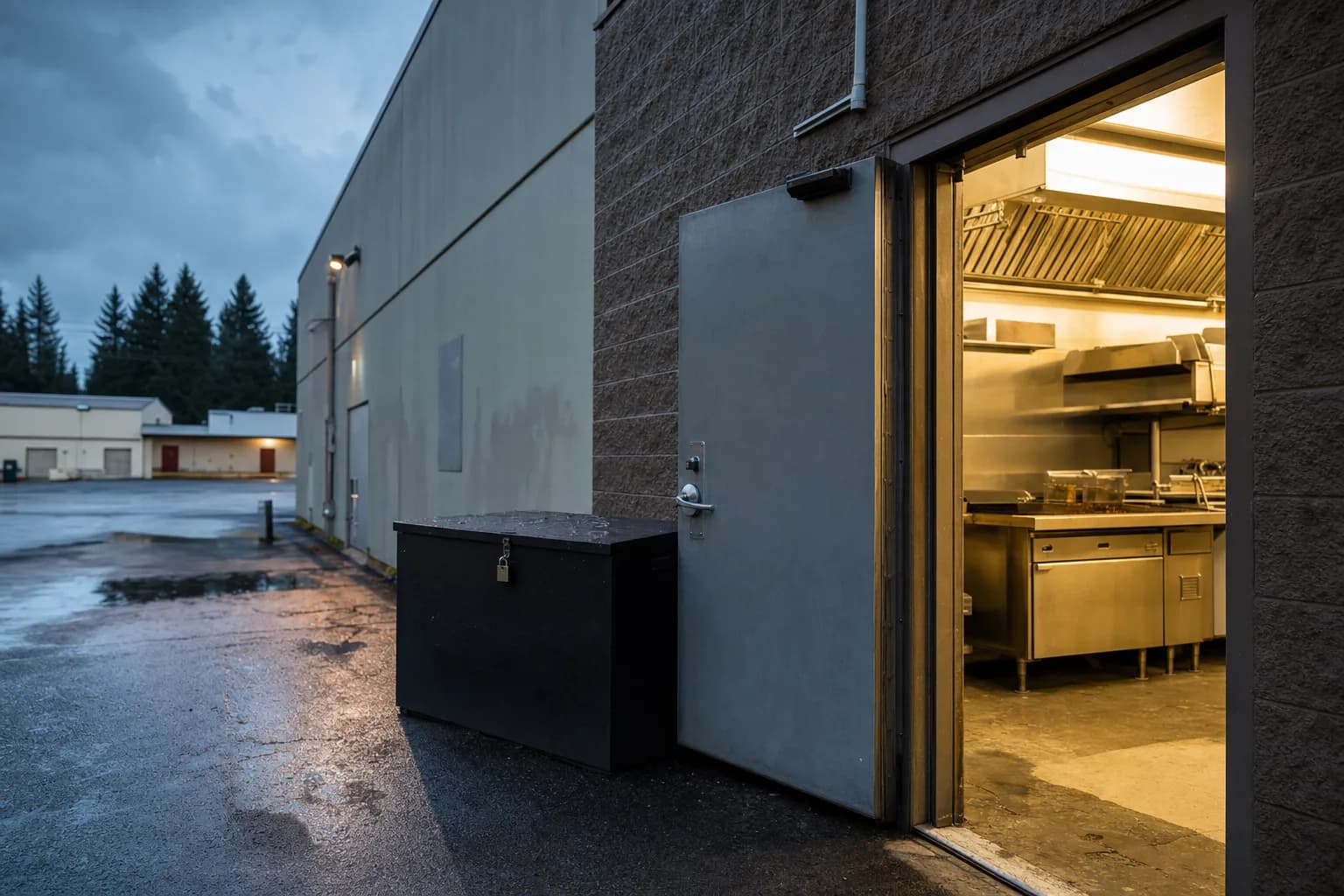
- A free locked, anti-theft collection bin. Grease theft is a real problem in this corridor, and a locked bin protects both your oil and your recycling record. Our guide on used cooking oil theft prevention explains why that matters.
- Scheduled pickups sized to your kitchen. A high volume fried chicken or teriyaki kitchen in Kent gets serviced more often than a small cafe in SeaTac. The cadence matches your fryer volume.
- A compliant digital manifest after every pickup. Documented chain of custody, ready to show a KCIW inspector or your city FOG coordinator.
- Two years of records kept. Your recycling paper trail is always on file.
- A real person answers the phone. When you need a pickup moved up or a bin swapped, you talk to a human.
If you are still weighing providers, our guide on how to choose a grease collection service walks through the questions to ask.
What Happens to Your Oil After Pickup
Once your bin is collected, the oil does not go to a landfill. It is filtered and processed through our licensed renderer and refinery into clean renewable fuel, used as biodiesel and renewable diesel feedstock. That closed loop is why the service can stay free: the oil has real value as a fuel input, so the recycler is paid on the back end, not you.
Washington backs this up on the recordkeeping side. The Washington State Department of Ecology oversees used oil management statewide, and the 1-800-RECYCLE database lets you verify that a recycler is real and reachable. Washington does not regulate used cooking oil through the EPA, so your protection is the Ecology framework plus a clean service record. Every Oil Guyz pickup is logged on a digital manifest with documented chain of custody, so your recycling history holds up during any city, county, or state review. For the compliance mindset in the neighboring market, our Seattle FOG compliance guide covers the same recordkeeping approach.
Getting Set Up in South King County
Setting up is quick. First, confirm which authority covers your address: KCIW plus your city for Kent, Renton, Auburn, and Tukwila, or your local sewer district for Federal Way and SeaTac. Then keep your grease interceptor on its cleaning schedule and your used cooking oil in a separate bin. Oil Guyz handles that second half for you: the locked bin, the scheduled pickup, the digital manifest, and two years of records, at no cost.
Call Oil Guyz at (714) 880-4788 to set up free used cooking oil pickup for your Kent, Renton, Auburn, Federal Way, Tukwila, or SeaTac restaurant. A real person answers, we size the pickup to your kitchen, and there is no contract required.