
Used cooking oil pickup in San Jose is free for restaurants and commercial kitchens, and it slots neatly into the city's grease rules when you use a service that leaves you a documented manifest. San Jose treats two things separately: the greasy wastewater the FOG program regulates, and the bulk fryer oil you pour off at closing, which is a recyclable commodity. Oil Guyz handles that second stream with a free locked bin, scheduled pickups sized to your volume, and a compliant digital manifest after every collection. Here is exactly how it works across San Jose and the wider South Bay.
If you operate in more than one part of the region, the rules shift by city and sewer district, so it helps to see the whole map first. Our Bay Area used cooking oil pickup guide covers that broader picture, and this page zooms into San Jose, Santa Clara, Sunnyvale, Milpitas, Campbell, and Mountain View.
Who regulates grease in San Jose and the South Bay
Grease oversight in the South Bay is split between a few different authorities, and knowing which one covers your address saves a lot of confusion.
The City of San Jose Environmental Services Department runs the FOG Control Program for restaurants inside San Jose city limits. The legal backbone is San Jose Municipal Code Chapter 15.14, the Sewer Use Regulations, which gives the program authority to inspect kitchens and require grease control devices. Sewage from San Jose flows to the San Jose-Santa Clara Regional Wastewater Facility in Alviso, a plant jointly owned by San Jose and Santa Clara that serves roughly 1.5 million residents and more than 17,000 businesses across eight cities. Keeping FOG out of that regional sewer system is the entire point of the program.
The surrounding cities run their own versions. The City of Santa Clara manages FOG through its Water and Sewer Utilities and is a co-owner of that same regional plant. Sunnyvale operates its own Water Pollution Control Plant and inspects food service establishments through its water pollution prevention staff. Campbell, Los Gatos, Monte Sereno, and most of Saratoga fall under the West Valley Sanitation District at 100 East Sunnyoaks Avenue in Campbell, which adopted its FOG program under Ordinance No. 153. Mountain View sends its sewage to the Palo Alto Regional Water Quality Control Plant and inspects kitchens through its Fire Department Environmental Protection staff. Milpitas discharges to the same San Jose-Santa Clara facility.
The county health department is a separate regulator entirely. The Santa Clara County Department of Environmental Health, at 1555 Berger Drive, Suite 300 in San Jose and reachable at 408-918-3400, issues your food facility permit under the California Retail Food Code. That is the food-safety side. Your grease control device and your used cooking oil recycling are handled by the city or sanitary district above, not the county. Two different inspectors, two different rulebooks.
What the San Jose FOG program requires
Inside San Jose, Chapter 15.14 and the Environmental Services Department FOG Control Program set clear expectations for any food service establishment, which the code defines broadly to include restaurants, delis, bakeries, cafeterias, markets, caterers, and similar operations that put grease into the sewer.
- Install an approved grease control device. The code requires a grease interceptor, grease trap, or mechanical grease removal device sized to your kitchen. It captures the greasy wastewater from sinks and dishwashers before it reaches the sewer.
- Service grease traps at least every 30 days. San Jose expects grease traps cleaned at least monthly, and higher-volume kitchens often need it sooner.
- Service grease interceptors at least every 90 days. Larger in-ground interceptors are cleaned at least quarterly, and more often if they fill faster than that.
- Keep maintenance records onsite. FOG inspectors can ask for your service records at any inspection, and failing to produce them can lead to violations and fines.
- Records uploaded to SwiftComply count as compliant. San Jose offers a free online records tool at fogregister.com/sanjose. Records uploaded there satisfy San Jose Municipal Code section 15.14.650, and your inspector can confirm compliance without visiting your kitchen.
None of these rules cover your bulk fryer oil directly, which is where a used cooking oil service comes in.
Grease trap vs used cooking oil (two different streams)
This is the single most common point of confusion, so it is worth being precise.
A grease trap or interceptor exists to catch the small amounts of fat that rinse off dishes, pans, and floors and mix into your wastewater. It is plumbed into your drains, and the FOG program regulates it.
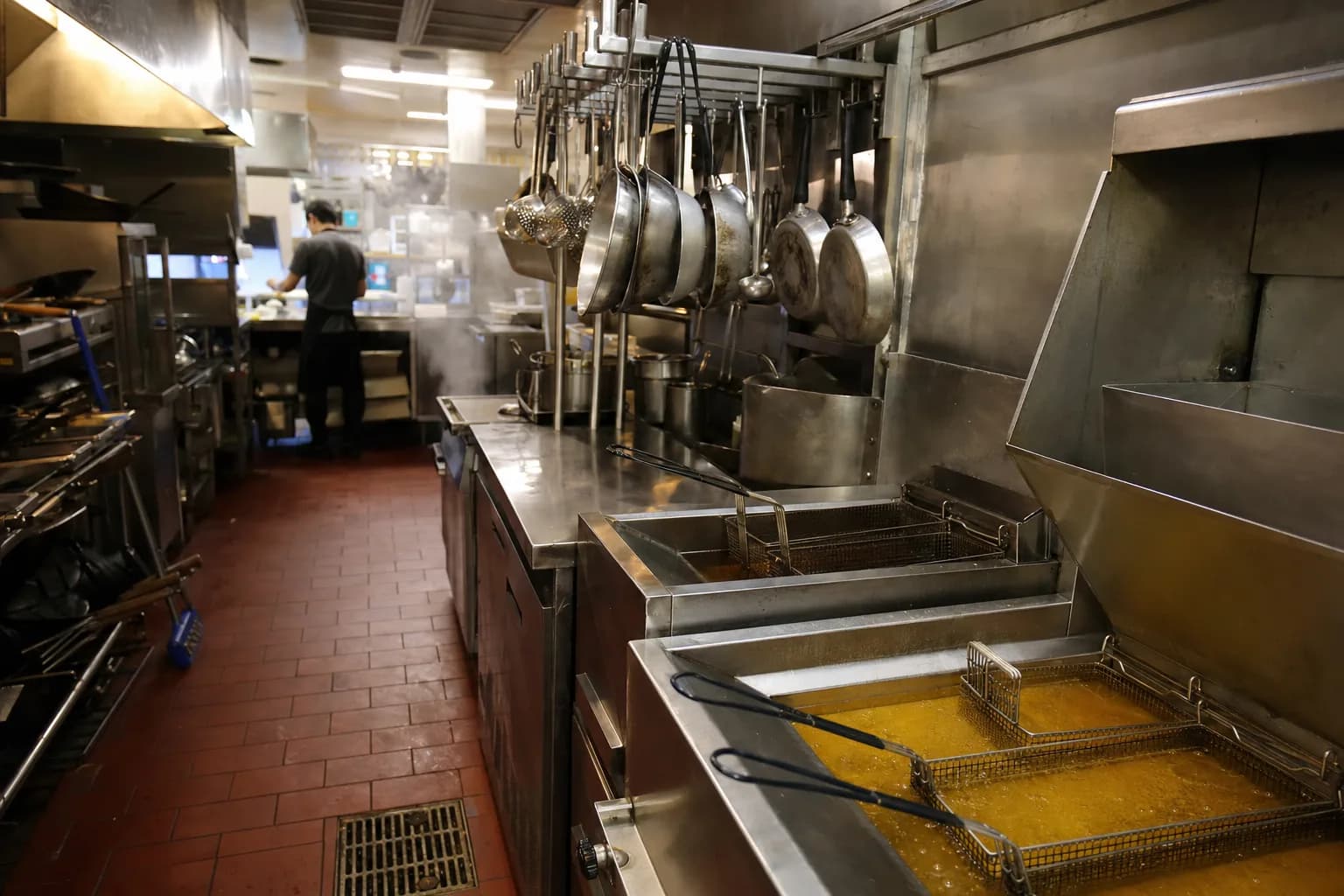
Bulk used cooking oil is different. It is the spent fryer oil you pour out when you change your fryers, and it is not wastewater. It is a recyclable commodity with real value as renewable fuel feedstock, and it belongs in a sealed collection bin, never in the trap, never down the drain, and never in the trash.
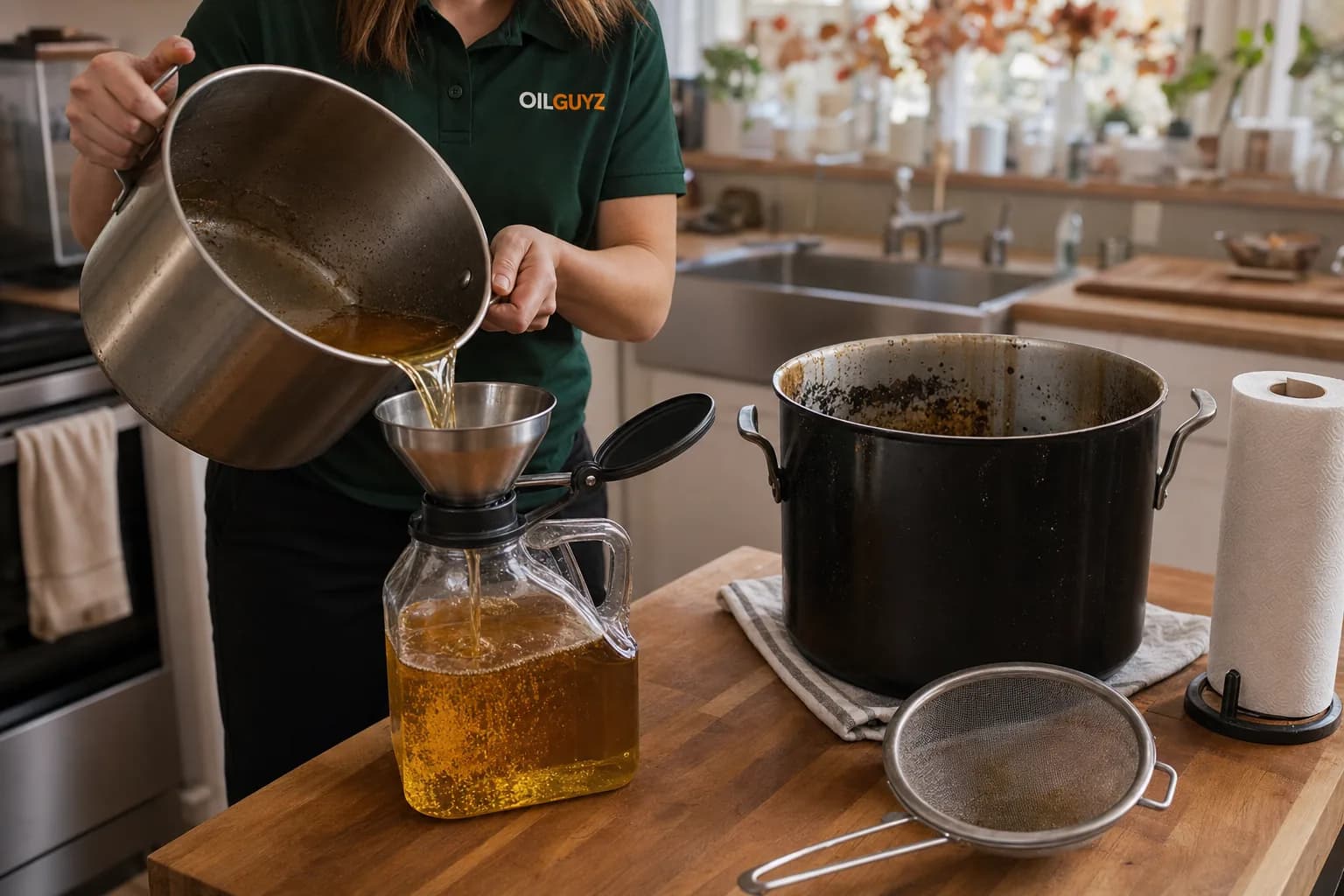
Pouring fryer oil into your grease interceptor is a fast way to overload it, trigger more frequent pumping, and fall out of compliance. Keep the two streams separate and both systems stay clean. If you want the mechanics of getting oil ready for collection, our guide on how to prepare used cooking oil for pickup walks through it.
How free used cooking oil pickup works
Oil Guyz handles the bulk-oil side for South Bay kitchens at no cost. Here is what the service includes.
- Free service, no contract. No signup fee and no long-term lock-in.
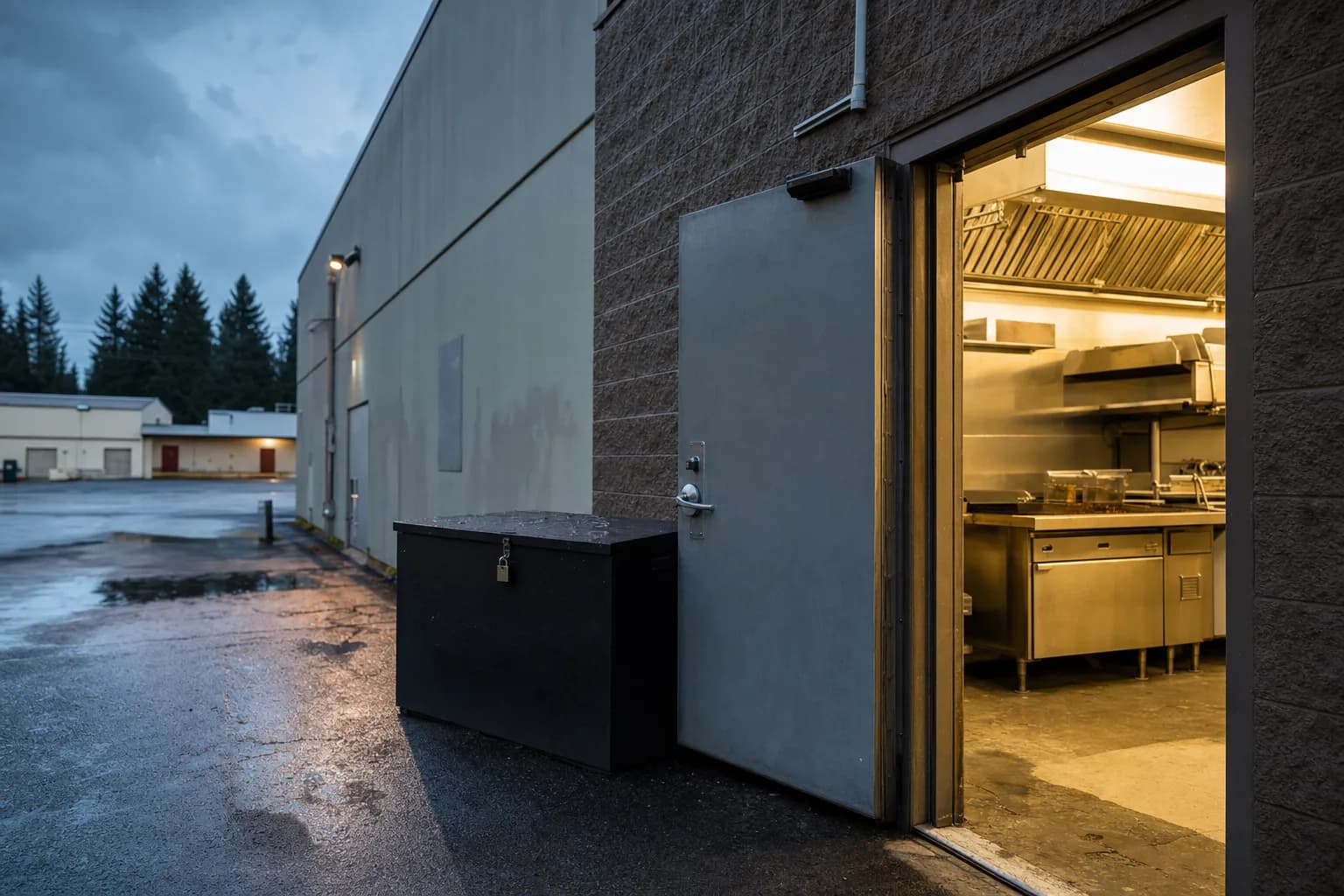
- A free locked anti-theft collection bin. Grease theft is a real problem in California, and a locked bin keeps your oil and your records intact. More on that in our piece on used cooking oil theft prevention for California restaurants.
- Scheduled pickups sized to your volume. A high-volume fried-chicken kitchen and a small cafe get different cadences, matched to how fast you fill the bin.
- A compliant digital manifest after every pickup. You get a documented chain of custody in line with California's inedible kitchen grease rules, which is exactly the paper trail an inspector or auditor wants.
- Two years of records kept. We retain your pickup history so you are never scrambling for documentation.
- A real person answers the phone. When you need to add a pickup or ask a question, you reach a human.
If you are weighing providers, our checklist on how to choose a grease collection service covers the questions worth asking.
What happens to your oil after pickup
Once your oil leaves the kitchen, it does not go to a landfill. It is filtered and processed through our licensed renderer and refinery into clean renewable fuel, the feedstock behind biodiesel and renewable diesel.
This loop is the reason free pickup works. Used cooking oil has value as a low-carbon fuel feedstock, and California's Low Carbon Fuel Standard rewards renewable fuels made from waste grease, so the recycler captures value from the oil rather than charging you to haul it away. You are not paid for the oil, and it should never be pitched that way. The value simply covers the cost of collection, which is what lets the service be free.
California tracks recycling through CalRecycle, the state agency at calrecycle.ca.gov, and used cooking oil moves under the California Department of Food and Agriculture inedible kitchen grease program, which requires a registered transporter and delivery to a licensed rendering facility. That manifest you receive after every pickup is your proof the oil was handled correctly, from your back door to the refinery. Separately, at the San Jose-Santa Clara Regional Wastewater Facility in Alviso, any residual fats, oils, and grease that reach the sewer are skimmed off during primary treatment, which is exactly the load the FOG program is designed to shrink.
Getting set up in San Jose and the South Bay
To recap: in San Jose, the Environmental Services Department FOG Control Program under Municipal Code Chapter 15.14 regulates your grease trap or interceptor, while your bulk fryer oil is a separate recyclable stream that needs its own collection and its own manifest. Neighboring cities and districts, from Santa Clara and Sunnyvale to the West Valley Sanitation District, run their own versions of the same idea. Whichever one covers you, keeping the two streams separate and holding a clean manifest is what keeps you out of trouble.
Getting started is simple. We drop off a free locked bin, set a pickup schedule sized to your kitchen, and leave a digital manifest after every collection. If you run locations beyond the South Bay, our East Bay used cooking oil pickup guide and San Francisco FOG rules guide cover those areas too.
Call Oil Guyz at (714) 880-4788 to set up free used cooking oil pickup for your San Jose or South Bay kitchen. No contract required.