
Bay Area restaurant grease and FOG rules are set locally, not by one regional agency, so the exact requirements for your kitchen depend on which city or sanitary district your sewer connects to. The good news for owners and operators is that the core obligations are the same everywhere, and handling your used cooking oil compliantly is free. You install approved grease control, keep it clean on schedule, keep the records onsite, and hand your spent fryer oil to a recycler that leaves you a documented manifest. This guide breaks down who regulates grease across Alameda, Santa Clara, and San Mateo counties, what each program requires, and how free scheduled pickup keeps you covered.
If you want the wider lay of the land first, including bin sizing and pickup scheduling across the region, start with our Bay Area used cooking oil pickup guide. This post focuses on the compliance side: the FOG programs, the codes, and the agencies that actually inspect your kitchen.
Who regulates grease in the Bay Area
There is no single Bay Area FOG agency. Two different things happen in your kitchen, and the region treats them separately.
The first is the greasy wastewater running off your sinks, dishwasher, and floor drains. That is what the local Fats, Oils, and Grease (FOG) program targets through grease traps and interceptors. In most of the Bay Area, the agency running that program is your city or your special sanitary district, operating under its own sewer use ordinance. They write the rules, permit your grease control device, and send an inspector.
The second is bulk used cooking oil, the spent fryer oil you pour out at the end of the night. That is a recyclable commodity with its own paper trail. In California, used cooking oil is collected and transported under the California Department of Food and Agriculture Inedible Kitchen Grease program, documented with a manifest for every load, and delivered to a licensed renderer.
Layered on top, your county environmental health department issues the retail food facility permit and can flag a missing or overflowing grease device during a routine inspection. So a single Bay Area kitchen can answer to a sanitary district for FOG, a county health department for its food permit, and a licensed renderer for its oil records. Here is how that shakes out county by county.
What the Bay Area FOG programs require, county by county
Alameda County
- EBMUD runs the regional wastewater treatment and the FOG hotspot program. The East Bay Municipal Utility District treats wastewater for much of the East Bay and runs FOG hotspot investigations, inspections, and enforcement support. Restaurant questions go to cleanbay@ebmud.com or (510) 287-1651.
- Union Sanitary District requires interceptors sized to your menu. In Fremont, Newark, and Union City, all food service establishments must have grease interceptors or traps under Ordinance 38, with the size set by your facility type and a review of your menu. No dishwasher may drain to the interceptor, but the pre-rinse sink must connect to it. The FOG Coordinator is at (510) 477-7630.
- Oro Loma Sanitary District requires pre-treatment and recycles the grease it receives. Serving San Lorenzo, Ashland, Cherryland, Fairview, and parts of San Leandro, Hayward, and Castro Valley, Oro Loma requires industrial and commercial users to pre-treat grease, and it operates a grease receiving facility that turns collected FOG into renewable energy.
Santa Clara County
- San Jose runs its FOG program under Municipal Code Chapter 15.14. Grease traps must be serviced at least every 30 days and interceptors at least every 90 days, with maintenance records kept onsite. The city offers a free digital tool, SwiftComply, and records uploaded through it satisfy the maintenance recordkeeping requirement in section 15.14.650 of the San Jose Municipal Code.
- West Valley Sanitation District enforces Ordinance No. 153. Covering Campbell, Los Gatos, Monte Sereno, and most of Saratoga, the district prohibits mixing yellow grease (your fryer oil) with grease trap or interceptor waste and inspects device installation and maintenance. Contact is (408) 378-2407.
- The City of Santa Clara runs its own FOG program through its Water and Sewer Utilities, separate from San Jose, so a kitchen a few blocks away can answer to a different office.
San Mateo County
- Silicon Valley Clean Water covers Redwood City, San Carlos, Belmont, and the West Bay Sanitary District. SVCW inspectors visit restaurants to check grease trap and interceptor handling, and they combine stormwater and FOG inspections into a single visit to cut down on trips.
- Many Peninsula cities run their own programs. The City of San Mateo, for example, administers its own FOG control program, so confirm which authority holds your sewer connection before you assume the county handles it.
San Francisco (see the dedicated guide)
San Francisco is stricter and runs its own show. The San Francisco Public Utilities Commission administers the FOG Control Ordinance, assigns each kitchen a Discharger Category, and requires approved grease capturing equipment. We cover it in full in our San Francisco FOG rules and used cooking oil guide, so we will not repeat it here.
The common thread: the 25 percent rule and records
Whatever agency you answer to, two requirements repeat across every Bay Area program:
- Clean at the 25 percent rule. Your grease device must be pumped when combined grease and solids reach 25 percent of its design depth, or on a set schedule such as every 90 days, whichever comes first. An inspector who finds you above 25 percent can issue a violation no matter when you last serviced it.
- Keep the records and produce them on demand. Most FOG violations are documentation failures, not missed service. A pump happened, but the manifest was lost, never issued, or missing a required detail. Every program expects service and manifest records kept onsite. Our theft and recordkeeping notes in the California used cooking oil theft prevention guide walk through why that paper trail also protects your oil.
Grease trap vs used cooking oil (two different streams)
This is the mistake we see most, and it costs restaurants money. A grease interceptor is plumbing. It captures the grease suspended in the wastewater from your sinks, dishwasher, and floor drains so that greasy water does not clog the public sewer. It gets pumped by a professional pumping company on a schedule.
Bulk used cooking oil is different. It is the concentrated fryer oil you drain and store, and it never belongs in the interceptor or down any drain. Pouring fryer oil into your interceptor overloads it, triggers more frequent and more expensive pumping, and can put you out of compliance in a single inspection. Keep the two streams apart: greasy wastewater goes to the interceptor, and spent fryer oil goes into a dedicated collection bin for recycling. West Valley Sanitation District writes this separation directly into its ordinance, and every other Bay Area program expects it in practice.
How free used cooking oil pickup works
For the fryer oil stream, Oil Guyz gives Bay Area restaurants a straightforward, no-cost setup:
- Free service, no contract. Nothing to sign, no monthly fee, and you are not locked in.
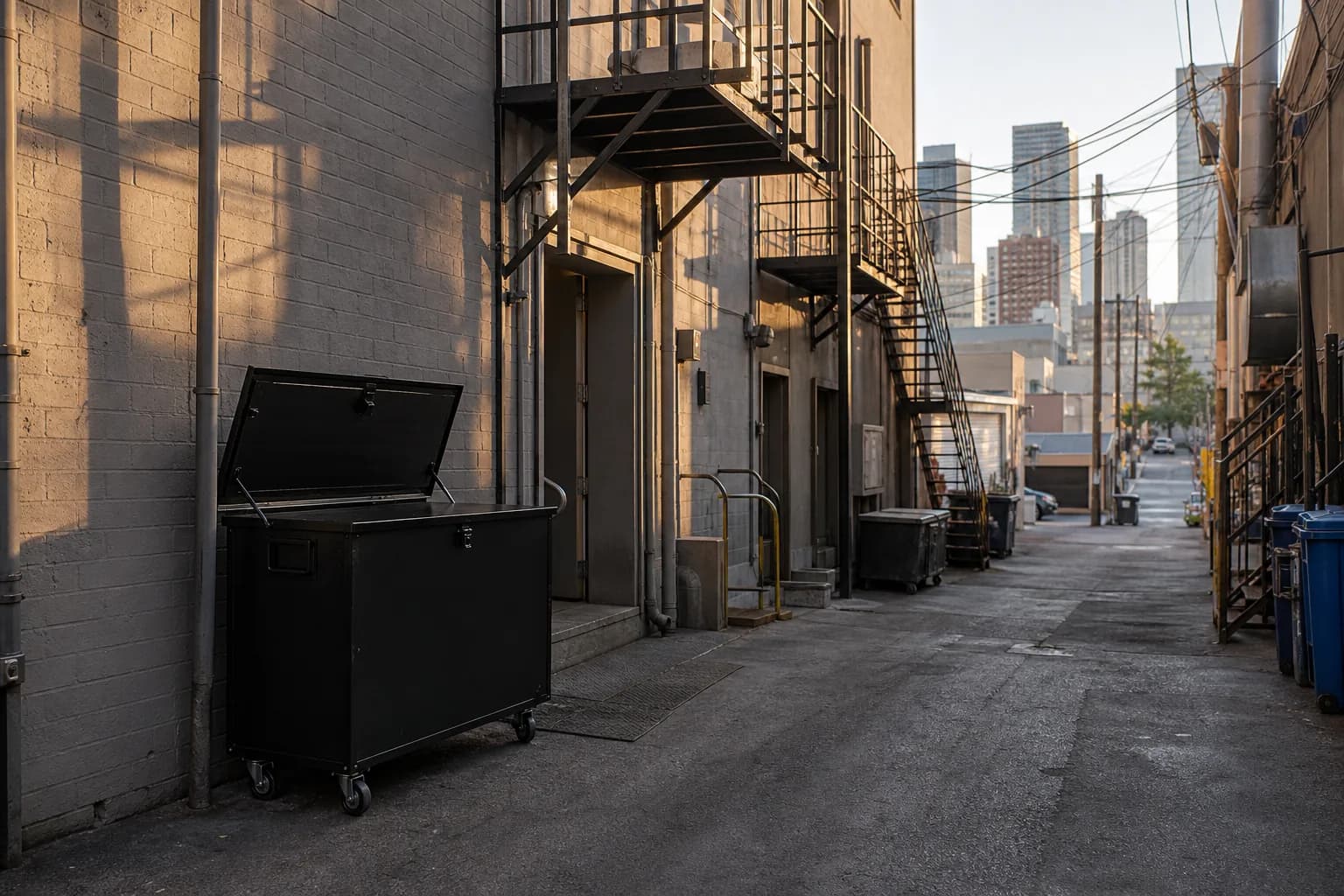
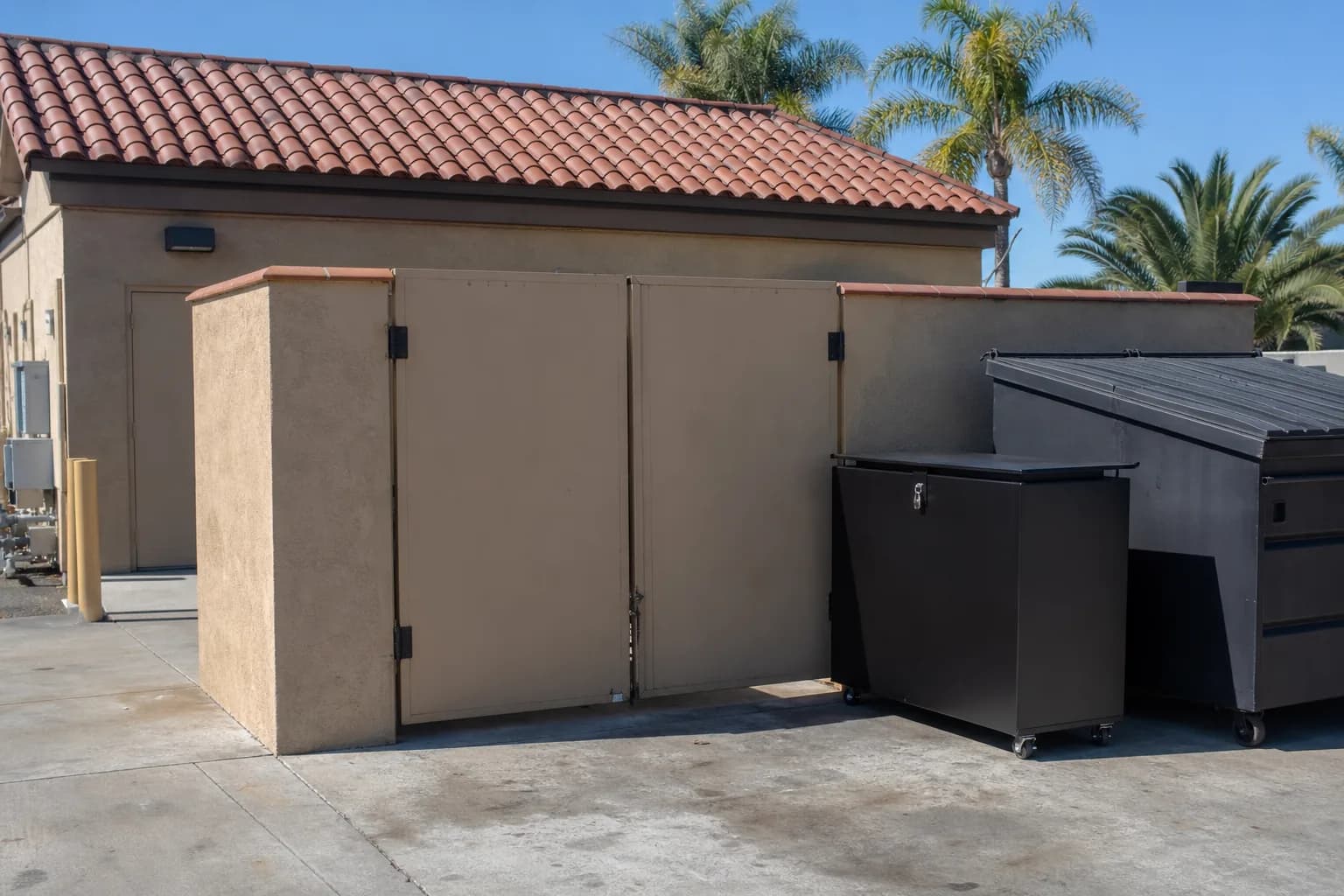
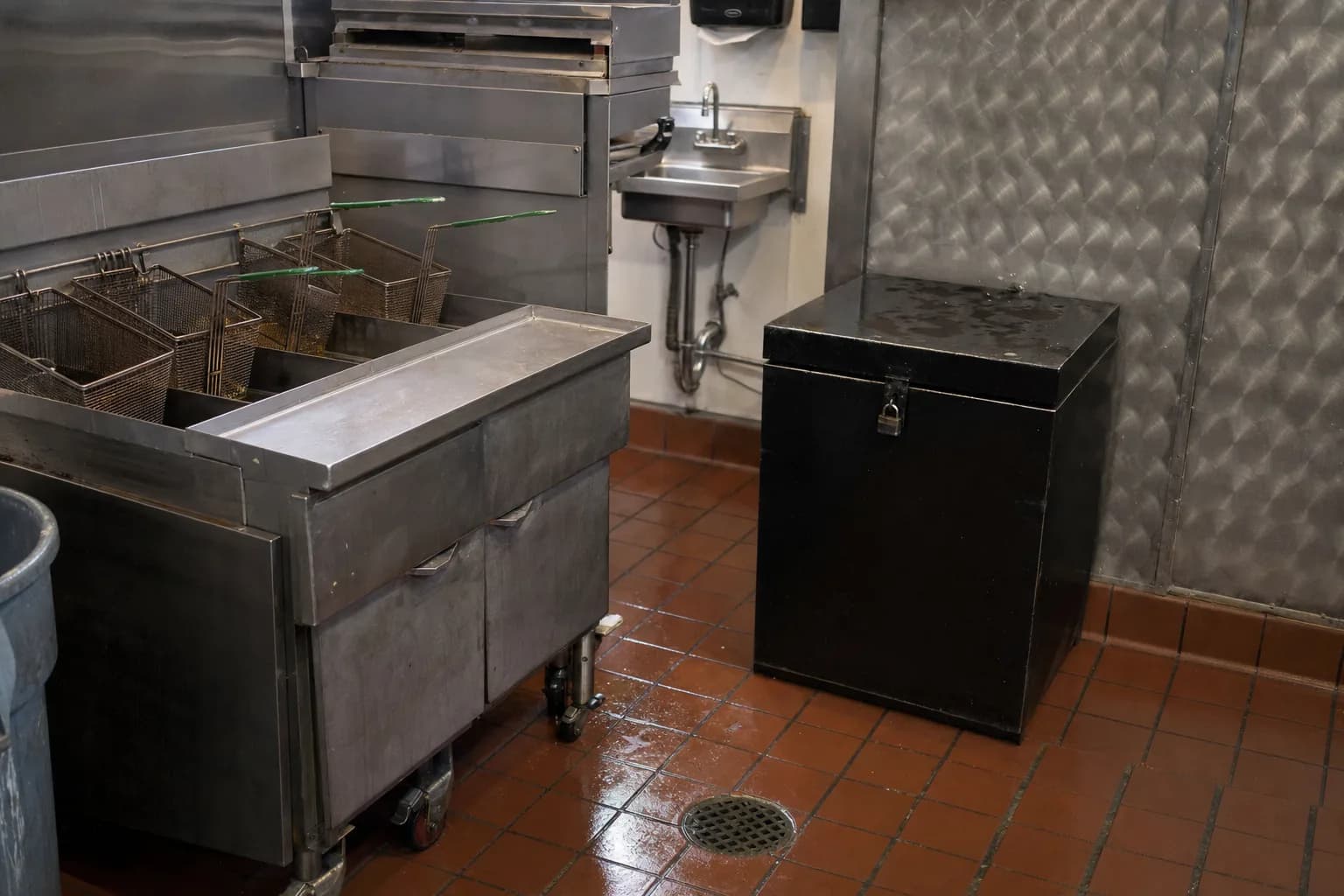
- A free locked, anti-theft collection bin. It keeps your oil secure and off the ground, which matters given how often unsecured bins get poached.
- Scheduled pickups sized to your kitchen. We match the cadence to your actual fryer volume so the bin never overflows and never sits full.
- A compliant digital manifest after every pickup. Documented chain of custody, ready to hand an inspector, with two years of records kept on file.
- A real person answers the phone. When you need a swap or an extra pickup before a big weekend, you reach a human.
For a deeper checklist on picking a service, our guide on how to choose a grease collection service covers the questions worth asking any hauler.
What happens to your oil after pickup
Your used cooking oil is not waste to us, it is feedstock, and that is exactly why the pickup can be free. Once collected, the oil is filtered and processed through our licensed renderer and refinery into clean renewable fuel, the biodiesel and renewable diesel feedstock that powers low-carbon transportation.
That loop is real and it is documented. Used cooking oil in California moves under the CDFA Inedible Kitchen Grease program with a manifest for every load, and rising demand under California's Low Carbon Fuel Standard is why restaurant fryer oil now has genuine value as a renewable fuel input rather than a disposal cost. You do not manage any of that. You keep the manifest, and the oil moves from your fryer to the fuel supply through a licensed chain of custody. For the full journey, see what happens to your recycled cooking oil.
Getting set up in the Bay Area
Here is the short version. Confirm which authority holds your sewer connection, whether that is EBMUD and a local sanitary district in the East Bay, San Jose Environmental Services or West Valley Sanitation District in Santa Clara County, or Silicon Valley Clean Water on the Peninsula. Keep your grease interceptor serviced under the 25 percent rule, keep the records onsite, and never let fryer oil touch the interceptor or a drain. Then let the fryer oil stream take care of itself with free scheduled pickup and a manifest after every collection. If you run multiple locations across county lines, our East Bay used cooking oil pickup guide shows how one service keeps every kitchen on the same records.
Ready to get your kitchen covered? Call Oil Guyz at (714) 880-4788. We will size your bin, set your pickup schedule, and start leaving you a compliant digital manifest after every collection. Free service, no contract required.